KIC Lesson 51 Kanji Reference
Table of Contents
- # Quick Reference
-
# Per-Kanji Entries
- ## 717 — 貝 (shellfish) — 7 strokes
- ## 718 — 具 (tool, utensil, means) — 8 strokes
- ## 719 — 故 (happenstance, especially, intentionally) — 9 strokes
- ## 720 — 散 (scatter, disperse, spend) — 12 strokes
- ## 721 — 致 (doth, do, send) — 10 strokes
- ## 722 — 敗 (failure, defeat, reversal) — 11 strokes
- ## 723 — 敷 (spread, pave, sit) — 15 strokes
- ## 724 — 負 (defeat, negative, -) — 9 strokes
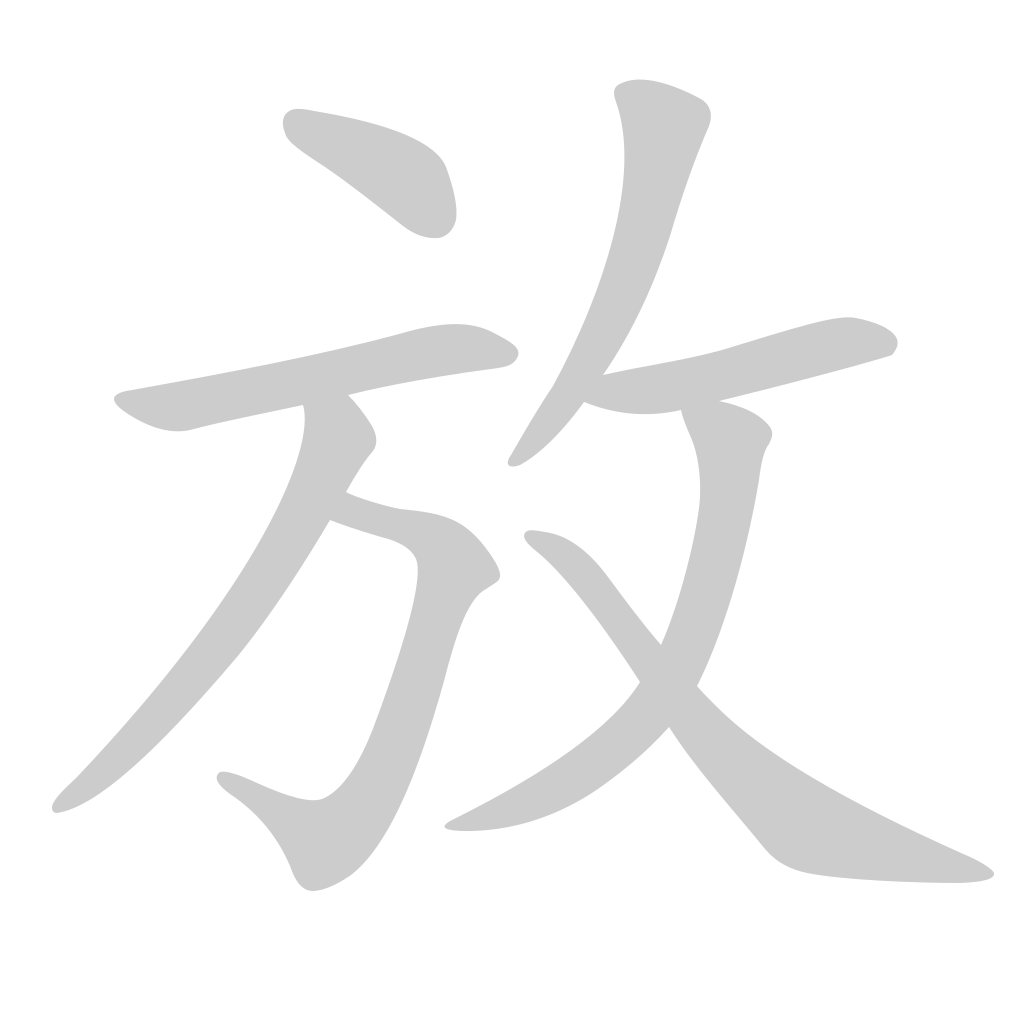
- ## 725 — 放 (set free, release, fire) — 8 strokes
- # Stroke & Component Patterns in This Lesson
- # Phonetic Series Summary (also in the workbook, repeated here for reference)
- # Sources
Lesson 51 — Characters 717–725: 貝 具 故 散 致 敗 敷 負 放 Companion to Workbook. The workbook handles articles, vocabulary, study aids, and self-test. This file is the structural deep-dive — radicals, functional components (meaning/sound/form), stroke order, and shared-component patterns.
Quick Reference
| # | Kanji | Stroke Order | Strokes | Radical | Links |
|---|---|---|---|---|---|
| 717 | 貝 |  | 7 | ⾙ (shell) | Jisho · AnimCJK |
| 718 | 具 |  | 8 | ⼋ (eight) | Jisho · AnimCJK |
| 719 | 故 |  | 9 | ⽁ (activity) | Jisho · AnimCJK |
| 720 | 散 |  | 12 | ⽁ (activity) | Jisho · AnimCJK |
| 721 | 致 |  | 10 | ⾄ (to arrive) | Jisho · AnimCJK |
| 722 | 敗 |  | 11 | ⽁ (activity) | Jisho · AnimCJK |
| 723 | 敷 |  | 15 | ⽁ (activity) | Jisho · AnimCJK |
| 724 | 負 |  | 9 | ⾙ (shell) | Jisho · AnimCJK |
| 725 | 放 |  | 8 | ⽁ (activity) | Jisho · AnimCJK |
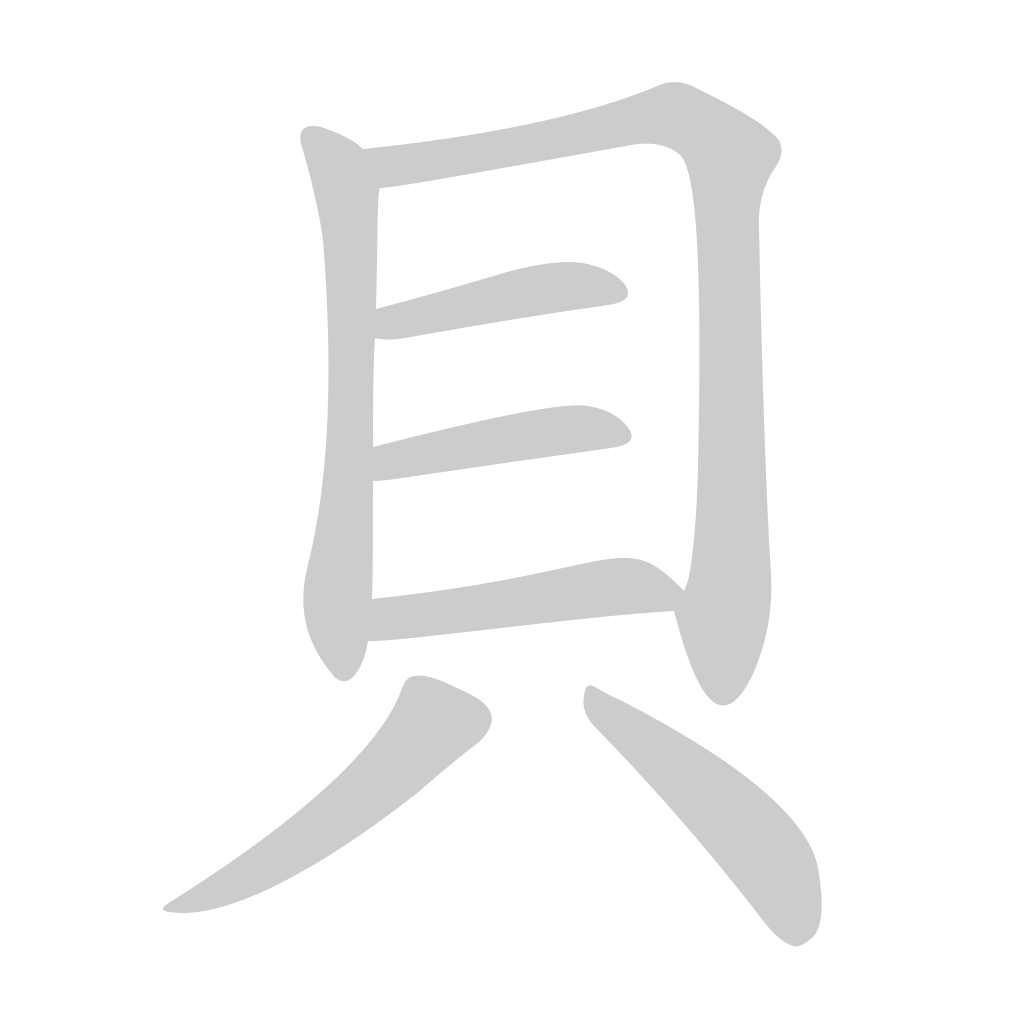
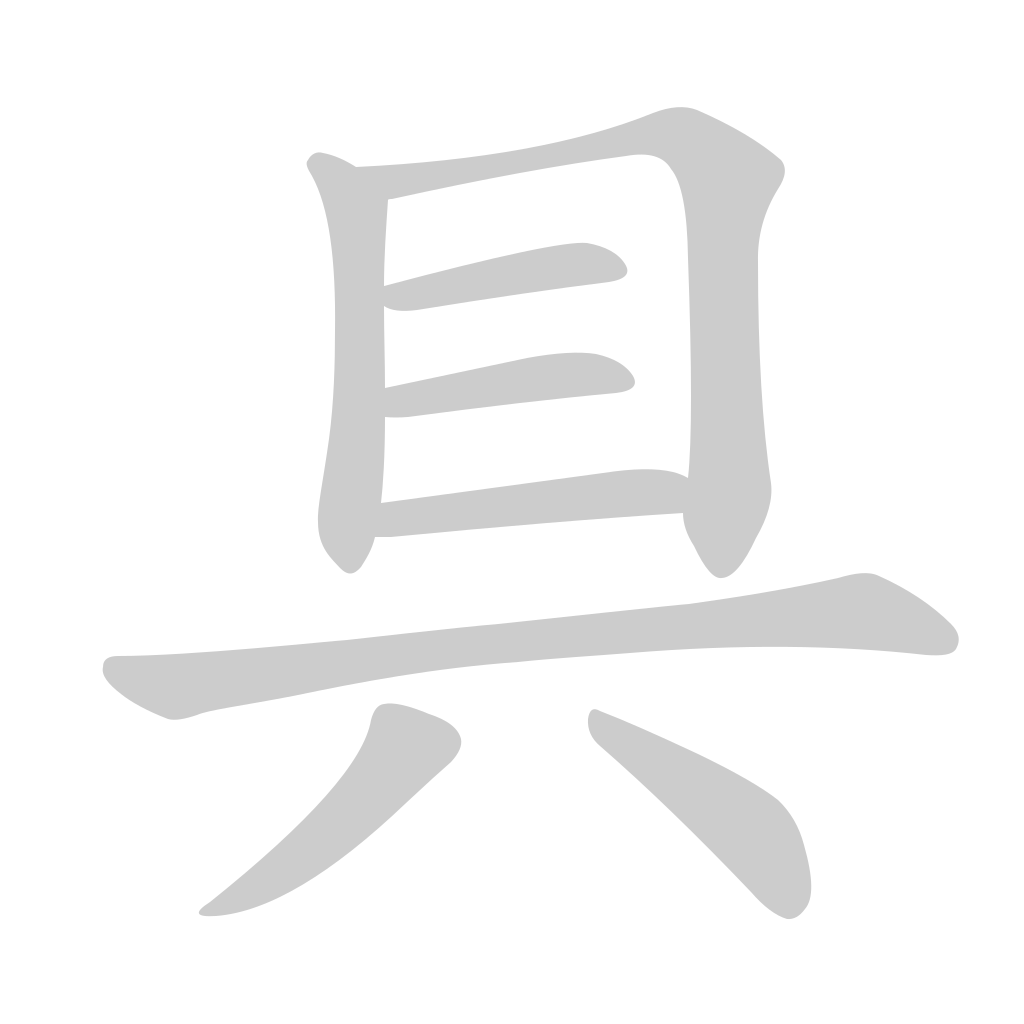
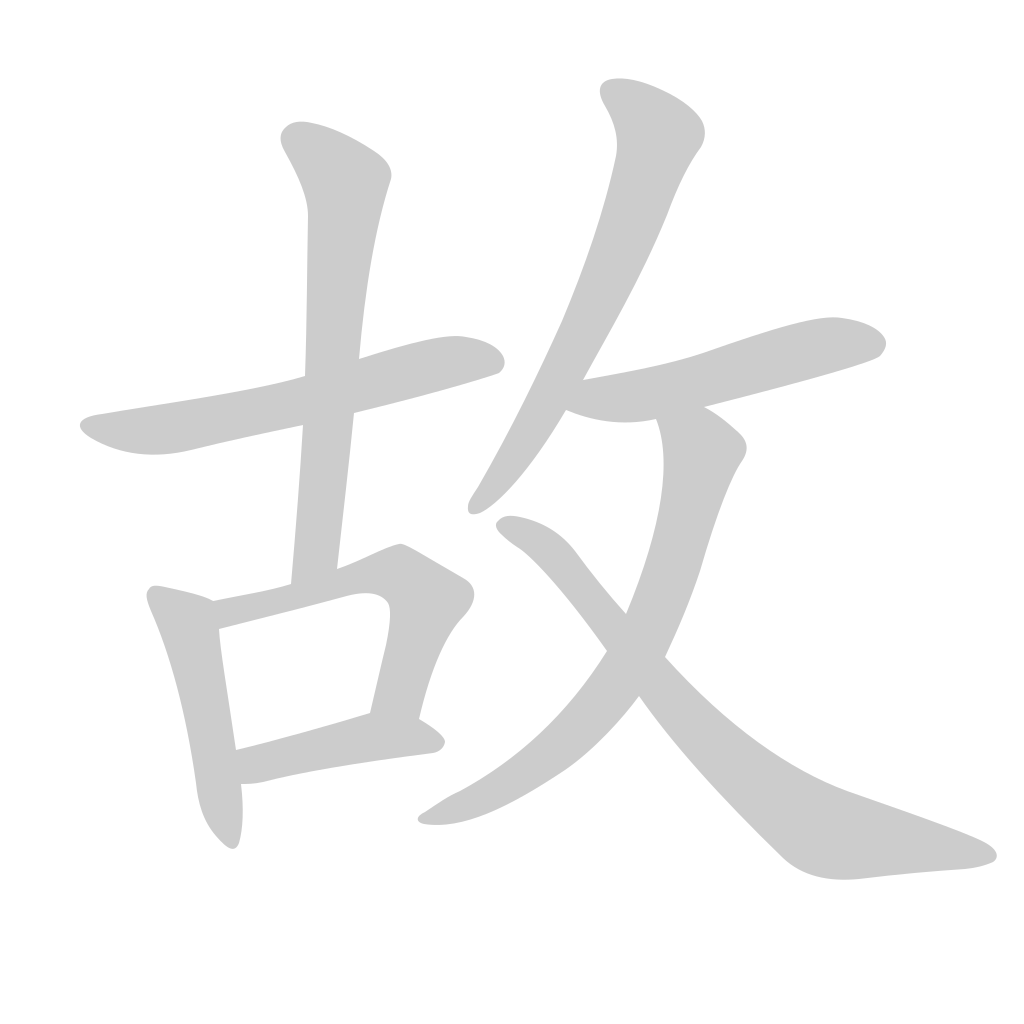
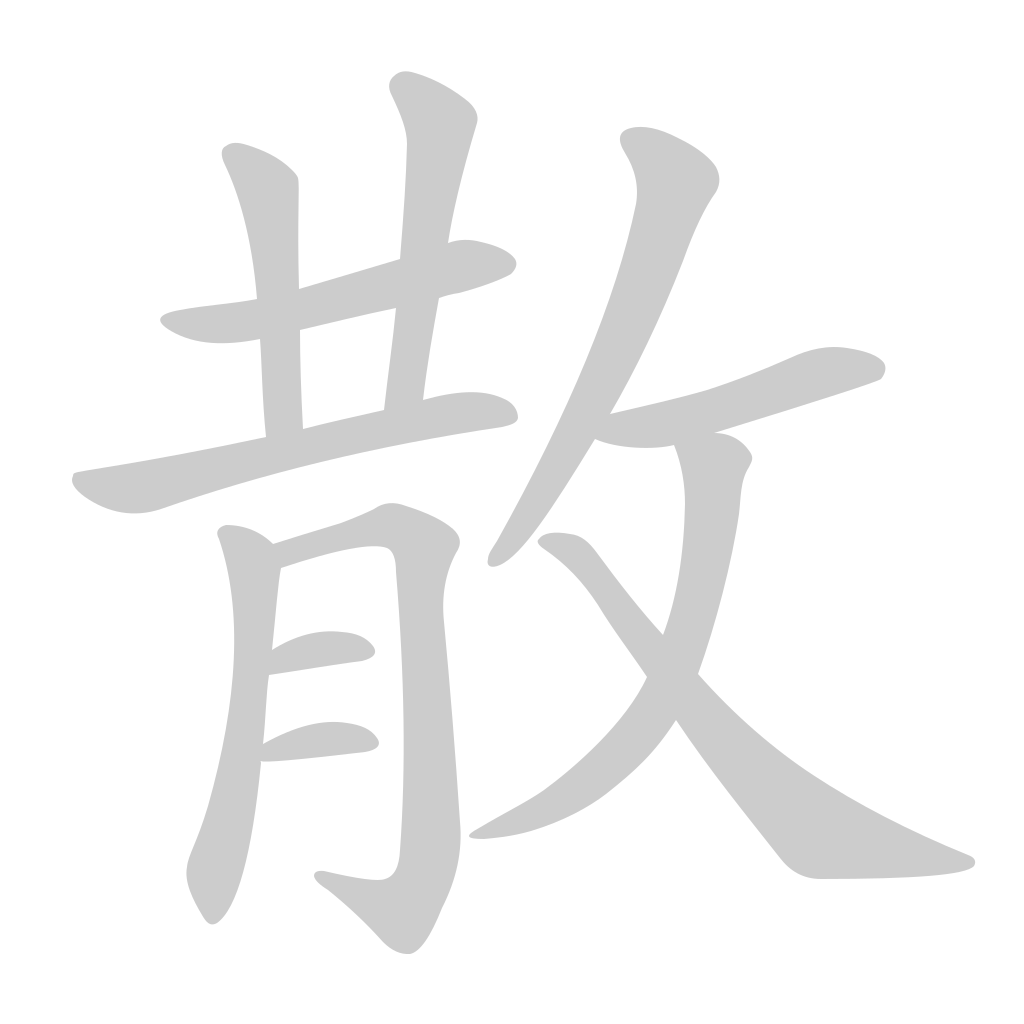
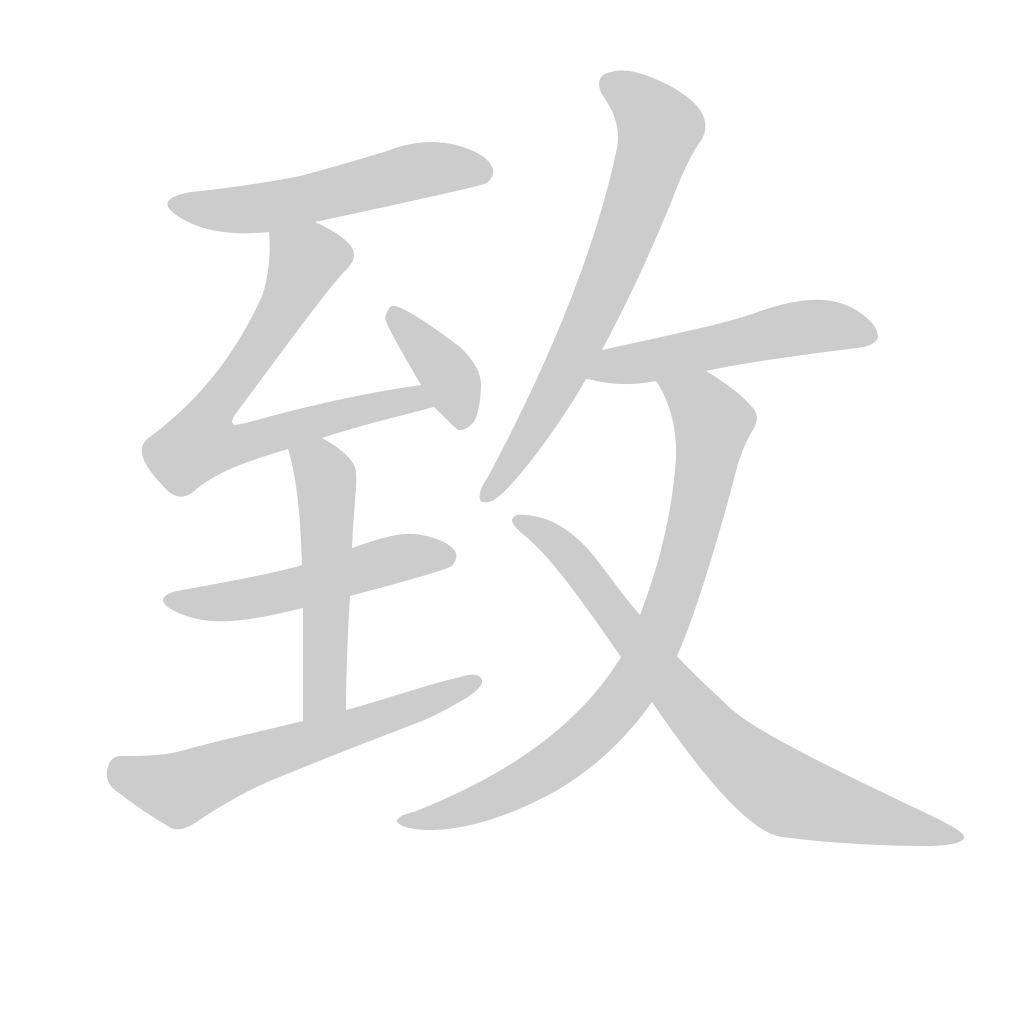
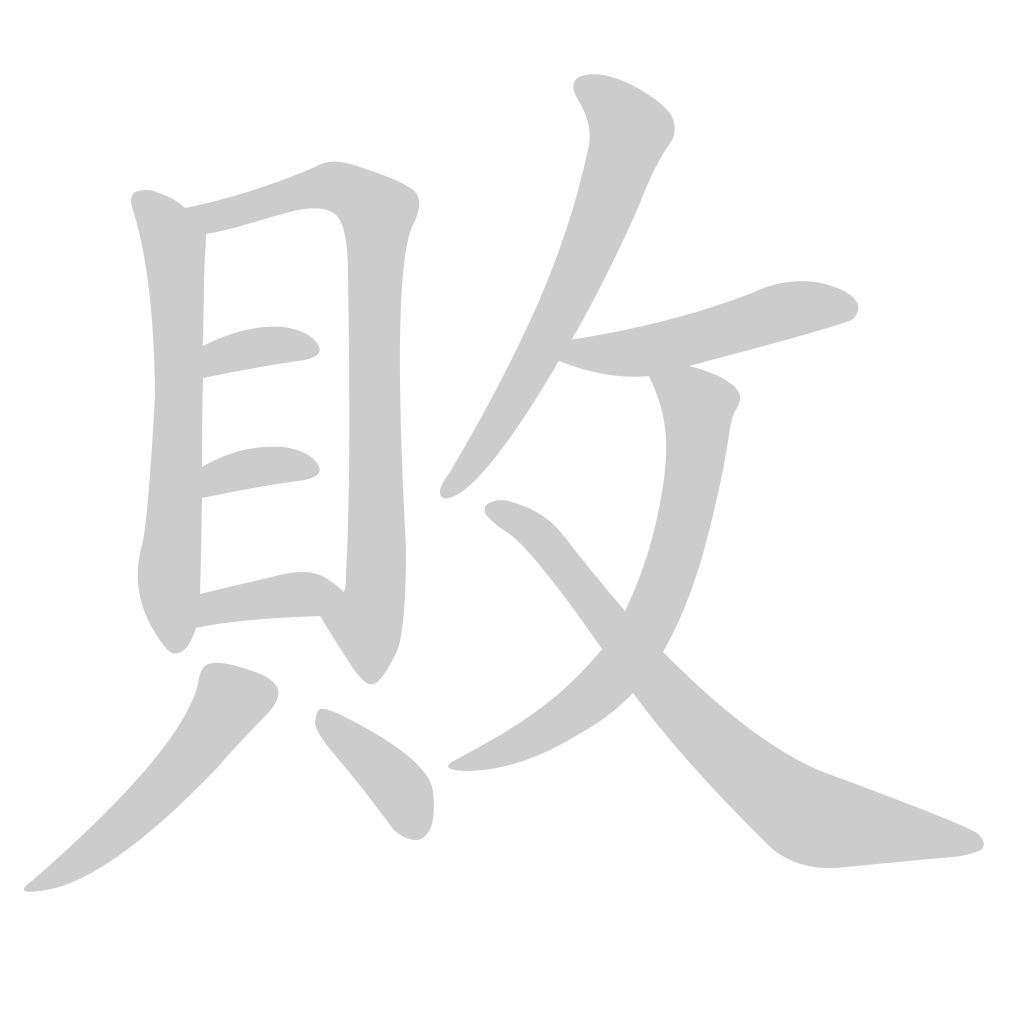
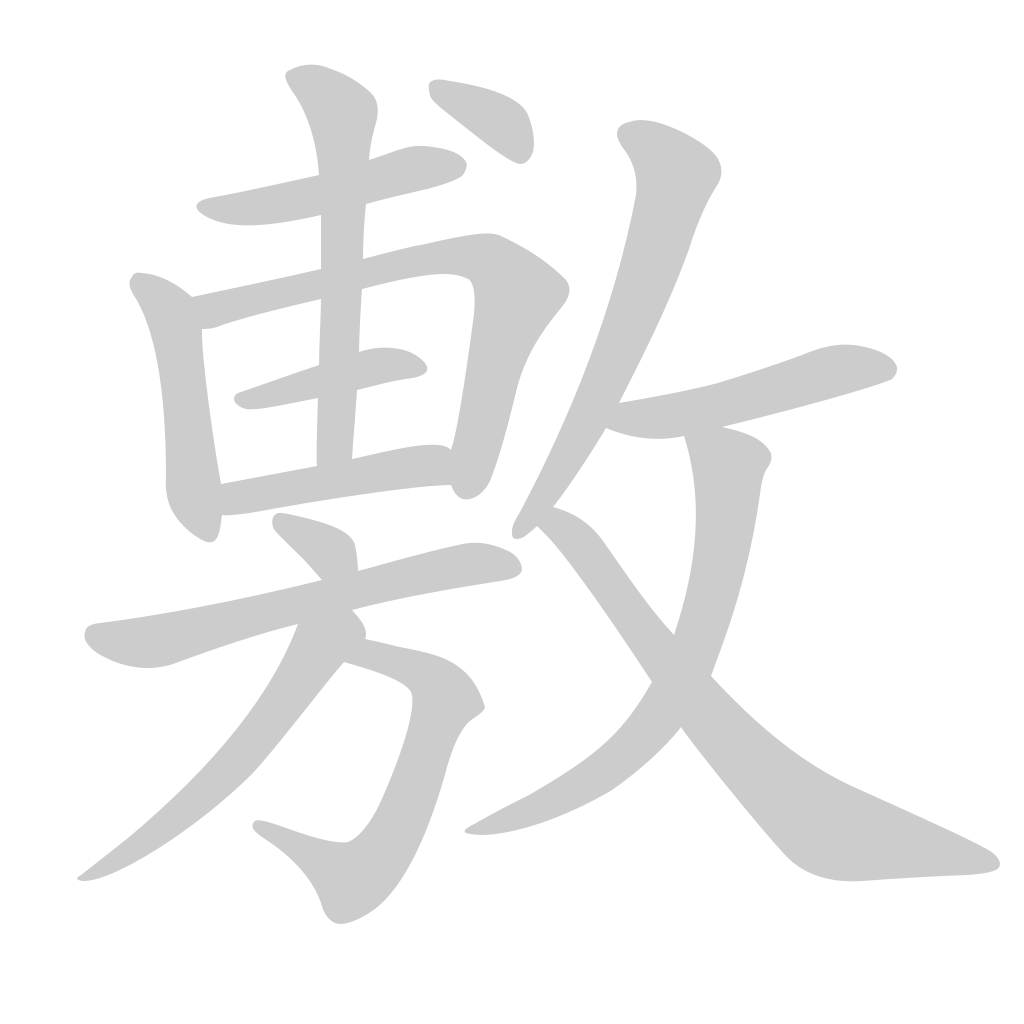
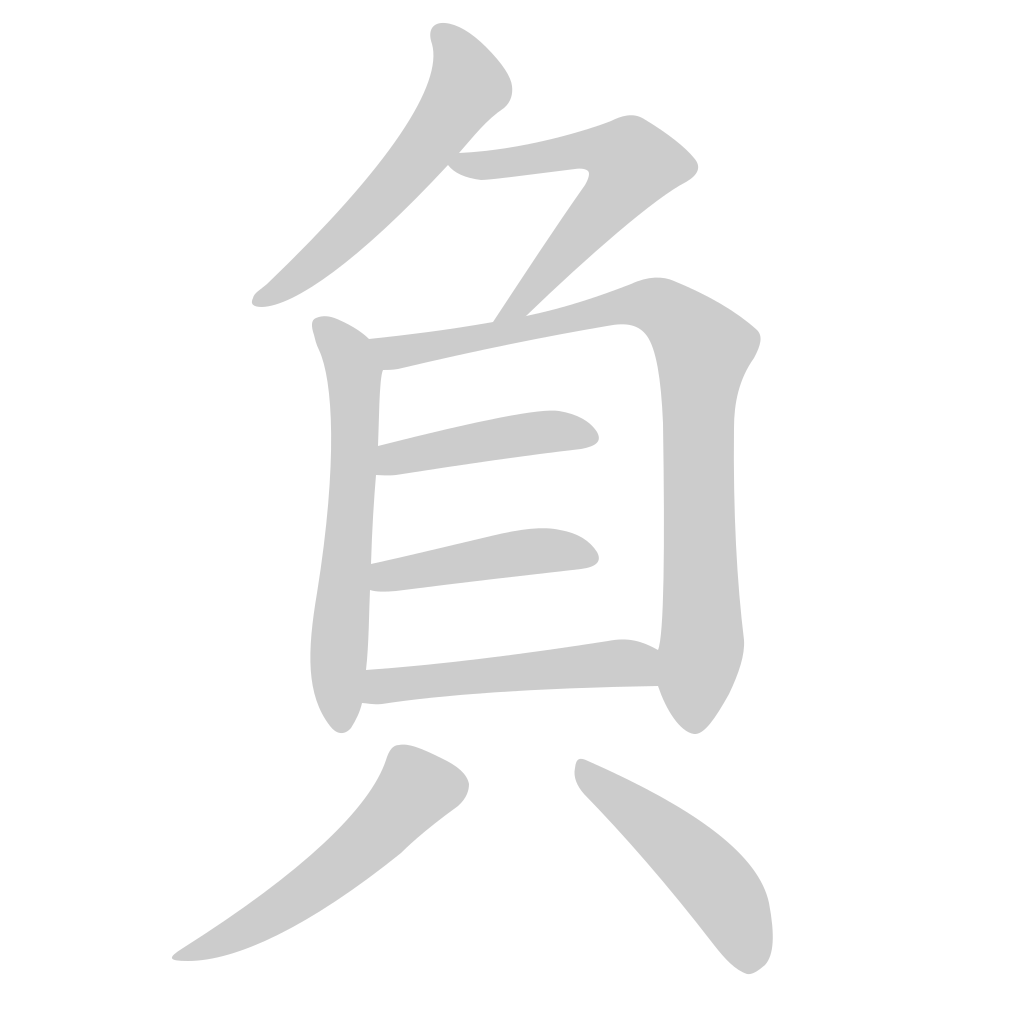
PNGs are generated from KanjiVG using
kanjivg-to-png, so each image shows the character being built stroke by stroke in panels. AnimCJK links open animated versions in a browser.
Per-Kanji Entries
717 — 貝 (shellfish) — 7 strokes
Radical: ⾙ (かい — "shell, property, wealth") · 7 strokes total
Components & function — 象形 (pictograph)
- Historically depicts a cowry shell with visible aperture. In ancient China these shells served as currency, so 貝 doubles as both concrete ("shellfish") and financial ("wealth, money, value").
- The 貝 radical appears in many money/trade kanji: 買 (buy), 販 (sell), 貯 (savings), 貧 (poor), 貨 (currency). Recognize 貝 on sight — its presence almost always signals "wealth/value" content.
- In this lesson 貝 recurs three times: as its own kanji, as the sound-carrier of 敗 (with the vowel drift バイ→ハイ), and as the bottom half of 負.
Stroke order
- Structure: top frame with inner horizontals (5 strokes — the ⽬-like square) → bottom 八 (2 strokes, splaying outward)
- Watch: only 2 inner horizontals inside the frame — not 3 (that would give 目). Then the bottom 八 opens outward, not vertical.
- Common error: writing the top as full 目 (5 strokes total for the frame including 3 inner horizontals) — 貝 has only 2 inner horizontals, giving 4 strokes for the frame; the extra stroke is the closing bottom of the frame, making 5.
718 — 具 (tool, utensil, means) — 8 strokes
Radical: ⼋ (はち — "eight") · 8 strokes total
Components & function — 会意 (compound ideograph)
- Top (6 strokes): a 貝-like frame without the bottom 八 — historically a "valuable object / tripod vessel" shape
- Bottom (2 strokes): 廾-simplified (two hands raised in support). The full-history glyph shows hands lifting a valuable vessel.
- Composite meaning: "hands carrying a valuable thing" → tool, utensil, means-to-an-end. Modern usage stretched from concrete tools (道具) to abstract means (具体的な "concrete/specific" = "the means made explicit").
- Visual trap: 具 vs 貝. 具 has 3 inner horizontals in the top frame (giving 目-shape then bottom splay); 貝 has only 2. Stroke counts differ (具 = 8, 貝 = 7).
Stroke order
- Structure: top frame + 3 inner horizontals (6 strokes) → bottom 八-like splay (2 strokes)
- Watch: count the inner horizontals — three, not two. If you draw only two, you get 貝 (wrong character).
- Common error: dropping an inner horizontal → 貝 (7 strokes) instead of 具 (8 strokes). Count carefully.
719 — 故 (happenstance, especially, intentionally) — 9 strokes
Radical: ⽁ (ぼくづくり — "activity, to strike, hit") · つくり · 9 strokes total
Components & function — 形声 (phonosemantic)
- 左 古 (sound コ; also semantic "old, past") — 5 strokes: 十 over 口
- 右 攵 (semantic: activity, doing something) — the ⽁ radical simplified for calligraphy
- 古【コ】→ 故【コ】 ✓ exact phonetic match. The 攵 marks it as an action-of-doing; 古 supplies both the sound and the "past/former" semantic content.
- Semantic spread: 故 has three surprisingly distinct branches — "happenstance/cause" (事故, 故に), "deliberate" (故意に), and "former/deceased" (故国, 故人). All trace back to "something done in relation to the past."
Stroke order
- Structure: left 古 (5 strokes: horizontal, vertical, then 口) → right 攵 (4 strokes: two angled strokes, then the sweeping finish)
- Watch: complete 古 fully before starting 攵. The 攵 is 4 strokes, not 3 — the last is a distinct rightward-sweeping stroke.
- Common error: rushing 攵 as 3 strokes (attempting 攴) — the modern simplified form is 4 strokes with a clear final sweep.
720 — 散 (scatter, disperse, spend) — 12 strokes
Radical: ⽁ (ぼくづくり — "activity, to strike, hit") · つくり · 12 strokes total
Components & function — 会意 (compound ideograph) (structure debated)
- 左上: variant of 廿 (twenty / gathered) — the pile-of-things component
- 左下: 月 (moon/body) — historically a corruption of 肉 (flesh); together with the top, "meat that gets divided up"
- 右: 攵 (activity/striking)
- "Striking gathered things" → scatter, disperse. The 月 is historical residue; don't read modern "moon" meaning into it.
Stroke order
- Structure: left column top-to-bottom (top 廿-variant → bottom 月 = 8 strokes total) → right 攵 (4 strokes)
- Watch: the left side has TWO stacked components. Finish the top completely before starting 月 below.
- Common error: interleaving the top and bottom left components — always top before bottom, then move right.
721 — 致 (doth, do, send) — 10 strokes
Radical: ⾄ (いたる — "to arrive, reach") · 10 strokes total
Components & function — 会意 / 形声 (compound ideograph with sound hint)
- 左 至 (arrive, reach) — 6 strokes; historically depicts a person or arrow reaching the ground
- 右 攵 (activity; historically 攴 = a hand holding a stick, used for "compelling action")
- "Making something arrive" → cause to reach, bring about, deliver. Modern uses: 致命 (fatal — "reach one's fate"), 一致 (unanimity — "reach the same point"), 致死量 (lethal dose).
- Sound: 至【シ】→ 致【チ】 — mild consonant shift. Not a clean phonetic series, but recognizable.
- Visual trap: 至 vs 到 (both "arrive"). 至's action-form is 致 (with 攵); 到's action-form is 到 itself (already has 刂 knife on right).
Stroke order
- Structure: left 至 (6 strokes: 一 + ム-like + 土) → right 攵 (4 strokes)
- Watch: 至 is 6 strokes top-to-bottom; don't shortchange the 土 at the bottom. Then 攵.
- Common error: confusing 至's bottom with 士 (warrior) — 至 has 土 (bottom horizontal LONGER than the top), not 士 (top horizontal longer).
722 — 敗 (failure, defeat, reversal) — 11 strokes
Radical: ⽁ (ぼくづくり — "activity, to strike, hit") · つくり · 11 strokes total
Components & function — 形声 (phonosemantic, with vowel drift)
- 左 貝 (sound-and-meaning): 貝【バイ】→ 敗【ハイ】 — the reading drifts バイ→ハイ, an old rendaku-adjacent shift also visible in 買【バイ】↔ 貧【ヒン】. Semantically, 貝 as "wealth/success" is being metaphorically broken.
- 右 攵 (activity/striking)
- "Striking one's wealth / breaking one's success" → be broken, defeated, failed. The ancient-money history of 貝 is directly at play here — this is the most transparent 貝-as-money reading in the Jōyō set.
Stroke order
- Structure: left 貝 (7 strokes: frame with 2 inner horizontals → bottom 八) → right 攵 (4 strokes)
- Watch: 貝 fully first (all 7 strokes), then move to 攵. Both components are complete kanji-shapes on their own; treat them as such.
- Common error: making the 貝's bottom 八 too wide, crowding 攵 on the right. Keep 貝 tight so 攵 has its own space.
723 — 敷 (spread, pave, sit) — 15 strokes
Radical: ⽁ (ぼくづくり — "activity, to strike, hit") · 15 strokes total
Components & function — 形声 (phonosemantic) (structure debated)
- 左 尃 (11 strokes; a rare component ≈ 甫 "garden patch" + 寸 "measure/hand") — historically "spreading a mat with measured hand movements"
- 右 攵 (activity)
- "Doing the spreading motion" → to spread, pave, lay flat. Extended: 敷設 (lay a pipeline), 敷地 (grounds/premises = area covered).
- Sound: 尃 gives フ in some readings, matching 敷【フ】. The phonetic connection is real but the 尃 component itself is unusual — you rarely see it elsewhere in the Jōyō set.
Stroke order
- Structure: left 尃 (11 strokes: top 甫-like block, then 寸 at bottom) → right 攵 (4 strokes)
- Watch: 敷 is the highest-stroke kanji in this lesson (15). Pace the left side — don't rush the 甫-like top block, which itself is 8+ strokes.
- Common error: dropping strokes in the 尃 component (it's genuinely obscure and easy to under-count). If your finished character is missing strokes, check the top-left block first.
724 — 負 (defeat, negative, -) — 9 strokes
Radical: ⾙ (かい — "shell, property, wealth") · 9 strokes total
Components & function — 会意 (compound ideograph)
- 上 (2 strokes): 勹-like / person-leaning shape — historically a person bent over, shouldering something
- 下 貝 (7 strokes): shell/money/valuable object
- "A person shouldering a bag of valuables" → bear (a burden), carry, take on (responsibility). Extended into "to lose" — in a match, you "bear the loss" (勝負に負ける).
- Semantic spread: two very different-looking uses: physical/metaphorical bearing (負担 "burden," 責任を負う "take responsibility") and losing (負ける, 勝負). Both come from the same "bearing a heavy thing" root.
- Visual trap: 負 vs 貧 (poor). Both have 貝 at the bottom. 負's top is a 2-stroke leaning figure; 貧's top is 分 (4 strokes). Count strokes.
Stroke order
- Structure: top 勹-like figure (2 strokes: angled slash + hooked stroke) → bottom 貝 (7 strokes)
- Watch: the top is 2 strokes forming a leaning-figure shape, NOT 刀 (knife) and NOT ⼈ (person). It's a hooked slash with a distinct downward curve.
- Common error: writing the top as 刀 (knife, 2 strokes but different shape) — 負's top curves down and hooks left; 刀 hooks right.
725 — 放 (set free, release, fire) — 8 strokes
Radical: ⽁ (ぼくづくり — "activity, to strike, hit") · つくり · 8 strokes total
Components & function — 形声 (phonosemantic)
- 左 方 (sound ホウ; historically "direction, side") — 4 strokes
- 右 攵 (activity/striking) — 4 strokes
- 方【ホウ】→ 放【ホウ】 ✓ exact phonetic match. "Doing the action of directing outward" → set free, release, emit, broadcast.
- Series: 方 is a productive sound component — 訪【ホウ】(visit), 芳【ホウ】(fragrant), 房【ボウ】(room), 妨【ボウ】(obstruct). Recognize 方 on sight for ホウ/ボウ predictions.
Stroke order
- Structure: left 方 (4 strokes: top dot, horizontal, then the flag-like curving shape with hook) → right 攵 (4 strokes)
- Watch: 方's top starts with a distinct dot separated from the horizontal below it. This is what distinguishes 方 from 万 (10,000, which has no separated dot).
- Common error: connecting 方's top dot to the horizontal below, making it look like 万 — keep the dot distinct and slightly to the right.
Stroke & Component Patterns in This Lesson
The ⽁/攵 (ぼくづくり) cluster — 故, 散, 敗, 敷, 放 (+致 partially)
This is the chapter's dominant structural theme. Five of nine kanji explicitly carry ⽁/攵, and 致's right side is structurally similar — call it six of nine. Nowhere else in the Jōyō set does one radical dominate a single lesson this heavily.
The pattern: ⽁/攵 always sits on the right side and signals "an action performed on something." What sits on the LEFT tells you either what's being acted on (in 会意 kanji) or the sound (in 形声 kanji), often both.
| Kanji | Left | Formation | Reading source |
|---|---|---|---|
| 故 | 古 | 形声 | 古【コ】→ 故【コ】 ✓ |
| 散 | 廿-variant + 月 | 会意 | conventional サン |
| 敗 | 貝 | 形声 (drift) | 貝【バイ】→ 敗【ハイ】 |
| 敷 | 尃 | 形声 | 尃 → 敷【フ】 |
| 放 | 方 | 形声 | 方【ホウ】→ 放【ホウ】 ✓ |
| 致 | 至 (right is 攵-like) | 形声 (shift) | 至【シ】→ 致【チ】 |
Drill 攵 as one unit: 4 strokes, always rightmost, always signaling "action." It recurs across the Jōyō set (also 政, 教, 敬, 数, 攻, 敢, and dozens more).
The 貝 (かい) cluster — 貝, 負, 敗
貝 (shellfish → shell-money → wealth/value) appears three times in this lesson:
| Kanji | Role of 貝 | What's added |
|---|---|---|
| 貝 | itself | — |
| 負 | bottom half (semantic, "valuables") | top: a leaning-person figure → "shoulder wealth" → bear/lose |
| 敗 | left (sound with drift + semantic) | right: 攵 → "strike wealth" → be broken/defeated |
Outside this lesson, 貝 is the semantic radical for 買 (buy), 販 (sell), 貯 (savings), 貧 (poor), 貨 (currency) — anything money-related. Once you recognize 貝 on sight, a whole slice of Jōyō vocabulary opens up.
Visual disambiguation: 貝 (7 strokes) vs 具 (8 strokes) vs 貧 (top-half not-貝). The bottom of 具 is 八; the bottom of 貝 is 八; but 具 has 3 inner horizontals in the frame, 貝 has 2. Count the horizontals.
Stroke-order recurrence: complete-left-then-attach-right
All six ⽁/攵 kanji in this lesson follow the same left-to-right order: finish the entire left component before starting 攵. This is the strictest rule in Japanese calligraphy for two-component kanji — never interleave.
For 敷 (15 strokes, the densest in the lesson), pacing matters: 11 strokes of 尃 on the left before 4 strokes of 攵. Slow down.
Phonetic Series Summary (also in the workbook, repeated here for reference)
Phonetic Series Summary
| Sound Component | Reading | In This Lesson | Other Common Kanji |
|---|---|---|---|
| 古 | コ | 故 | 湖 (lake), 個 (individual), 枯 (wither) — all コ |
| 方 | ホウ | 放 | 訪 (visit — ホウ), 妨 (obstruct — ボウ), 芳 (fragrant — ホウ), 房 (room — ボウ) |
| 貝 | バイ→ハイ | 敗* | 買 (buy — バイ), 販 (sell — ハン); 貝 itself is the sound with a vowel-drift |
💡 Lesson highlight: This chapter is unusually radical-heavy — five of nine kanji (故, 散, 敗, 敷, 放) share ⽁/攵 (ぼくづくり, "activity"), the semantic marker for "an action performed on something." Add 致 with its 攵-like right side and six of nine share the same functional signal — this is the chapter's dominant structural theme. Phonetic series are singletons within the lesson but connect to productive outside series (古→故→湖→個, 方→放→訪→芳). Note the 貝→敗 shift: 貝 was ancient China's shell-money character (hence 買 buy, 販 sell), stretched here as a sound-carrier despite the vowel drift バイ→ハイ.
Sources
- KanjiVG — github.com/KanjiVG/kanjivg | License: CC-BY-SA 3.0
- kanjivg-to-png — github.com/nicdgonzalez/kanjivg-to-png
- AnimCJK — github.com/parsimonhi/animCJK | License: Arphic Public License
- Jisho.org — jisho.org | Uses KanjiVG data for stroke order diagrams.
- Outlier Linguistics — outlier-linguistics.com | The Outlier Kanji Dictionary is the gold standard for rigorous functional component analysis.