KIC Lesson 21 Kanji Reference
Table of Contents
- # Quick Reference
-
# Per-Kanji Entries
- ## 374 — 功 (achievement, merits, success) — 5 strokes
- ## 375 — 工 (craft, construction, katakana e radical (no. 48)) — 3 strokes
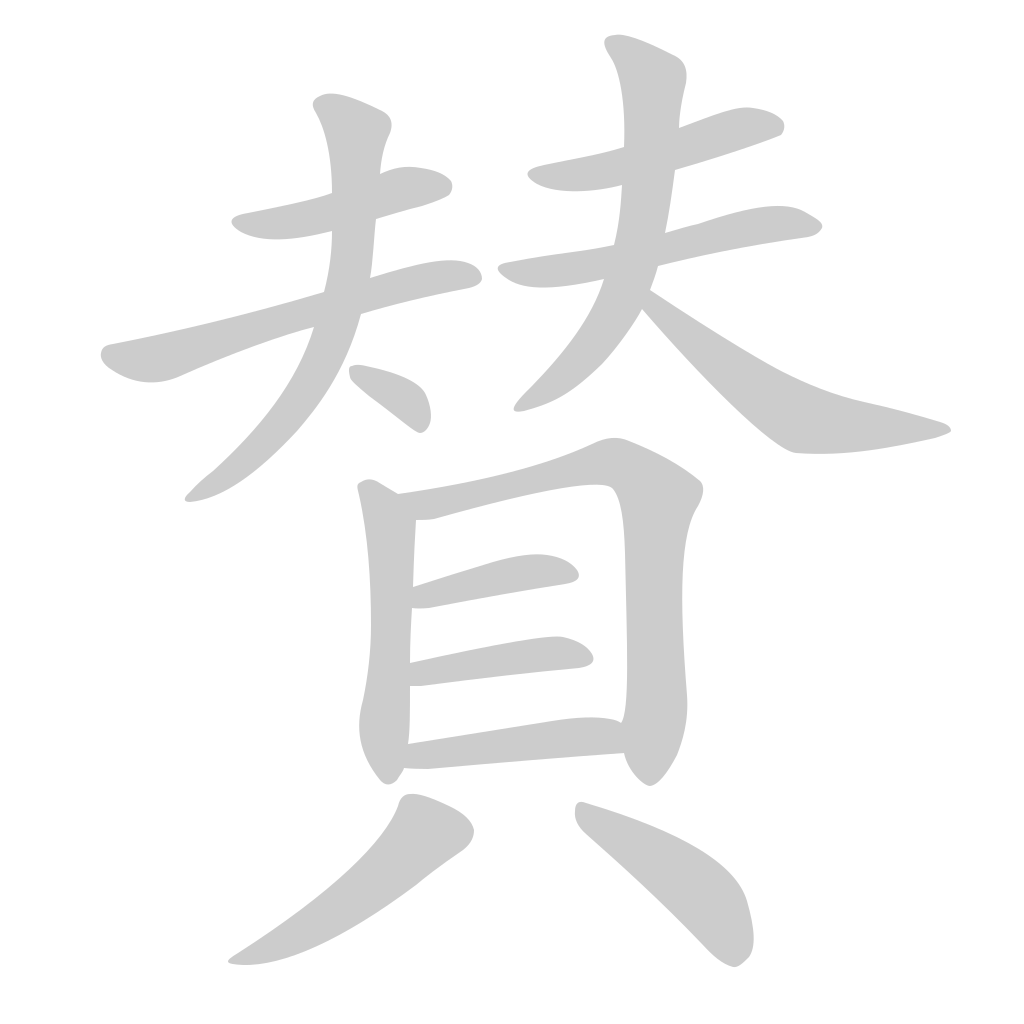
- ## 376 — 賛 (approve, praise, title or inscription on picture) — 15 strokes
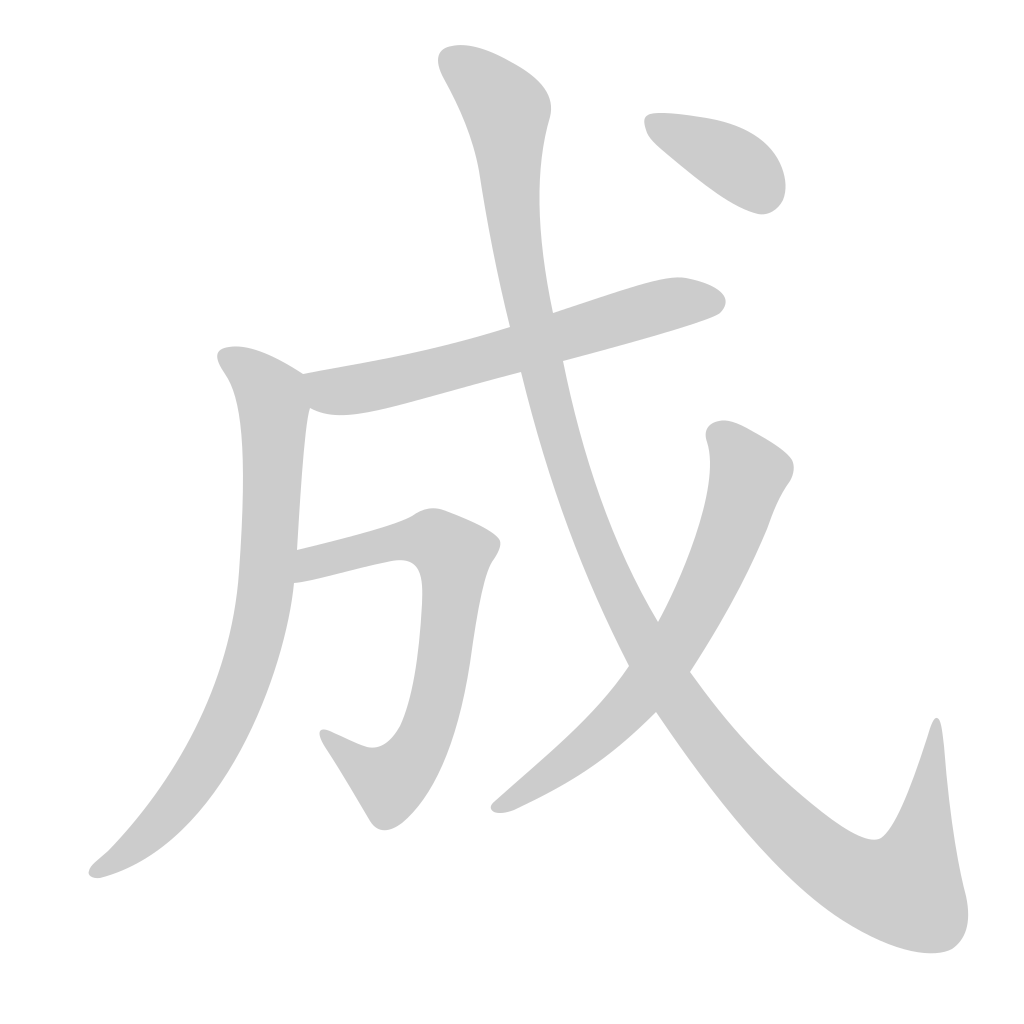
- ## 377 — 成 (turn into, become, get) — 6 strokes
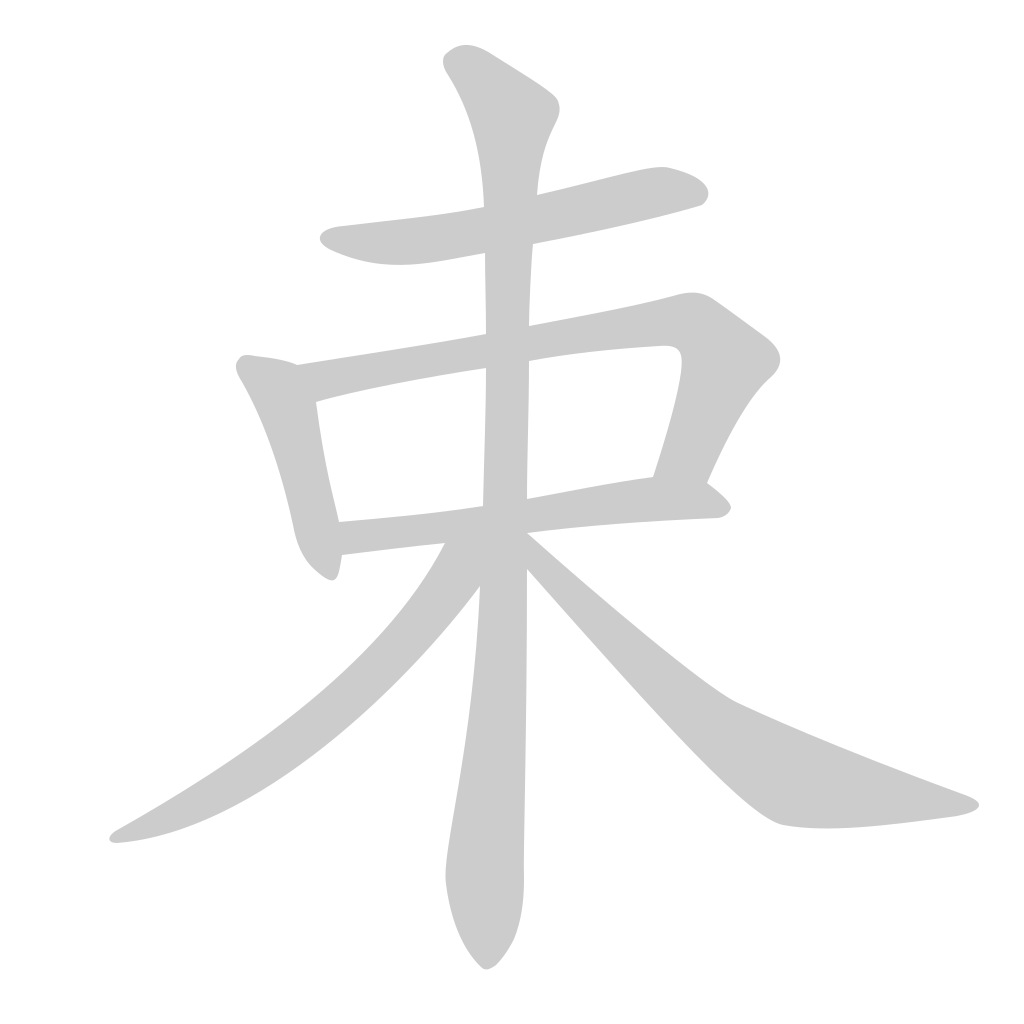
- ## 378 — 束 (bundle, sheaf, ream) — 7 strokes
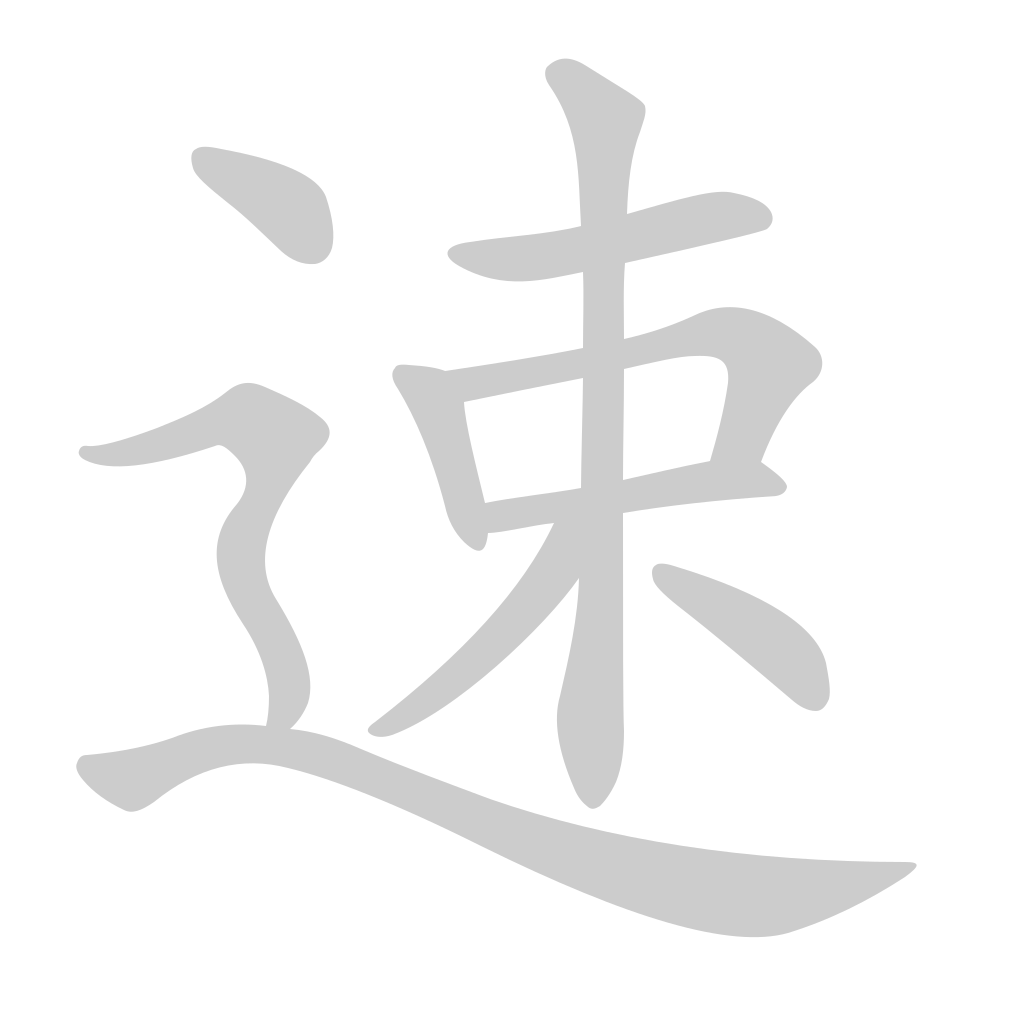
- ## 379 — 速 (quick, fast) — 10 strokes
- ## 380 — 替 (exchange, spare, substitute) — 12 strokes
- ## 381 — 達 (accomplished, reach, arrive) — 12 strokes
- ## 382 — 竹 (bamboo) — 6 strokes
- ## 383 — 的 (bull's eye, mark, target) — 8 strokes
- ## 384 — 約 (promise, approximately, shrink) — 9 strokes
- # Stroke & Component Patterns in This Lesson
- # Phonetic Series Summary (also in the workbook, repeated here for reference)
- # Sources
Lesson 21 — Characters 374–384: 功 工 賛 成 束 速 替 達 竹 的 約 Companion to Workbook. The workbook handles articles, vocabulary, study aids, and self-test. This file is the structural deep-dive — radicals, functional components (meaning/sound/form), stroke order, and shared-component patterns.
Quick Reference
| # | Kanji | Stroke Order | Strokes | Radical | Links |
|---|---|---|---|---|---|
| 374 | 功 | 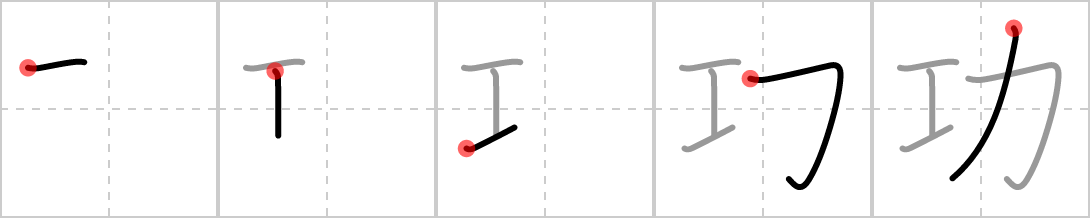 | 5 | ⼒ (power) | Jisho · AnimCJK |
| 375 | 工 | 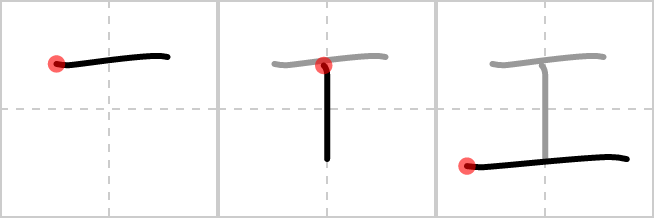 | 3 | ⼯ (work) | Jisho · AnimCJK |
| 376 | 賛 |  | 15 | ⾙ (shell) | Jisho · AnimCJK |
| 377 | 成 |  | 6 | ⼽ (spear) | Jisho · AnimCJK |
| 378 | 束 |  | 7 | ⽊ (tree) | Jisho · AnimCJK |
| 379 | 速 |  | 10 | ⾡ (road) | Jisho · AnimCJK |
| 380 | 替 |  | 12 | ⽈ (sun) | Jisho · AnimCJK |
| 381 | 達 |  | 12 | ⾡ (road) | Jisho · AnimCJK |
| 382 | 竹 |  | 6 | ⽵ (bamboo) | Jisho · AnimCJK |
| 383 | 的 |  | 8 | ⽩ (white) | Jisho · AnimCJK |
| 384 | 約 |  | 9 | ⽷ (thread) | Jisho · AnimCJK |
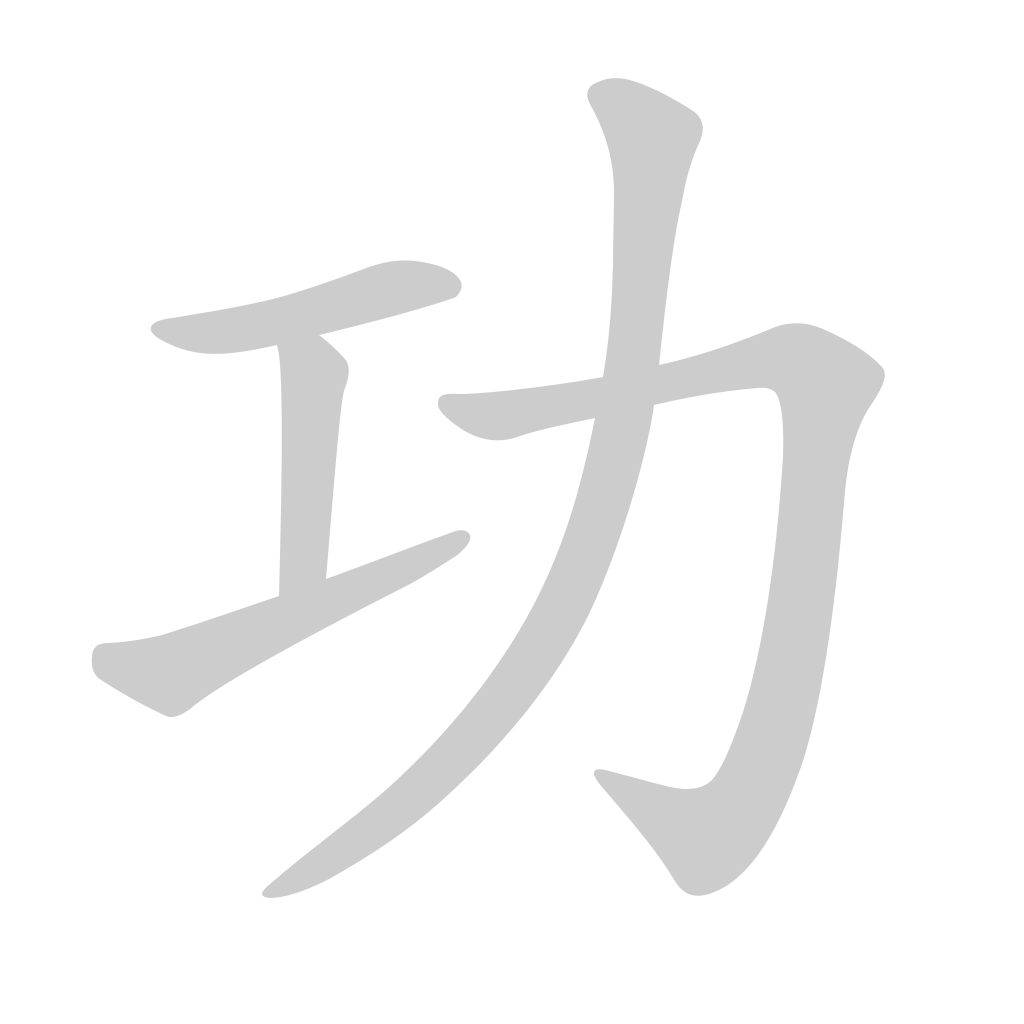
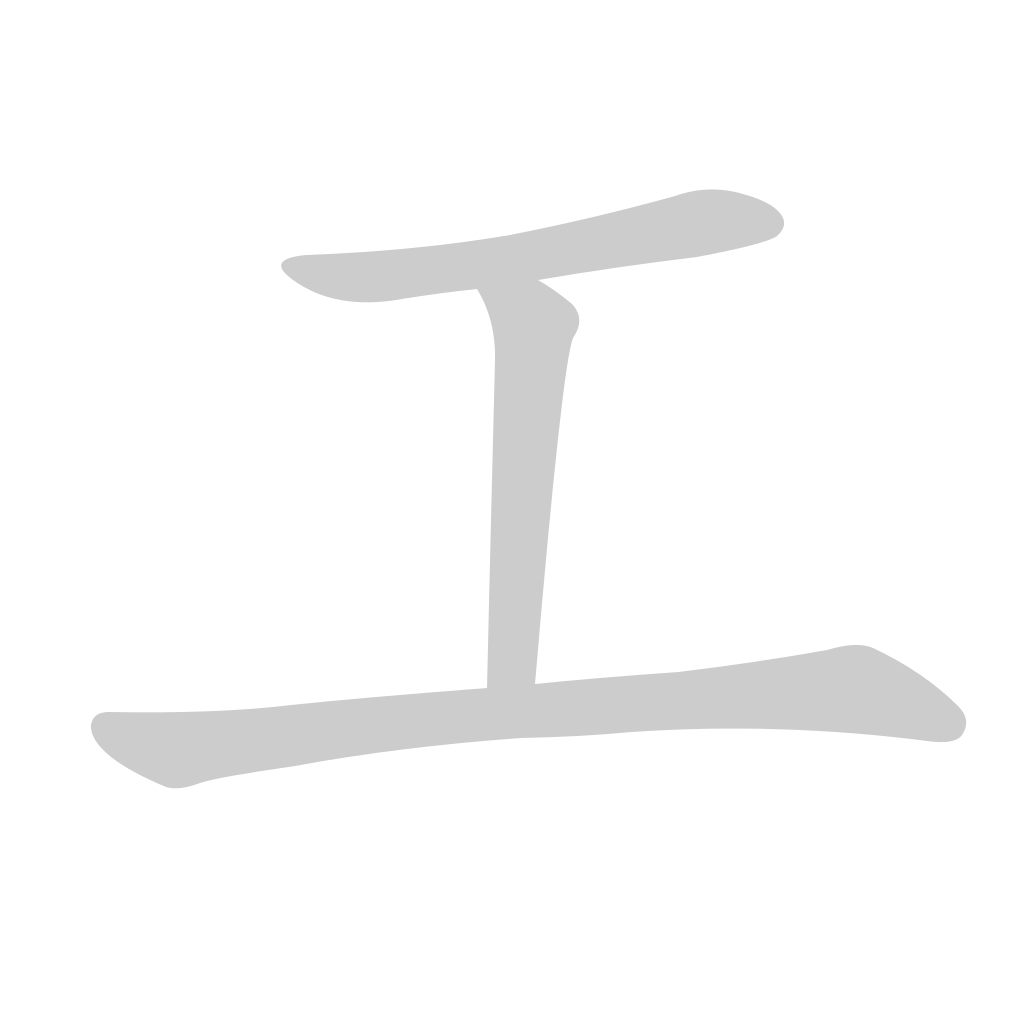
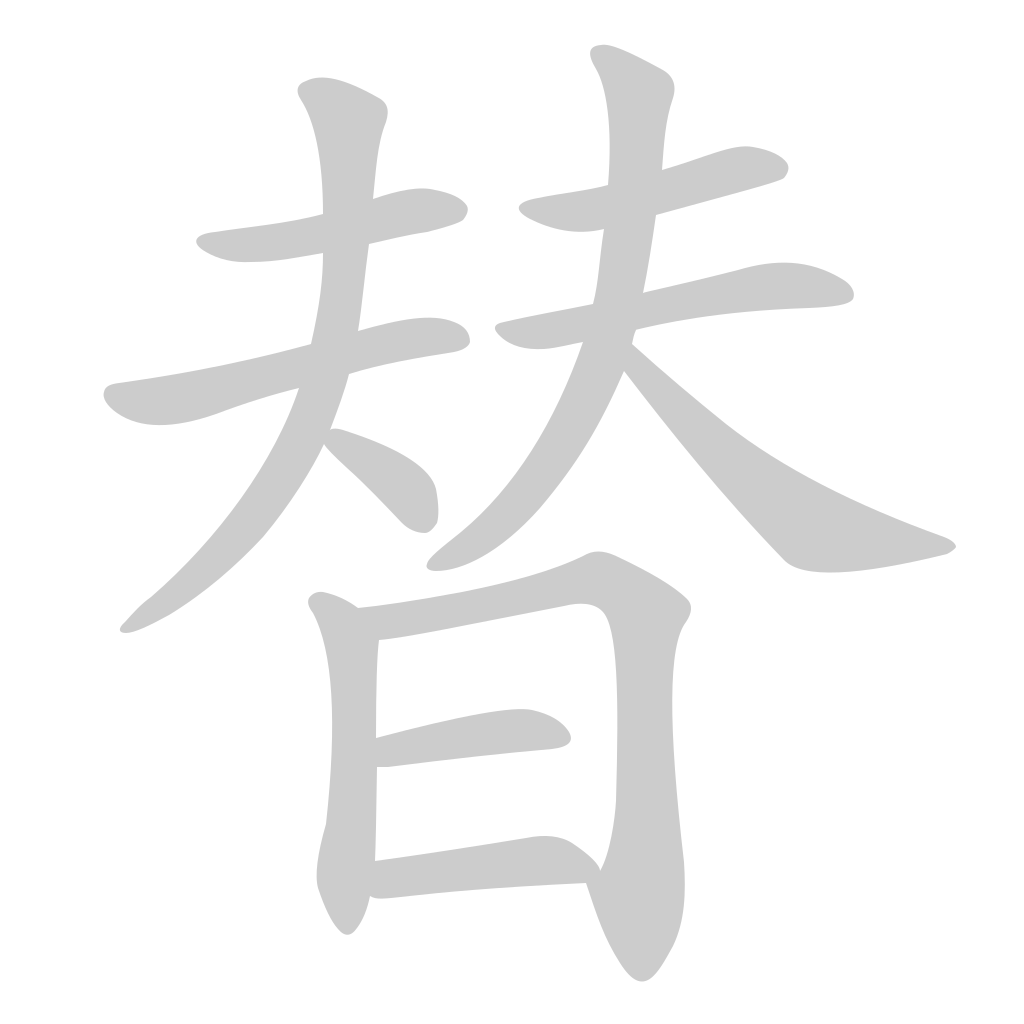
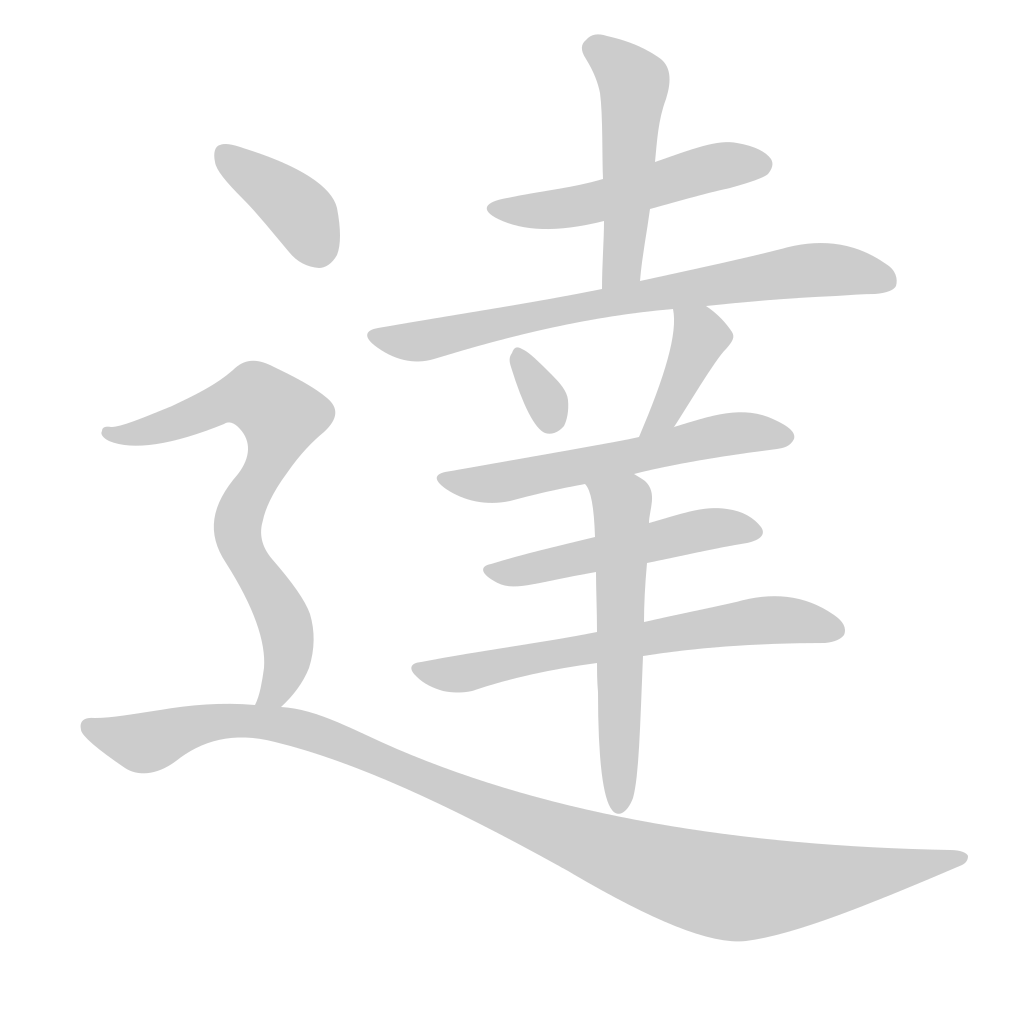
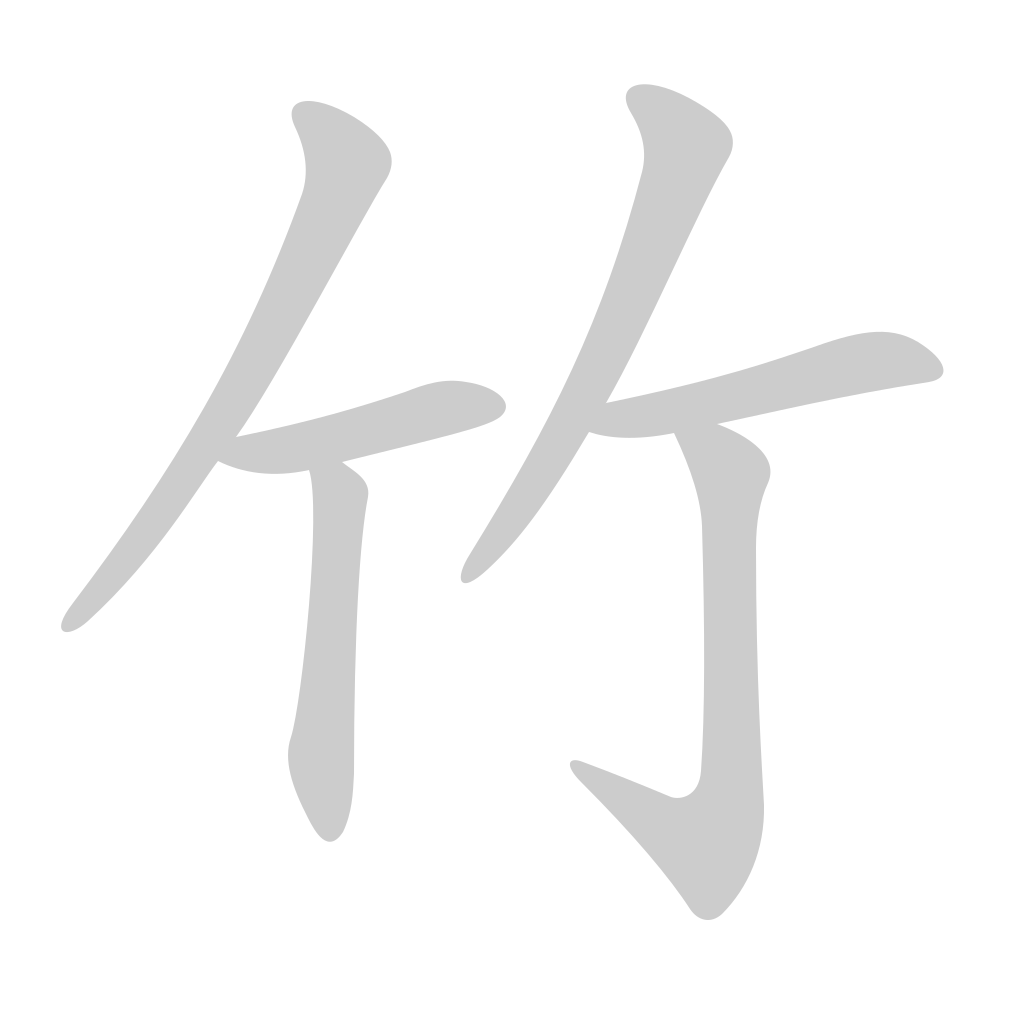
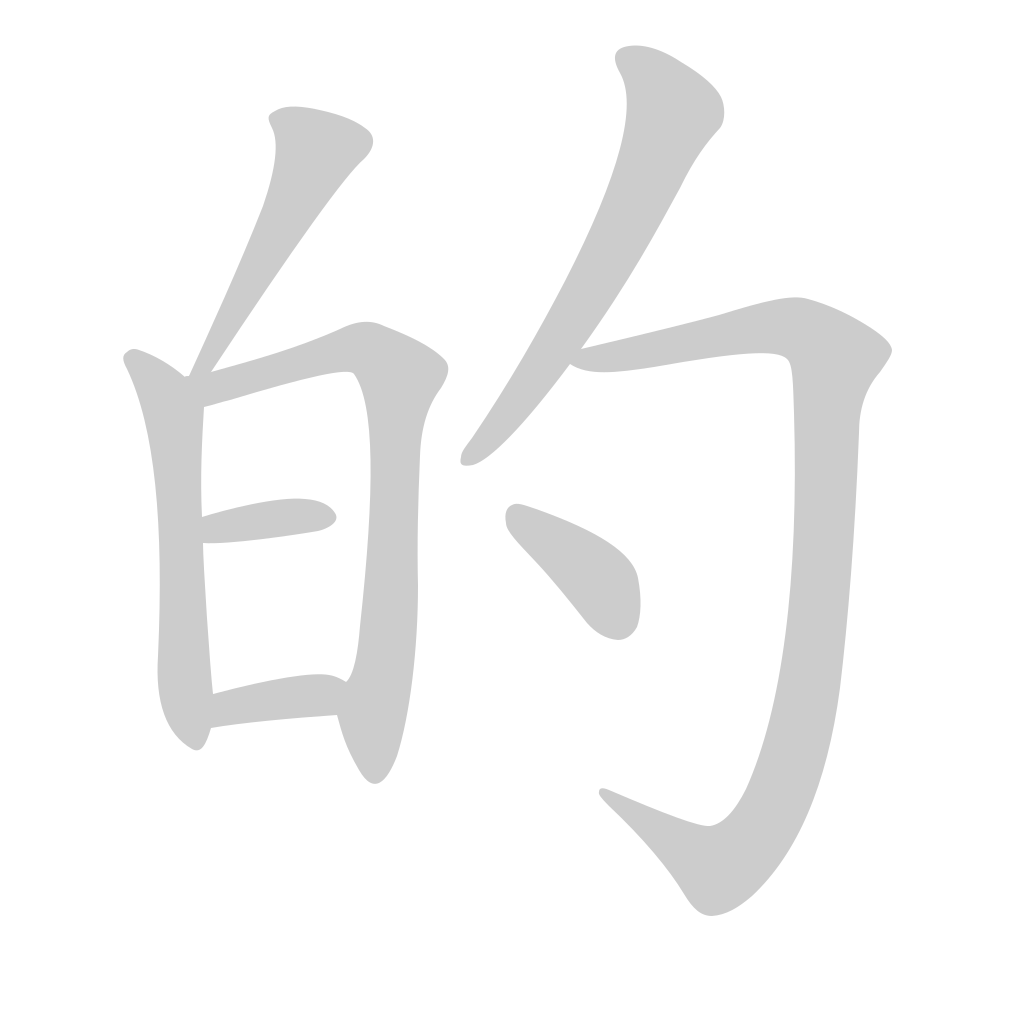
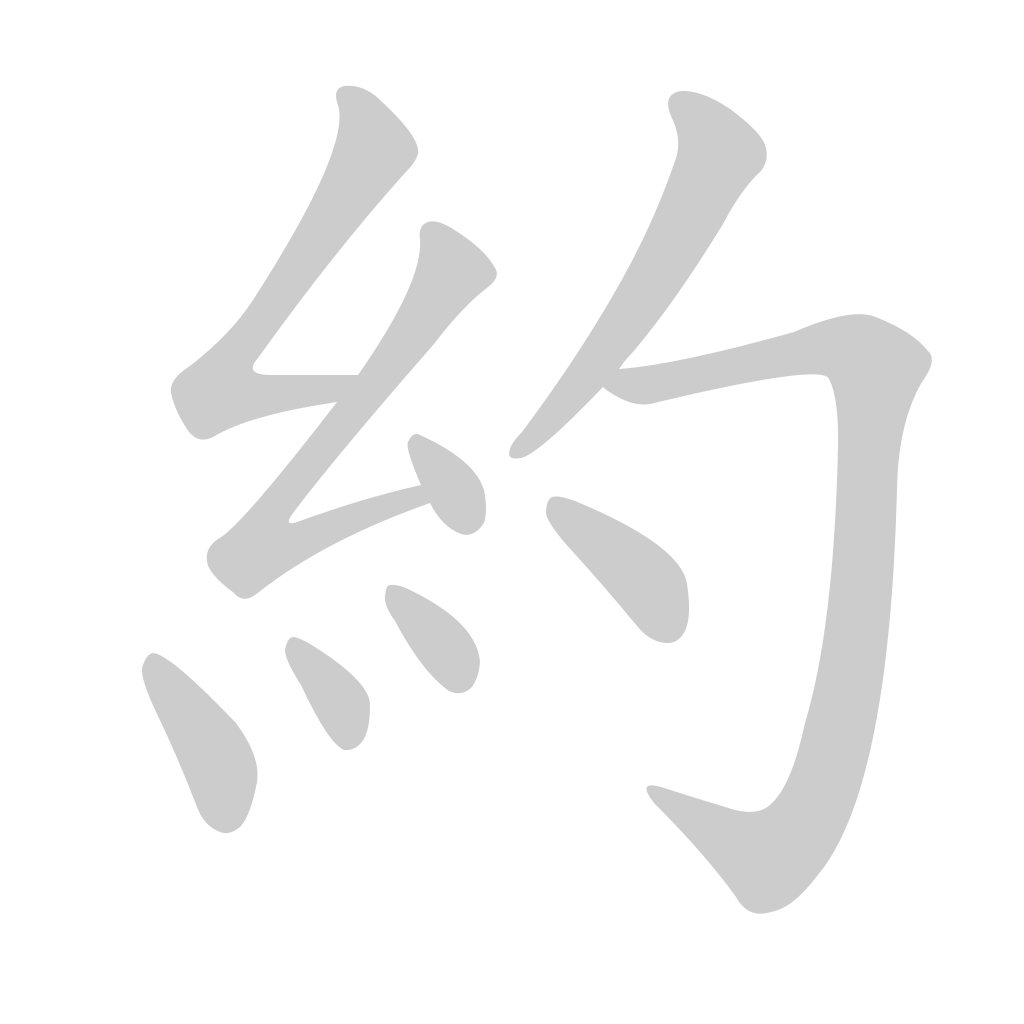
PNGs are generated from KanjiVG using
kanjivg-to-png, so each image shows the character being built stroke by stroke in panels. AnimCJK links open animated versions in a browser.
Per-Kanji Entries
374 — 功 (achievement, merits, success) — 5 strokes
Radical: ⼒ (ちから — "power") · 5 strokes total
Components & function — 形声 (phonosemantic)
- 工 (sound + meaning, left): 工【コウ】→ 功【コウ】 ✓ — exact phonetic match; 工 also contributes "work / craft" semantically
- 力 (semantic, right): power, effort
- "Work + power" → "achievement, merit, distinguished service". The 工 supplies both sound and the work-context; 力 anchors the sense of effort that produces the achievement.
- Pair with 工 (Lesson 21 #375): 功 IS 工 + 力. The 工 IS the phonetic root of 功. Recognise 工 on sight as the コウ source.
Stroke order
- Structure: left 工 (3 strokes — top horizontal, vertical, bottom horizontal) → right 力 (2 strokes)
- Watch: 工 first, completely. Then 力 to the right: small slash, then horizontal-and-hook curving down.
- Common error: making 力 too tall — keep it sized to match 工's height.
375 — 工 (craft, construction, katakana e radical (no. 48)) — 3 strokes
Radical: ⼯ (たくみ — "work, carpenter, skill") · 3 strokes total
Components & function — 象形 (pictographic)
- 工 is itself a pictograph — historically depicting a carpenter's square or a similar measuring/construction tool
- The whole character IS the radical. No further decomposition.
- Phonetic role: 工 is one of the cleanest phonetic roots in the joyo set — coming up in 功【コウ】 (this lesson), 攻【コウ】 (attack), 紅【コウ】(crimson), 江【コウ】(river/inlet), 空【クウ】 (sky — variant). Always read 工 as コウ in compounds.
Stroke order
- Structure: 3 strokes — top horizontal, vertical, bottom horizontal
- Watch: standard top-down. The bottom horizontal is slightly wider than the top.
- Common error: writing the vertical first (it's second). Or making the horizontals equal length — bottom should be visibly wider.
376 — 賛 (approve, praise, title or inscription on picture) — 15 strokes
Radical: ⾙ (かい — "shell, property, wealth") · 15 strokes total
Components & function — 会意 (compound ideograph)
- 兟 (top — twin 先/兂 forms): two people stepping forward, signalling agreement / advancing together
- 貝 (bottom, semantic): shell / wealth — historically the symbol of valuables; here it indicates the formal/material weight of public approval
- "Two people stepping forward together with valuables" → "approve, support, praise". The compound captures public, formal endorsement.
- Reading: サン is conventional. The character is its own phonetic root for some derivatives.
Stroke order
- Structure: top 兟 (twin 8-stroke shapes side by side) → bottom 貝 (7 strokes)
- Watch: this is a high-stroke kanji (15). Top half: write left 先-like component fully, then right 先-like component fully. THEN 貝 below.
- Common error: the top components look like 先 but are slightly different — they share an earlier glyph form. Just write them as 先 and you'll be fine.
377 — 成 (turn into, become, get) — 6 strokes
Radical: ⼽ (ほこ — "spear, weapon") · 6 strokes total
Components & function — 会意 (compound ideograph)
- 戊 (the bulk of the character): a halberd / spear shape
- 丁 (small inner mark, top-left): "complete" or a peg-and-block
- Composite picture: a weapon being completed/finished → "to bring to completion, become, accomplish". The 戊-frame plus the small inner stroke captures the completion sense.
- Reading: セイ in most compounds. The rare ジョウ appears only in 成就 (じょうじゅ — accomplishment in religious/formal sense).
Stroke order
- Structure: 6 strokes — top horizontal-with-hook, vertical sweeping down-left, then a wide right-curving sweep, with two small inner marks
- Watch: 成 has a tricky stroke order. 1) short top horizontal with downward hook on the right. 2) left-falling sweep. 3) wide horizontal-and-curve on the right. 4) inner short stroke. 5) inner small mark. 6) final dot.
- Common error: this is one of the most-commonly-miswritten basic kanji. Practice the order from the SVG diagram a few times — the inner strokes go LATE, not early.
378 — 束 (bundle, sheaf, ream) — 7 strokes
Radical: ⽊ (き — "tree, wood") · 7 strokes total
Components & function — 会意 (compound ideograph)
- 木 (tree/wood, base shape) with a 口-like loop tied around the middle
- "A tree with something tied around it" → "a bundle, sheaf, things bound together". The 木 anchors the wood/material; the surrounding loop captures the binding.
- Phonetic role: 束 is itself a phonetic root for 速【ソク】 (Lesson 21 #379). Recognise 束 on sight as the ソク source.
Stroke order
- Structure: 7 strokes — outer 木-frame with the inner loop crossed by a vertical
- Watch: write the top horizontal first, then the long vertical (which extends through to the bottom), then the 口-like cross-strokes mid-character, then the two outer slanting strokes at the bottom.
- Common error: confusing with 朿 (rare) — 束 has a clean rectangular middle; treat it as 木 with a loop in the middle.
379 — 速 (quick, fast) — 10 strokes
Radical: ⾡ (しんにょう — "road, walk, to advance") · にょう · 10 strokes total
Components & function — 形声 (phonosemantic)
- 束 (sound, inner): 束【ソク】→ 速【ソク】 ✓ — exact phonetic match
- 辶 (semantic, road/motion): going, advancing
- "Carrying a bundle along a path quickly" → "fast, quick, swift". The 辶 supplies "going"; the 束 supplies the sound and reinforces the carrying-something-bundled image.
- Pair with 束 (Lesson 21 #378): 速 IS 束 + 辶. The 束 IS the phonetic root of 速.
Stroke order
- Structure: inner 束 (7 strokes) → 辶 (3 strokes — written LAST as a にょう wrapper)
- Watch: standard にょう pattern — write everything inside 辶 first (the full 束), then 辶 wraps as the final 3 strokes.
- Common error: starting with 辶 — it always comes LAST in にょう-radical kanji. Same rule as 巡 (Lesson 44), 達 (this lesson), 適 (Lesson 45), etc.
380 — 替 (exchange, spare, substitute) — 12 strokes
Radical: ⽈ (ひ — "sun, day, time") · 12 strokes total
Components & function — 会意 (compound ideograph)
- 兂兂 / 夫夫 (top): two 夫 (man) glyphs side by side — "two men" or alternates
- 日 (bottom, semantic): sun / time
- "Two figures replacing each other over time" → "exchange, replace, substitute". The doubled top captures the alternation; 日 anchors the temporal sequence.
- ⚠️ Radical is 日 but most semantic weight is in the doubled top component; 日 here is the dictionary filing radical.
Stroke order
- Structure: top doubled component (8 strokes — 4 strokes × 2) → bottom 日 (4 strokes)
- Watch: write the top-LEFT component fully (all 4 strokes), then the top-RIGHT component fully (all 4 strokes), THEN 日 underneath.
- Common error: starting 日 too early or interleaving with the top — strict top-then-bottom.
381 — 達 (accomplished, reach, arrive) — 12 strokes
Radical: ⾡ (しんにょう — "road, walk, to advance") · にょう · 12 strokes total
Components & function — 会意 (compound ideograph)
- 羊 (sheep, top inner): historically a sheep glyph, possibly indicating the sound or a herd-leading metaphor
- 大 (big, sometimes seen below 羊 in older glyphs)
- 辶 (semantic, road/motion): going, advancing
- "Driving sheep along a path until arrival" → "to reach, arrive at, accomplish". The 辶 supplies the motion-toward-completion; the inner element historically referenced reaching a destination.
- Reading: タツ is conventional. The ダ in 友達 is a historical fixed reading, not really a clean ダ on'yomi.
Stroke order
- Structure: inner 羊+幸-like component (9 strokes) → 辶 (3 strokes — written LAST)
- Watch: standard にょう pattern. Write all the inner strokes first — the 羊-like top with three horizontals plus the 幸-like bottom — THEN 辶 wraps. Pace yourself: 12 strokes total.
- Common error: confusing the inner with 幸 (happiness) — the inner of 達 is similar but not identical to 幸. Look at the SVG carefully.
382 — 竹 (bamboo) — 6 strokes
Radical: ⽵ (たけ — "bamboo") · 6 strokes total
Components & function — 象形 (pictographic)
- 竹 is a pictograph of two bamboo stalks side by side, each with a leaf at the top
- The whole character IS the radical. No further decomposition.
- Use as a radical: 竹 in bamboo-cap form (⺮) appears at the top of many compound kanji related to bamboo objects (筆 brush, 笛 flute, 笑 laugh, 答 answer, 算 calculate, 等 equality). Always at the TOP, never side or bottom.
Stroke order
- Structure: 6 strokes — left stalk (3 strokes: short slash, horizontal-and-hook, vertical) → right stalk (3 strokes: same pattern)
- Watch: write the LEFT bamboo stalk completely before starting the RIGHT one. Each stalk is itself 3 strokes.
- Common error: writing the two stalks interleaved (alternating left and right strokes) — strict left-first.
383 — 的 (bull's eye, mark, target) — 8 strokes
Radical: ⽩ (はくへん — "white") · へん · 8 strokes total
Components & function — 形声 / 会意 (debated)
- 白 (semantic, left): white — historically a target was painted white for visibility
- 勺 (right): a ladle / small measure
- "A white ladle-shape mark" → "a target, a bull's eye". Later extended via the suffix-style ~的 (-tic, -al) to form adjectival nouns (民主的 = democratic, 理想的 = ideal).
- Reading: テキ in compounds. The kun reading まと is restricted to the literal "target" sense.
- Visual pair with 約 (Lesson 21 #384): both have 勺 on the right. Different left radical (白 vs 糸), and 約 derives its sound from 勺 while 的 doesn't.
Stroke order
- Structure: left 白 (5 strokes) → right 勺 (3 strokes — outer hook + inner short stroke + inner dot)
- Watch: 白 first (top short slash, then 日-like body of 4 strokes). Then 勺: the curving outer stroke first, then the inner dot/stroke last.
- Common error: confusing 勺 (3 strokes) with 句 (5 strokes — Lesson 46) — 勺 is just the outer hook + tiny inner mark; 句 has a full 口 inside.
384 — 約 (promise, approximately, shrink) — 9 strokes
Radical: ⽷ (いとへん — "thread") · へん · 9 strokes total
Components & function — 形声 (phonosemantic, with sound shift)
- 糸 (semantic, left): thread → tying, binding, agreement
- 勺 (sound, right): 勺【シャク】→ 約【ヤク】 — a recurring シャク → ヤク sound shift
- "Tying with a small measure" → "to make an agreement / promise / binding commitment". The 糸 anchors the binding sense; the 勺 supplies the sound.
- The "approximately" sense (約100人 ≈ 100 people) extends from "tied/contracted" → "an approximate amount fitting within the agreement".
- Visual pair with 的 (Lesson 21 #383): both have 勺 on the right. Only 約 derives its sound from 勺.
Stroke order
- Structure: left 糸 (6 strokes) → right 勺 (3 strokes)
- Watch: 糸 first — top short slash, two angled cross-strokes, then the bottom three small strokes. Then 勺: outer curving stroke, inner short stroke, final dot.
- Common error: confusing 約 with 紛 or 紋 — they all share the 糸 left-side. 約 specifically has 勺 on the right (3 strokes only).
Stroke & Component Patterns in This Lesson
The promoted-phonetic pattern — 工 → 功, 束 → 速
This chapter's headline pattern: TWO of its kanji are themselves phonetic roots that the chapter then EXTENDS into compound focus kanji using a single semantic component:
| Simple kanji | + extension | = focus kanji |
|---|---|---|
| 工 (work, コウ) | + 力 (power) | 功 (achievement, コウ) |
| 束 (bundle, ソク) | + 辶 (going) | 速 (fast, ソク) |
In each pair, the simple kanji IS the phonetic root, AND it ALSO contributes meaning to the compound. This is the most transparent kind of phonosemantic construction — drill the simple form, the compound becomes free.
にょう cluster — 速 達
Two of eleven kanji use 辶 (しんにょう). Both are 形声/会意 with the inner component supplying meaning + sometimes sound:
| Kanji | Inner | Role of inner |
|---|---|---|
| 速 | 束 | sound + meaning (carrying a bundle quickly) |
| 達 | 羊+幸-like | meaning (driving sheep to a destination) |
Standard にょう rule applies: write everything inside FIRST, then 辶 wraps as the FINAL strokes. Same as 巡 (Lesson 44), 適 (Lesson 45).
The 勺 visual cluster — 的 約
Both have 勺 (3 strokes) on the right side. Different sound origins (約 derives from 勺 → ヤク; 的 doesn't), but visual recognition transfers:
| Kanji | Left radical | Sound origin |
|---|---|---|
| 的 | 白 (white/target) | conventional テキ |
| 約 | 糸 (thread/binding) | 勺【シャク】→ 約【ヤク】 |
The kun-tied trio — 替 束 取り替える
替 (replace) is a kun-heavy kanji in this chapter — it appears mostly in compound verbs and noun phrases that READ kun (両替 = りょうがえ; 着替え = きがえ; 取り替える = とりかえる). Watch the か-/かえる-spelling carefully: the okurigana is 〜える for the trans verb, 〜わる for the intrans.
The simple-vs-compound trap — 工 vs 功, 束 vs 速
Both phonetic-root pairs share the same on'yomi (コウ for 工/功, ソク for 束/速). When reading vocabulary, the SIMPLE kanji often shows up alone (工事, 束); the COMPOUND kanji often shows up in derived words (成功, 速度). Memorising the pair means you don't need to remember "is this コウ or something else?" — both members of the pair share the reading.
Phonetic Series Summary (also in the workbook, repeated here for reference)
| Sound Component | Reading | In This Lesson | Other Common Kanji |
|---|---|---|---|
| 工 | コウ | 工, 功 | 攻 (attack), 紅 (crimson), 江 (river) |
| 束 | ソク | 束, 速 | 勅 (imperial edict — rare) |
| 勺 | シャク → ヤク | 約 | 酌 (pour), 釣 (fish) |
💡 Lesson highlight: Two of this chapter's kanji are themselves phonetic roots that have been promoted to focus kanji, then EXTENDED into their paired focus kanji this same lesson — 工 → 功 and 束 → 速. Both pairs carry their on'yomi cleanly: コウ for 工/功, ソク for 束/速.
Etymological decompositions are simplified for study purposes. For rigorous functional analysis, see the Outlier Kanji Dictionary (iOS/Android via Pleco). Free sources used: Wiktionary JP, Kanji Alive, on'yomi cross-referencing via WWWJDIC.
Sources
- KanjiVG — github.com/KanjiVG/kanjivg | License: CC-BY-SA 3.0
- kanjivg-to-png — github.com/nicdgonzalez/kanjivg-to-png
- AnimCJK — github.com/parsimonhi/animCJK | License: Arphic Public License
- Jisho.org — jisho.org | Uses KanjiVG data for stroke order diagrams.
- Outlier Linguistics — outlier-linguistics.com | The Outlier Kanji Dictionary is the gold standard for rigorous functional component analysis.