KIC Lesson 52 Kanji Reference
Table of Contents
- # Quick Reference
-
# Per-Kanji Entries
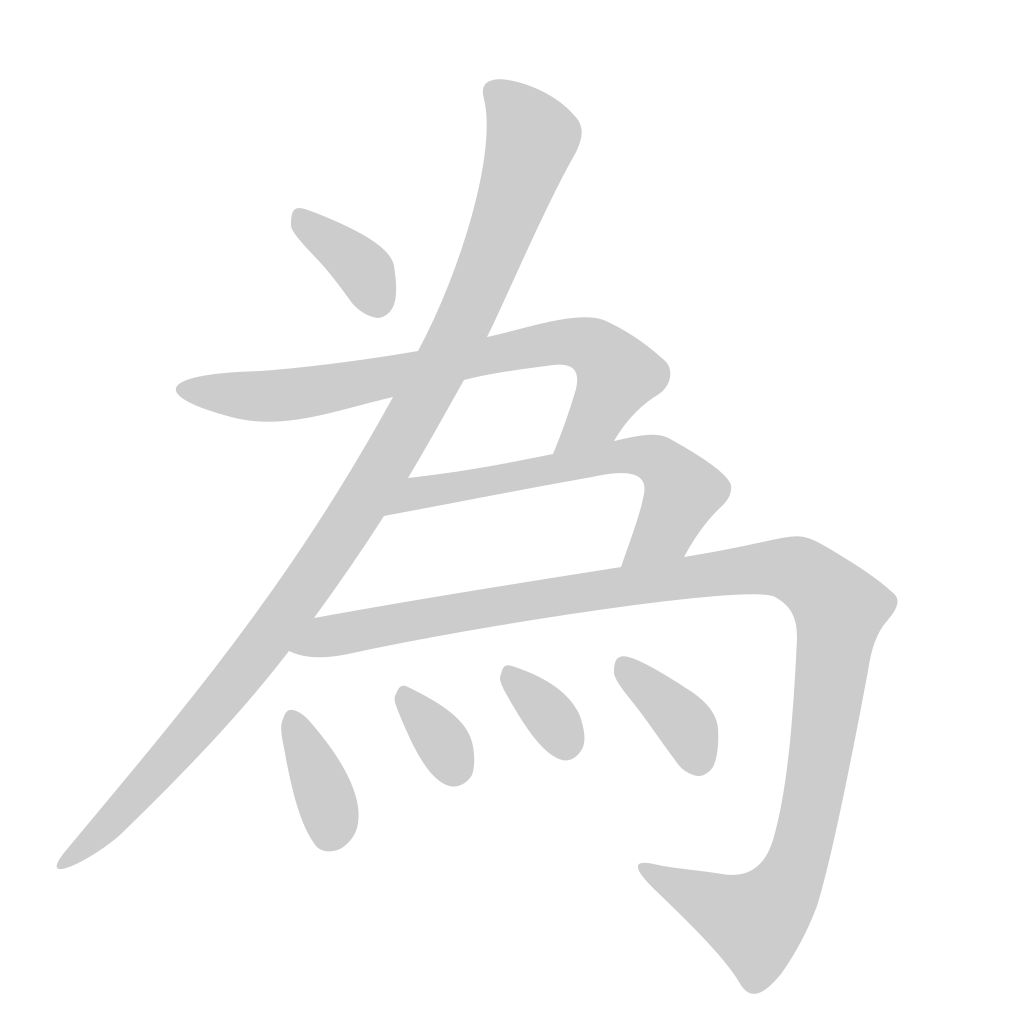
- ## 726 — 為 (do, change, make) — 9 strokes
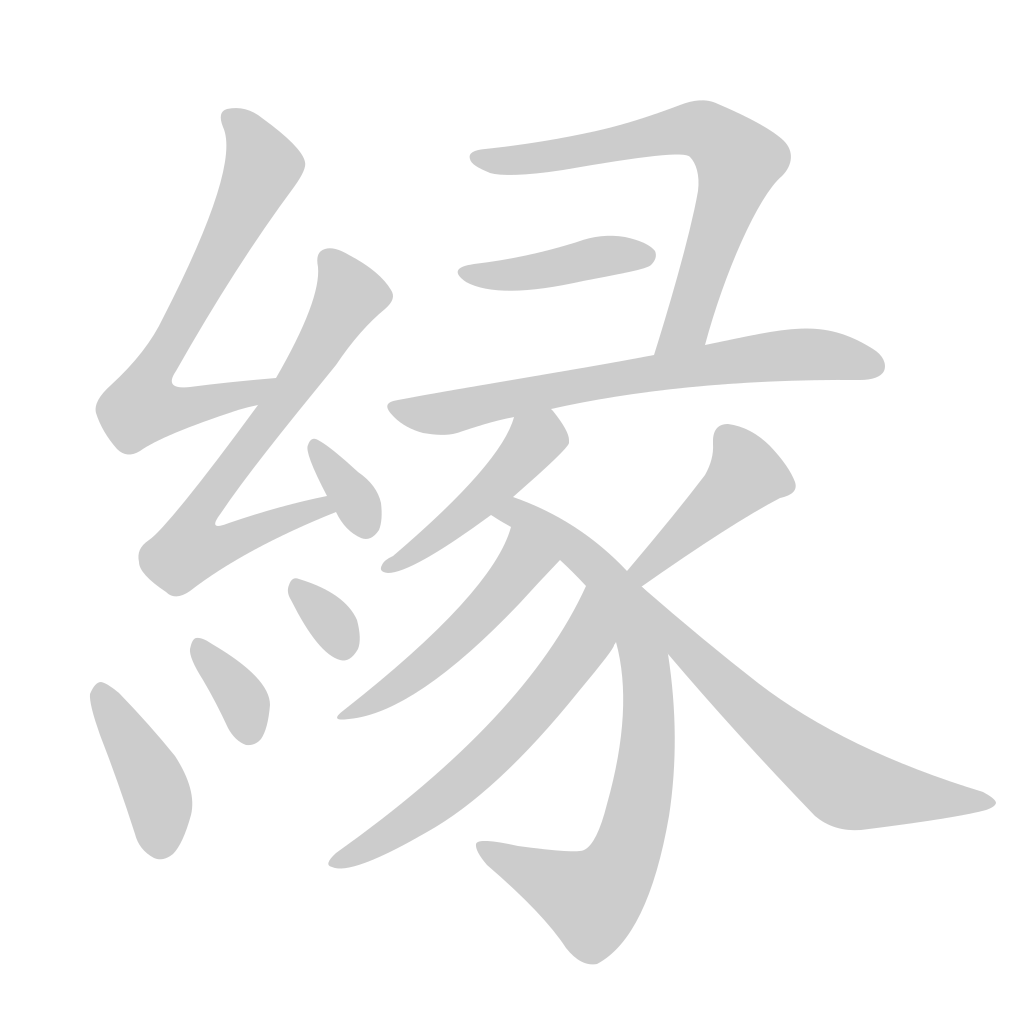
- ## 727 — 縁 (affinity, relation, connection) — 15 strokes
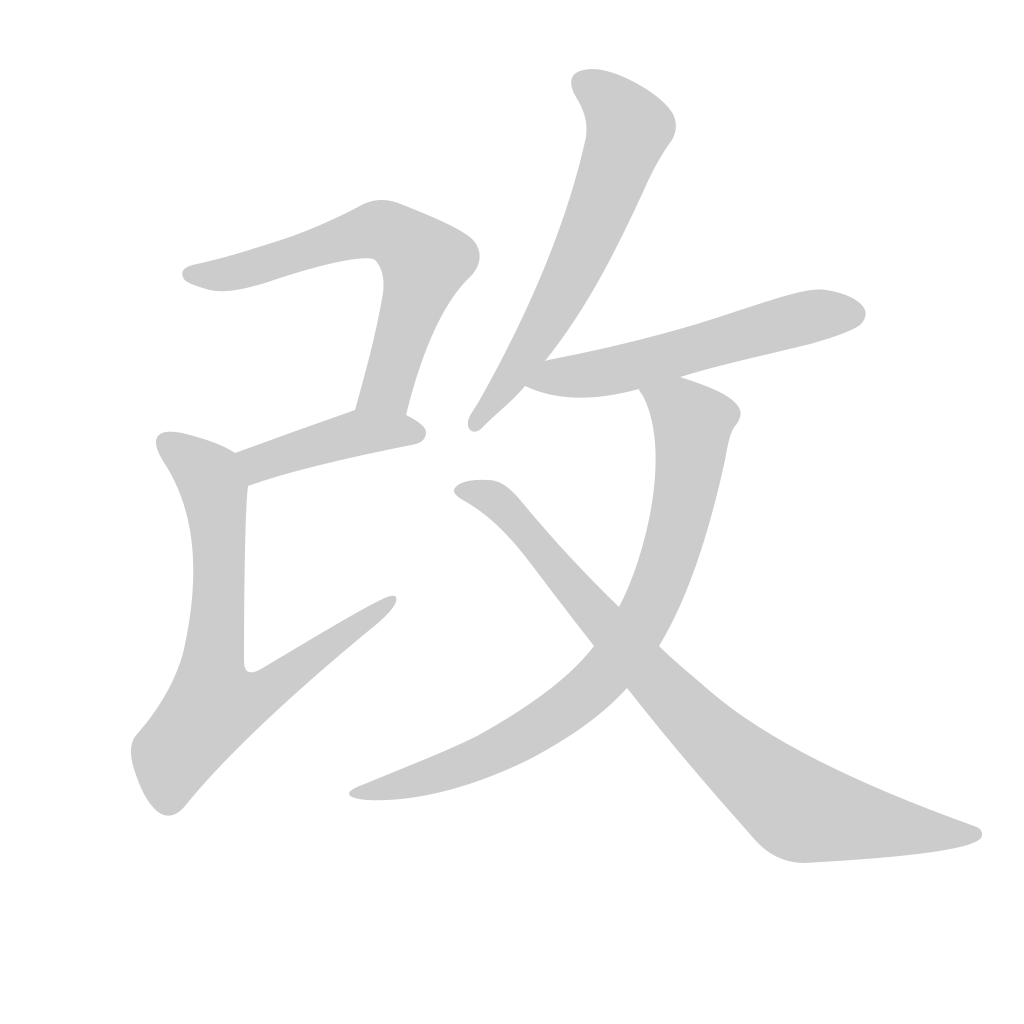
- ## 728 — 改 (reformation, change, modify) — 7 strokes
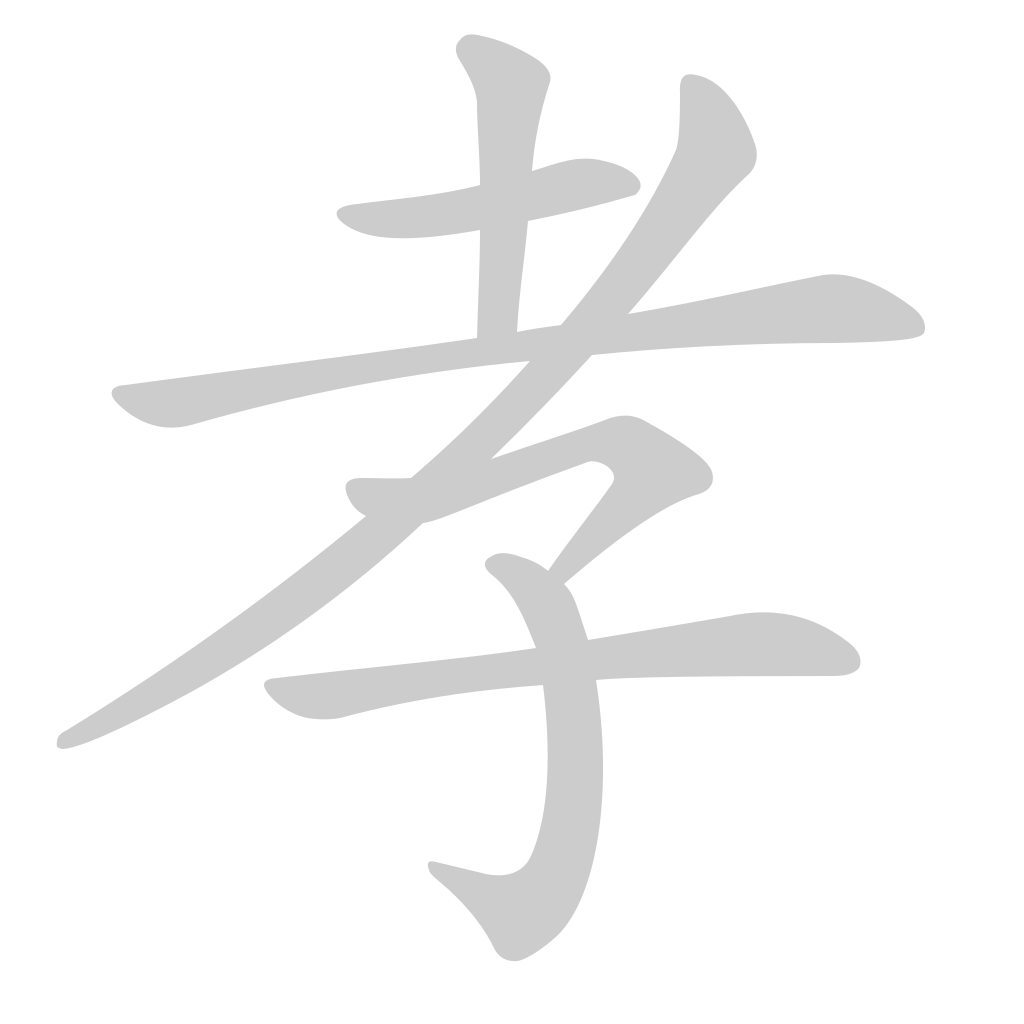
- ## 729 — 孝 (filial piety, child's respect) — 7 strokes
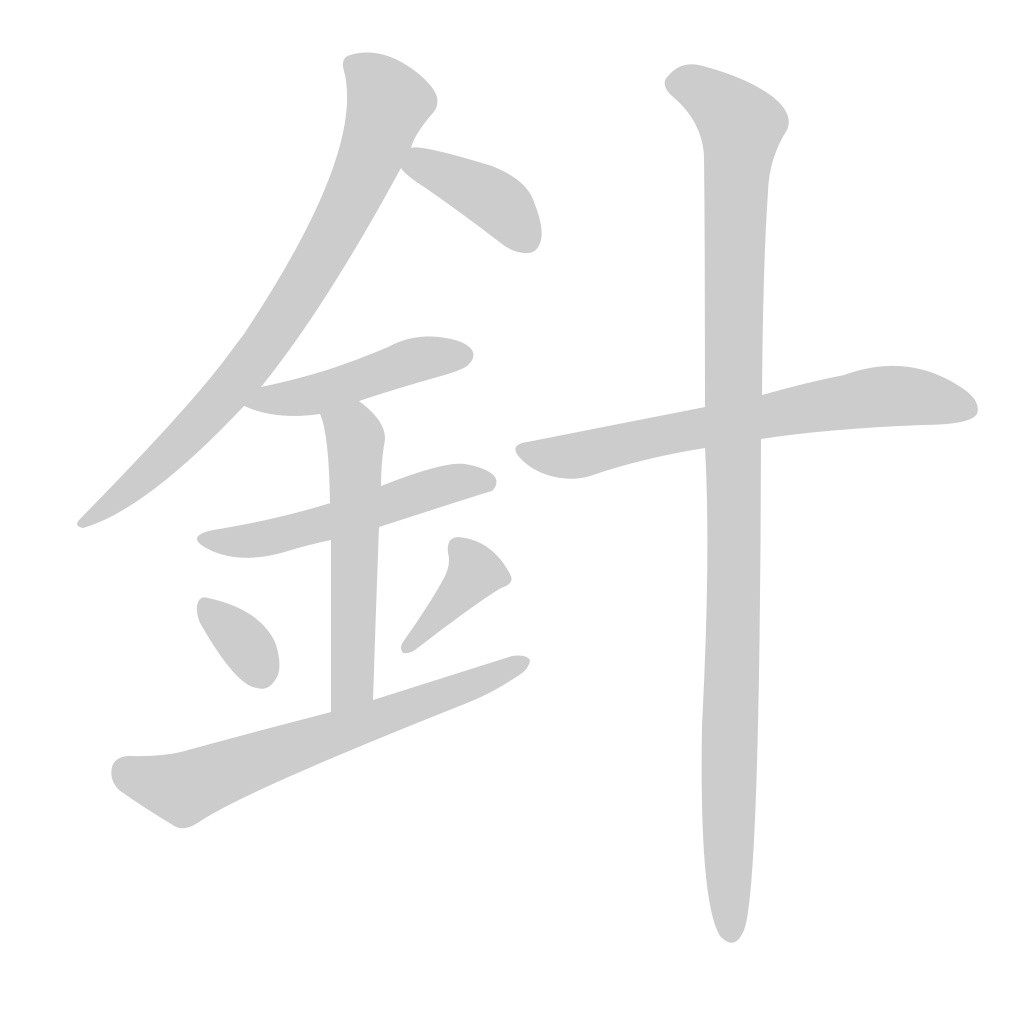
- ## 730 — 針 (needle, pin, staple) — 10 strokes
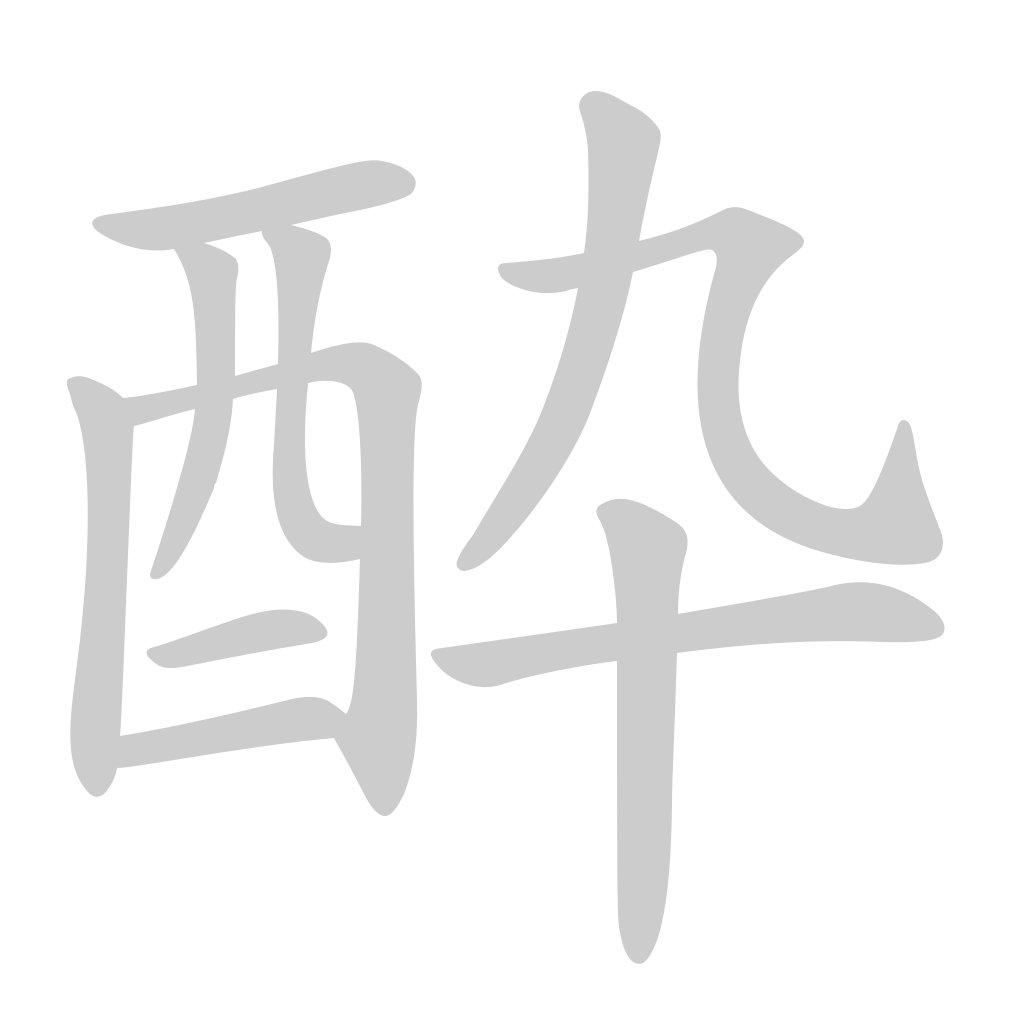
- ## 731 — 酔 (drunk, feel sick, poisoned) — 11 strokes
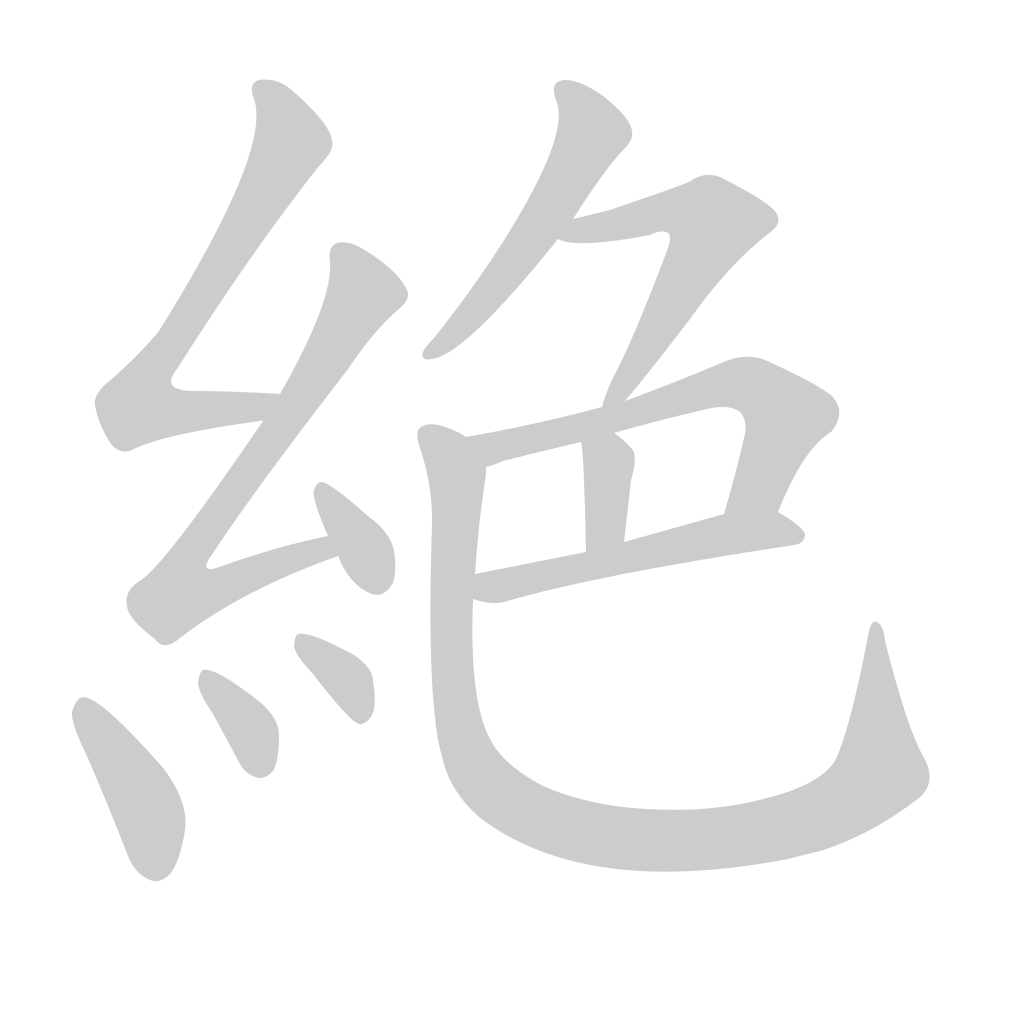
- ## 732 — 絶 (discontinue, sever, cut off) — 12 strokes
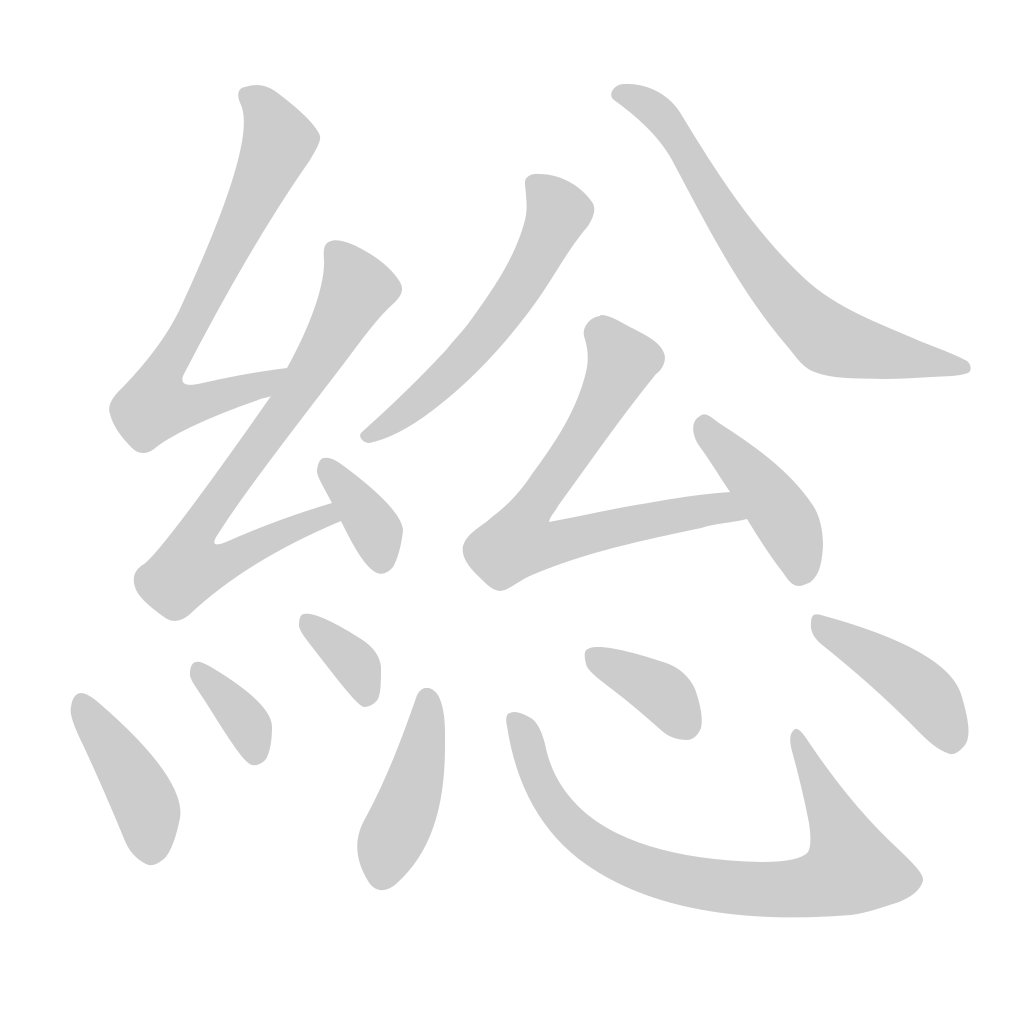
- ## 733 — 総 (general, whole, all) — 14 strokes
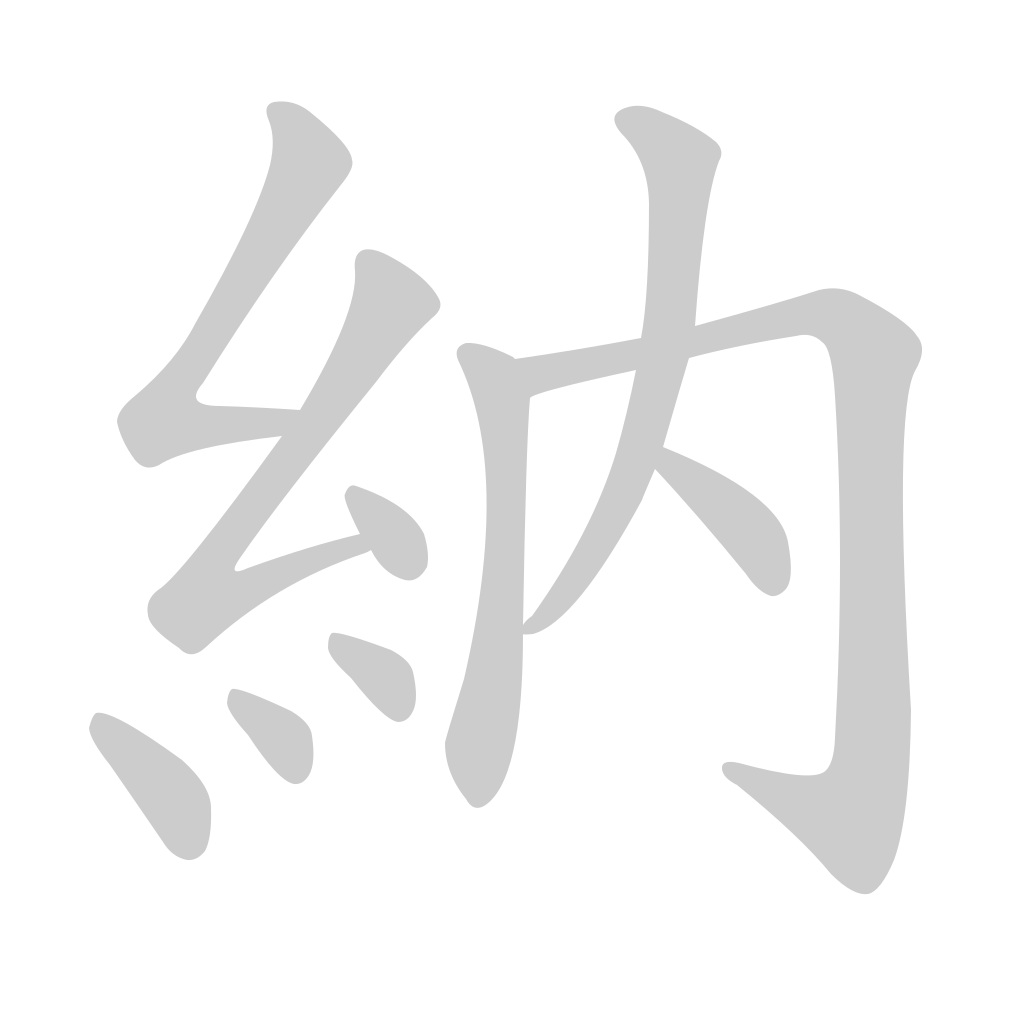
- ## 734 — 納 (settlement, obtain, reap) — 10 strokes
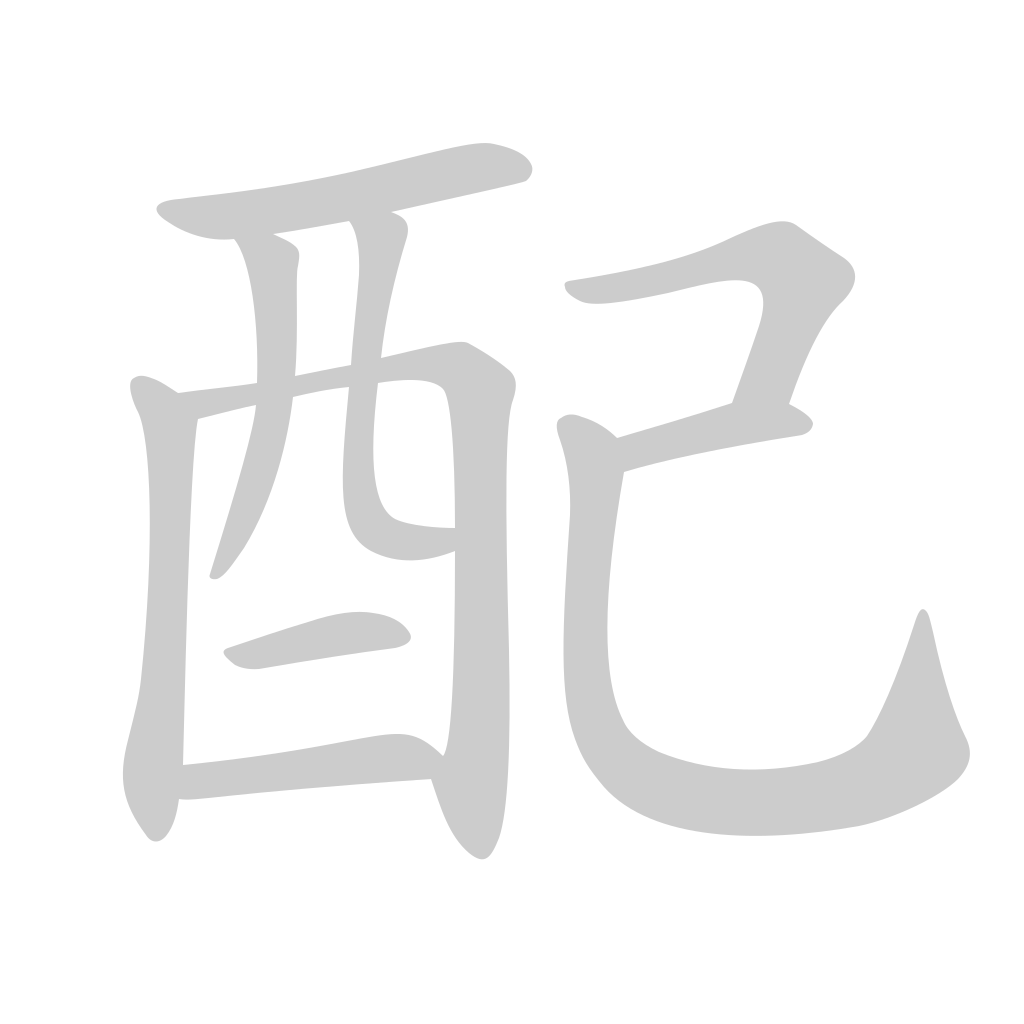
- ## 735 — 配 (distribute, spouse, exile) — 10 strokes
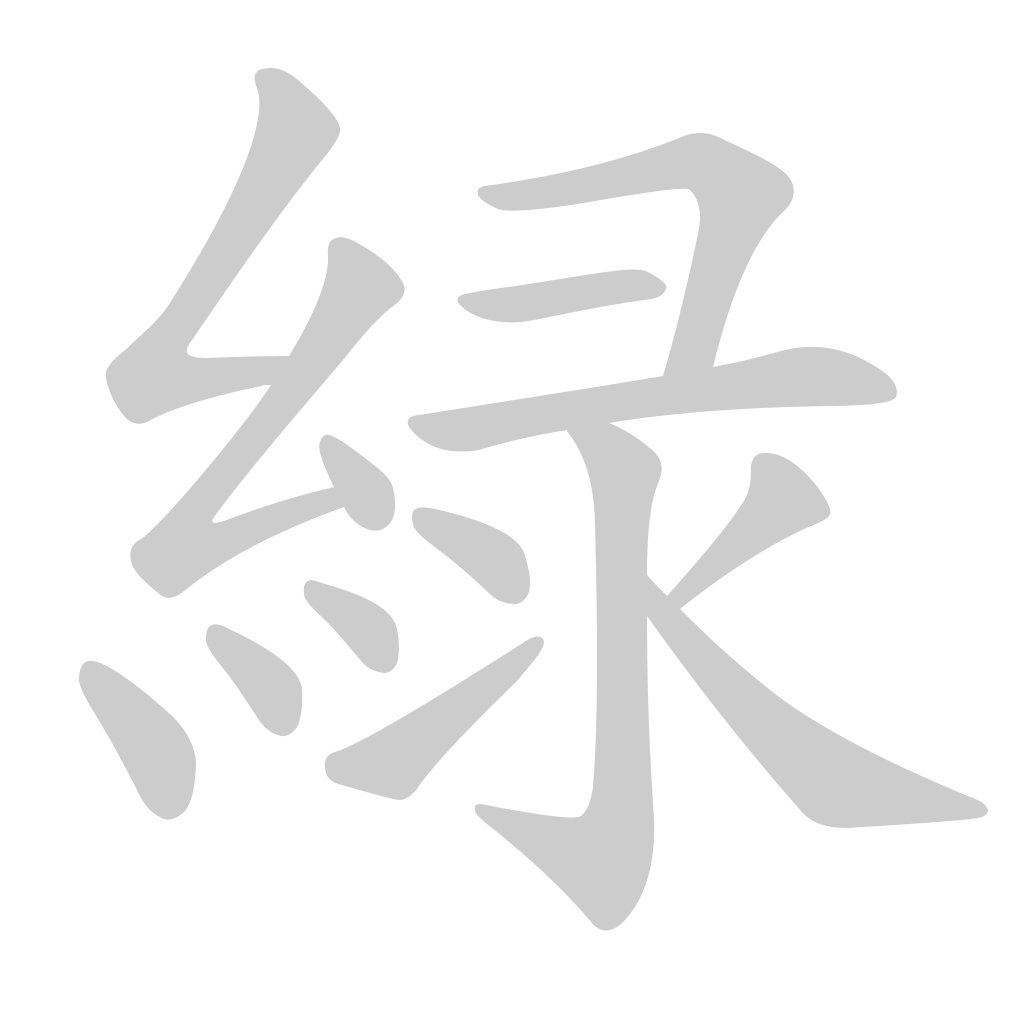
- ## 736 — 緑 (green) — 14 strokes
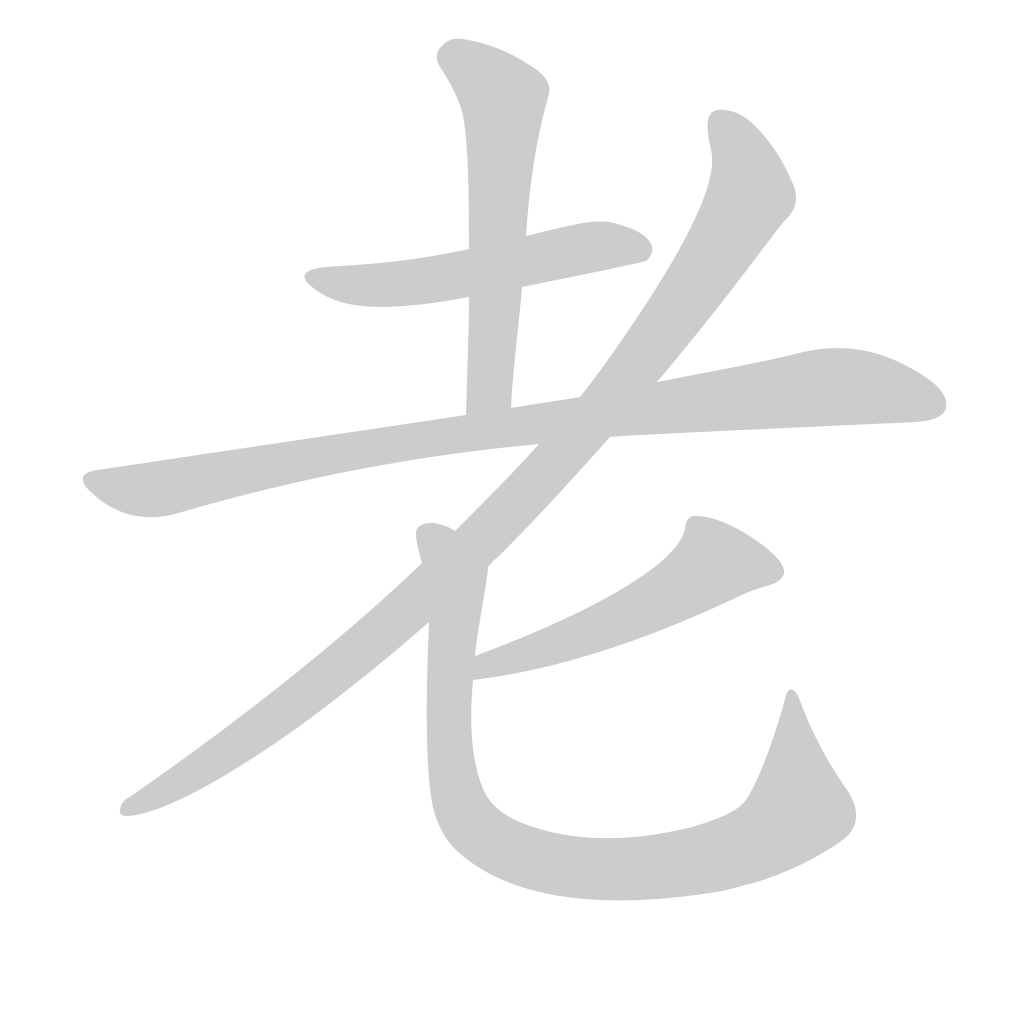
- ## 737 — 老 (old man, old age, grow old) — 6 strokes
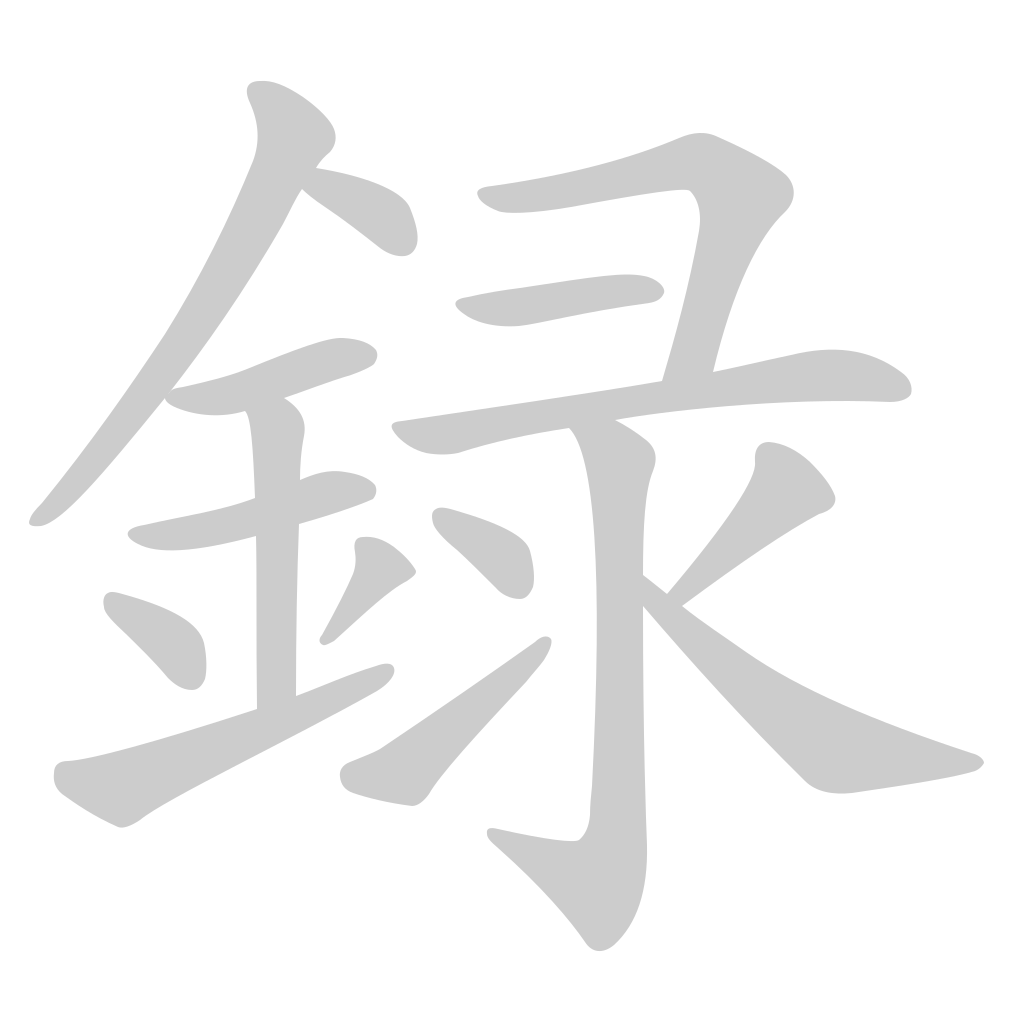
- ## 738 — 録 (record) — 16 strokes
- # Stroke & Component Patterns in This Lesson
- # Similar-Looking Kanji (Outside This Lesson)
- # Phonetic Series Summary (also in the workbook, repeated here for reference)
- # Sources
Lesson 52 — Characters 726–738: 為 縁 改 孝 針 酔 絶 総 納 配 緑 老 録 Companion to Workbook. The workbook handles articles, vocabulary, study aids, and self-test. This file is the structural deep-dive — radicals, functional components (meaning/sound/form), stroke order, and shared-component patterns.
Quick Reference
| # | Kanji | Stroke Order | Strokes | Radical | On'yomi | Kun'yomi | Links |
|---|---|---|---|---|---|---|---|
| 726 | 為 |  | 9 | ⽕ (fire) | イ | ため, な.る, な.す, す.る, たり, つく.る, なり | Jisho · AnimCJK |
| 727 | 縁 |  | 15 | ⽷ (thread) | エン, -ネン | ふち, ふち.どる, ゆかり, よすが, へり, えにし | Jisho · AnimCJK |
| 728 | 改 |  | 7 | ⽁ (activity) | カイ | あらた.める, あらた.まる | Jisho · AnimCJK |
| 729 | 孝 |  | 7 | ⼦ (child) | コウ, キョウ | (なし) | Jisho · AnimCJK |
| 730 | 針 |  | 10 | ⾦ (metal) | シン | はり | Jisho · AnimCJK |
| 731 | 酔 |  | 11 | ⾣ (sake jar) | スイ | よ.う, よ.い, よ | Jisho · AnimCJK |
| 732 | 絶 |  | 12 | ⽷ (thread) | ゼツ | た.える, た.やす, た.つ | Jisho · AnimCJK |
| 733 | 総 |  | 14 | ⽷ (thread) | ソウ | す.べて, すべ.て, ふさ | Jisho · AnimCJK |
| 734 | 納 |  | 10 | ⽷ (thread) | ノウ, ナッ, ナ, ナン, トウ | おさ.める, -おさ.める, おさ.まる | Jisho · AnimCJK |
| 735 | 配 |  | 10 | ⾣ (sake jar) | ハイ | くば.る | Jisho · AnimCJK |
| 736 | 緑 |  | 14 | ⽷ (thread) | リョク, ロク | みどり | Jisho · AnimCJK |
| 737 | 老 |  | 6 | ⽼ (old) | ロウ | お.いる, ふ.ける | Jisho · AnimCJK |
| 738 | 録 |  | 16 | ⾦ (metal) | ロク | しる.す, と.る | Jisho · AnimCJK |
PNGs are generated from KanjiVG using
kanjivg-to-png, so each image shows the character being built stroke by stroke in panels. AnimCJK links open animated versions in a browser.
Per-Kanji Entries
726 — 為 (do, change, make) — 9 strokes
Radical: ⽕ (ひ — "fire") · 9 strokes total
Components & function — 象形 / 会意 (structure debated)
- Traditional, widely-taught account: top = 爪 (a claw/hand), bottom = a stylized elephant body — "a hand leading an elephant to work," giving the general verb "to do, make, act." Modern epigraphy treats the "elephant" reading of the oracle-bone form as uncertain folk etymology rather than settled fact — treat it as a memory aid, not history.
- The ⽕ (fire) radical assigned by the modern dictionary is a shape classification of the bottom four strokes only — it carries no semantic "fire" content. A clean example of a radical that predicts nothing about meaning.
Stroke order
- Structure: top claw-shape (4 strokes) → bottom four short strokes (5 strokes, resembling 灬 but unrelated to fire)
- Watch: the bottom four strokes are easy to rush into a connected squiggle — keep them as distinct, separated strokes
- Common error: assuming the bottom is literally 火/灬 and expecting a fire-related meaning — there is none; it's a pure shape classification
727 — 縁 (affinity, relation, connection) — 15 strokes
Radical: ⽷ (いと — "thread") · 15 strokes total
Components & function — 形声 (phonosemantic)
- 左 糸 (semantic: thread/binding) — supplies the "something that threads together or borders two things" image, giving both meanings: "affinity/fate" (an invisible connecting thread) and "edge/rim" (a bordering hem).
- 右 彖 (phonetic — historically closer to えん, giving 縁's on'yomi エン). 彖's own meaning is unrelated (a pig-adjacent pictograph); it's borrowed purely for sound here.
Stroke order
- Structure: left 糸 (6 strokes) → right 彖 (9 strokes: an upper 彑-like element over a lower 豕-like element)
- Watch: 彖 is dense — keep its lower portion legible rather than compressing it into a blob; it has its own internal top-then-bottom sequence
- Common error: dropping 糸's small dot-tail at the bottom-right, which quietly changes the stroke count
728 — 改 (reformation, change, modify) — 7 strokes
Radical: ⽁ (ぼくづくり — "activity, to strike, hit") · つくり · 7 strokes total
Components & function — 会意 (left component's exact identity debated)
- 左 a self/serpent-shape (traditionally glossed as related to 己, though some sources treat it as a distinct 巳-variant rather than 己 itself)
- 右 攵 (semantic: activity/striking — the same family seen throughout the Jōyō set: 教, 政, 敬, 敗, 放)
- Traditional gloss: "to strike/act upon oneself" → to correct, reform, revise. The left component supplies what's being acted on — one's own conduct — giving the reflexive "self-correction" sense.
Stroke order
- Structure: left self-shape (3 strokes) → right 攵 (4 strokes)
- Watch: keep the left component compact — don't let it sprawl wider than 攵, or the character looks unbalanced
- Common error: rushing the left component's final hook into a straight vertical instead of curving it left
729 — 孝 (filial piety, child's respect) — 7 strokes
Radical: ⼦ (こ — "child, son") · 7 strokes total
Components & function — 会意 (compound ideograph)
- 上 耂 (abbreviated form of ⽼ "old/elderly")
- 下 子 (child)
- One of the most visually literal 会意 stories in the Jōyō set: an elderly-person-shape sitting atop a child-shape — a child supporting an elderly parent → filial piety, respect for one's elders.
Stroke order
- Structure: top 耂 (4 strokes) → bottom 子 (3 strokes)
- Watch: 耂's final stroke sweeps left below the horizontal — don't cut it short or it collapses toward 土
- Common error: confusing 耂 here with the visually similar top of 考 — same shape, unrelated word, easy to conflate (see Similar-Looking Kanji below)
730 — 針 (needle, pin, staple) — 10 strokes
Radical: ⾦ (かねへん — "metal, gold, mineral") · へん · 10 strokes total
Components & function — 形声 (phonetic contribution debated)
- 左 金 (semantic: metal) — consistent across 金-radical kanji (銀, 銅, 鉄, etc.)
- 右 十 — the modern Jōyō form's simplified stand-in. The historical/traditional character is 鍼 (used for acupuncture needles specifically), whose real phonetic component is 咸 (カン). 十 itself doesn't naturally give シン (十 alone reads ジュウ) — treat 針's on'yomi as memorized rather than derived from its visible right-hand shape.
Stroke order
- Structure: left 金 (8 strokes) → right 十 (2 strokes)
- Watch: keep 金's bottom two dots small and symmetrical — don't let them merge into the vertical stroke
- Common error: over-widening 金 so there's no room left for 十 on the right
731 — 酔 (drunk, feel sick, poisoned) — 11 strokes
Radical: ⾣ (ひよみのとり — "sake jar, bird") · 11 strokes total
Components & function — 形声 (loose phonetic match)
- 左 酉 (semantic: wine/sake jar — the radical itself is a pictograph of a jar)
- 右 卒 (an approximate historical sound source; the modern スイ vs. ソツ gap shows real drift — not a clean, predictable phonetic series)
- 酉 recurs across drinking/fermentation vocabulary (酒, 酌, 酸) — recognizing it flags "liquid/fermentation" content on sight. 卒's own meaning ("soldier," "graduate," "finish") is unrelated and contributes sound only.
Stroke order
- Structure: left 酉 (7 strokes) → right 卒 (4 strokes: 十 over fused simplified legs)
- Watch: keep 酉's internal horizontal lines evenly spaced — a common source of a cramped, uneven left side
- Common error: over-drawing 卒's lower portion as four full separate strokes instead of the fused simplified form
732 — 絶 (discontinue, sever, cut off) — 12 strokes
Radical: ⽷ (いとへん — "thread") · へん · 12 strokes total
Components & function — 会意 (compound ideograph)
- 左 糸 (thread)
- 右 a fused component historically combining a knife/seal shape — depicting a blade cutting through thread
- "Cutting the thread" → sever, discontinue, cut off — extended to the intensifier sense "absolute/utterly" (a clean cut leaves nothing partial), which is why 絶対 and 絶大 feel so different in force from 絶える at first glance.
Stroke order
- Structure: left 糸 (6 strokes) → right component (6 strokes)
- Watch: the right side's small internal turns are easy to smear together at speed — treat them as two distinct sub-strokes
- Common error: confusing the right-hand component with the bottom portion of 色 — superficially similar shape, unrelated kanji
733 — 総 (general, whole, all) — 14 strokes
Radical: ⽷ (いとへん — "thread") · へん · 14 strokes total
Components & function — 形声 (phonosemantic)
- 左 糸 (semantic: many strands gathered into one bundle → the whole, the aggregate)
- 右 悤 (phonetic ソウ — built from 囱 "window/chimney" over 心 "heart," historically "hurried/busy," borrowed here purely for sound)
- Note that 糸 contributes a different semantic role here than in 縁 or 絶 in this same lesson — direct evidence that a shared radical does not mean a shared modern meaning.
Stroke order
- Structure: left 糸 (6 strokes) → right 悤 (8 strokes: 囱-shape over 心)
- Watch: keep 悤's bottom 心 (two dots + a curving base) visually distinct from the box shape above it
- Common error: compressing 悤 until the bottom 心 disappears into a blob, losing the stroke count
734 — 納 (settlement, obtain, reap) — 10 strokes
Radical: ⽷ (いとへん — "thread") · へん · 10 strokes total
Components & function — 形声 / 会意 (structure debated)
- 左 糸 (thread/cloth — by extension, goods or tribute)
- 右 内 (semantic "inside," and a loose phonetic contributor — 内's own reading ナイ/ダイ is close enough to explain some of 納's on'yomi variants, though ノウ itself isn't a clean derivation)
- "Bringing goods inside" (a storehouse or treasury) → to pay in, deliver, store, settle. 納 is unusually reading-rich (ノウ, ナッ, ナ, ナン, and even トウ in 出納) — a case where per-compound memorization beats deriving readings from the component.
Stroke order
- Structure: left 糸 (6 strokes) → right 内 (4 strokes)
- Watch: close 内's enclosing box on all sides before adding the final internal stroke — don't leave a gap
- Common error: letting 内's internal stroke poke through the top of the box, a common speed-writing slip
735 — 配 (distribute, spouse, exile) — 10 strokes
Radical: ⾣ (とりへん — "sake jar, bird") · へん · 10 strokes total
Components & function — 会意 (compound ideograph)
- 左 酉 (sake jar)
- 右 己 (a kneeling person)
- A person kneeling beside a wine jar — originally depicting the ceremonial arranging/pairing of people at a wine-sharing rite (as in a wedding, hence the "spouse" sense: 配偶者), extended to the general "arranging/distributing" sense (配る, 配達).
Stroke order
- Structure: left 酉 (7 strokes) → right 己 (3 strokes)
- Watch: 己's hook at the bottom-right is the character's final stroke — don't finish early and omit it
- Common error: cramping 己 too small relative to 酉, throwing off the character's overall balance
736 — 緑 (green) — 14 strokes
Radical: ⽷ (いとへん — "thread") · へん · 14 strokes total
Components & function — 形声 (phonosemantic)
- 左 糸 (semantic: dyed thread/cloth — a common pattern for color names, cf. 紅 red, 紫 purple)
- 右 a phonetic component read ロク — a pictograph of disputed origin, associated with a well-pulley or a carving/filtering tool; purely a sound-carrier here
- Forms the lesson's cleanest phonetic pair with 録 (738): identical right-hand component, identical ロク reading.
Stroke order
- Structure: left 糸 (6 strokes) → right-hand component (8 strokes)
- Watch: the right-hand component's middle section has a small enclosed box — keep it small and centered so it doesn't crowd the strokes above and below
- Common error: merging the right-hand component's top and middle sections into a single stroke instead of the correct two-part sequence
737 — 老 (old man, old age, grow old) — 6 strokes
Radical: ⽼ (おいかんむり — "old, old-age") · かんむり · 6 strokes total
Components & function — 象形 (pictograph)
- A direct pictograph of an elderly person: long hair (top), bent back, and a cane or bent leg (bottom 匕-shape) — one of the most transparent pictographs remaining in the Jōyō set, with no separate "other component" to analyze.
- Its abbreviated top form, 耂, is the version that recurs as a component elsewhere — including this lesson's own 孝.
Stroke order
- Structure: top (hair + back, 4 strokes) → bottom 匕-shape (2 strokes: the bent leg/cane)
- Watch: the bottom-left stroke sweeps down-and-left before its final hook — resist making it a straight vertical
- Common error: writing the bottom as 七 (a similar-looking but differently-angled shape) instead of the correct 匕-like hook
738 — 録 (record) — 16 strokes
Radical: ⾦ (かねへん — "metal, gold, mineral") · へん · 16 strokes total
Components & function — 形声 (phonosemantic)
- 左 金 (semantic: metal — records were originally engraved onto metal or stone, bronze inscriptions being among the earliest Chinese record media; the sense later generalized to any kind of record — audio, video, written)
- 右 the same phonetic component (read ロク) as in 緑 above
- Forms the lesson's cleanest phonetic pair with 緑 (736): identical component, identical reading, only the semantic radical (糸 vs. 金) differs.
Stroke order
- Structure: left 金 (8 strokes) → right-hand component (8 strokes)
- Watch: the highest stroke count in the lesson (16) — pace the two halves evenly rather than rushing the second
- Common error: under-drawing 金's bottom two dots when rushing, which also throws off spacing for the right-hand component
Stroke & Component Patterns in This Lesson
The ⽷ (thread) cluster — 縁, 絶, 総, 納, 緑
Five of thirteen kanji in this lesson carry 糸 as their left-hand radical — the chapter's largest structural cluster, matching the density of Lesson 51's 攵 cluster. But where that cluster shared one consistent semantic role ("action performed on"), this one is different in kind: 糸's contribution ranges from the literal (dyed thread → color, in 緑) to the entirely metaphorical (a connecting thread → affinity, in 縁; a severed thread → discontinuation, in 絶; bundled threads → totality, in 総; cloth-as-tribute → payment, in 納).
| Kanji | Right component | Role of 糸 | Modern meaning |
|---|---|---|---|
| 縁 | 彖 (phonetic エン) | connecting/bordering thread | affinity, edge |
| 絶 | cutting-blade component | thread being severed | discontinue, absolute |
| 総 | 悤 (phonetic ソウ) | threads bundled together | general, whole |
| 納 | 内 (semantic "inside") | cloth/goods brought in | pay, store, settle |
| 緑 | shared with 録 (phonetic ロク) | dyed thread | the color green |
Takeaway: this is the chapter's strongest illustration of "radical tells you an origin, not a modern meaning." Seeing 糸 on an unfamiliar kanji is a genuinely weak predictor of what the word means today — treat it as a historical clue, not a semantic shortcut.
The 緑/録 phonetic pair (ロク)
The cleanest phonetic series in the lesson: both kanji carry the same right-hand component, and both read ロク (緑 additionally carries リョク in several compounds — 新緑, 緑地, 葉緑素 — while 録 is consistently ロク). Recognize that shared shape on sight as a reliable ロク signal.
The ⾣ (sake jar) pair — 酔, 配
Two kanji share 酉, but put it to very different structural use: 酔 pairs it with a phonetic component (卒) for "the effect of alcohol" (形声); 配 pairs it with 己 (a kneeling figure) in a 会意 story about ceremonial wine-sharing → arranging, pairing, distributing. Even a small two-kanji cluster can split cleanly between formation types.
耂 (abbreviated 老) — 孝, and 老 itself
老 is the source pictograph; its abbreviated top-component form 耂 reappears in 孝 (old person over child = filial piety) within this lesson. Outside it, 耂 also tops 者 and 考 — the resemblance to 考 in particular is worth flagging explicitly (see Similar-Looking Kanji below), since the two are genuinely easy to conflate at a glance.
Similar-Looking Kanji (Outside This Lesson)
These aren't this lesson's kanji, but they're easy to confuse with one when reading — different meaning, different (or coincidentally similar) reading, similar shape.
| This lesson's kanji | Looks like | Key difference | Why it matters |
|---|---|---|---|
| 老 (ロウ, old) | 考 (コウ, think) | Bottom: a 匕-hook (老) vs. a ノ+丂-hook (考) | Both trace to the same "elderly figure" pictograph family, and the shared 耂 top makes them easy to conflate at a glance — but the readings and modern meanings ("old" vs. "think/consider") are unrelated in practice. Check the bottom before committing to either. |
| 酔 (スイ, drunk) | 粋 (スイ, refined, chic) | Left radical: 酉 (sake jar) vs. 米 (rice) | Identical on'yomi, both built on the same 卒-derived right side — a genuine same-sound, same-shape trap. 酔う (get drunk) and 粋な (stylish) could not be further apart in meaning. |
| 総 (ソウ, general/total) | 窓 (ソウ, window) | Radical: 糸 (thread) vs. 穴 (hole/cave) | Same 悤/囱 phonetic core, same ソウ reading — this lesson's own phonetic pattern extends directly to 窓, one of the most common kanji in daily vocabulary. |
| 針 (シン, needle) | 計 (ケイ, measure, plan) | Left radical: 金 (metal) vs. 言 (word/speech) | Both end in the same simplified 十 shape on the right, collapsing into near-identical silhouettes at small sizes or handwriting speed — and 方針 (policy) and 計画 (plan) even show up together in the same sentences, raising the real-world confusion risk. |
Phonetic Series Summary (also in the workbook, repeated here for reference)
Phonetic Series Summary
| Sound Component | Reading | Kanji in this lesson | Notes |
|---|---|---|---|
| shared right-hand component of 緑/録 (carve/filter, disputed origin) | ロク | 緑, 録 | Clean pair — identical component, identical ロク reading. 緑 additionally carries リョク in several compounds (新緑, 緑地, 葉緑素); 録 is consistently ロク. |
| 悤 / 囱 (window, hasty) | ソウ | 総 | Singleton within the lesson, but a real series outside it: 窓 (window), 聡 (astute) — both also ソウ. |
💡 Lesson highlight: This chapter's structural spine is the 糸 (thread) cluster — five of thirteen kanji (縁, 絶, 総, 納, 緑) share 糸 as their left-hand radical, the lesson's largest cluster (matching Ch. 51's 攵 density). But unlike a true phonetic series, 糸 here is a weak predictor of modern meaning: it fans out from the literal "dyed thread" (緑, green) to entirely metaphorical uses (縁 affinity, 絶 severance, 総 totality, 納 payment) — a clean case study in "radical tells you an origin, not a definition." The chapter's one clean phonetic pair is 緑/録, both carrying the same right-hand component for an identical ロク reading. A second small cluster, 酔/配, shares 酉 (sake jar) but splits into different formation types (形声 vs. 会意) — even a shared radical doesn't guarantee a shared word-formation pattern.
Sources
- KanjiVG — github.com/KanjiVG/kanjivg | License: CC-BY-SA 3.0
- kanjivg-to-png — github.com/nicdgonzalez/kanjivg-to-png
- AnimCJK — github.com/parsimonhi/animCJK | License: Arphic Public License
- Jisho.org — jisho.org | Uses KanjiVG data for stroke order diagrams.
- Outlier Linguistics — outlier-linguistics.com | The Outlier Kanji Dictionary is the gold standard for rigorous functional component analysis.