KIC Lesson 23 Kanji Reference
Table of Contents
- # Quick Reference
-
# Per-Kanji Entries
- ## 395 — 員 (employee, member, number) — 10 strokes
- ## 396 — 然 (sort of thing, so, if so) — 12 strokes
- ## 397 — 損 (damage, loss, disadvantage) — 13 strokes
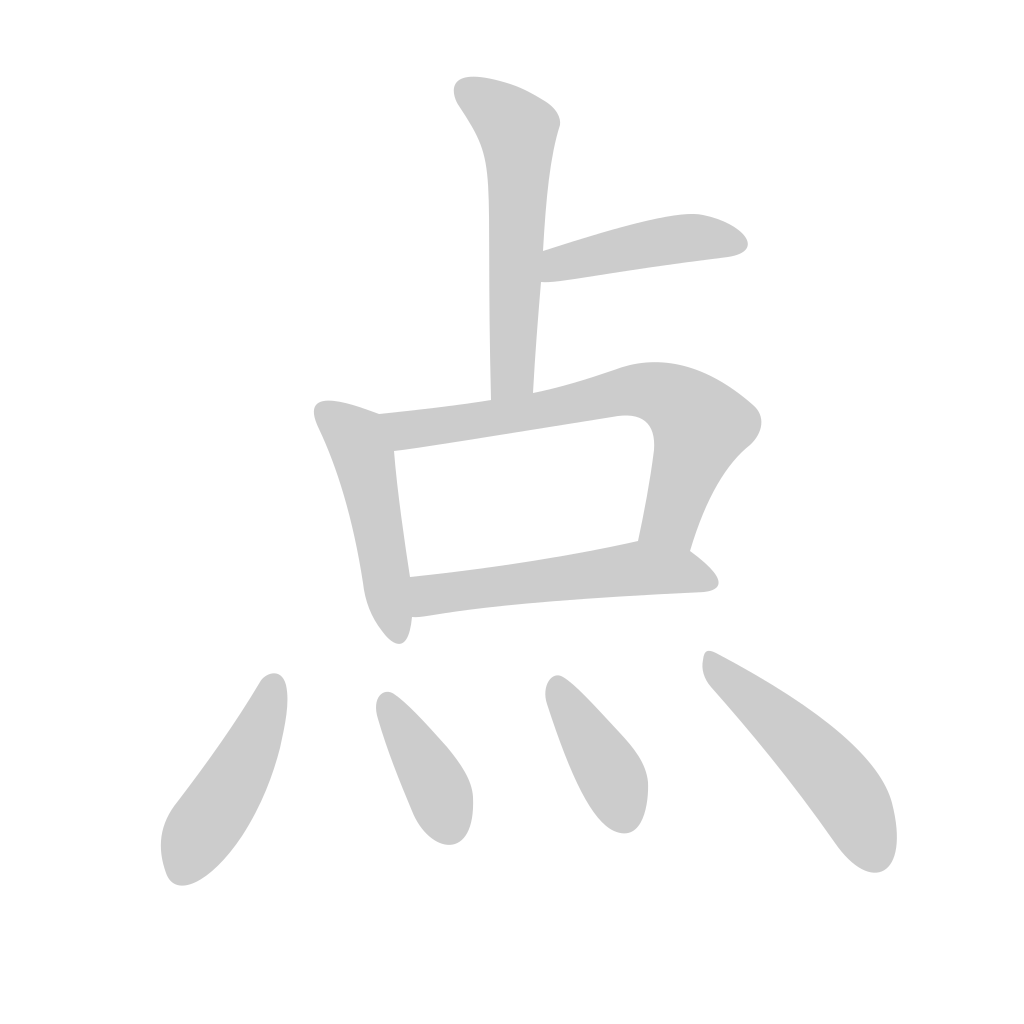
- ## 398 — 点 (spot, point, mark) — 9 strokes
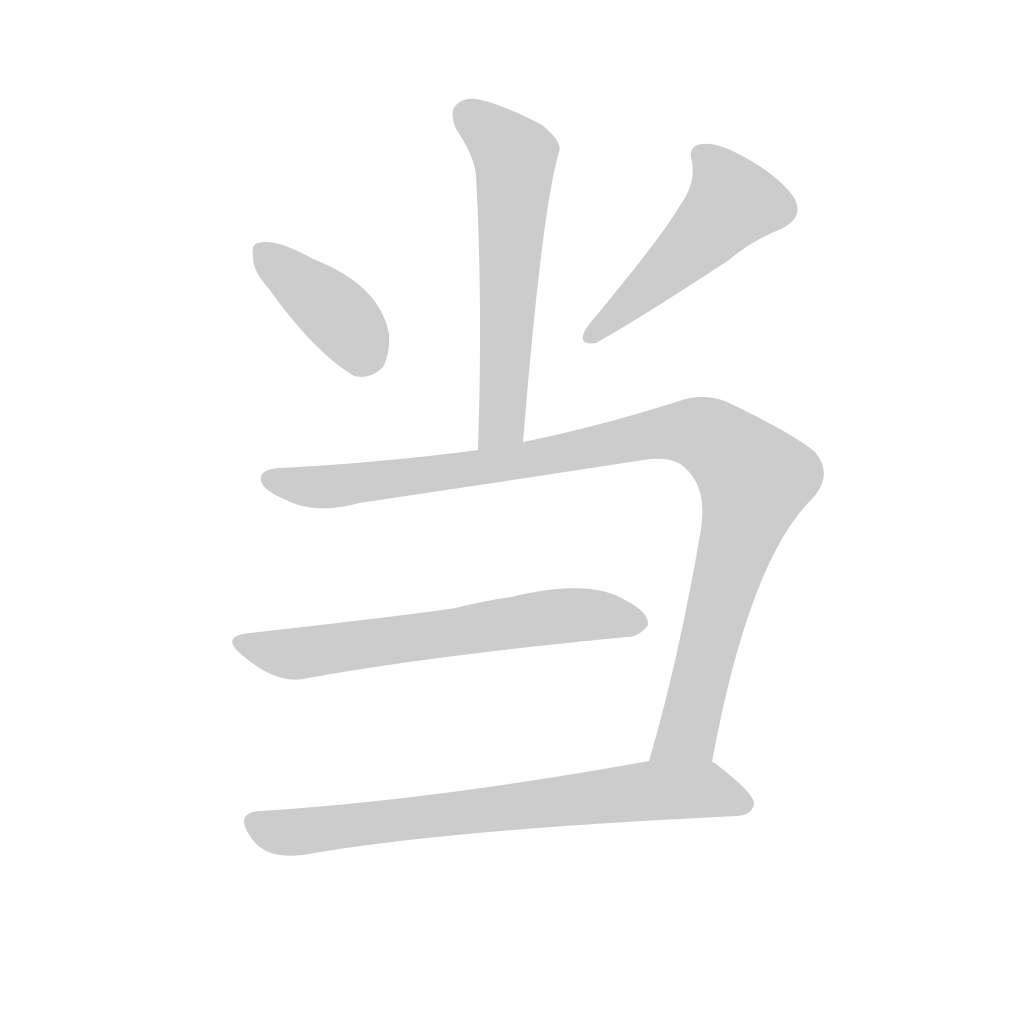
- ## 399 — 当 (hit, right, appropriate) — 6 strokes
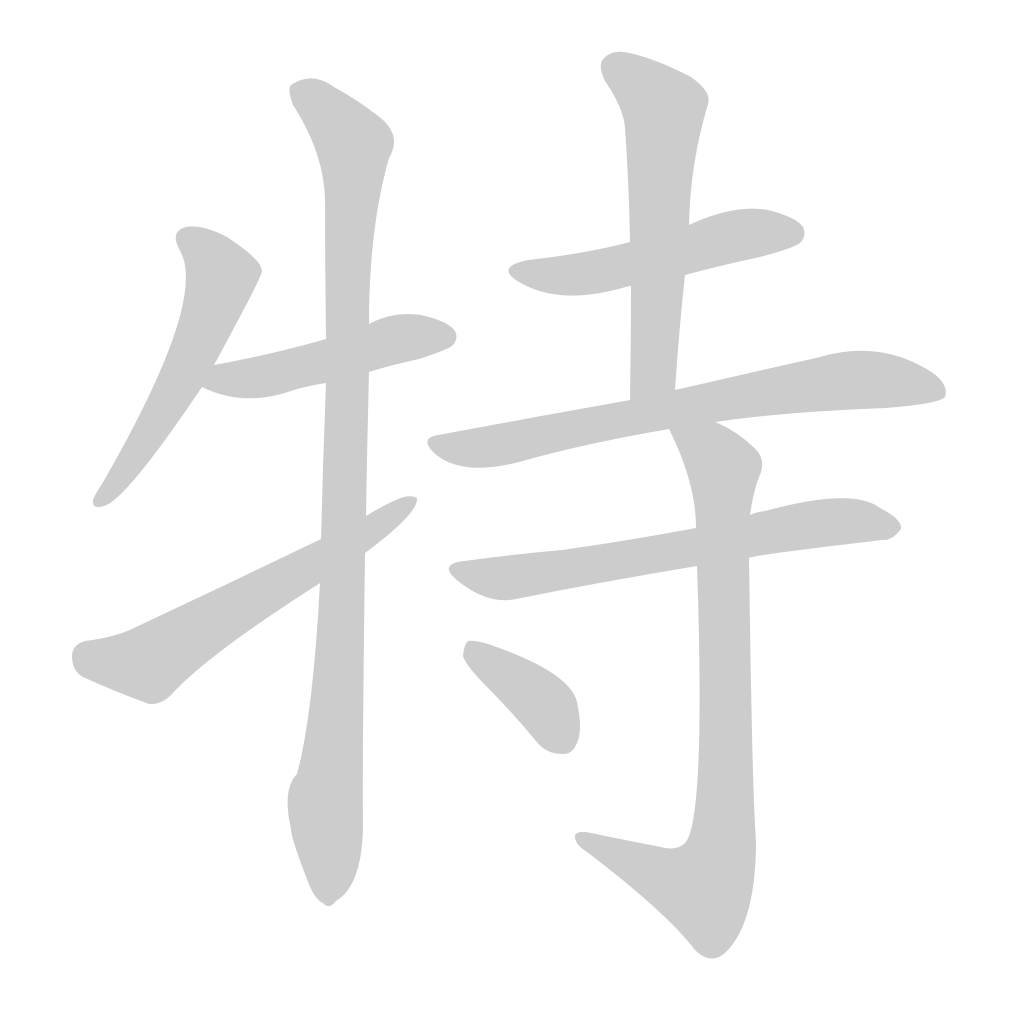
- ## 400 — 特 (special) — 10 strokes
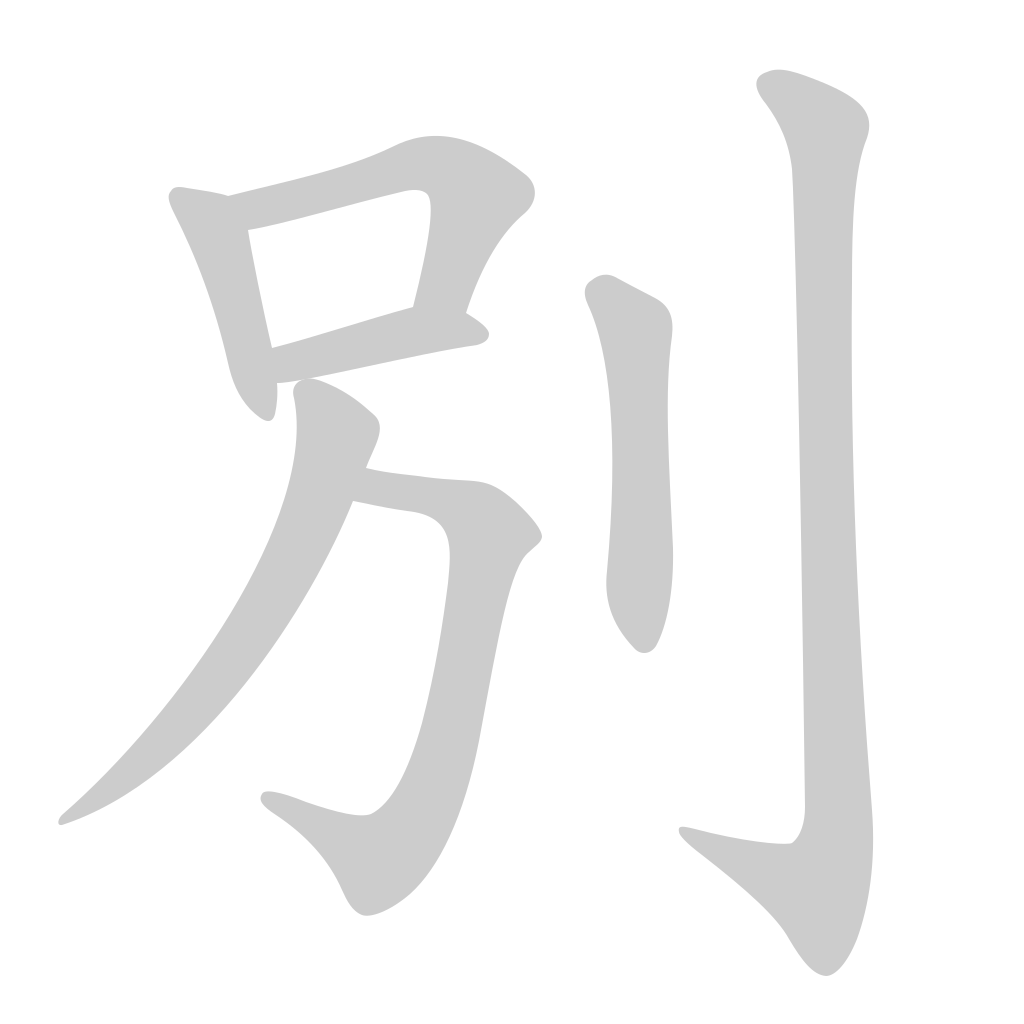
- ## 401 — 別 (separate, branch off, diverge) — 7 strokes
- ## 402 — 無 (nothingness, none, ain't) — 12 strokes
- ## 403 — 野 (plains, field, rustic) — 11 strokes
- ## 404 — 予 (beforehand, previous, myself) — 4 strokes
- # Stroke & Component Patterns in This Lesson
- # Similar-Looking Kanji (Outside This Lesson)
- # Phonetic Series Summary (also in the workbook, repeated here for reference)
- # Sources
Lesson 23 — Characters 395–404: 員 然 損 点 当 特 別 無 野 予 Companion to Workbook. The workbook handles articles, vocabulary, study aids, and self-test. This file is the structural deep-dive — radicals, functional components (meaning/sound/form), stroke order, and shared-component patterns.
Quick Reference
| # | Kanji | Stroke Order | Strokes | Radical | Links |
|---|---|---|---|---|---|
| 395 | 員 |  | 10 | ⼝ (mouth) | Jisho · AnimCJK |
| 396 | 然 |  | 12 | ⽕ (fire) | Jisho · AnimCJK |
| 397 | 損 |  | 13 | ⼿ (hand) | Jisho · AnimCJK |
| 398 | 点 |  | 9 | ⽕ (fire) | Jisho · AnimCJK |
| 399 | 当 |  | 6 | ⼹ (pig's head) | Jisho · AnimCJK |
| 400 | 特 |  | 10 | ⽜ (cow) | Jisho · AnimCJK |
| 401 | 別 |  | 7 | ⼑ (knife) | Jisho · AnimCJK |
| 402 | 無 |  | 12 | ⽕ (fire) | Jisho · AnimCJK |
| 403 | 野 |  | 11 | ⾥ (village) | Jisho · AnimCJK |
| 404 | 予 | 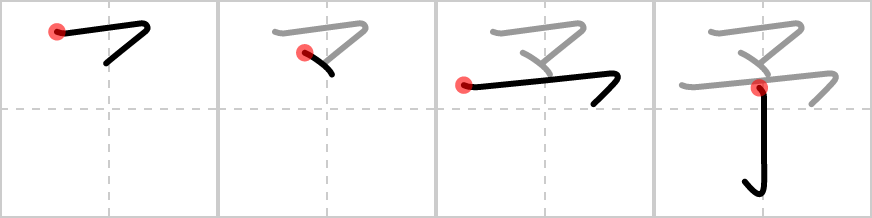 | 4 | ⼅ (vertical stroke with a hook) | Jisho · AnimCJK |
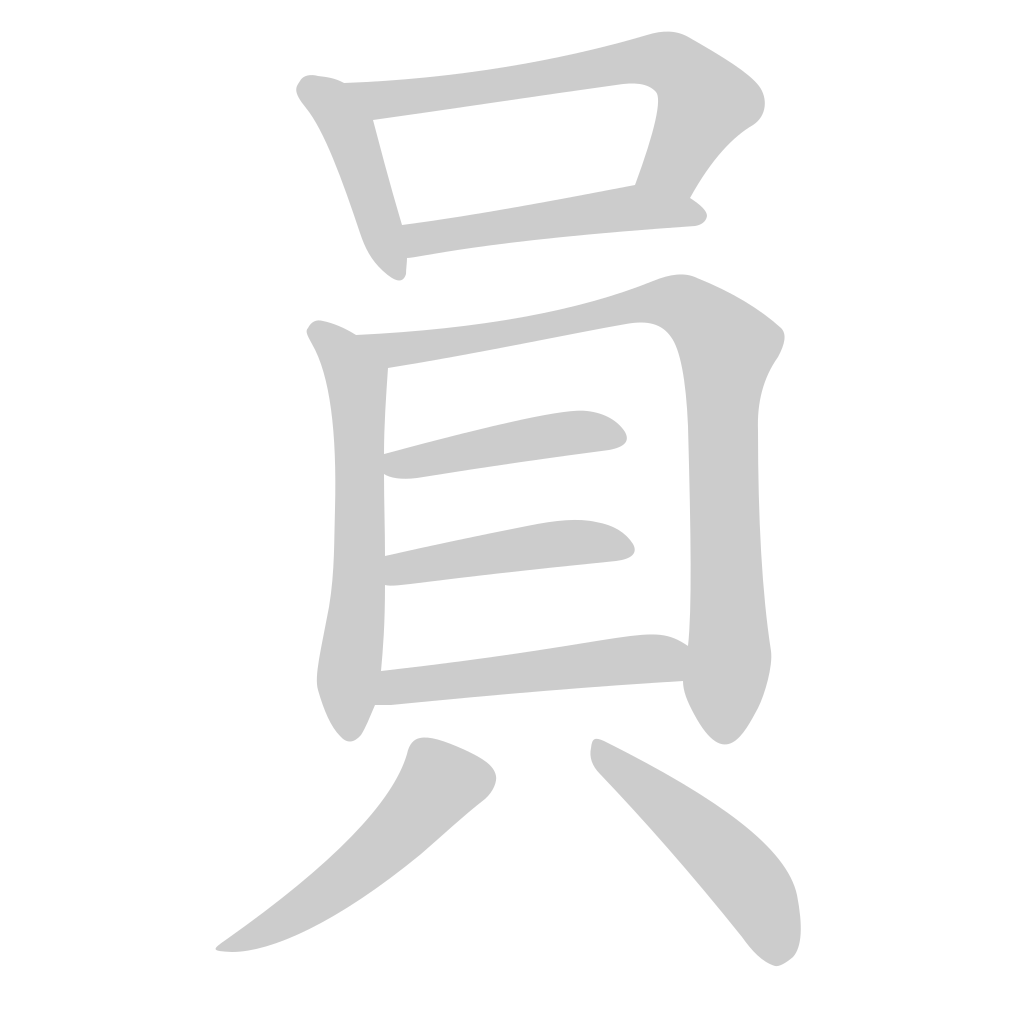
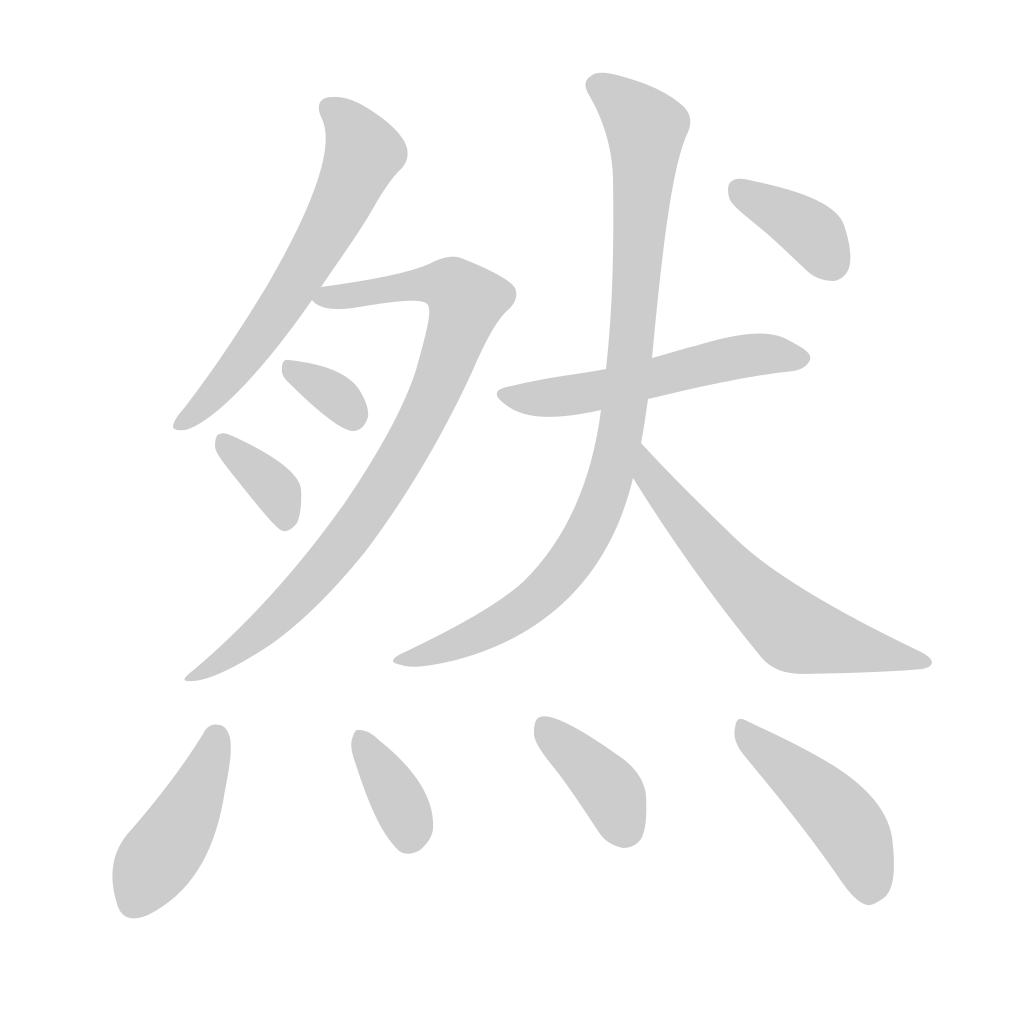
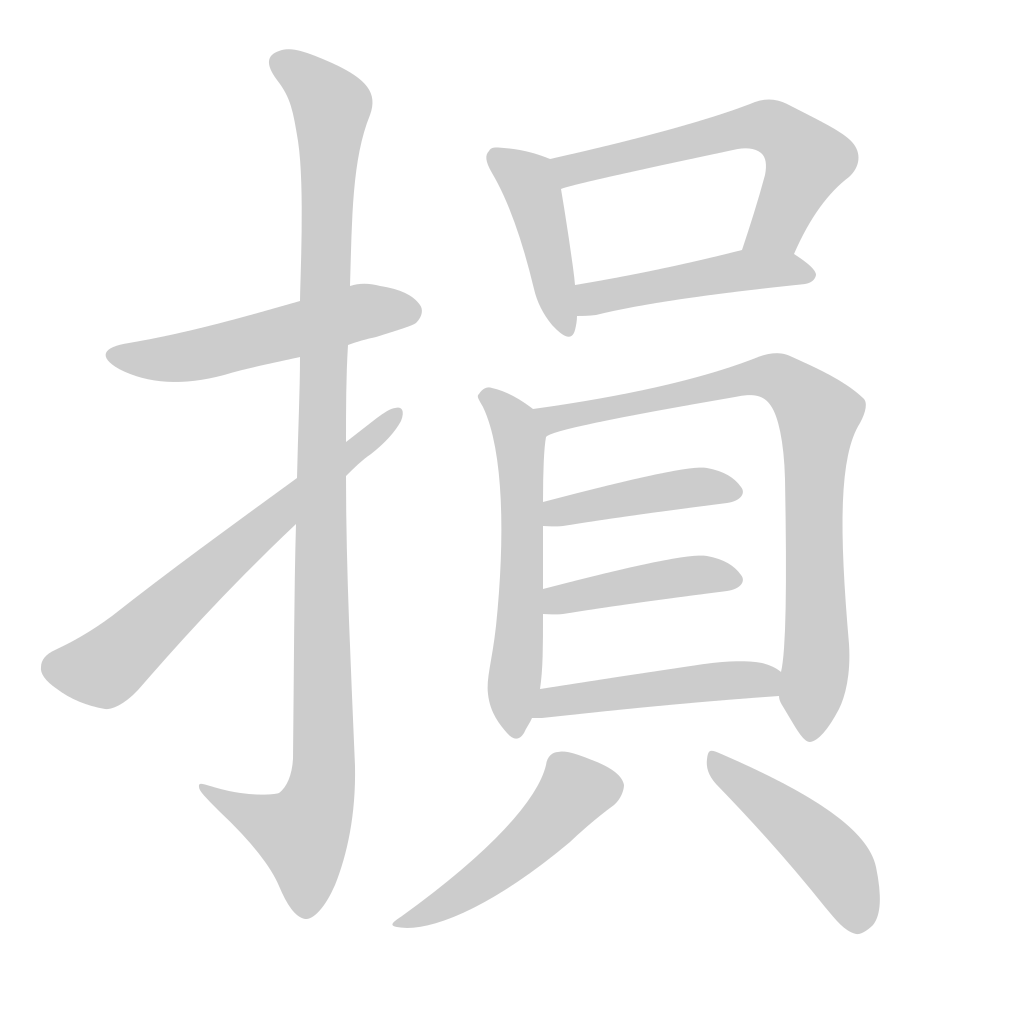
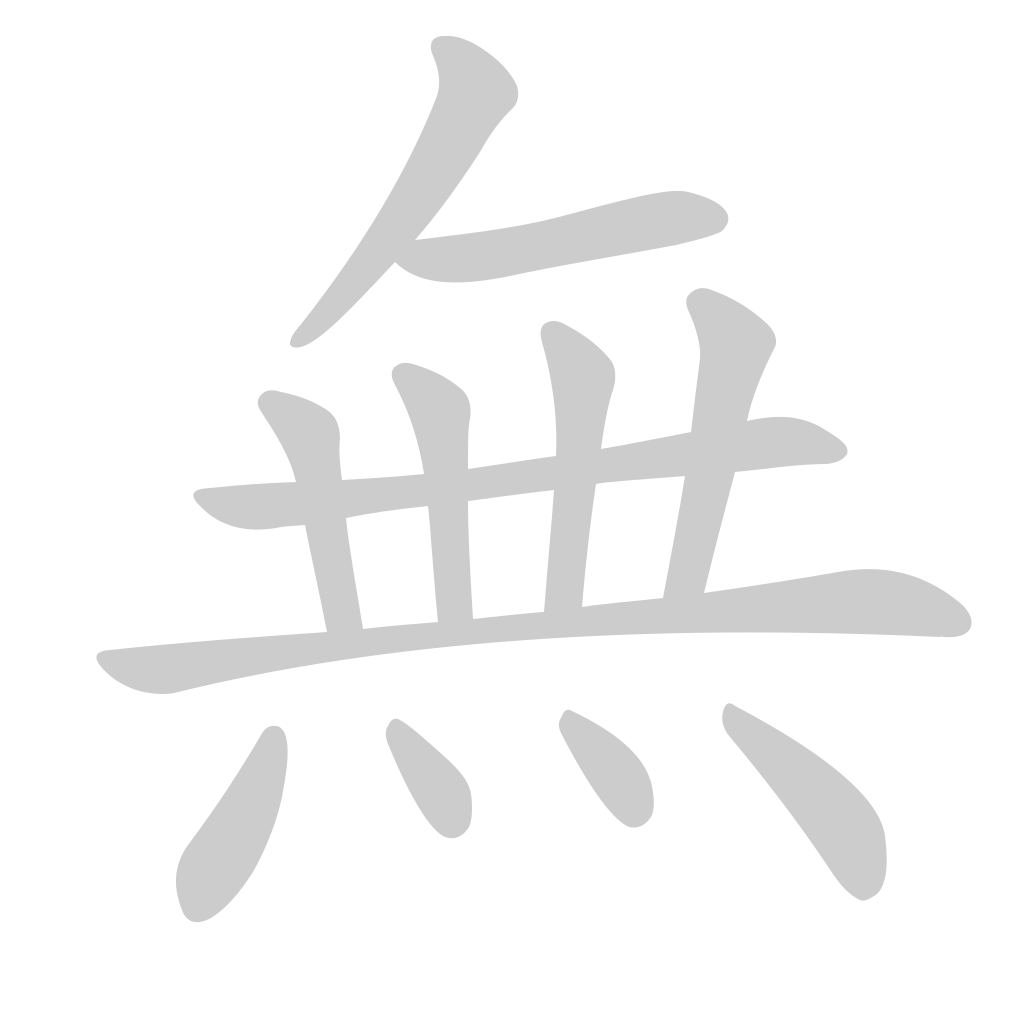
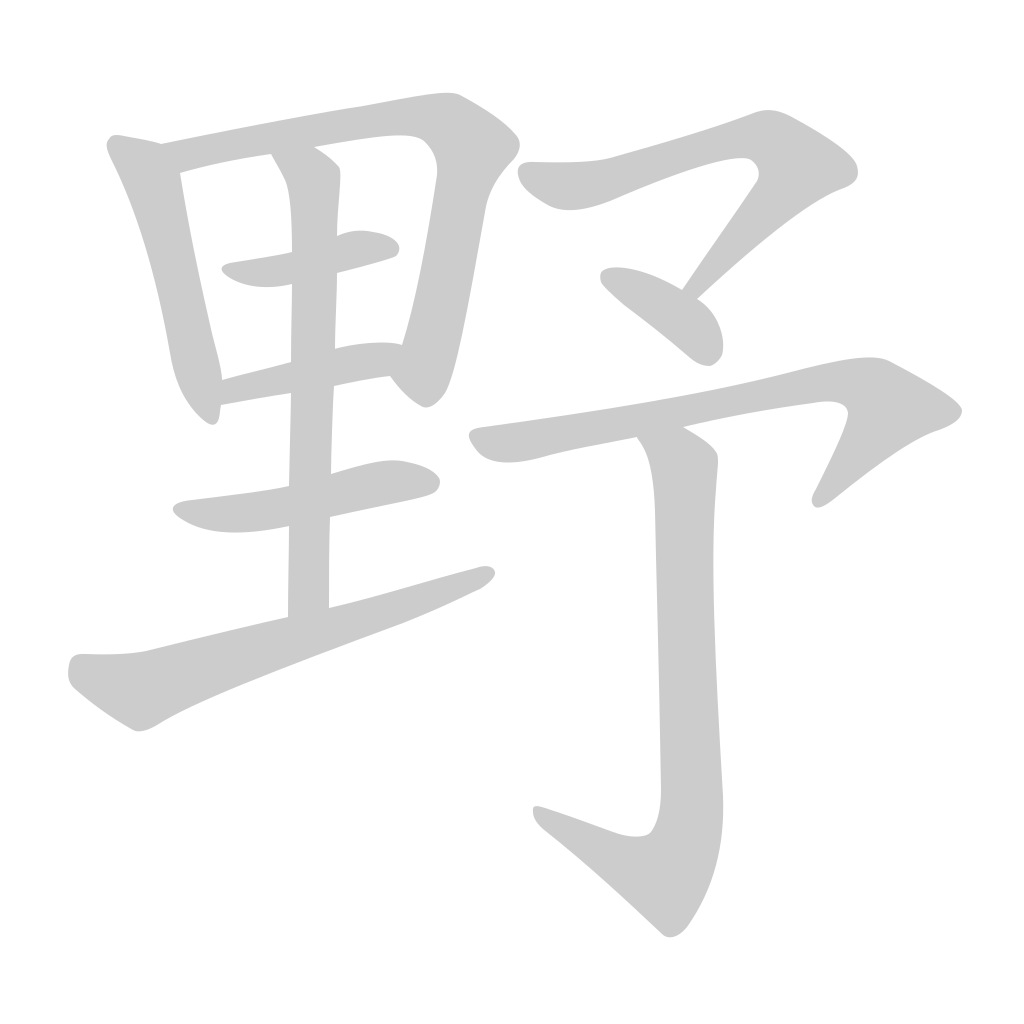
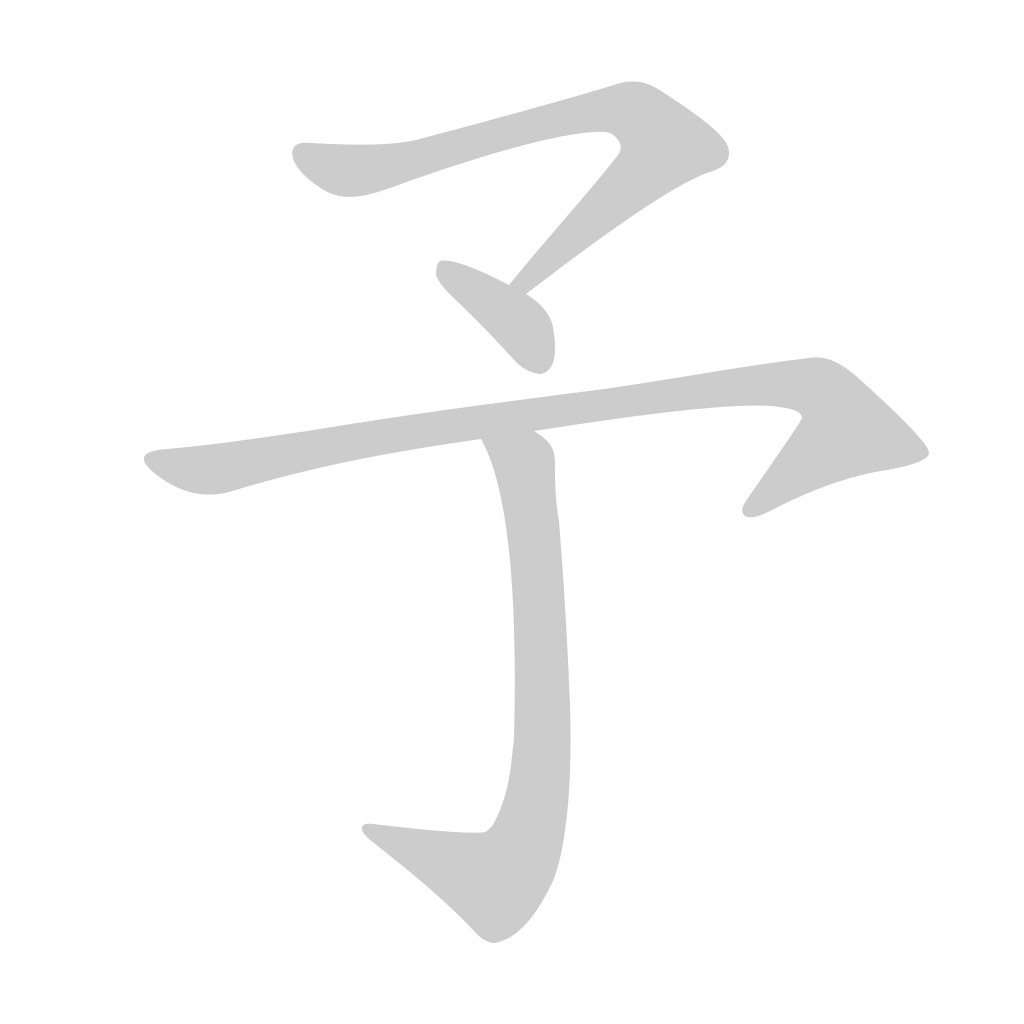
PNGs are generated from KanjiVG using
kanjivg-to-png, so each image shows the character being built stroke by stroke in panels. AnimCJK links open animated versions in a browser.
Per-Kanji Entries
395 — 員 (employee, member, number) — 10 strokes
Radical: ⼝ (くち — "mouth") · 10 strokes total
Components & function — 会意 (compound ideograph, with corrupted components)
- 口 (top) — not "mouth" here: originally a round rim (〇) drawn above the vessel below
- 貝 (bottom) — a corruption of 鼎 (ancient tripod cauldron), not the shell/money 貝
Originally "the round rim of a cauldron" → transferred to counting round objects → counting people → member, personnel (社員, 全員, 定員). The dictionary radical ⼝ "mouth" is a filing convention only — nothing in 員 is about speaking. 員 is itself the sound component of 損 (this lesson) and 韻 (rhyme).
Stroke order
- Structure: top 口 (3 strokes) → bottom 貝 (7 strokes: frame with 2 inner horizontals, then the splaying 八)
- Watch: the bottom is 貝 with TWO inner horizontals — not 目 + 八 (three)
- Common error: writing the bottom like 具's frame (3 inner horizontals), inflating the character to 11 strokes — 員 is 10
396 — 然 (sort of thing, so, if so) — 12 strokes
Radical: ⽕ (れっか — "fire") · あし · 12 strokes total
Components & function — 会意 (compound ideograph), later borrowed
- ⺼ (top-left) — meat (the flesh variant of 月)
- 犬 (top-right) — dog; keep the final dot
- 灬 (bottom) — fire, the original semantic core: roasting meat over flame → "to burn"
Originally "burn/roast." The character was then borrowed (仮借) for the grammatical sense "so, thus, in that way" — 当然 "as it should be," 自然 "self-so" = nature — and the displaced "burn" meaning was re-marked with an extra 火 as 燃 (L64). The ⽕ radical is genuinely semantic in origin, even though the modern meaning has drifted entirely away from fire.
Stroke order
- Structure: top-left ⺼ (4 strokes) → top-right 犬 (4 strokes) → bottom 灬 (4 dots, left to right)
- Watch: 犬 must keep its top-right dot — drop it and the right side collapses into 大
- Common error: writing 灬 as three dots — it is four, the leftmost angling left and the other three angling right
397 — 損 (damage, loss, disadvantage) — 13 strokes
Radical: ⼿ (てへん — "hand") · へん · 13 strokes total
Components & function — 形声 (phonosemantic)
- 扌 (hand) — semantic: an action performed by the hand
- 員 (sound イン→ソン) — phonetic carrier; a possible secondary semantic hint (denting/chipping a round vessel) is sometimes cited, but that layer is debated — the sound role is certain
"Hand acting on something" + 員's sound → diminish, damage, lose (損失, 損なう). 員→損 is one of this lesson's two in-lesson phonetic pairs — learn them together: mastering 員 gives you ten of 損's thirteen strokes.
Stroke order
- Structure: left 扌 (3 strokes, ending in the rising flick) → right 員 (10 strokes: 口, then 貝)
- Watch: complete 扌's rising third stroke before starting 口
- Common error: cramming the right side — 員 is 10 of the 13 strokes and needs roughly two-thirds of the width
398 — 点 (spot, point, mark) — 9 strokes
Radical: ⽕ (れっか — "fire") · あし · 9 strokes total
Components & function — 形声 (phonosemantic)
- 占 (sound セン→テン; "divine, occupy") — phonetic carrier
- 灬 (fire) — semantic: a flame scorches a surface and leaves a black mark → dot, spot, point
The traditional form is 點 (黒 "black" + 占); the Japanese shinjitai swapped 黒 for the leaner 灬 while keeping the fire/blackening idea. Same 占 series as 店 (テン, L3) — identical reading, so 点/店 rhyme for a structural reason.
Stroke order
- Structure: top 占 (5 strokes: 卜 first, then 口) → bottom 灬 (4 dots)
- Watch: 卜's vertical comes first and stays vertical; the 口 hangs below and to the right of it
- Common error: writing the four dots right-to-left, or merging them into a single horizontal line — each is a distinct stroke, written left to right
399 — 当 (hit, right, appropriate) — 6 strokes
Radical: ⼹ (けいがしら — "pig's head") · 6 strokes total
Components & function — 形声 (phonosemantic — in the original form 當)
- ⺌ (top) + ヨ (bottom) — the modern glyph is a drastic shinjitai simplification of 當: originally 尚 (sound ショウ→トウ) over 田 (field — semantic)
- Original picture: fields matched against each other in value → to correspond, match, hit the mark → 当たる, 当然 ("corresponding to how things should be"), 当時 ("the corresponding time")
Neither modern component carries the etymology — don't hunt for meaning in ⺌ or ヨ, and treat the dictionary radical ⼹ as pure filing convention.
Stroke order
- Structure: ⺌ (3 strokes: center vertical first, then left dot, then right dot) → ヨ (3 strokes: the top fold, then middle and bottom horizontals)
- Watch: ⺌ goes center-then-sides, exactly like the top of 光
- Common error: starting ⺌ with the left dot, or letting ヨ's middle horizontal poke out past the right-side fold — it stops short
400 — 特 (special) — 10 strokes
Radical: ⽜ (うしへん — "cow") · へん · 10 strokes total
Components & function — 形声 (phonosemantic)
- 牜 (ox) — semantic: originally the special bull singled out for sacrifice
- 寺 (sound; ジ→トク, heavily drifted) — phonetic carrier from the notoriously drifting 寺 series: 時 (ジ), 持 (ジ — L6), 待 (タイ — L8), 等 (トウ), 特 (トク)
"The one ox set apart from the herd" → special, particular, outstanding (特別, 特色, 独特). The sacrificial-bull origin makes ⽜ genuinely semantic despite the abstract modern meaning.
Stroke order
- Structure: left 牜 (4 strokes) → right 寺 (6 strokes: 土 on top, then 寸)
- Watch: 牜's final stroke is a short rising flick, not the long flat horizontal of standalone 牛; in 寺, the upper horizontal of 土 is shorter than the lower one
- Common error: writing the left side as full-width 牛 with a protruding horizontal — as a left radical it compresses and its horizontal tilts upward
401 — 別 (separate, branch off, diverge) — 7 strokes
Radical: ⼑ (りっとう — "knife, sword") · つくり · 7 strokes total
Components & function — 会意 (compound ideograph)
- Left side (口 over a hooked 𠃌+ノ) — a corruption of 冎 (a jointed bone with the flesh removed); it is not "mouth" plus anything
- 刂 (knife) — semantic core: cutting apart
"Separating bone at the joint with a knife" → divide, separate, another (区別, 別れる, 別の). Here the dictionary radical ⼑/刂 IS the semantic component — the opposite of 員 and 無, where the radical misleads.
Stroke order
- Structure: left component (5 strokes: 口 first, then the fold and the short left-falling stroke) → right 刂 (2 strokes: short vertical, then long hooked vertical)
- Watch: 刂 is short-then-long, and only the long second stroke hooks
- Common error: making 刂's two strokes equal length, or fusing the left side's bottom hook and diagonal into one stroke — the left component is 5 distinct strokes
402 — 無 (nothingness, none, ain't) — 12 strokes
Radical: ⽕ (れっか — "fire") · あし · 12 strokes total
Components & function — 象形 (pictograph), borrowed (仮借)
- The whole glyph — originally a dancer with long decorated sleeves and tassels; the modern strokes admit no meaningful component analysis
- 灬 (bottom) — NOT fire: the dancer's legs and hanging tassels, corrupted over centuries into the four-dot shape
The character was borrowed very early as a sound-loan for the abstract "not exist, nothing" (無理, 無料, 無い), and the displaced "dance" meaning was re-marked with 舛 (opposed feet) as 舞. The dictionary radical ⽕ is pure filing convention — this is the lesson's clearest radical-≠-semantics case (see Workbook Section 4D).
Stroke order
- Structure: left-falling ノ → top horizontal → four verticals → two more horizontals → bottom 灬 (4 dots). 12 strokes total.
- Watch: FOUR verticals hang inside the frame, and there are THREE horizontals in total before the dots
- Common error: writing three verticals instead of four, or starting the 灬 dots before the last horizontal is in place
403 — 野 (plains, field, rustic) — 11 strokes
Radical: ⾥ (さとへん — "village, (3.93 km)") · へん · 11 strokes total
Components & function — 形声 (phonosemantic)
- 里 (village, settled land) — semantic: inhabited terrain
- 予 (sound ヨ→ヤ) — phonetic carrier; the lesson's second in-lesson phonetic pair (予→野)
"The land out beyond the village" → open fields, plains (野原, 平野); extended to "wild" (野生), and metaphorically to "a field" of activity or study (分野). Same 予 series as 預 (ヨ — L38) and 序 (ジョ).
Stroke order
- Structure: left 里 (7 strokes: 日 on top, then the central vertical and two horizontals forming 土) → right 予 (4 strokes)
- Watch: as a left radical, 里's final horizontal rises slightly; finish all 7 strokes before starting 予
- Common error: adding an extra right-falling stroke to 予's hook, drifting the right side toward 矛 — 予 is 4 strokes, 矛 is 5
404 — 予 (beforehand, previous, myself) — 4 strokes
Radical: ⼅ (はねぼう — "vertical stroke with a hook") · 4 strokes total
Components & function — 象形 / 指事 — structure debated
- The glyph as a whole — traditionally explained as a weaving shuttle being passed through threads (the proto-form of 杼 "shuttle"), or as interlocking hooks showing "pushing forward"; accounts differ, so treat the etymology as debated
- Borrowed for "beforehand, in advance" (予定, 予約, 予報) and for the literary first-person "I"; the kyūjitai for the "beforehand" sense is 豫 (with 象), of which 予 is the simplified survivor
As a component, 予 is a productive ヨ sound-carrier: 野 (ヤ — this lesson), 預 (ヨ), 序 (ジョ).
Stroke order
- Structure: top マ (2 strokes) → bottom 了-shape (2 strokes: horizontal fold, then the vertical hook)
- Watch: the final vertical hangs from the center of the fold and hooks left; it must not pierce upward through the マ
- Common error: adding a right-falling fifth stroke, which turns 予 into 矛 (spear) — 予 has no ノ
Stroke & Component Patterns in This Lesson
The 灬 trio (然, 点, 無) — real fire and false fire
Three kanji end in the same four-dot 灬, and all three file under the ⽕ radical — but the dots mean fire only twice:
- 然 — genuine fire: originally "roast" (⺼ meat + 犬 dog + 灬 flame), later borrowed for "so, thus"
- 点 — genuine fire: a flame scorches a mark; shinjitai substitute for 點's 黒
- 無 — false fire: the corrupted legs and tassels of a dancing figure, borrowed for "nothing"
Stroke-order constant: 灬 is always written last, four separate dots, left to right — the leftmost angles left, the rest angle right. Drill it once and all three kanji end the same way.
Two in-lesson phonetic pairs — 員→損 and 予→野
This lesson recycles its own kanji as components — twice:
| Pair | Sound shift | Structure |
|---|---|---|
| 員 → 損 | イン→ソン | 損 = 扌 (3) + 員 (10): the whole of 員 sits on the right |
| 予 → 野 | ヨ→ヤ | 野 = 里 (7) + 予 (4): the whole of 予 sits on the right |
Both follow the strict left-before-right rule: finish the left component entirely, then write the embedded lesson kanji exactly as you learned it standalone. Learning 員 and 予 first makes 損 and 野 nearly free.
Shinjitai hides the etymology — 当 (當), 点 (點), 予 (豫)
Three glyphs in this lesson are simplified survivors of more complex traditional forms: 当 for 當 (尚+田), 点 for 點 (黒+占), and 予 standing in for 豫. In each case the modern strokes no longer show the original components — analyze the historical form for meaning, and treat the modern shape purely as something to write. 当 is the extreme case: neither ⺌ nor ヨ meant anything, ever.
Similar-Looking Kanji (Outside This Lesson)
These aren't this lesson's kanji, but they're easy to confuse with one when reading — different meaning, different (or coincidentally similar) reading, similar shape.
| This lesson's kanji | Looks like | Key difference | Why it matters |
|---|---|---|---|
| 予 (ヨ, beforehand) | 矛 (ム, spear — L72) | 矛 adds a fifth stroke (ノ) through the hook | One extra stroke flips 予定 "plan" into the spear of 矛盾 "contradiction" — the classic near-twin, and the reason to drill 予 as exactly 4 strokes. |
| 特 (トク, special) | 持 (ジ, hold — L6) / 待 (タイ, wait — L8) | Left radical only: 牜 vs 扌 vs 彳 | All three share the 寺 right side and are extremely frequent; the radical alone decides special/hold/wait, and the reading drifts with it (トク/ジ/タイ). |
| 然 (ゼン, so, thus) | 燃 (ネン, burn — L64) | 燃 = 然 with an extra 火 on the left | A direct derivation: 然 originally meant "burn" and 燃 re-marked that sense when 然 was borrowed for "so." Meeting 燃 later should recall this lesson, not confuse it. |
| 点 (テン, point) | 店 (テン, shop — L3) | What surrounds the shared 占: 灬 below vs 广 around | Same reading AND same 占 phonetic — 店 from Lesson 3 resurfaces constantly, and the fire-versus-roof cue is the only visual difference that matters. |
Phonetic Series Summary (also in the workbook, repeated here for reference)
Phonetic Series Summary
| Sound Component | Reading | In This Lesson | Other Common Kanji |
|---|---|---|---|
| 員 (member/round) | イン→ソン | 員, 損* | 員 (イン) is itself the sound component of 損 (ソン, drifted) — an in-lesson pair. Also 韻 (イン "rhyme"). |
| 予 (beforehand) | ヨ→ヤ | 予, 野* | 予 (ヨ) is the sound in 野 (ヤ, drifted) — the lesson's second in-lesson pair. Also 預 (ヨ "deposit" — L38), 序 (ジョ "order"). |
| 占 (divine/occupy) | セン→テン | 点* | 占 (セン) shifts to テン in both 点 and 店 (shop — L3). Same series, identical reading — 点/店 rhyme for a reason. |
| 然 (so, thus) | ネン | 然 | 然 is itself the sound (and origin) of 燃 (ネン "burn" — L64): 燃 is literally 然 with 火 re-added. |
| 寺 (temple) | ジ→トク* | 特* | The 寺 series drifts wildly: 時 (ジ), 持 (ジ — L6), 待 (タイ — L8), 等 (トウ), 特 (トク). Recognize the component; don't trust the reading. |
💡 Lesson highlight: This lesson contains two complete phonetic pairs inside the lesson itself — 員→損 (イン→ソン) and 予→野 (ヨ→ヤ) — a rarity worth exploiting: learn each pair together, since mastering 員 and 予 gives you most of 損 and 野 for free. The ⽕/灬 radical appears three times (然, 点, 無) but is genuinely "fire" only in 然 and 点; in 無 the four dots are a corrupted dancer's tassels — see Section 4D. Compound pairing within the lesson is dense: 当然 (当+然) and 特別な (特+別) each fuse two focus kanji into one high-frequency word.
Sources
- KanjiVG — github.com/KanjiVG/kanjivg | License: CC-BY-SA 3.0
- kanjivg-to-png — github.com/nicdgonzalez/kanjivg-to-png
- AnimCJK — github.com/parsimonhi/animCJK | License: Arphic Public License
- Jisho.org — jisho.org | Uses KanjiVG data for stroke order diagrams.
- Outlier Linguistics — outlier-linguistics.com | The Outlier Kanji Dictionary is the gold standard for rigorous functional component analysis.