KIC Lesson 53 Kanji Reference
Table of Contents
- # Quick Reference
-
# Per-Kanji Entries
- ## 739 — 換 (interchange, period, change) — 12 strokes
- ## 740 — 抗 (confront, resist, defy) — 7 strokes
- ## 741 — 才 (genius, years old, cubic shaku) — 3 strokes
- ## 742 — 材 (lumber, log, timber) — 7 strokes
- ## 743 — 財 (property, money, wealth) — 10 strokes
- ## 744 — 氏 (family name, surname, clan) — 4 strokes
- ## 745 — 接 (touch, contact, adjoin) — 11 strokes
- ## 746 — 蓄 (amass, raise, hoard) — 13 strokes
- ## 747 — 貯 (savings, store, lay in) — 12 strokes
- ## 748 — 底 (bottom, sole, depth) — 8 strokes
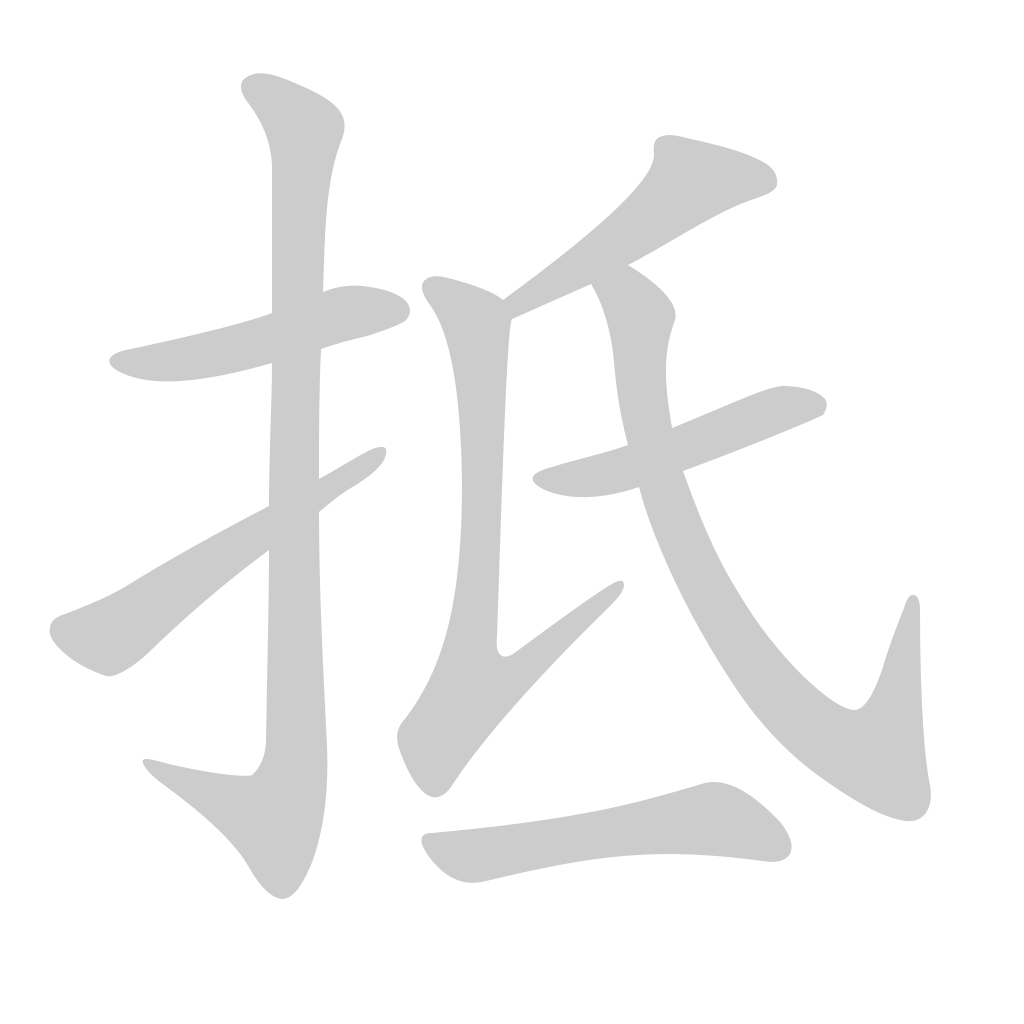
- ## 749 — 抵 (resist, reach, touch) — 8 strokes
- # Stroke & Component Patterns in This Lesson
- # Similar-Looking Kanji (Outside This Lesson)
- # Phonetic Series Summary (also in the workbook, repeated here for reference)
- # Sources
Lesson 53 — Characters 739–749: 換 抗 才 材 財 氏 接 蓄 貯 底 抵 Companion to Workbook. The workbook handles articles, vocabulary, study aids, and self-test. This file is the structural deep-dive — radicals, functional components (meaning/sound/form), stroke order, and shared-component patterns.
Quick Reference
| # | Kanji | Stroke Order | Strokes | Radical | On'yomi | Kun'yomi | Links |
|---|---|---|---|---|---|---|---|
| 739 | 換 |  | 12 | ⼿ (hand) | カン | か.える, -か.える, か.わる | Jisho · AnimCJK |
| 740 | 抗 |  | 7 | ⼿ (hand) | コウ | あらが.う | Jisho · AnimCJK |
| 741 | 才 | 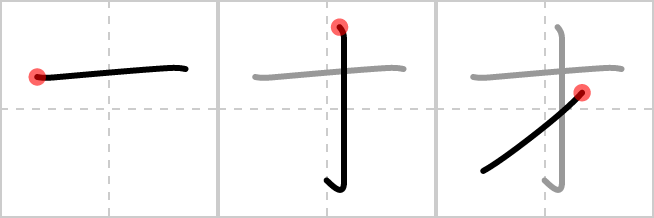 | 3 | ⼿ (hand) | サイ | (なし) | Jisho · AnimCJK |
| 742 | 材 |  | 7 | ⽊ (tree) | ザイ | (なし) | Jisho · AnimCJK |
| 743 | 財 |  | 10 | ⾙ (shell) | ザイ, サイ, ゾク | たから | Jisho · AnimCJK |
| 744 | 氏 | 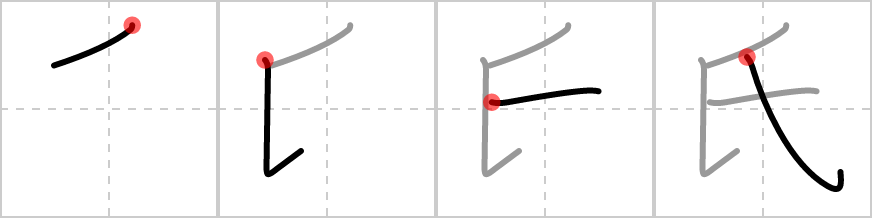 | 4 | ⽒ (family) | シ | うじ, -うじ | Jisho · AnimCJK |
| 745 | 接 |  | 11 | ⼿ (hand) | セツ, ショウ | つ.ぐ | Jisho · AnimCJK |
| 746 | 蓄 |  | 13 | ⾋ (grass) | チク | たくわ.える | Jisho · AnimCJK |
| 747 | 貯 |  | 12 | ⾙ (shell) | チョ | た.める, たくわ.える | Jisho · AnimCJK |
| 748 | 底 |  | 8 | ⼴ (slanting roof) | テイ | そこ | Jisho · AnimCJK |
| 749 | 抵 |  | 8 | ⼿ (hand) | テイ | (なし) | Jisho · AnimCJK |
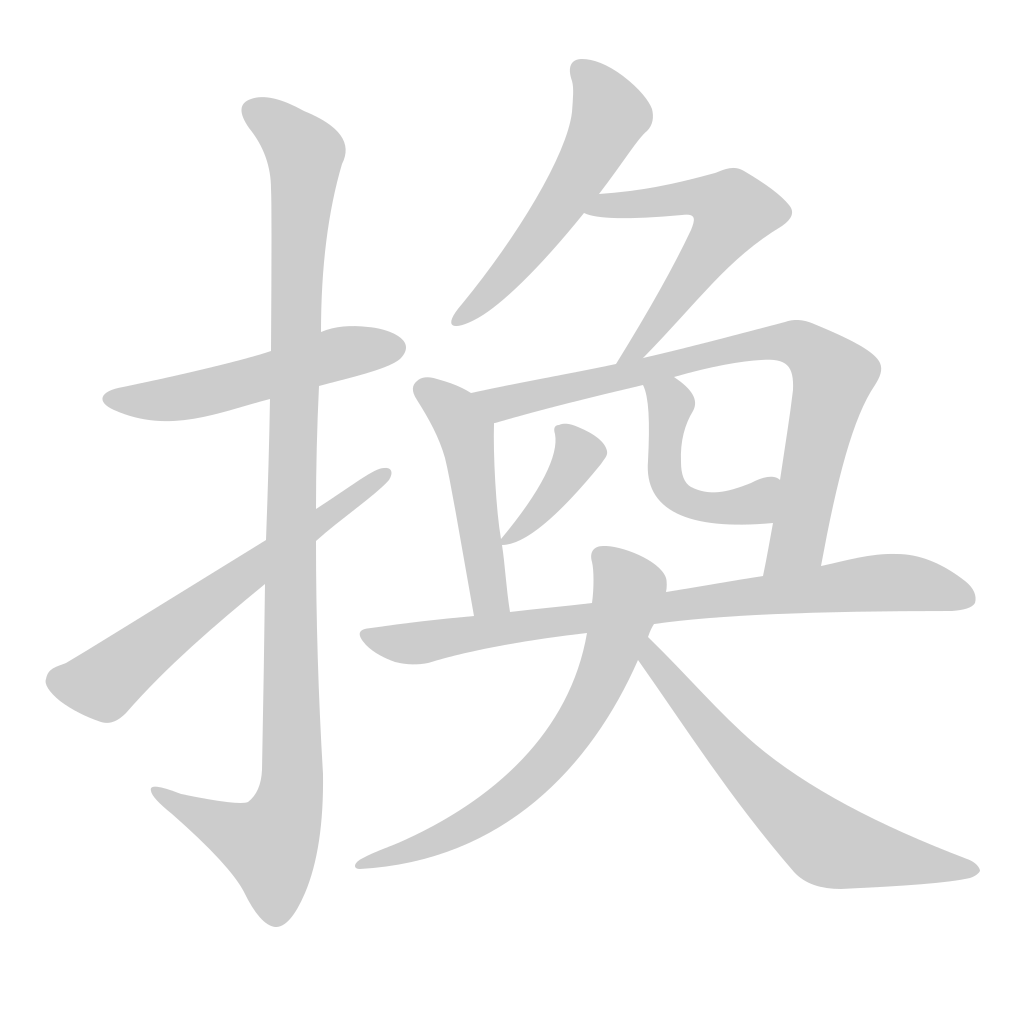
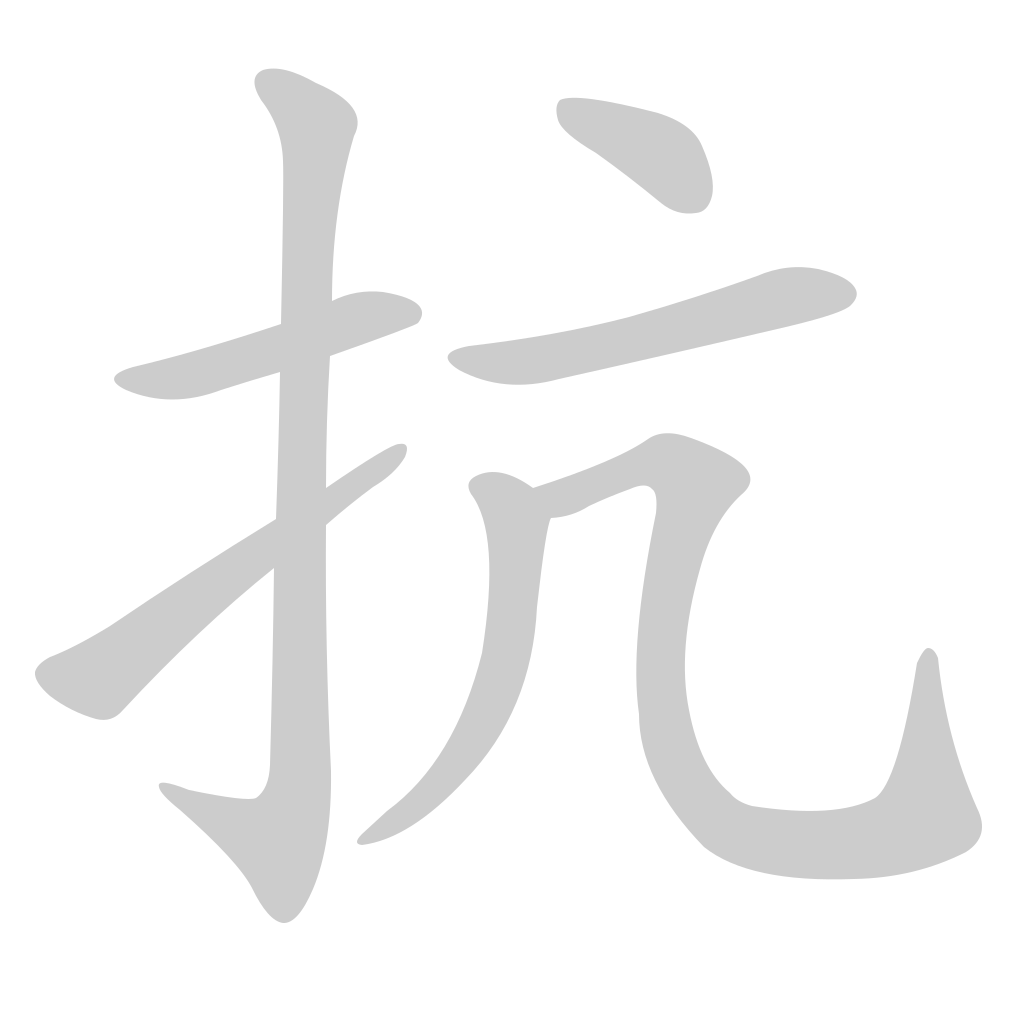
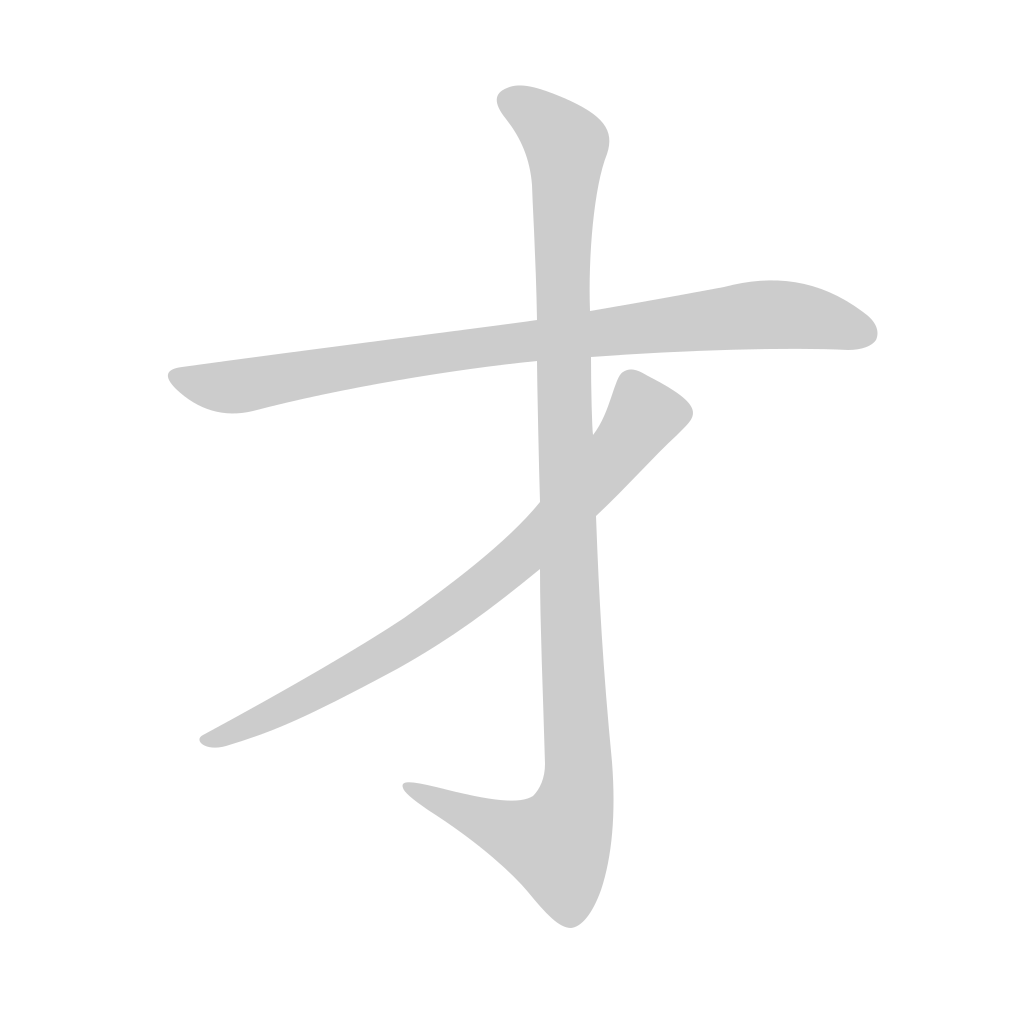
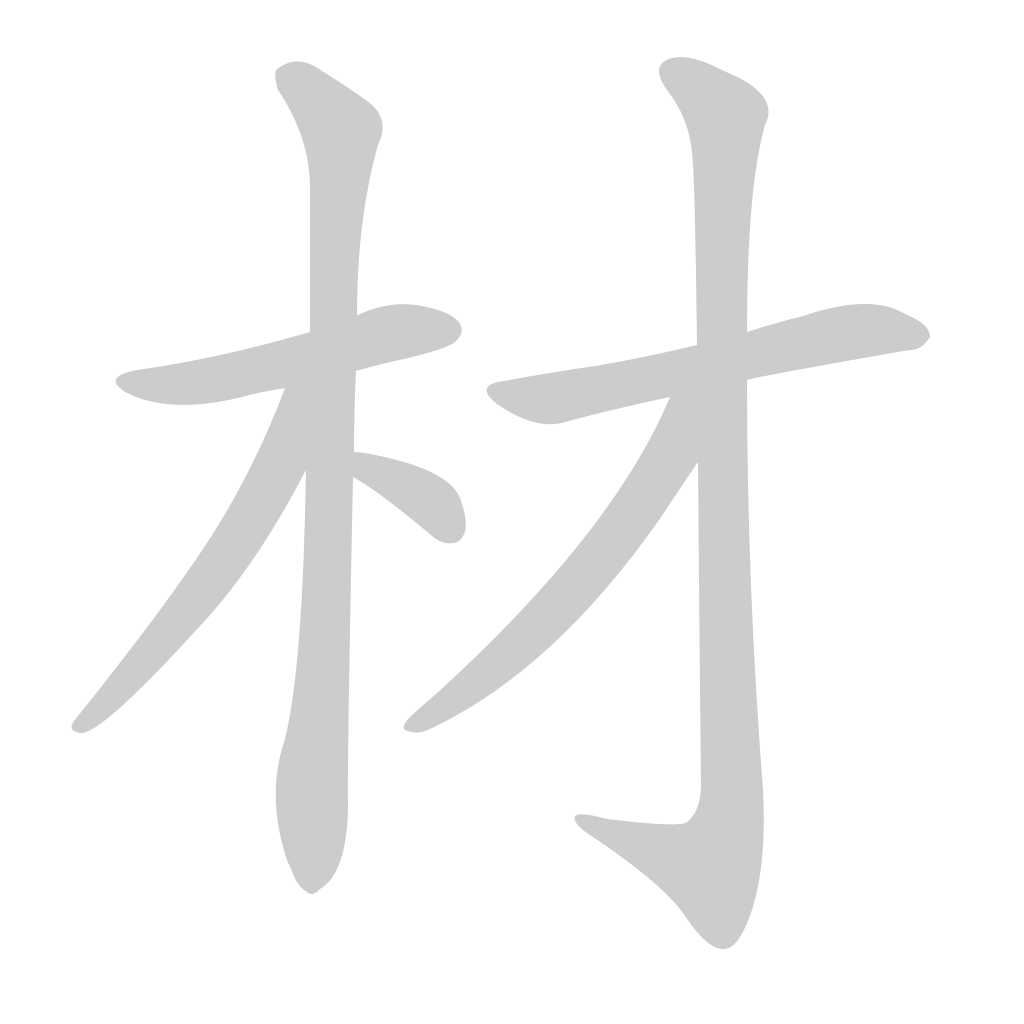
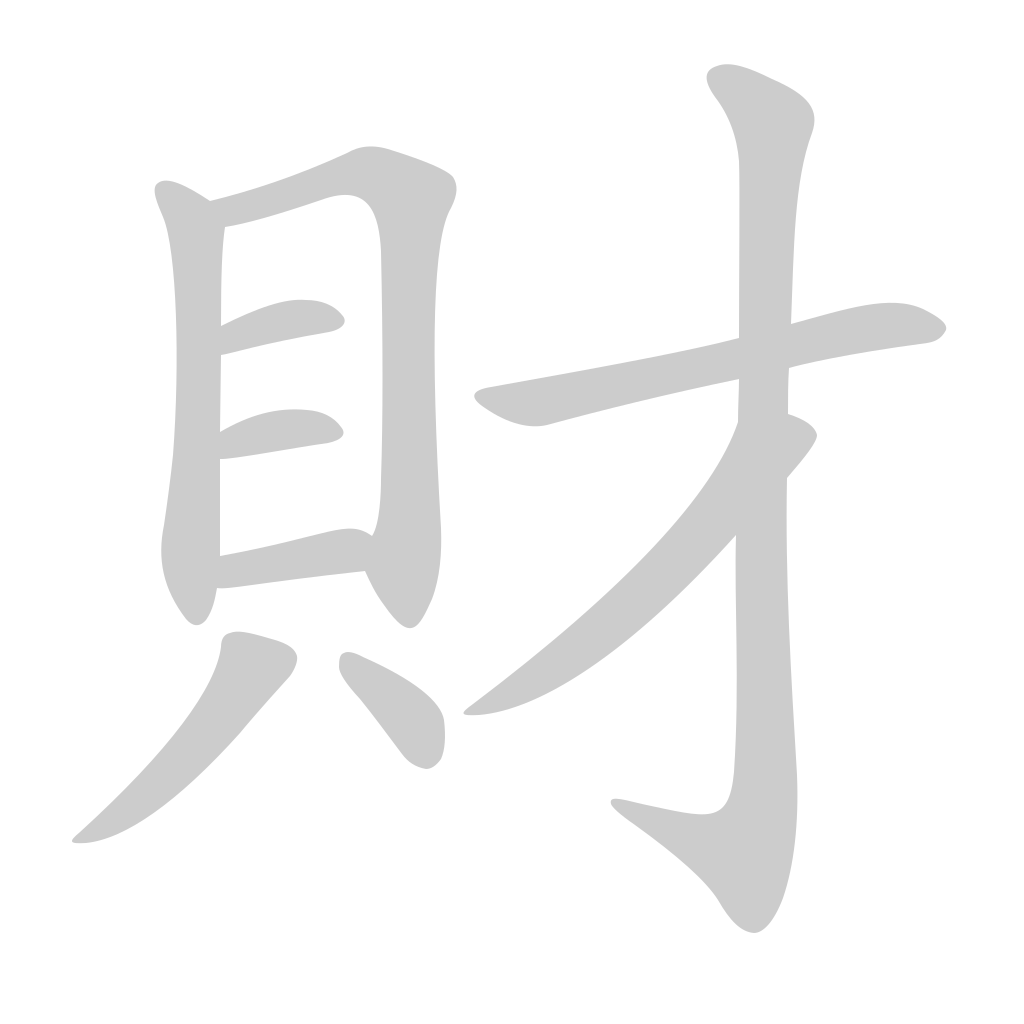
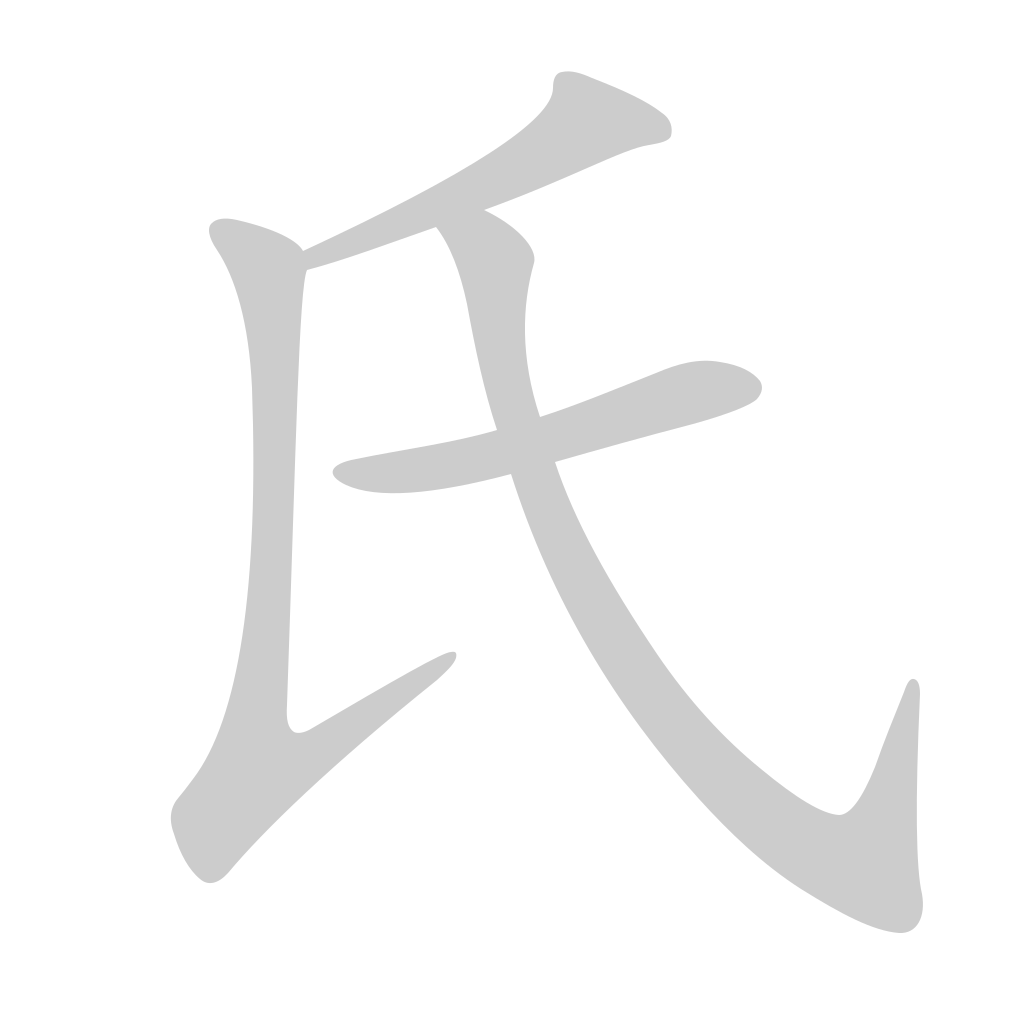
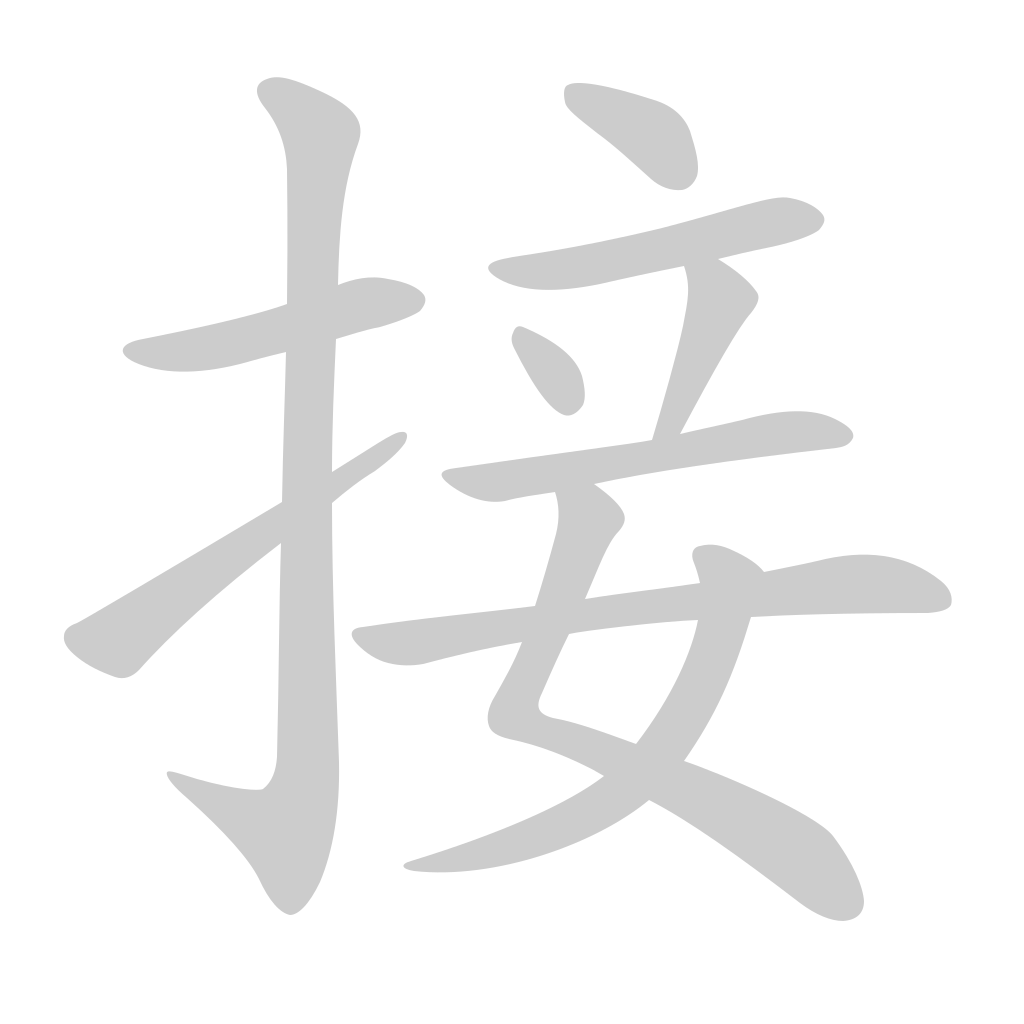
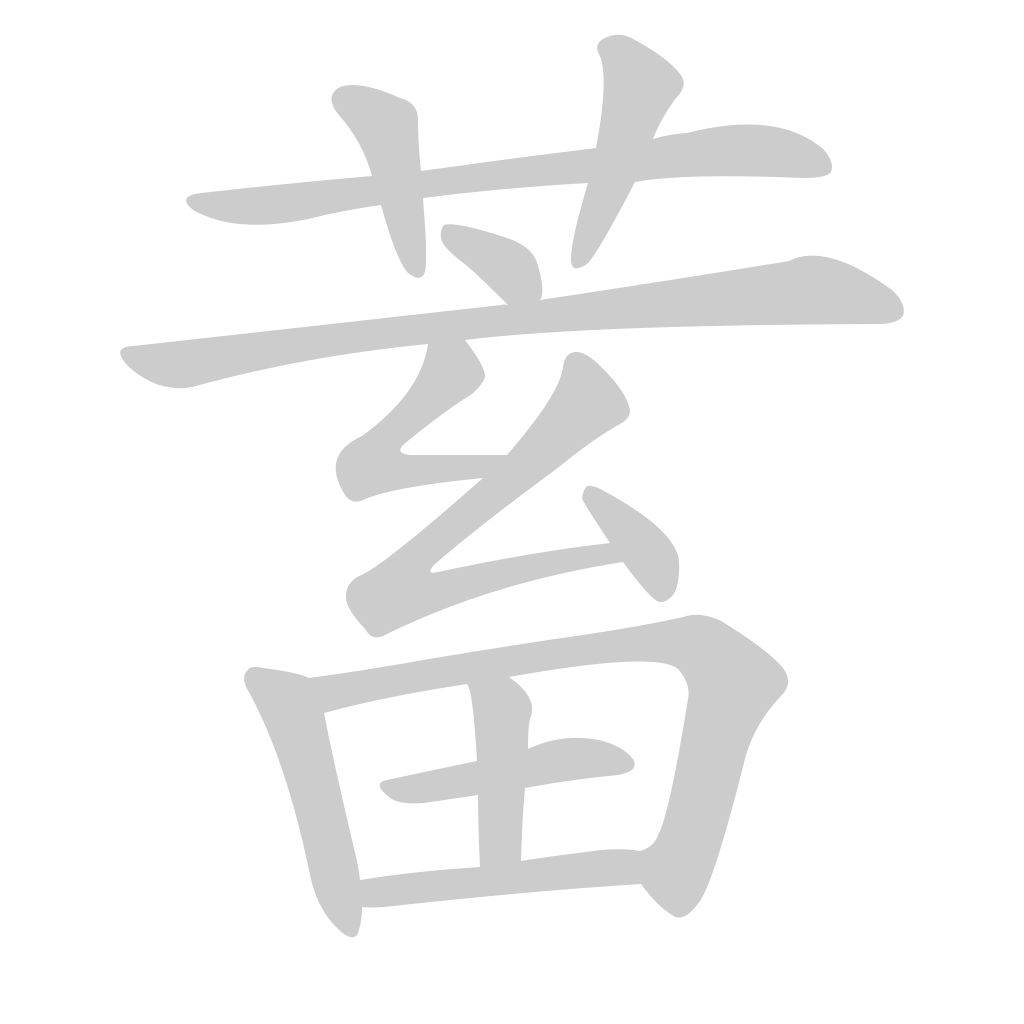
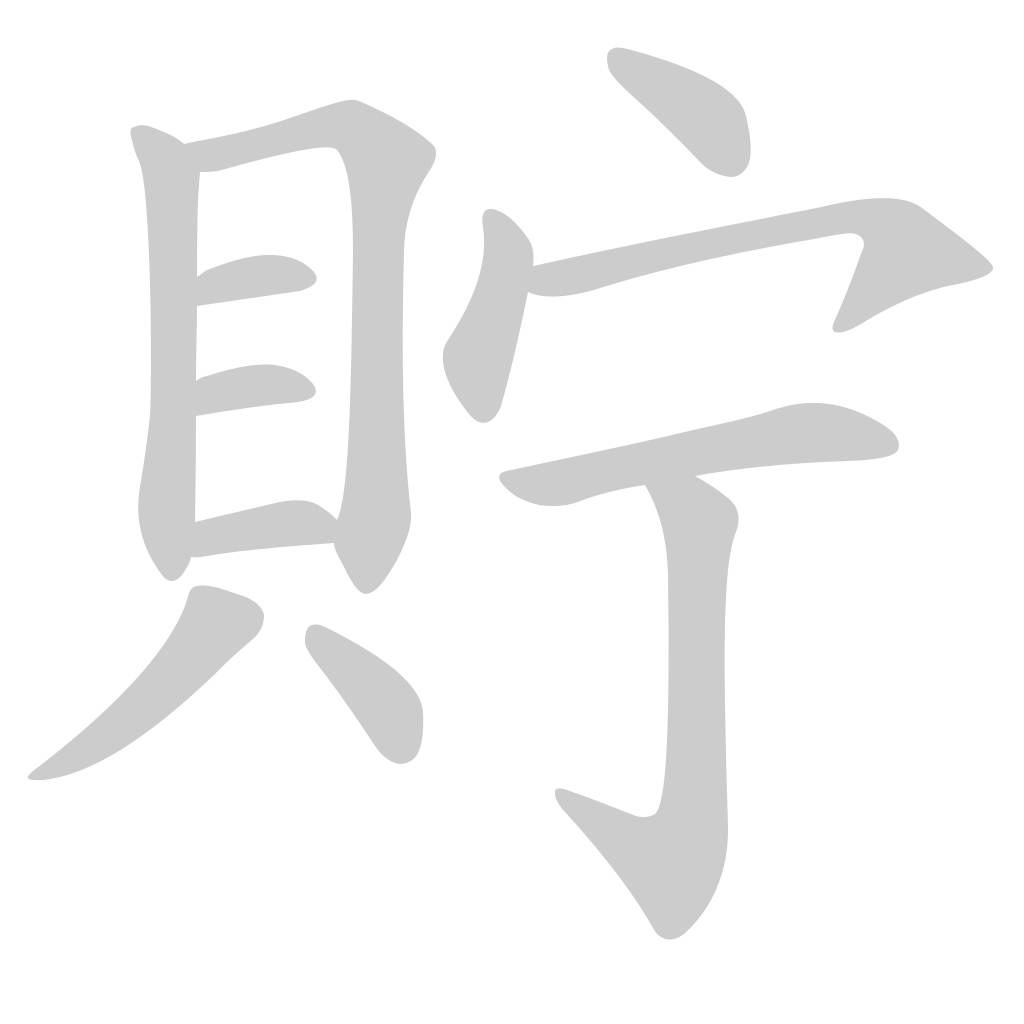
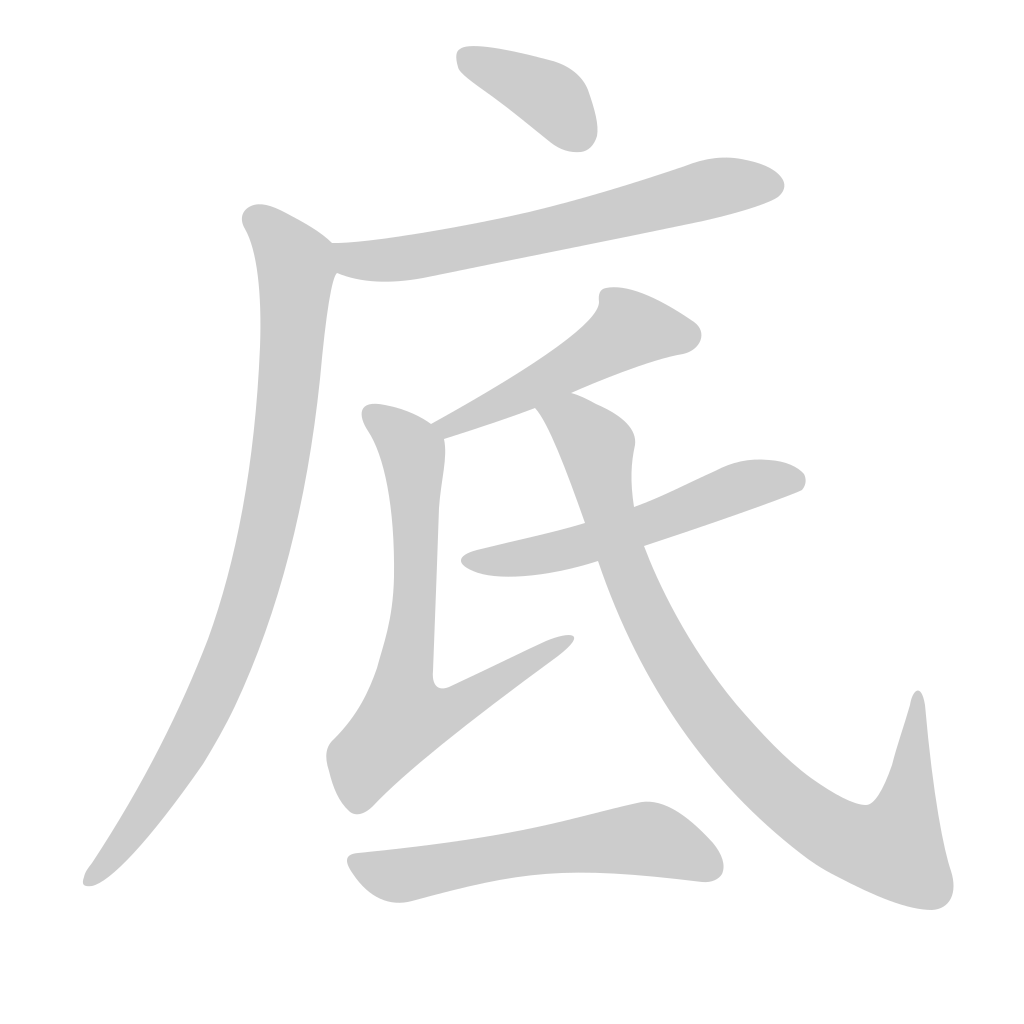
PNGs are generated from KanjiVG using
kanjivg-to-png, so each image shows the character being built stroke by stroke in panels. AnimCJK links open animated versions in a browser.
Per-Kanji Entries
739 — 換 (interchange, period, change) — 12 strokes
Radical: ⼿ (てへん — "hand") · へん · 12 strokes total
Components & function — 形声 (phonosemantic) (奐's own origin debated)
- 左 扌 (semantic: hand — passing something from one hand to another)
- 右 奐 (phonetic カン; 9 strokes). Its own etymology is unsettled — treat it as a sound-carrier. It reappears in 喚 (カン, shout/summon).
- "By hand + カン" → swap, exchange; extended to 換気 (air exchange) and 換算 (currency conversion).
Stroke order
- Structure: left 扌 (3 strokes) → right 奐 (9 strokes: a slanted top with a flag, a frame with inner marks, then a 大-like base)
- Watch: 扌's last stroke is a rising flick, not a dot — and the frame inside 奐 must stay closed before the base is written
- Common error: squeezing 奐 until the frame and base merge into one blob
740 — 抗 (confront, resist, defy) — 7 strokes
Radical: ⼿ (てへん — "hand") · へん · 7 strokes total
Components & function — 形声 (phonosemantic)
- 左 扌 (semantic: hand — pushing back)
- 右 亢 (phonetic コウ; 亠 over 几). 亢 originally pictured a raised neck → "hold up against". The same sound component appears in 航 (voyage) and 坑 (mine shaft).
- "Hand + コウ (raise up against)" → resist, confront; 抵抗 / 抗議 / 反抗 all keep the sense of pushing back.
Stroke order
- Structure: left 扌 (3 strokes) → 亠 (2 strokes) → 几 (2 strokes)
- Watch: 几's second stroke ends with a hook — don't finish it as a plain vertical
- Common error: writing 元 (二 over 儿) in place of 亢 — the top is 亠, not 二
741 — 才 (genius, years old, cubic shaku) — 3 strokes
Radical: ⼿ (てへん — "hand") · へん · 3 strokes total
Components & function — 象形 (pictograph) (structure debated)
- Commonly explained as a sprout pushing up through the ground — potential about to grow — which stretches to "talent".
- Dictionaries file 才 under the 手 radical (⼿) purely by shape; it is not a hand kanji (radical ≠ semantic component).
- Its real job in this lesson is as a sound component: 才 → 材, 財 (all ザイ). Outside: 在 (ザイ).
Stroke order
- Structure: horizontal → vertical with hook → left-falling stroke (3 strokes)
- Watch: the third stroke is a falling ノ that crosses the vertical; the same shape as the left-hand radical 扌 rises instead
- Common error: adding a dot (→ 寸) or writing a rising third stroke, which makes the radical 扌 instead of the standalone kanji
742 — 材 (lumber, log, timber) — 7 strokes
Radical: ⽊ (きへん — "tree, wood") · へん · 7 strokes total
Components & function — 形声 (phonosemantic)
- 左 木 (semantic: tree/wood)
- 右 才 (phonetic サイ → voiced ザイ in compounds; the "raw potential" sense of 才 also fits timber).
- "Wood + ザイ" → lumber, then any raw material: 材料, 教材, 取材 (collecting source material).
Stroke order
- Structure: left 木 (4 strokes) → right 才 (3 strokes)
- Watch: as a left component, 木's final stroke shortens into a dot-like press so 才 has room
- Common error: writing 寸 (with the dot) on the right, which makes 村 (village)
743 — 財 (property, money, wealth) — 10 strokes
Radical: ⾙ (かいへん — "shell, property, wealth") · へん · 10 strokes total
Components & function — 形声 (phonosemantic)
- 左 貝 (semantic: shell — ancient money, hence wealth)
- 右 才 (phonetic ザイ).
- "Wealth + ザイ" → property, assets: 財産, 財政, 財界. Irregular: 財布 reads さいふ (サイ, not ザイ).
Stroke order
- Structure: left 貝 (7 strokes) → right 才 (3 strokes)
- Watch: as a left component, 貝's last two strokes shorten and lift slightly
- Common error: cramping 貝 so wide that 才 collides with it
744 — 氏 (family name, surname, clan) — 4 strokes
Radical: ⽒ (うじ — "family, clan") · 4 strokes total
Components & function — 象形 (pictograph) (structure debated)
- Origin is disputed (a spoon/ladle, a root or a tool shape have all been proposed). Not reliably decomposable — memorize as a unit.
- It is not the sound component in 底 or 抵 — that is 氐 (氏 with an extra stroke underneath).
- Used for clan names and as an honorific: 氏名, 山本氏, 氏神 (the clan's guardian god).
Stroke order
- Structure: left-falling stroke → vertical with hook → horizontal → long sweeping stroke (4 strokes)
- Watch: the final long stroke cuts through the horizontal and ends in a small hook at the bottom right
- Common error: adding a stroke underneath (氐) or confusing it with 民
745 — 接 (touch, contact, adjoin) — 11 strokes
Radical: ⼿ (てへん — "hand") · へん · 11 strokes total
Components & function — 形声 (phonosemantic)
- 左 扌 (semantic: hand — touching, joining)
- 右 妾 (立 over 女; 8 strokes). Its own meaning (a woman in service) is irrelevant; it is borrowed for sound. 接's secondary on'yomi ショウ matches 妾's reading.
- "Hand + 妾" → touch, connect: 直接, 面接, 接近, 接続, 接待.
Stroke order
- Structure: left 扌 (3 strokes) → 立 (5 strokes) → 女 (3 strokes)
- Watch: the two small ticks at the top of 立 are separate strokes; 女's last stroke runs wide underneath
- Common error: dropping one of 立's ticks, or omitting the base of 女
746 — 蓄 (amass, raise, hoard) — 13 strokes
Radical: ⾋ (くさ — "grass, plant") · 13 strokes total
Components & function — 形声 / 会意 (畜 gives both sound and sense) (role of the grass radical debated)
- 下 畜 (チク; 玄 over 田) — "livestock", and the sense "stock up / keep" is already in 畜 itself.
- 上 艹 (grass) — dictionaries use it as the radical, and it is often explained as stored fodder or provisions, but it adds little you can rely on (radical ≠ semantic component).
- "Stock + grass" → accumulate, store up: 蓄える, 備蓄, 蓄積.
Stroke order
- Structure: top 艹 (3 strokes) → 玄-like block (亠, then two turning strokes) → 田 (5 strokes)
- Watch: 艹 is written as three strokes (two verticals and one long horizontal); finish the whole top before the lower body
- Common error: leaving off 艹 — that is 畜 (livestock), a different word
747 — 貯 (savings, store, lay in) — 12 strokes
Radical: ⾙ (かいへん — "shell, property, wealth") · へん · 12 strokes total
Components & function — 形声 (phonosemantic)
- 左 貝 (semantic: shell — wealth, valuables)
- 右 宁 (宀 over 丁; phonetic チョ and also "store"). A rare component with no common siblings.
- "Wealth + store" → savings, store: 貯金, 貯蓄, 貯蔵, 貯水池.
Stroke order
- Structure: left 貝 (7 strokes) → right 宁 (5 strokes)
- Watch: 宁's last stroke is a vertical with a small hook; keep it centered under the roof
- Common error: swapping 宁 for 守 or 宇, which have 寸 / 于 beneath the roof
748 — 底 (bottom, sole, depth) — 8 strokes
Radical: ⼴ (まだれ — "slanting roof") · たれ · 8 strokes total
Components & function — 形声 (phonosemantic)
- 上左 广 (a roof/building: the floor or ground of a house)
- 右 氐 (phonetic テイ; 氏 plus a stroke underneath). 氐 itself means "base", so it carries both sound and sense.
- "House + base" → bottom, floor, sole; reading テイ in 海底, 根底; そこ alone (底, 底値).
Stroke order
- Structure: 广 (3 strokes) → 氐 (5 strokes: the four strokes of 氏, then the bar underneath)
- Watch: the extra bar under 氏 is what makes it 氐 — and 底 vs 低 differs only by the left radical
- Common error: writing plain 氏 on the right (no bar), or using 亻 (→ 低)
749 — 抵 (resist, reach, touch) — 8 strokes
Radical: ⼿ (てへん — "hand") · へん · 8 strokes total
Components & function — 形声 (phonosemantic)
- 左 扌 (semantic: hand — pressing against)
- 右 氐 (phonetic テイ; "base")
- "Hand against a base" → push against, resist, bump into: 抵抗, 抵触 (conflict with a law), 抵当 (mortgage, something pressed against as security), 大抵 ("for the most part").
Stroke order
- Structure: left 扌 (3 strokes) → 氐 (5 strokes)
- Watch: as with 底, finish 氏's four strokes before adding the underneath bar
- Common error: omitting the bar, or mistaking 抵 for 低 (see Similar-Looking Kanji)
Stroke & Component Patterns in This Lesson
The 扌 (hand) cluster — 換, 抗, 接, 抵 (and the impostor 才)
Four kanji carry 扌 on the left, and unusually the radical is a genuine clue: each describes a hand acting on something — swapping (換), pushing back (抗), touching (接), pressing against (抵). The sound always comes from the right-hand component (奐, 亢, 妾, 氐), never from 扌.
| Kanji | Right component | Role of 扌 |
|---|---|---|
| 換 | 奐 (phonetic カン) | passing from hand to hand |
| 抗 | 亢 (phonetic コウ) | pushing back |
| 接 | 妾 (phonetic) | touching, joining |
| 抵 | 氐 (phonetic テイ) | pressing against a base |
Watch the impostor: 才 is filed under 手 by dictionaries, and as a left-hand component 扌 has the same shape — but 才 itself is a sprout pictograph, and it is the sound in 材 and 財.
The 才 family — 才, 材, 財
One sound component, three kanji: 才 (サイ), 材 (木+才, ザイ), 財 (貝+才, ザイ). Learn the left-hand radical for meaning (wood / wealth) and let 才 predict the reading. Outside this lesson: 在 (ザイ).
The 氐 pair and the 氏 trap — 底, 抵 (+ 氏)
底 (广+氐) and 抵 (扌+氐) both read テイ because of 氐 — not because of 氏 (シ). 氐 is 氏 with one extra stroke under it, so the two look nearly identical; the lesson deliberately sits 氏 next to them. Outside: 低 (テイ, low), 邸 (テイ, mansion).
The money chain — 財, 貯, 蓄
財 and 貯 both use 貝 (shell → wealth); 蓄 stores it up with 畜 under a grass top. Together they cover the whole vocabulary of saving: 財産 → 貯金 → 貯蓄 → 備蓄 → 蓄積.
Similar-Looking Kanji (Outside This Lesson)
These aren't this lesson's kanji, but they're easy to confuse with one when reading — different meaning, different (or coincidentally similar) reading, similar shape.
| This lesson's kanji | Looks like | Key difference | Why it matters |
|---|---|---|---|
| 底 (テイ, bottom) | 低 (テイ, low) | Left: 广 (roof) vs 亻 (person) | Same reading, same 氐 on the right — only the radical differs. 底 is the bottom of something (海底), 低 is low in level (低い); the radical is your only cue. |
| 材 (ザイ, timber) | 村 (ソン, village) | Right: 才 vs 寸 (extra dot) | Both are 木 + a three-stroke right side. One dot separates a material (材料) from a village (村). |
| 蓄 (チク, store up) | 畜 (チク, livestock) | 艹 on top of 蓄 | Same reading and shared lower body — 蓄積 (accumulation) vs 畜産 (livestock farming). |
| 氏 (シ, clan) | 民 (ミン, people) | 民 has 5 strokes with an extra box-like top-left | Both are common in names and politics (氏 vs 国民); easy to swap when handwriting fast. |
Phonetic Series Summary (also in the workbook, repeated here for reference)
Phonetic Series Summary
| Sound Component | Reading | Kanji in this lesson | Notes |
|---|---|---|---|
| 才 (talent; sprout) | サイ / ザイ | 才, 材, 財 | 才 is both a kanji and the sound inside 材 (木+才) and 財 (貝+才); the voiced ザイ appears when 才 is a component. Outside: 在 (ザイ, exist). |
| 氐 (base, bottom) | テイ | 底, 抵 | The sound is 氐 — not 氏 (this lesson's own シ kanji). 氐 is 氏 with an extra stroke underneath. Outside: 低 (テイ, low), 邸 (テイ, mansion). |
| 亢 | コウ | 抗 | Singleton here; real series outside: 航 (コウ, voyage), 坑 (コウ, mine shaft). |
| 奐 | カン | 換 | Singleton here; outside: 喚 (カン, shout, summon). |
| 畜 (livestock; accumulate) | チク | 蓄 | 蓄 = 艹 + 畜; 畜 supplies both the sound and the "accumulate" sense. Look-alike warning: 畜産 vs 蓄積. |
| 妾 | ショウ → セツ | 接 | 接's secondary on'yomi ショウ matches 妾's reading; the everyday セツ is the drifted form. Not a productive series for prediction. |
| 宁 (store) | チョ | 貯 | Rare component with no common siblings — treat 貯's reading as memorized. |
💡 Lesson highlight: Two sound components do the heavy lifting: 才 → 材, 財 (all ザイ) and 氐 → 底, 抵 (all テイ) — and the trap is that 氏 is not 氐. The lesson also packs a 扌 (hand) cluster — 換, 抗, 接, 抵 — where the radical genuinely carries a coherent "act on something by hand" sense (exchange, resist, touch, push against). But 才 is filed under the same 手 radical by dictionaries purely by shape: it is a sprout/talent pictograph, not a hand kanji (radical ≠ semantic component). 財 and 貯 round out the money vocabulary through 貝 (shell = wealth), and 蓄 stores it up.
Sources
- KanjiVG — github.com/KanjiVG/kanjivg | License: CC-BY-SA 3.0
- kanjivg-to-png — github.com/nicdgonzalez/kanjivg-to-png
- AnimCJK — github.com/parsimonhi/animCJK | License: Arphic Public License
- Jisho.org — jisho.org | Uses KanjiVG data for stroke order diagrams.
- Outlier Linguistics — outlier-linguistics.com | The Outlier Kanji Dictionary is the gold standard for rigorous functional component analysis.