KIC Lesson 45 Kanji Reference
Table of Contents
- # Quick Reference
-
# Per-Kanji Entries
- ## 653 — 慢 (ridicule, laziness) — 14 strokes
- ## 654 — 情 (feelings, emotion, passion) — 11 strokes
- ## 655 — 慣 (accustomed, get used to, become experienced) — 14 strokes
- ## 656 — 快 (cheerful, pleasant, agreeable) — 7 strokes
- ## 657 — 適 (suitable, occasional, rare) — 14 strokes
- ## 658 — 敵 (enemy, foe, opponent) — 15 strokes
- ## 659 — 欠 (lack, gap, fail) — 4 strokes
- ## 660 — 次 (next, order, sequence) — 6 strokes
- ## 661 — 姿 (figure, form, shape) — 9 strokes
- ## 662 — 冷 (cool, cold (beer, person), chill) — 7 strokes
- # Stroke & Component Patterns in This Lesson
- # Similar-Looking Kanji (Outside This Lesson)
- # Phonetic Series Summary (also in the workbook, repeated here for reference)
- # Sources
Lesson 45 — Characters 653–662: 慢 情 慣 快 適 敵 欠 次 姿 冷 Companion to Workbook. The workbook handles articles, vocabulary, study aids, and self-test. This file is the structural deep-dive — radicals, functional components (meaning/sound/form), stroke order, and shared-component patterns.
Quick Reference
| # | Kanji | Stroke Order | Strokes | Radical | Links |
|---|---|---|---|---|---|
| 653 | 慢 |  | 14 | ⼼ (heart) | Jisho · AnimCJK |
| 654 | 情 |  | 11 | ⼼ (heart) | Jisho · AnimCJK |
| 655 | 慣 |  | 14 | ⼼ (heart) | Jisho · AnimCJK |
| 656 | 快 |  | 7 | ⼼ (heart) | Jisho · AnimCJK |
| 657 | 適 |  | 14 | ⾡ (road) | Jisho · AnimCJK |
| 658 | 敵 |  | 15 | ⽁ (activity) | Jisho · AnimCJK |
| 659 | 欠 | 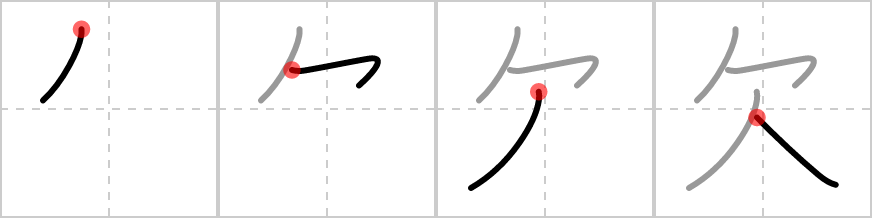 | 4 | ⽋ (to lack) | Jisho · AnimCJK |
| 660 | 次 |  | 6 | ⽋ (to lack) | Jisho · AnimCJK |
| 661 | 姿 |  | 9 | ⼥ (woman) | Jisho · AnimCJK |
| 662 | 冷 |  | 7 | ⼎ (ice) | Jisho · AnimCJK |
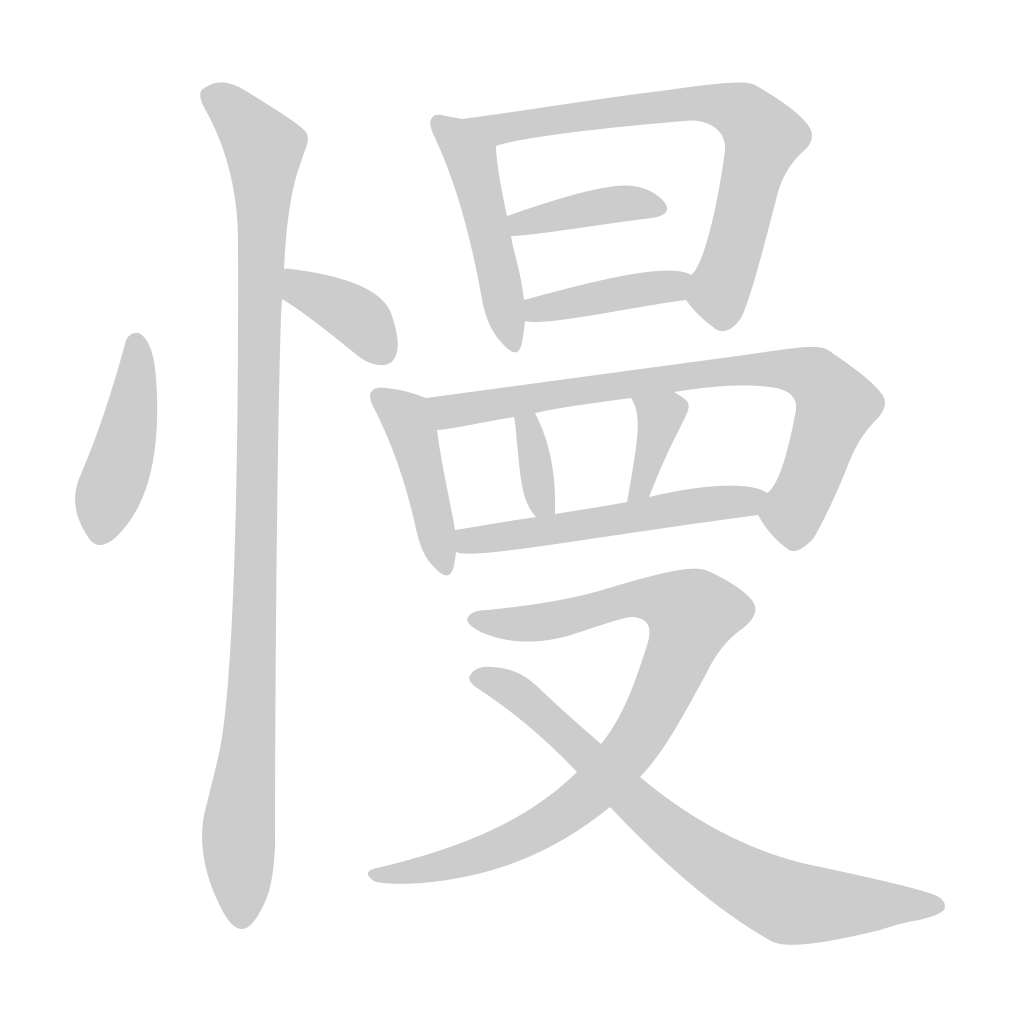
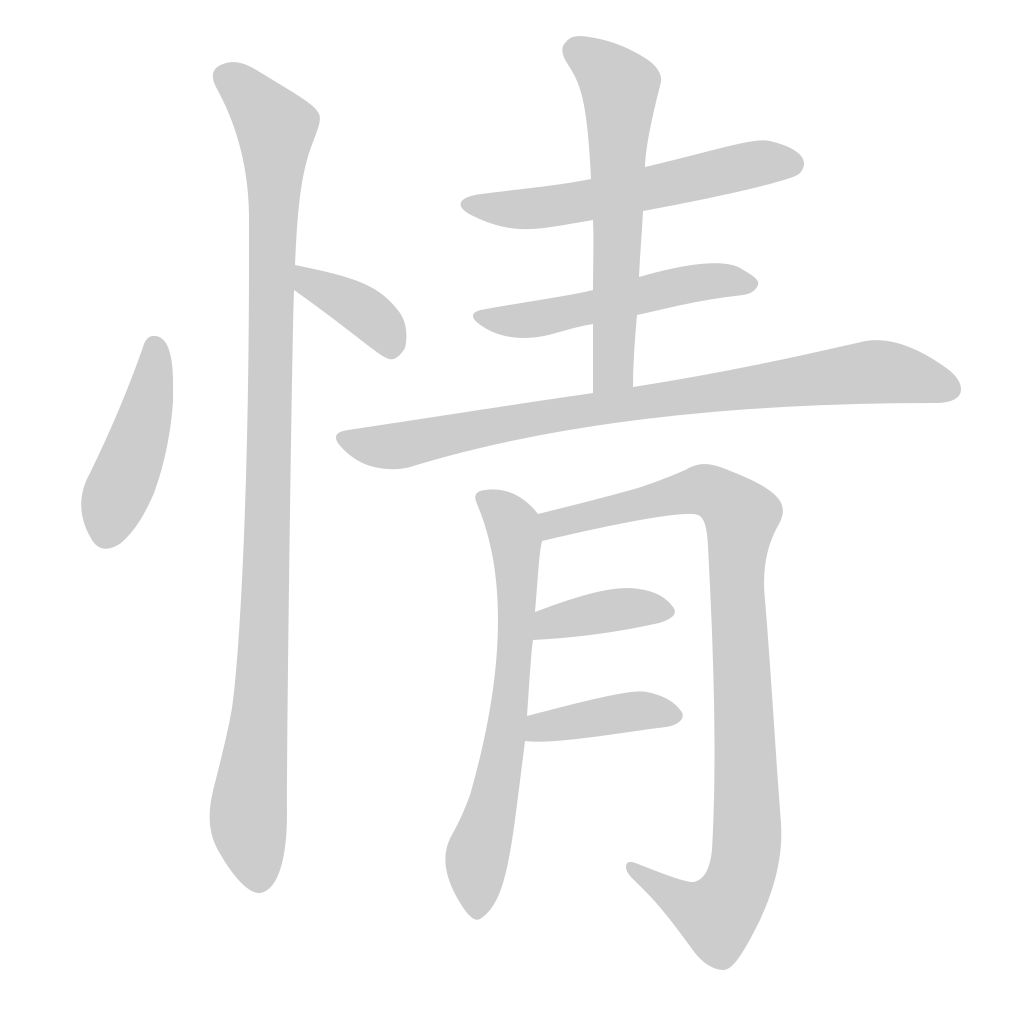
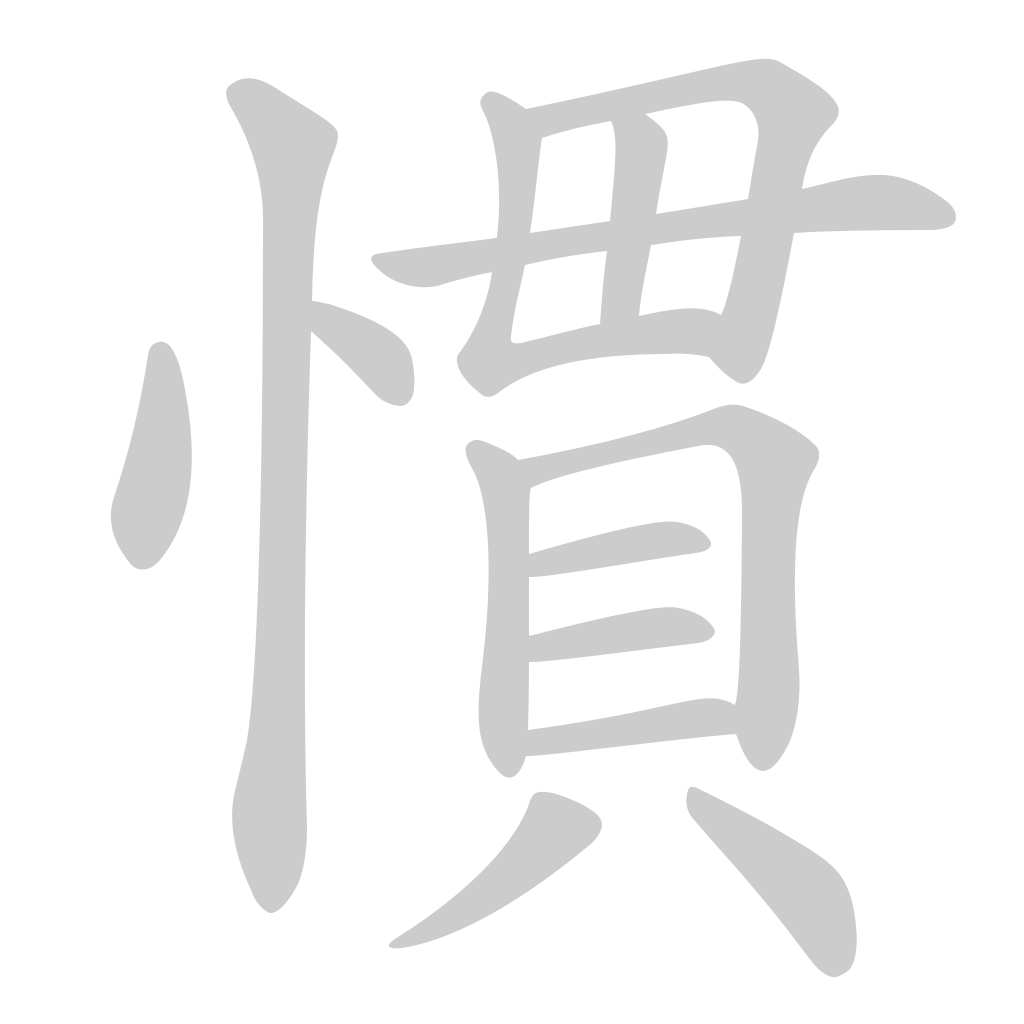
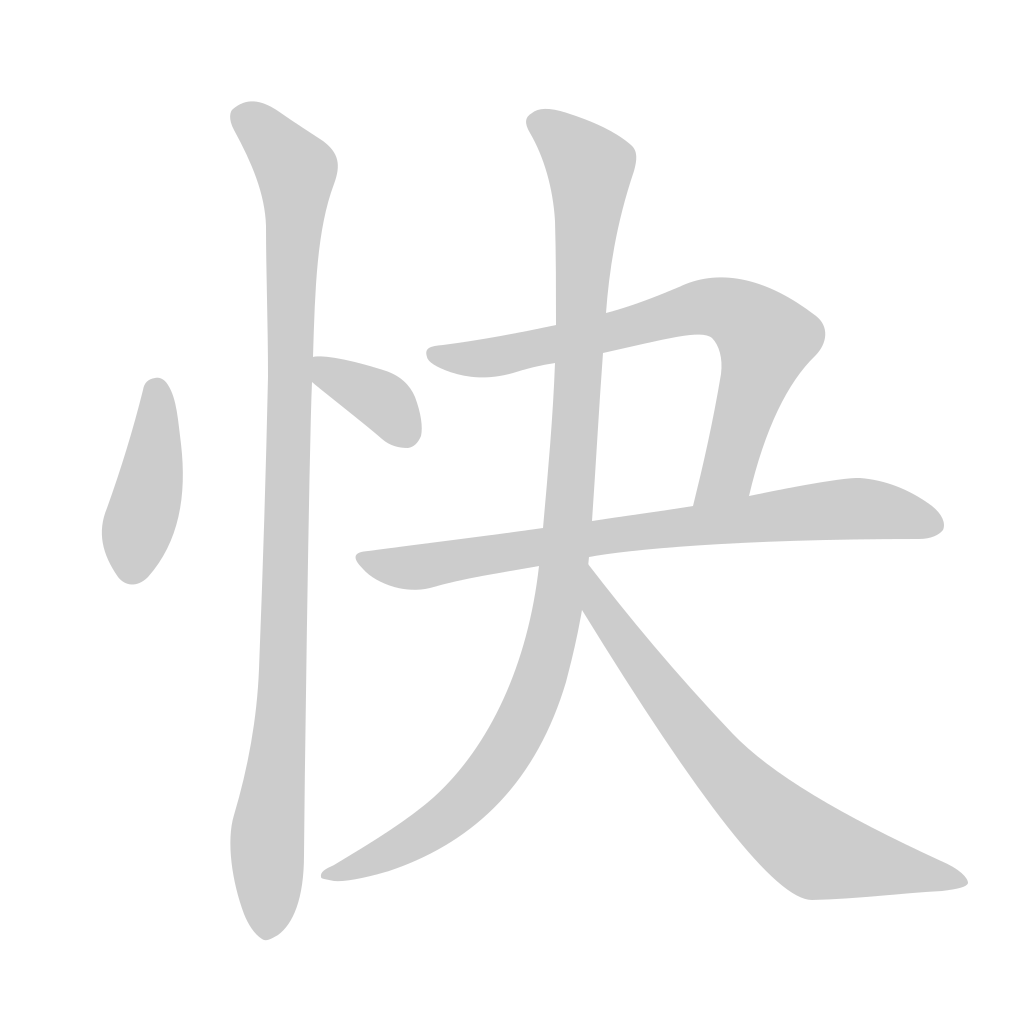
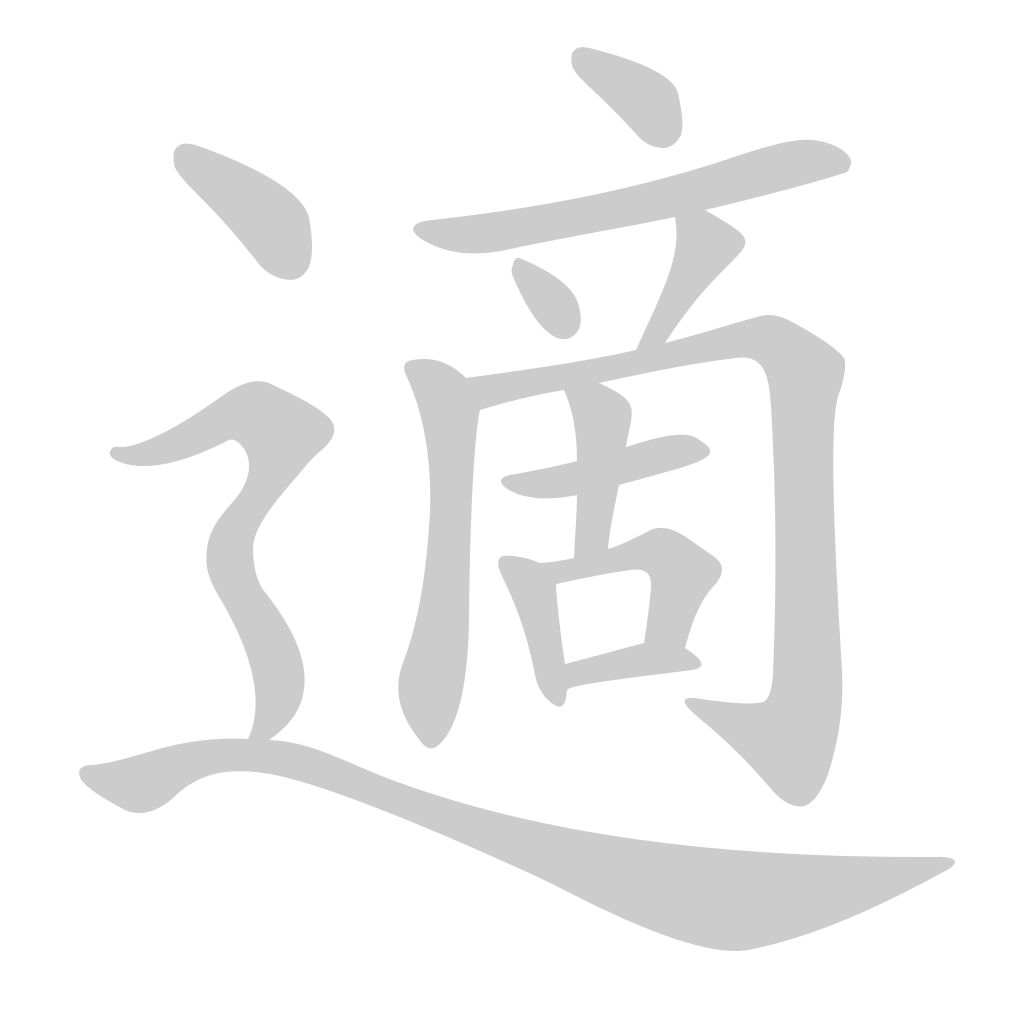
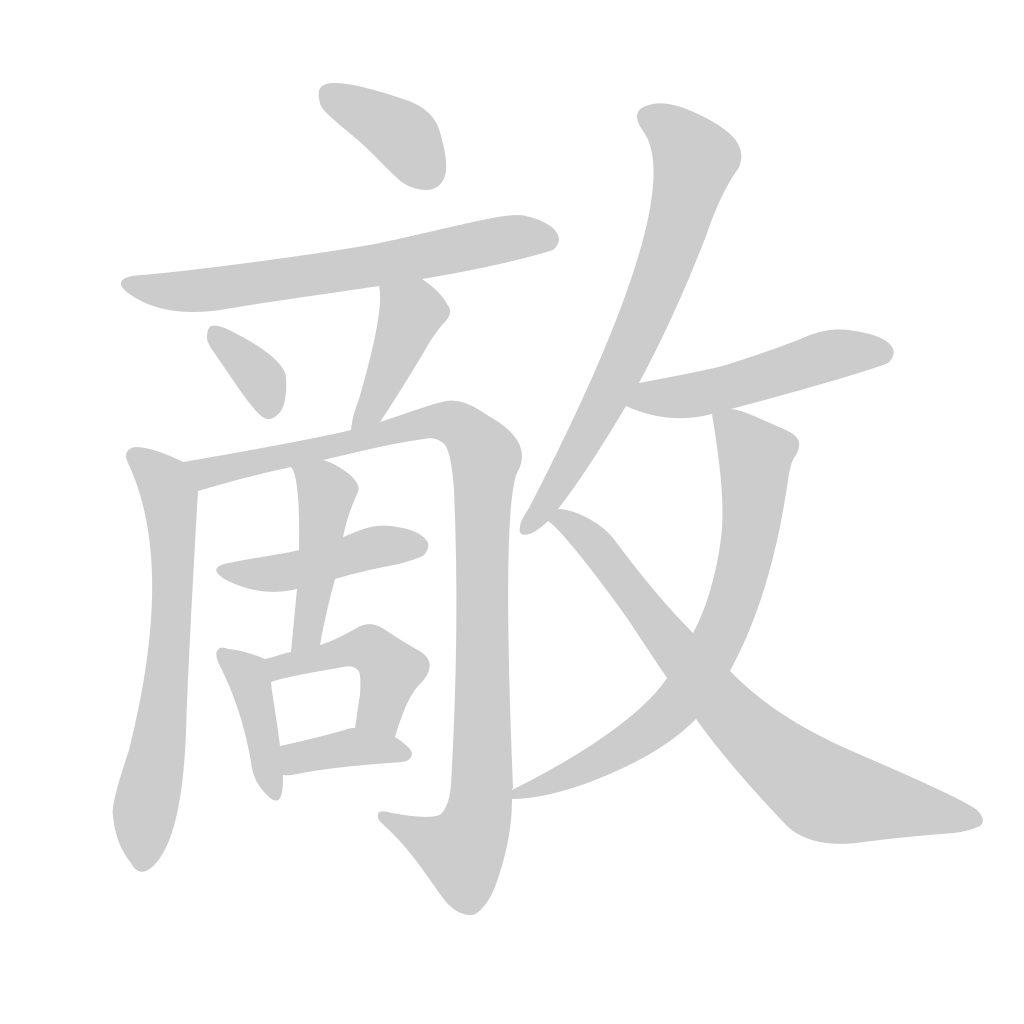
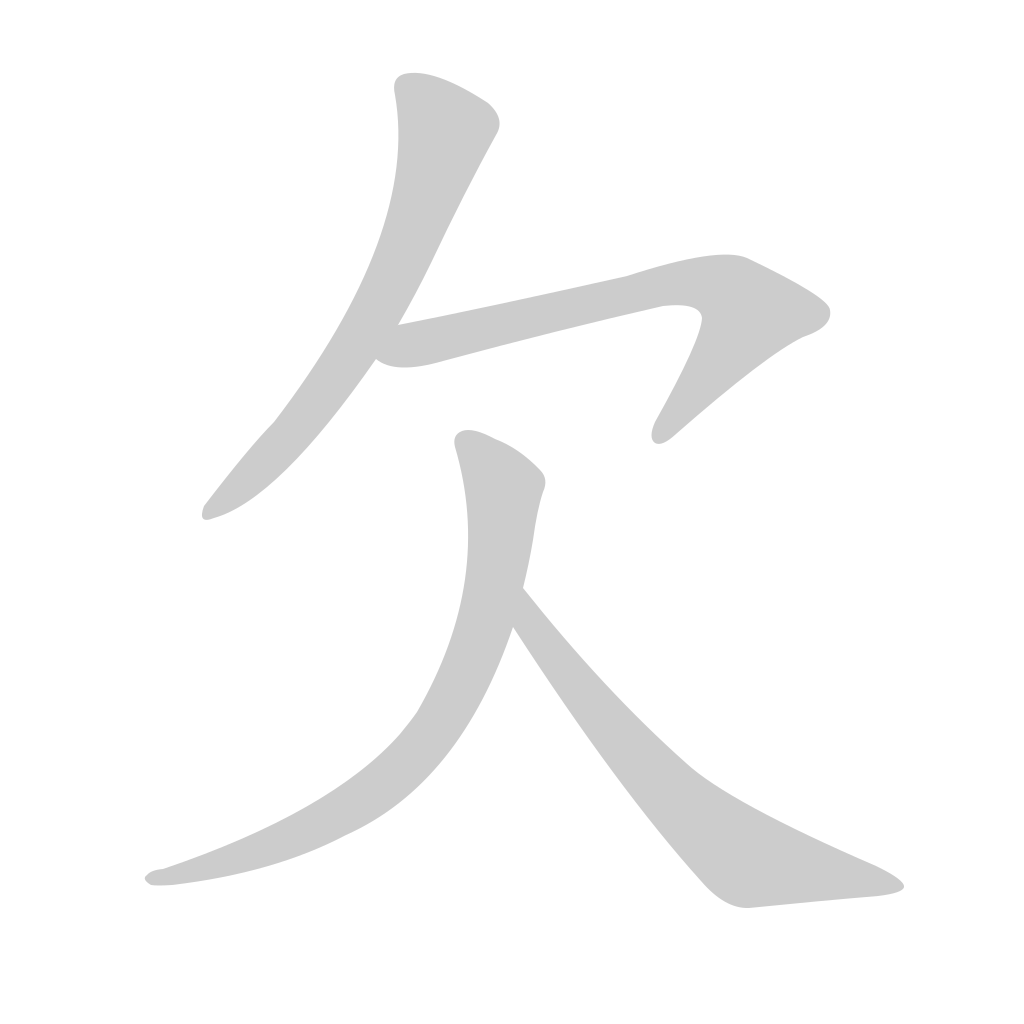
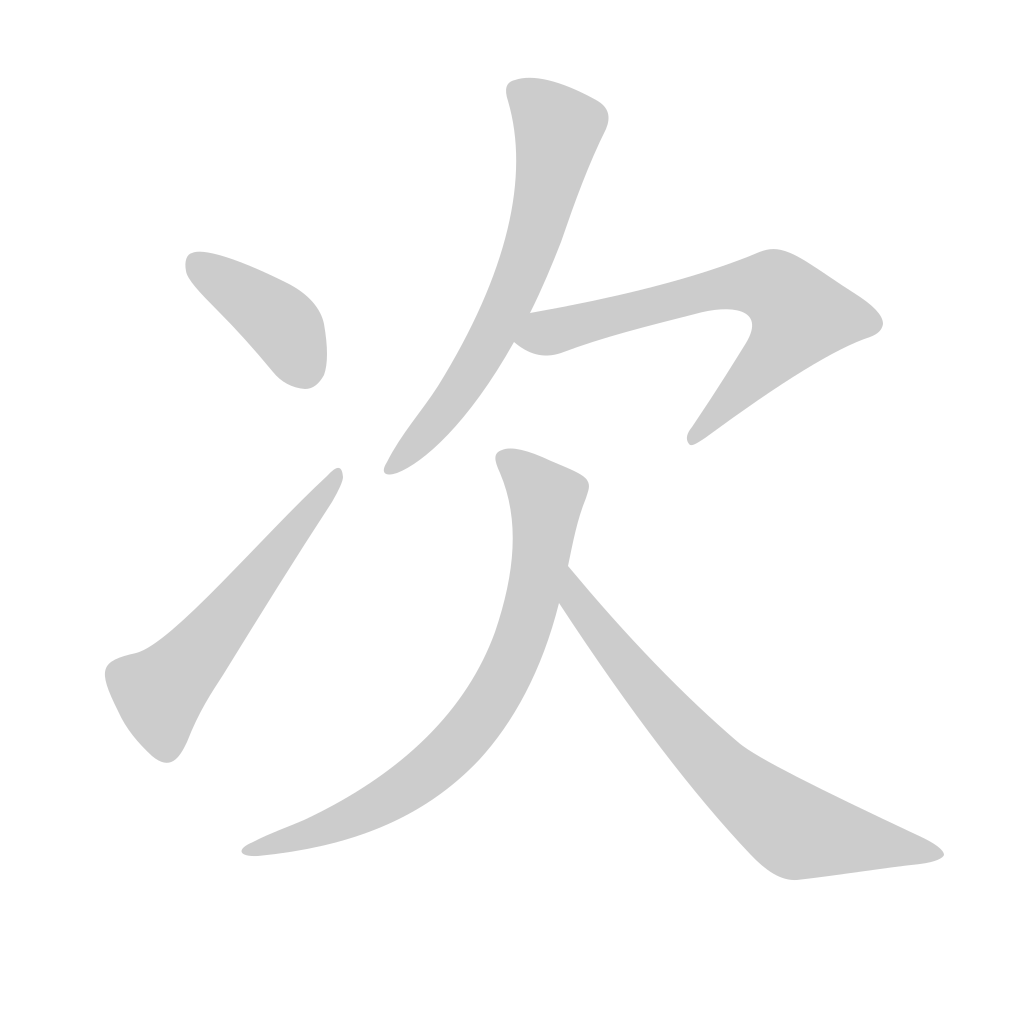
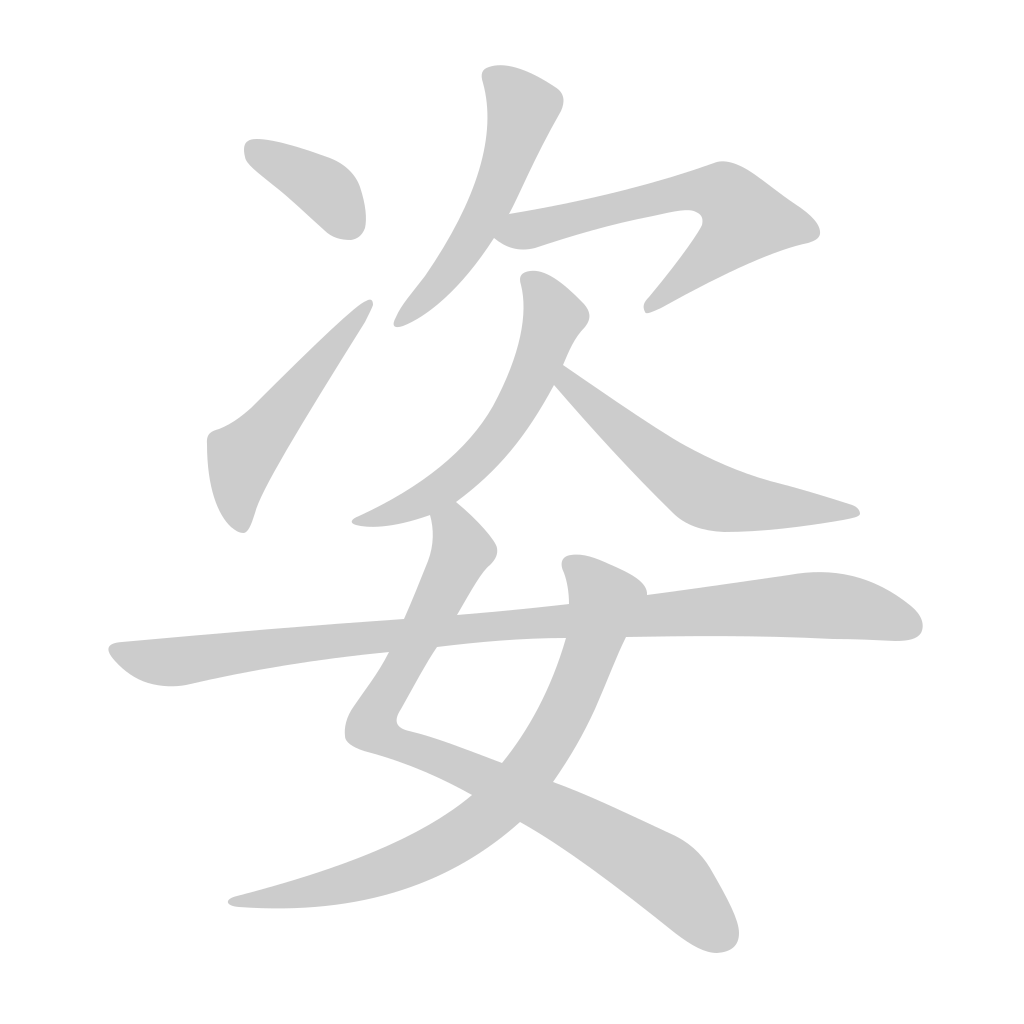
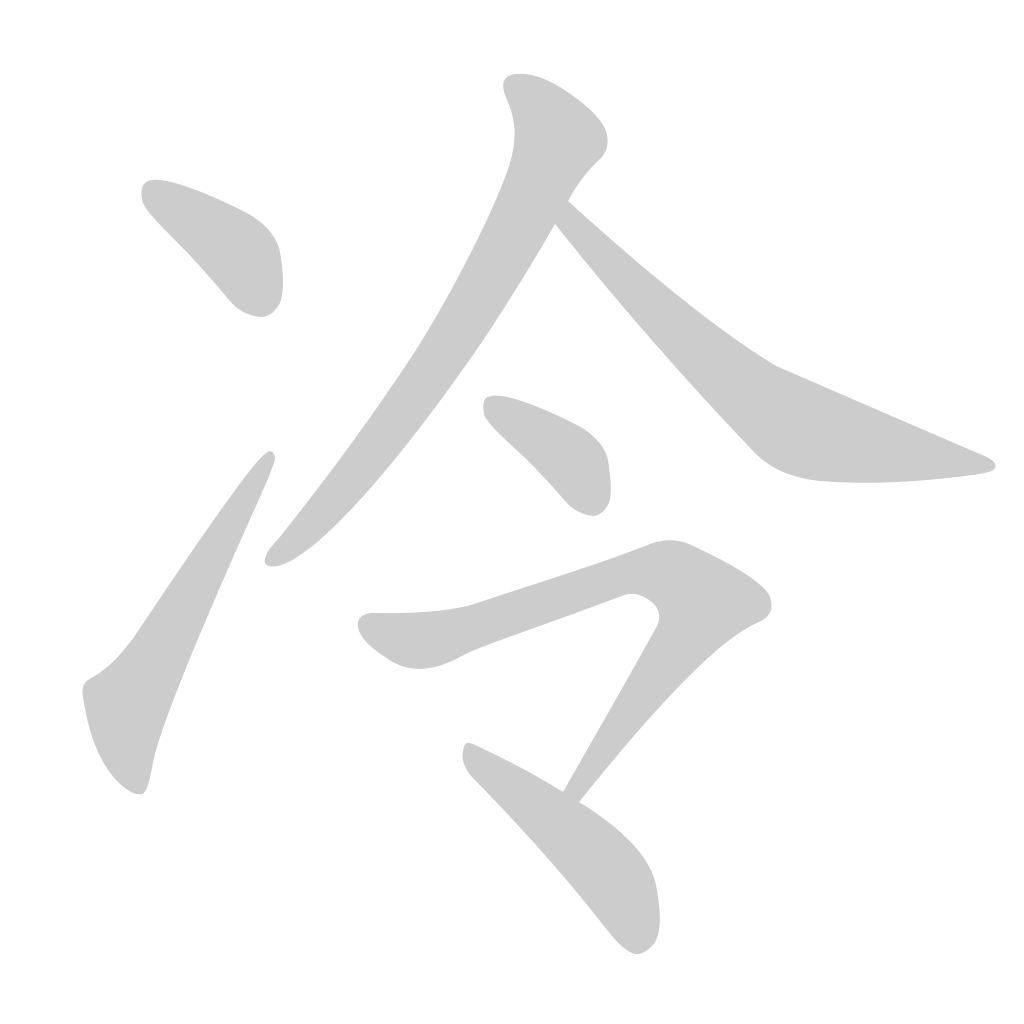
PNGs are generated from KanjiVG using
kanjivg-to-png, so each image shows the character being built stroke by stroke in panels. AnimCJK links open animated versions in a browser.
Per-Kanji Entries
653 — 慢 (ridicule, laziness) — 14 strokes
Radical: ⼼ (こころ — "heart, mind, spirit") · 14 strokes total
Components & function — 形声 (phonosemantic)
- 左 忄 (semantic: heart, emotions) — the vertical "heart" radical, marking this as an emotional-state kanji
- 右 曼 (sound マン; "long, drawn-out") — 曼【マン】→ 慢【マン】 ✓ exact phonetic match. The "drawn-out" sense also colors the meaning: a heart sprawling out lazily or loftily → laziness (怠慢), arrogance (自慢, 高慢), and by extension endurance (我慢 — the heart stretched long).
- Series link: 曼 is the same sound-carrier as 漫 (Lesson 44 — 漫画's 漫). Once you see 曼, predict マン.
Stroke order
- Structure: left 忄 (3 strokes: left dot, right dot, vertical) → right 曼 (11 strokes: 日 on top, the broad 罒 frame in the middle, 又 at the bottom)
- Watch: 曼 is three stacked layers — finish 日 completely, then the wide 罒, then 又. Don't interleave the layers.
- Common error: writing the middle layer as a second 日 — it's the broad, flat 罒 frame, clearly wider than the 日 above it. Pair-drill 慢 and 漫 (Lesson 44) side by side: same right-side 曼, only the radical differs.
654 — 情 (feelings, emotion, passion) — 11 strokes
Radical: ⼼ (りっしんべん — "heart, mind, spirit") · へん · 11 strokes total
Components & function — 形声 (phonosemantic)
- 左 忄 (semantic: heart, emotions)
- 右 青 (sound セイ; "blue/clear/fresh") — 青【セイ】→ 情【セイ】 as in 風情【ふぜい】's older reading; the dominant ジョウ is the 呉音 layer of the same series. Verify the series: 青 → 清 (clean), 晴 (clear), 静 (quiet) — all セイ/ジョウ-adjacent.
- Composite: "what wells up clear from the heart" → feeling, emotion, and by extension circumstances (事情) and information (情報 — originally "reports on circumstances").
Stroke order
- Structure: left 忄 (3 strokes) → right 青 (8 strokes: 龶 top — three horizontals + vertical — then 月 below)
- Watch: 青's top is 龶 (4 strokes), bottom is 月 (4 strokes — a thin moon shape). Complete the top before starting 月.
- Common error: writing the bottom of 青 as 円 — it's 月, not the round-bottomed 円.
655 — 慣 (accustomed, get used to, become experienced) — 14 strokes
Radical: ⼼ (りっしんべん — "heart, mind, spirit") · へん · 14 strokes total
Components & function — 形声 (phonosemantic)
- 左 忄 (semantic: heart, mind)
- 右 貫 (sound カン; "pierce, run through") — 貫【カン】→ 慣【カン】 ✓ exact phonetic match. The meaning rides along too: "habit" is the heart pierced through repeatedly until the path is worn (習慣, 慣れる).
- 貫 itself is Jōyō (一貫 "consistency") — this is one of the cleanest sound-and-meaning components in the lesson.
Stroke order
- Structure: left 忄 (3 strokes) → right 貫 (11 strokes: 毋-like bowl shape on top — 4 strokes — then 目, then the splayed base)
- Watch: 貫's top is the 毋-like shape, then 目 (5 strokes), then the two-stroke base. Three layers, top to bottom.
- Common error: treating the top of 貫 as 母 — it's similar but the inner stroke pattern differs. Write it as one crossing frame, not the two-dot 母.
656 — 快 (cheerful, pleasant, agreeable) — 7 strokes
Radical: ⼼ (りっしんべん — "heart, mind, spirit") · へん · 7 strokes total
Components & function — 形声 (phonosemantic)
- 左 忄 (semantic: heart, feelings)
- 右 夬 (sound カイ; "split open, decisive") — 夬【カイ】→ 快【カイ】 ✓. The same 夬 gives 決【ケツ】 (decide) with a consonant shift. The "decisive opening" → "release/pleasure" metaphor is faint but present: a heart that opens up feels pleasant (快適, 愉快).
- At 7 strokes this is the lightest 忄 kanji in the lesson — but 夬 is deceptively tricky to write despite its 4 strokes.
Stroke order
- Structure: left 忄 (3 strokes) → right 夬 (4 strokes: horizontal with downward hook on top, then the long vertical-to-sweep pair)
- Watch: 夬's top is the ⼹-like hooked shape, then the crossing strokes below — the final sweep tails off to the right.
- Common error: mistaking 夬 for 央 — 央 is symmetric, 夬 is asymmetric (the tail goes right and the top is open on the left).
657 — 適 (suitable, occasional, rare) — 14 strokes
Radical: ⾡ (しんにょう — "road, walk, to advance") · にょう · 14 strokes total
Components & function — 形声 (phonosemantic)
- 内 啇 (sound テキ; historically "root/base, small branch") — 啇【テキ】→ 適【テキ】 ✓ exact match
- 繞 辶 (semantic: going, advancing) — "going where one fits" → to suit, be appropriate (適当, 適応, 快適)
- Pair alert ⚡: 敵 (next entry) carries the identical 啇 — same sound, opposite-feeling semantic. 適 = good fit; 敵 = bad fit (the one you clash with). Memorize as a pair.
Stroke order
- Structure: inner 啇 first, fully (11 strokes: the 立-like cap, then 冂 with inner strokes, then 口 at the bottom) → 辶 wraps around last (3 strokes: dot, then the swooping body)
- Watch: 辶 is always written last, even though it visually "starts" on the left — this is the standard にょう rule.
- Common error: writing 辶 first because it sits on the left. Contents before the wrapping radical — no exceptions for しんにょう kanji.
658 — 敵 (enemy, foe, opponent) — 15 strokes
Radical: ⽁ (ぼくづくり — "activity, to strike, hit") · つくり · 15 strokes total
Components & function — 形声 (phonosemantic)
- 左 啇 (sound テキ) — the same component as in 適, with the same exact reading
- 右 攵 (semantic: to strike at) — "the one you strike at / who strikes at you" → enemy, opponent (敵, 匹敵 "to rival")
- Note the radical is the 4-stroke 攵 on the right, not the visually dominant 啇 — the sound lives on the left, the meaning on the right. This left-sound/right-meaning layout is the mirror image of the lesson's 忄 kanji.
Stroke order
- Structure: left 啇 (11 strokes, same as in 適) → right 攵 (4 strokes: short slash, horizontal, slash, final sweep)
- Watch: complete all 11 strokes of 啇 before starting 攵. The 攵 order is: short slash, then horizontal, then the two crossing sweeps.
- Common error: writing 攵 as 3 strokes — it's strictly 4. The final rightward sweep is its own stroke.
659 — 欠 (lack, gap, fail) — 4 strokes
Radical: ⽋ (あくび — "to lack, yawn") · 4 strokes total
Components & function — 象形 (pictograph)
- Depicts a person with mouth wide open — 𠂊 (a bowing/leaning figure) over 人. The original meaning is "yawn" (あくび), still alive in 欠伸.
- The "lack" meaning is historically borrowed: 欠 serves as the modern simplified form of 缺 ("chip, deficit"), and that merged-in sense (欠点, 欠席, 欠ける) is now dominant. So the picture says "yawn" while the everyday meaning says "missing" — don't try to derive one from the other.
- One of the few Jōyō kanji that is its own radical with no further decomposition; it recurs immediately in 次 and (via 次) in 姿.
Stroke order
- Structure: the angled top stroke (a single stroke that turns) → the second hooked stroke → 人 below (slash, then final sweep)
- Watch: the first stroke bends — it is one stroke, not two. Then the hook, then the two 人 strokes.
- Common error: treating 欠 as a 5-stroke kanji — it's strictly 4.
660 — 次 (next, order, sequence) — 6 strokes
Radical: ⽋ (あくび — "to lack, yawn") · 6 strokes total
Components & function — 会意 (compound ideograph) (structure debated)
- 左 冫 (2 strokes) — in the modern glyph this looks like the ice radical, but historically it is usually analyzed as a corruption of 二 ("two, second"), which also explains the reading ジ (as in 二【ジ】)
- 右 欠 (yawning/pausing person) — "pausing for breath" → what comes after the pause → next, second (次回, 目次, 次ぐ)
- The 欠 radical here is structural rather than cleanly semantic — the modern meaning "next" cannot be read off either component, so treat the composition as a memory aid, not an etymology.
Stroke order
- Structure: left 冫 (2 strokes: top dot, then lower slash) → right 欠 (4 strokes, as in the previous entry)
- Watch: both 冫 strokes come first, then all of 欠. Keep the left side narrow so 欠 has room.
- Common error: drawing 冫 with 3 dots like 氵 — it's only 2 strokes.
661 — 姿 (figure, form, shape) — 9 strokes
Radical: ⼥ (おんな — "woman") · 9 strokes total
Components & function — 形声 (phonosemantic)
- 上 次 (sound シ) — 次【シ・ジ】→ 姿【シ】; the same series gives 資 (resources) and 諮 (consult), both シ
- 下 女 (semantic: woman → body, form) — the radical carries the meaning here: the form/silhouette of a body → figure, appearance (姿, 姿勢, 容姿)
- Rare in this lesson: a vertically stacked 形声 kanji (sound on top, meaning below) — every other phonosemantic kanji in the lesson is left-right.
Stroke order
- Structure: top 次 (6 strokes, in the order from the previous entry) → bottom 女 (3 strokes: diagonal sweep, horizontal, then the long final stroke that crosses through)
- Watch: all of 次 first, then 女 — top before bottom, never interleaved.
- Common error: putting 女 on the side rather than the bottom — 姿 is a vertically stacked kanji, not a left-right one.
662 — 冷 (cool, cold (beer, person), chill) — 7 strokes
Radical: ⼎ (にすい — "ice") · へん · 7 strokes total
Components & function — 形声 (phonosemantic)
- 左 冫 (semantic: ice, freezing) — the 2-stroke ice radical, deliberately distinct from 3-stroke 氵 (liquid water)
- 右 令 (sound レイ; "command" — historically a person kneeling under a roof receiving orders) — 令【レイ】→ 冷【レイ】 ✓ exact match. The same series gives 零 (zero), 鈴 (bell), 齢 (age) — all レイ.
- Composite: "ice-cold" both literally (冷蔵庫, 冷たい) and of people (冷静, 冷淡) — the semantic radical does all the meaning work; 令 is pure sound here.
Stroke order
- Structure: left 冫 (2 strokes) → right 令 (5 strokes: the 𠆢-like cap — 2 strokes — then the small angled stroke, and the vertical with hook below)
- Watch: 冫 first, and again — 2 strokes, not 3. Then 令's cap before its lower strokes.
- Common error: writing 冷 with 氵 (water radical) — it's 冫 (ice). The difference matters semantically as well: 氵 = liquid water, 冫 = frozen/chilled.
Stroke & Component Patterns in This Lesson
The 忄 (りっしんべん) cluster — 慢, 情, 慣, 快
Four of ten kanji begin with 忄 (3 strokes: left dot, right dot, vertical) — this is the lesson's dominant structural theme. Always 忄 first, then the right-side phonetic. The right side fully determines both reading and meaning nuance:
| Kanji | Right side | Reading driver |
|---|---|---|
| 慢 | 曼 | 曼【マン】→ 慢【マン】 ✓ |
| 情 | 青 | 青【セイ】→ 情【ジョウ/セイ】 |
| 慣 | 貫 | 貫【カン】→ 慣【カン】 ✓ |
| 快 | 夬 | 夬【カイ】→ 快【カイ】 ✓ |
All four are emotional-state kanji — 忄 is doing honest semantic work in every one. Practice 忄 in isolation a dozen times; it makes all four kanji feel routine.
The 啇 pair — 適, 敵
Both kanji are 啇【テキ】 plus a different functional radical: 辶 ("going" → going where one fits → suitable) versus 攵 ("striking" → the one struck at → enemy). Same sound, opposite-feeling semantics — the highest-leverage pairing in the chapter. The 啇 itself is dense (11 strokes): drill it in isolation, then add 辶 (written last, wrapping) for 適 or 攵 (written after, on the right) for 敵.
The 冫 pair — 次, 冷
Both use a 2-stroke left component that must not be written as 3-stroke 氵. In 冷 it genuinely is the ice radical (semantic); in 次 it's historically a corruption of 二. Either way the writing rule is identical: two strokes, top dot then lower slash, before anything on the right. The 冫 vs 氵 distinction is one of the most commonly missed points in stroke-order practice.
The yawn family — 欠 → 次 → 姿
欠 (4 strokes) is a building block: 次 contains it (冫 + 欠), and 姿 contains all of 次 (次 + 女). Building up 姿 is also rehearsing 欠 and 次 — practice in exactly that order: 欠 → 次 → 姿. As a bonus, the sound carries partway: 次【シ】→ 姿【シ】 is a clean phonetic inheritance.
Similar-Looking Kanji (Outside This Lesson)
These aren't this lesson's kanji, but they're easy to confuse with one when reading — different meaning, different (or coincidentally similar) reading, similar shape.
| This lesson's kanji | Looks like | Key difference | Why it matters |
|---|---|---|---|
| 慢 (マン, lazy/arrogant) | 漫 (マン, rambling — Lesson 44) | Radical only: 忄 (heart) vs 氵 (water) | Same reading AND same right side 曼 — the strongest confusion pair available. 自慢 (boasting) vs 漫画 (manga): the radical is the only visual cue. |
| 適 (テキ, suitable) | 摘 (テキ, pluck) / 滴 (テキ, drip) | Left radical: 辶 vs 扌 vs 氵 — 啇 is identical | The 啇 series all read テキ, so the phonetic gives no disambiguation help — 指摘 (point out) and 水滴 (droplet) turn up constantly in real text next to 適当/快適. Check the radical, not the bulk of the character. |
| 姿 (シ, figure) | 資 (シ, resources) | Bottom: 女 vs 貝 | Same reading, same 次 on top. 姿勢 (posture) vs 資源 (resources) — at reading speed the top half is all you see; force yourself to check the bottom component. |
| 快 (カイ, pleasant) | 決 (ケツ, decide) | Radical: 忄 vs 氵; same right side 夬 | Shared 夬 with a consonant shift (カイ→ケツ). 快定? 決適? Learners swap these in writing more than in reading — the 夬 shape triggers the wrong radical from muscle memory. |
Phonetic Series Summary (also in the workbook, repeated here for reference)
Phonetic Series Summary
| Sound Component | Reading | In This Lesson | Other Common Kanji |
|---|---|---|---|
| 啇 | テキ | 適, 敵 | 摘 (pick), 滴 (drop) |
| 曼 | マン | 慢 | 漫 (Lesson 44 — same series) |
| 青 | セイ / ジョウ | 情 | 清 (clean), 晴 (clear), 静 (quiet) |
| 貫 | カン | 慣 | 貫 itself (penetrate) |
| 夬 | カイ | 快 | 決 (decide), 缺 (old form of 欠) |
| 令 | レイ | 冷 | 零 (zero), 鈴 (bell), 齢 (age) |
| 次 | シ / ジ | 姿 | 資 (resources), 諮 (consult) |
Lesson highlight: The 啇 series 適 ↔ 敵 is the single highest-leverage pattern in this chapter — same on'yomi, same component on the right, opposite semantic (good-fit vs bad-fit). This pairing recurs throughout the joyo set whenever 啇 appears.
Cross-lesson highlight (back-reference): 慢 + 漫 (Lesson 44) share 曼【マン】. If you learned 漫 last week, 慢 is structurally free.
⚠️ Etymological decompositions are simplified for study. For rigorous functional analysis see the Outlier Kanji Dictionary. Free sources used: Wiktionary JP 字源, Kanji Alive, on'yomi cross-referencing via WWWJDIC.
Sources
- KanjiVG — github.com/KanjiVG/kanjivg | License: CC-BY-SA 3.0
- kanjivg-to-png — github.com/nicdgonzalez/kanjivg-to-png
- AnimCJK — github.com/parsimonhi/animCJK | License: Arphic Public License
- Jisho.org — jisho.org | Uses KanjiVG data for stroke order diagrams.
- Outlier Linguistics — outlier-linguistics.com | The Outlier Kanji Dictionary is the gold standard for rigorous functional component analysis.