KIC Lesson 22 Kanji Reference
Table of Contents
- # Quick Reference
-
# Per-Kanji Entries
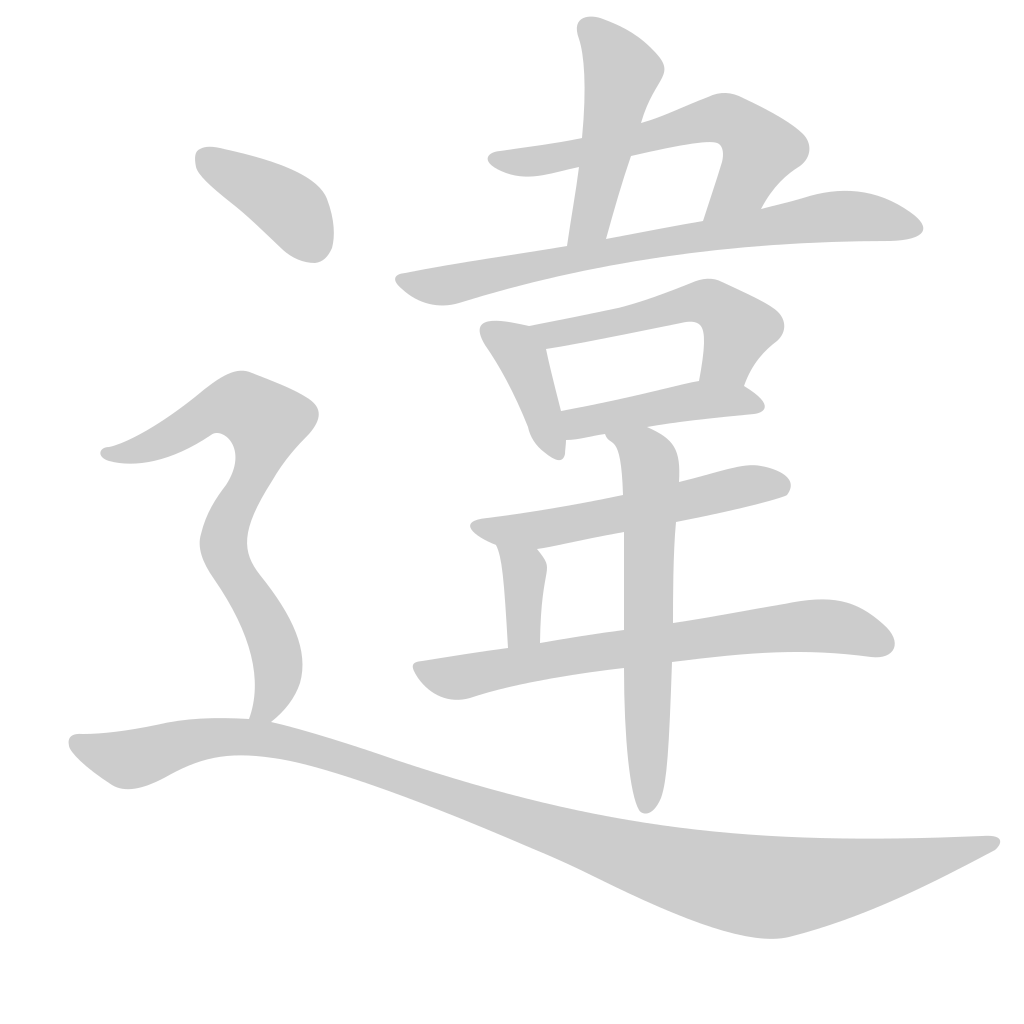
- ## 385 — 違 (difference, differ) — 13 strokes
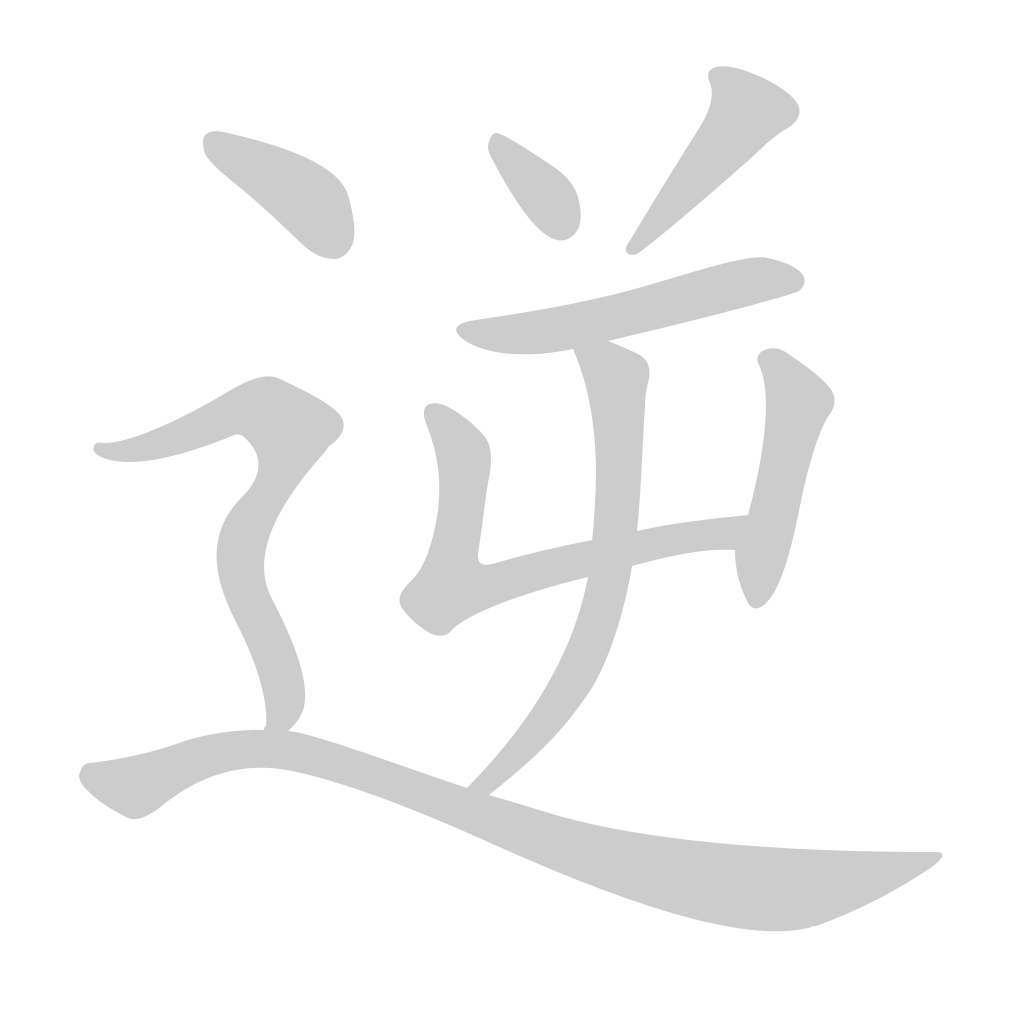
- ## 386 — 逆 (inverted, reverse, opposite) — 9 strokes
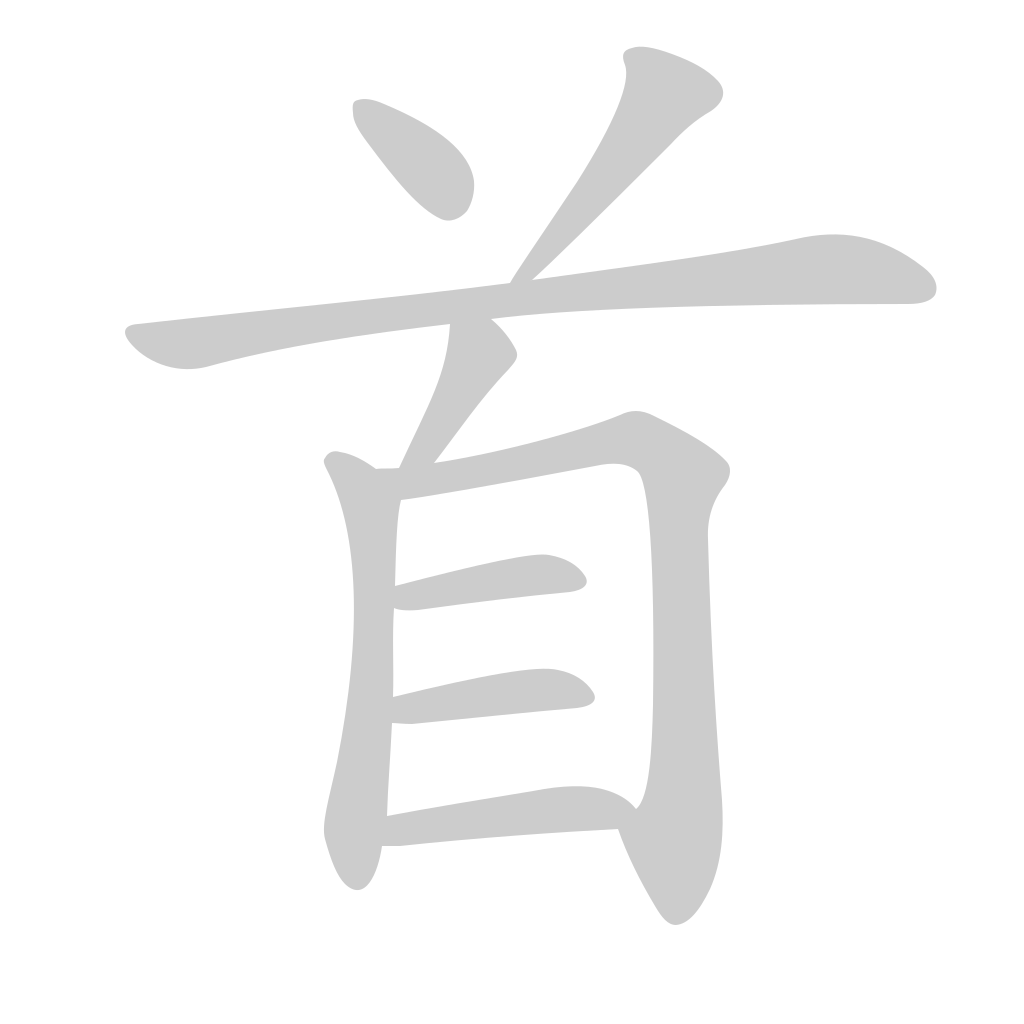
- ## 387 — 首 (neck, counter for songs and poems) — 9 strokes
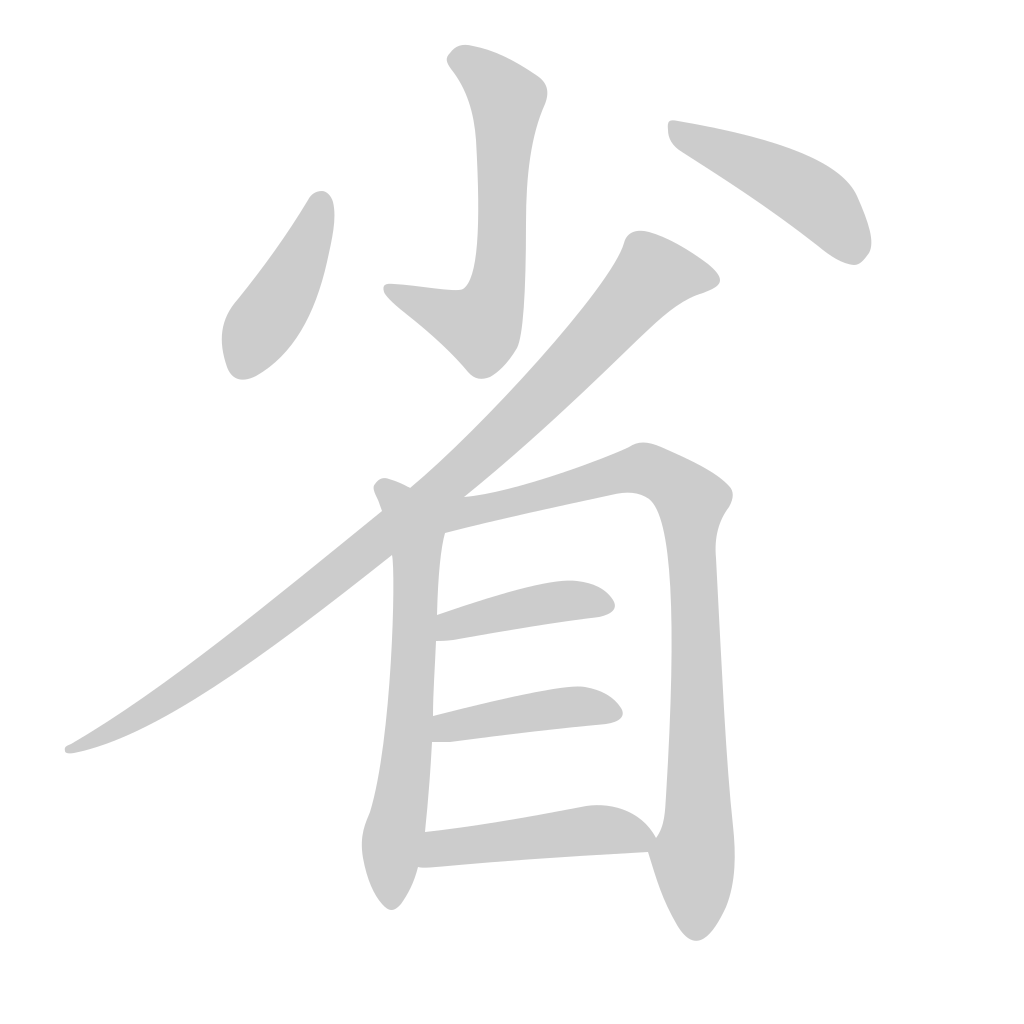
- ## 388 — 省 (government ministry, conserve, omit) — 9 strokes
- ## 389 — 身 (somebody, person, one's station in life) — 7 strokes
- ## 390 — 整 (organize, arranging, tune) — 16 strokes
- ## 391 — 想 (idea, thought, conception) — 13 strokes
- ## 392 — 相 (inter-, mutual, together) — 9 strokes
- ## 393 — 談 (discuss, talk) — 15 strokes
- ## 394 — 務 (task, duties) — 11 strokes
- # Stroke & Component Patterns in This Lesson
- # Similar-Looking Kanji (Outside This Lesson)
- # Phonetic Series Summary (also in the workbook, repeated here for reference)
- # Sources
Lesson 22 — Characters 385–394: 違 逆 首 省 身 整 想 相 談 務 Companion to Workbook. The workbook handles articles, vocabulary, study aids, and self-test. This file is the structural deep-dive — radicals, functional components (meaning/sound/form), stroke order, and shared-component patterns.
Quick Reference
| # | Kanji | Stroke Order | Strokes | Radical | Links |
|---|---|---|---|---|---|
| 385 | 違 |  | 13 | ⾡ (road) | Jisho · AnimCJK |
| 386 | 逆 |  | 9 | ⾡ (road) | Jisho · AnimCJK |
| 387 | 首 |  | 9 | ⾸ (head) | Jisho · AnimCJK |
| 388 | 省 |  | 9 | ⽬ (eye) | Jisho · AnimCJK |
| 389 | 身 |  | 7 | ⾝ (body) | Jisho · AnimCJK |
| 390 | 整 |  | 16 | ⽁ (activity) | Jisho · AnimCJK |
| 391 | 想 |  | 13 | ⼼ (heart) | Jisho · AnimCJK |
| 392 | 相 |  | 9 | ⽬ (eye) | Jisho · AnimCJK |
| 393 | 談 |  | 15 | ⾔ (words) | Jisho · AnimCJK |
| 394 | 務 |  | 11 | ⼒ (power) | Jisho · AnimCJK |
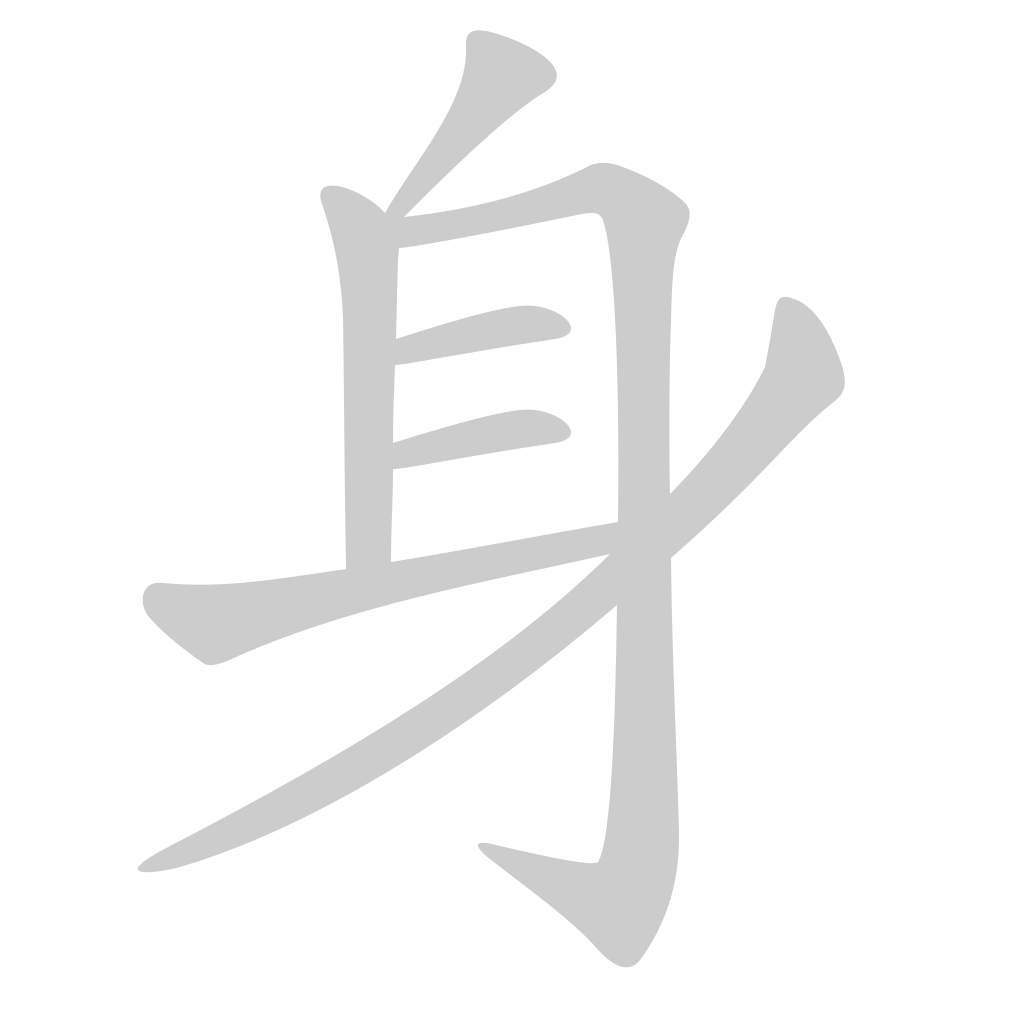
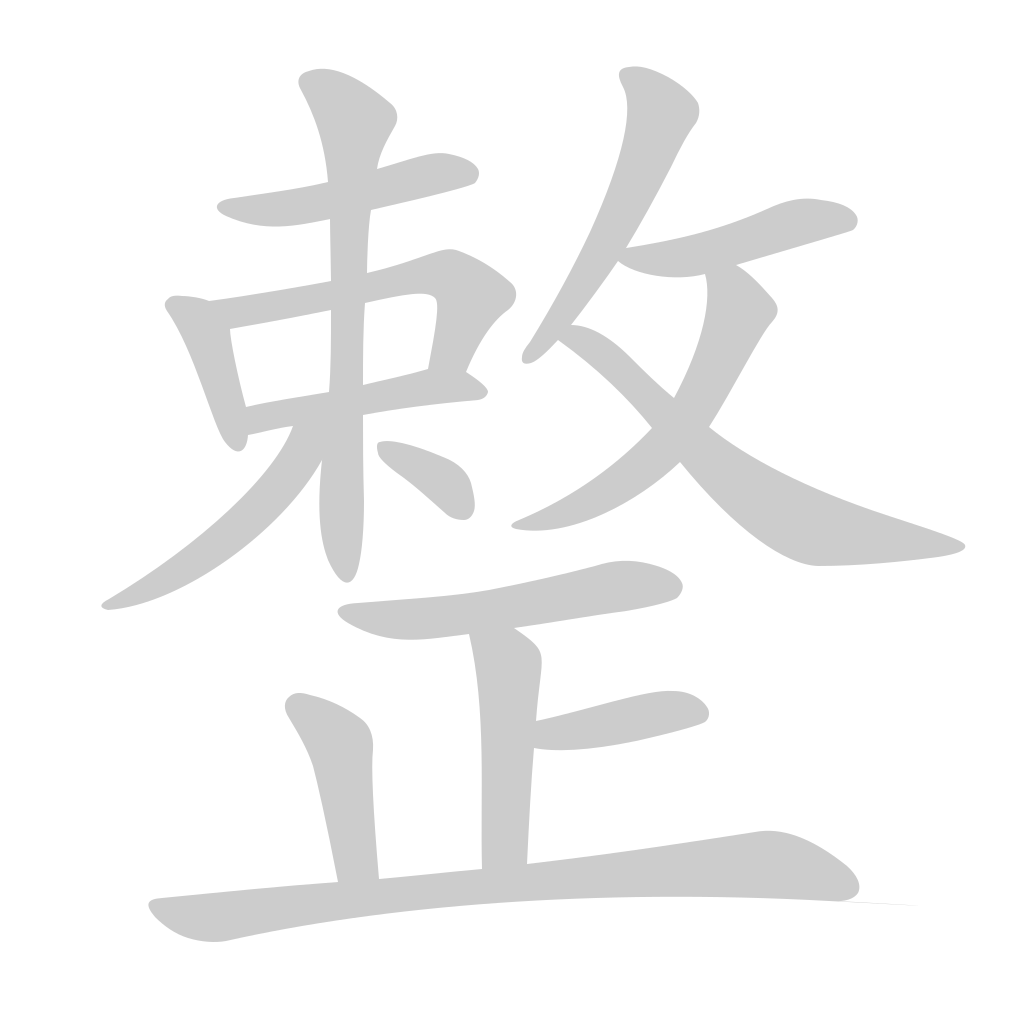
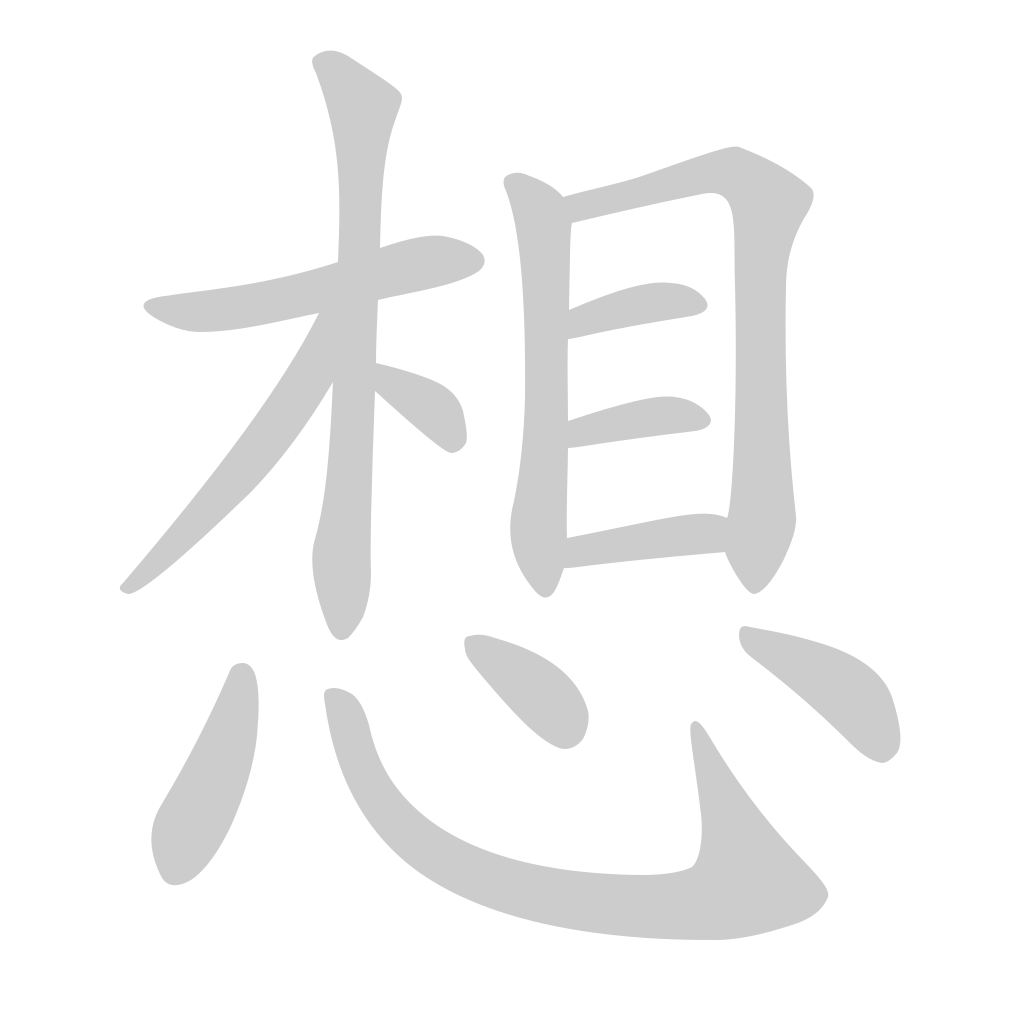
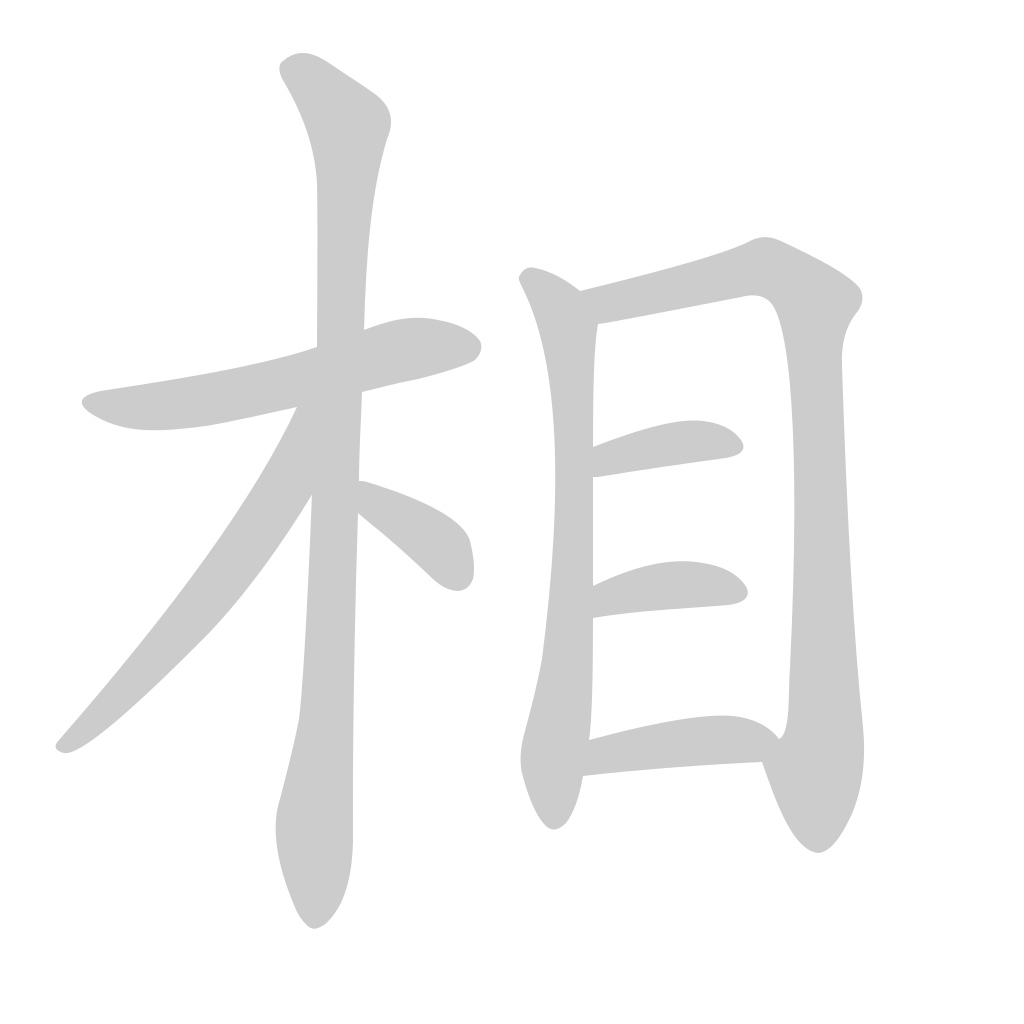
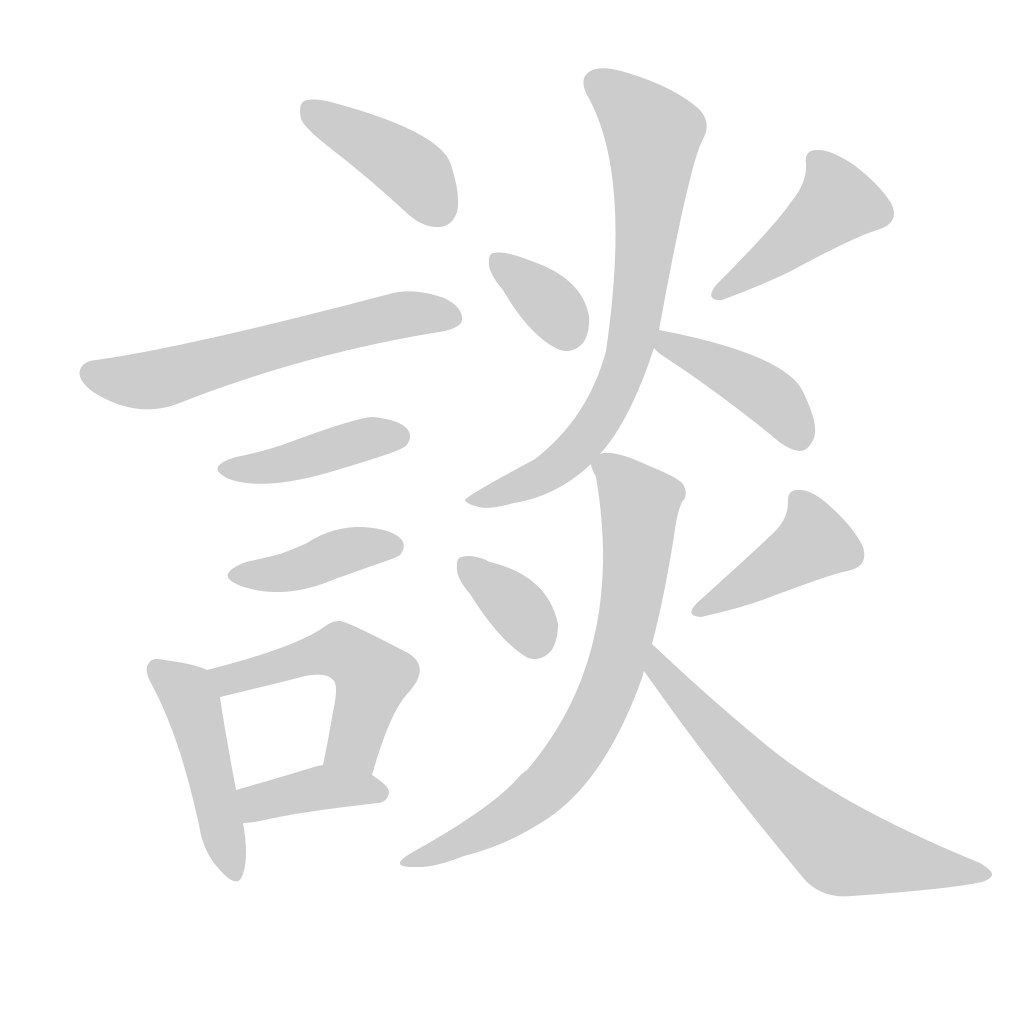
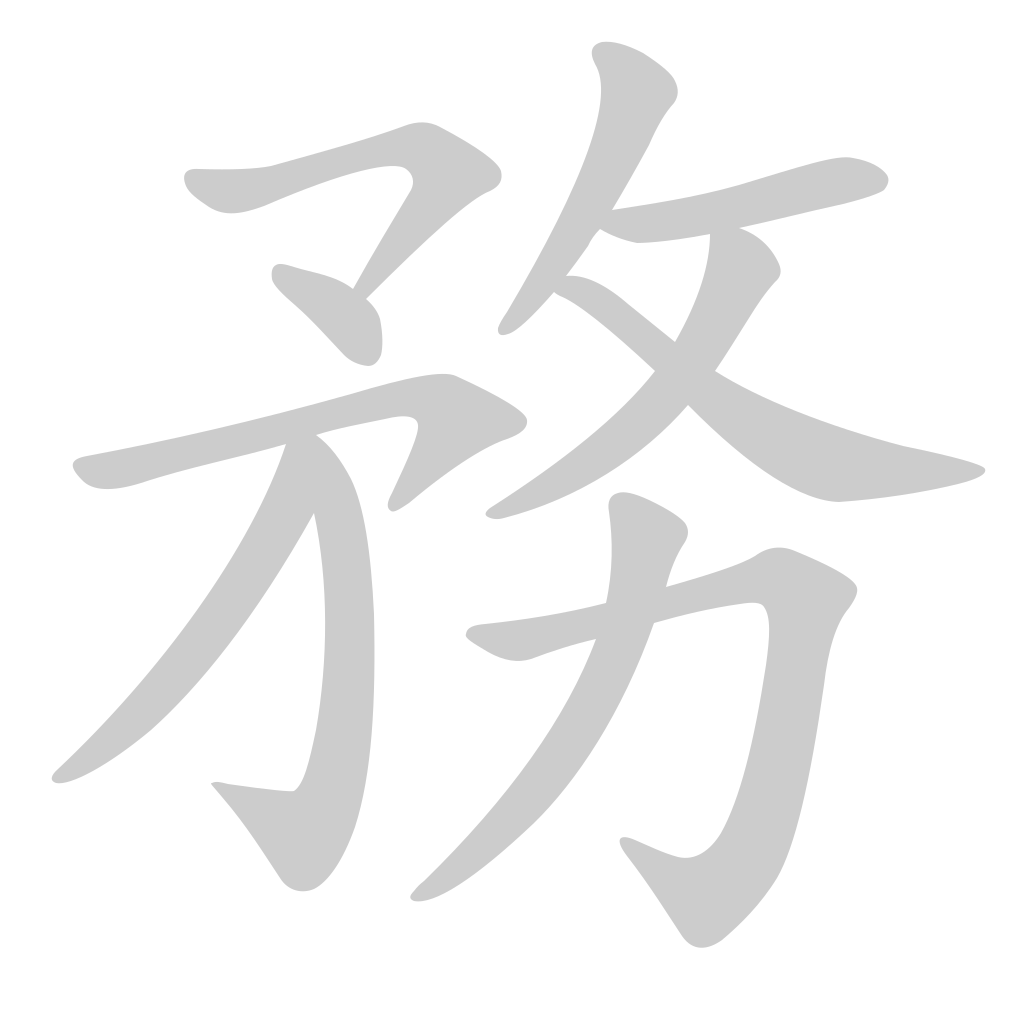
PNGs are generated from KanjiVG using
kanjivg-to-png, so each image shows the character being built stroke by stroke in panels. AnimCJK links open animated versions in a browser.
Per-Kanji Entries
385 — 違 (difference, differ) — 13 strokes
Radical: ⾡ (しんにょう — "road, walk, to advance") · にょう · 13 strokes total
Components & function — 形声 (phono-semantic compound)
- ⻌ (movement, road) — semantic component: motion along a path
- 韋 (sound イ; standalone meaning "tanned leather") — phonetic component; its oracle-bone form shows two feet circling a city wall in opposite directions, so it also contributes the original meaning "go against, diverge"
- 韋【イ】→ 違【イ】 ✓ exact match, and the series is productive: 偉【イ】 (great), 緯【イ】 (latitude/weft), 衛【エイ】 (guard). "Paths that diverge" → differ (違う), and by legal extension "diverge from the rules" → violate (違反, 違法, 違憲).
Stroke order
- Structure: Inner component 韋 first (10 strokes: top block, middle 口, bottom block), then ⻌ (3 strokes) last
- Watch: しんにょう is written last even though it sits on the left — the standard にょう exception to left-first order
- Common error: Writing ⻌ first out of left-to-right habit; also under-counting 韋 (it is a full 10 strokes — practice it separately)
386 — 逆 (inverted, reverse, opposite) — 9 strokes
Radical: ⾡ (しんにょう — "road, walk, to advance") · にょう · 9 strokes total
Components & function — 形声 (phono-semantic compound; the phonetic is also pictorially semantic)
- ⻌ (movement, road) — semantic component: motion along a path
- 屰 (sound ギャク) — an upside-down person: the pictograph 大 (person with arms spread) inverted. Carries both the sound and the image of "inverted, going against"
- "Moving against the flow / moving inverted" → reverse, opposite (逆の, 逆さ), oppose (逆らう), rebel (反逆). The rare secondary on'yomi ゲキ survives only in literary words. 屰 appears in few other Jōyō kanji — treat this as a self-contained character rather than a productive series.
Stroke order
- Structure: Inner component 屰 first (6 strokes: the two short top strokes, then the 屮-like body), then ⻌ (3 strokes) last
- Watch: Same にょう rule as 違 — the road radical goes last, and its final sweeping stroke must extend under the whole of 屰
- Common error: Writing 屰 as 羊 or 半 (over-simplifying the top) — the top strokes splay outward like an inverted 大, they are not a ソ + horizontal stack
387 — 首 (neck, counter for songs and poems) — 9 strokes
Radical: ⾸ (くび — "head") · 9 strokes total
Components & function — 象形 (pictograph)
- Depicts a head: the two top strokes are hair (or horns in the earliest forms), and the lower part is 自 — itself the pictograph of a face/nose. Not a compound; 首 is its own radical.
- Semantic spread runs "head" → "the top one": head of state (元首), prime minister (首相 "head minister"), top of the class (首席), and the head-entry of a dictionary section (部首 — the radical that heads a character group). It is also the counter for poems (一首).
- Note the Japanese quirk: kun くび means neck (首, 手首), while the on'yomi compounds keep the older "head/chief" sense — the meanings split between the two readings.
Stroke order
- Structure: The two short top strokes first, then the long horizontal, then 自 (6 strokes: outer frame before inner horizontals)
- Watch: The lower component is 自 — it starts with a short slanting tick before the frame, giving 6 strokes, not 5
- Common error: Writing the lower part as 目 (dropping 自's top tick) — that loses a stroke and produces a subtly wrong character
388 — 省 (government ministry, conserve, omit) — 9 strokes
Radical: ⽬ (め — "eye") · 9 strokes total
Components & function — 会意 (compound ideograph) (structure debated)
- 少 (few, small) — in the traditional analysis, "narrowing": narrowing the eyes to inspect closely
- 目 (eye) — semantic core: looking, inspecting
- "Look closely with narrowed eyes" → inspect, examine — inward as reflect (反省, 省みる) and outward as the inspecting office → government ministry (文部省). "Narrow down" separately yields omit, economize (省略, 省く, 省エネルギー). Older etymology reads the top as 生 (sound セイ) over 目, which would make it 形声 — structure debated.
- The two on'yomi track the meaning split: セイ for self-examination (反省), ショウ for ministry and omission (文部省, 省略).
Stroke order
- Structure: Top 少 first (4 strokes: vertical, two side dots, long left sweep), then 目 (5 strokes)
- Watch: 少's final left-sweeping stroke must fully clear before 目 begins — it hangs over the eye, not into it
- Common error: Writing the top as 小 (3 strokes) and forgetting the fourth sweeping stroke — the sweep is what distinguishes 省's top from a plain 小
389 — 身 (somebody, person, one's station in life) — 7 strokes
Radical: ⾝ (み — "body") · 7 strokes total
Components & function — 象形 (pictograph)
- Depicts a person in profile with a prominent belly — the oracle-bone form is usually read as a pregnant woman, hence "body" and by extension "oneself, one's person." 身 is its own radical.
- Semantic spread: the physical body (全身, 心身), then the social self — where you are from (出身), who you are (自身), your standing (身分) — and finally the metaphorical interior (中身 "contents"). The set phrase 身をもって ("with one's own body" = firsthand) preserves the concrete sense.
- As a radical, 身 marks body-related kanji outside this lesson (射, 躾) — rare but recognizable.
Stroke order
- Structure: Short top-left slant, then left vertical, then the folding stroke that forms top and right side, the two inner horizontals, the bottom horizontal that protrudes past the left vertical, and finally the long diagonal sweep written last
- Watch: The final diagonal cuts from upper right through the lower left, crossing outside the frame — it is the 7th stroke, never earlier
- Common error: Stopping the 6th stroke at the frame (it must jut out to the lower left) and writing the final sweep before the inner horizontals
390 — 整 (organize, arranging, tune) — 16 strokes
Radical: ⽁ (ぼくづくり — "activity, to strike, hit") · つくり · 16 strokes total
Components & function — 形声 (phono-semantic compound; both parts also pull semantic weight)
- 敕 (top: 束 "bundle" + 攵 "action") — semantic block: acting on a bundle, i.e. regulating, ordering
- 正 (correct) — phonetic component and semantic reinforcement: 正【セイ】→ 整【セイ】 ✓ exact match, the same series as 政【セイ】 (politics = 正 + 攵)
- "Act on a bundle until it is correct" → put in order, arrange, adjust (整理, 調整, 整える). The dictionary radical ⽁/攵 is buried in the top-right of a three-part stack — a good example of the radical not being the visual anchor.
Stroke order
- Structure: Top-left 束 (7 strokes), then top-right 攵 (4 strokes), then bottom 正 (5 strokes) — the lesson's highest stroke count at 16
- Watch: Finish 束 completely (including both final sweeps) before starting 攵; 正 comes last, with its final bottom horizontal the longest stroke of the character
- Common error: Squeezing 正 — the top pair (束+攵) should take roughly the upper 60% so the bottom 正 keeps full width; also miswriting 束 as 朿
391 — 想 (idea, thought, conception) — 13 strokes
Radical: ⼼ (こころ — "heart, mind, spirit") · 13 strokes total
Components & function — 形声 (phono-semantic compound)
- 相 (sound ソウ; "inspect, aspect") — phonetic component, and it is lesson-mate No. 392: 相【ソウ】→ 想【ソウ】 ✓ exact match, an in-lesson phonetic series
- 心 (heart/mind) — semantic component: mental activity
- "The mind holding an image before it" → think of, imagine (想像, 空想, 発想). Nearly all its vocabulary is mental imagery: 理想 (the ideal image), 予想 (the image cast ahead), 回想 (the image recalled). The minor on'yomi ソ survives in 愛想 (あいそ).
Stroke order
- Structure: Top 相 first (木 4 strokes, then 目 5 strokes), bottom 心 last (4 strokes: left dot, sweeping hook, two dots)
- Watch: 心's curving hook stroke carries the character's balance — keep it wide enough to cradle the two final dots
- Common error: Flattening 心 into a cramped line under the wide 相 — reserve the bottom third of the square for it
392 — 相 (inter-, mutual, together) — 9 strokes
Radical: ⽬ (め — "eye") · 9 strokes total
Components & function — 会意 (compound ideograph)
- 木 (tree) — the thing observed
- 目 (eye) — the observer; note dictionaries file 相 under the radical 目, not the left-hand 木 — the radical is a filing convention here
- "An eye examining a tree" → inspect, watch → the aspect a thing presents (人相, 様相) → two parties facing each other → mutual (相談, 相手, 相互) → the one who watches over affairs of state: minister (首相, 外相). One character, a long but traceable chain.
- Doubly important in this lesson: 相 is also the sound component of 想 (No. 391), and carries ソウ into 箱 and 霜 outside the lesson.
Stroke order
- Structure: Left 木 first (4 strokes), then 目 (5 strokes)
- Watch: As a left-hand component, 木's final right-hand stroke compresses into a short dot so 目 has room — don't write full-width 木
- Common error: Letting 木 claim half the character — the へん should take roughly 40%, and the 目 must stay a tall, narrow rectangle
393 — 談 (discuss, talk) — 15 strokes
Radical: ⾔ (ごんべん — "words, to speak, say") · へん · 15 strokes total
Components & function — 形声 (phono-semantic compound)
- 言 (words, speech) — semantic component: verbal activity
- 炎 (flame; two 火 stacked) — phonetic component. 炎 itself reads エン, but its derived series drifted: 淡【タン】 (pale), 痰【タン】 (phlegm), 談【ダン】 — mark it as a shifted series (エン→タン/ダン)
- "Words" + the タン/ダン sound → talk, conversation. The popular gloss "heated/lively words" reads 炎 semantically — appealing mnemonic, but the component is there for sound; treat the fire imagery as memory aid, not etymology.
- 談 is this lesson's only kanji with no kun'yomi — every use is an on'yomi compound (相談, 会談, 対談, 談話).
Stroke order
- Structure: Left 言 first (7 strokes: top dot, three horizontals, then 口), then 炎 (8 strokes: top 火, bottom 火)
- Watch: The two 火 are written top-then-bottom, each complete in itself; the top 火's final stroke shortens so the bottom 火 has room
- Common error: Making the two 火 equal size — the top one is compressed, the bottom one carries the full sweeping strokes
394 — 務 (task, duties) — 11 strokes
Radical: ⼒ (ちから — "power") · 11 strokes total
Components & function — 形声 (phono-semantic compound)
- 敄 (top: 矛 "spear" + 攵 "action") — the phonetic block: 矛【ム】→ 務【ム】 ✓ exact match, continuing into 霧【ム】 (fog). 敄 on its own meant "to exert, strive"
- 力 (strength) — semantic component, added below-right to underline effortful work
- "Striving with strength" → duty, task, service: the clerical everyday (事務, 公務員), the institutions (外務省, 国務省), and the verb 務める "serve in a role." The dictionary radical ⼒ occupies the smallest corner of the character — another radical-≠-visual-anchor case.
Stroke order
- Structure: Left 矛 first (5 strokes, ending in the piercing left sweep), then top-right 攵 (4 strokes), then 力 (2 strokes) tucked at bottom-right
- Watch: 矛 is 5 strokes — the final ノ pierces down-left through the hook; without it you have written 予
- Common error: Writing 矛 as 予 (dropping the 5th stroke), and misplacing 力 — it sits under 攵 on the right, not centered under the whole character
Stroke & Component Patterns in This Lesson
The しんにょう pair — 違, 逆 (radical written LAST)
Two kanji share ⾡/⻌ (しんにょう, "road/movement"), and both encode how something moves: 違 = paths that diverge, 逆 = movement against the flow.
- 違 (韋 + ⻌) — 13 strokes. Inner 韋 (10 strokes) first, then ⻌.
- 逆 (屰 + ⻌) — 9 strokes. Inner 屰 (6 strokes) first, then ⻌.
Stroke-order trap: unlike ordinary enclosures (which come first), にょう components come last — write the inner component completely, then wrap ⻌ (3 strokes) around and under it. If you drilled "enclosure before contents," this pair is the standing exception.
The observing eye — 目 in 省, 相, 想 (and 自 in 首)
Three kanji build on 目 (eye), and in all three the eye genuinely means observation:
- 省 (少 + 目) — narrowed eyes inspecting closely → reflect / ministry / omit
- 相 (木 + 目) — an eye examining a tree → inspect → mutual → minister
- 想 (相 + 心) — the inspected image held in the mind → think, imagine
想 literally contains 相 — batch-practice them together (write 相, then add 心). Meanwhile 首's lower component is 自 (nose/face), not 目: it has an extra top tick and 6 strokes. When these four kanji sit side by side, the 目/自 distinction is the one to keep sharp.
The 攵 action component off-radical — 整, 務
Both kanji contain 攵 ("action"), but in neither is it where you would look for a radical:
- 整 (束 + 攵 + 正) — 攵 IS the dictionary radical, yet it hides top-right in a three-part stack; the visual anchor is the bottom 正.
- 務 (矛 + 攵 + 力) — 攵 sits top-right again, but the radical is the small ⼒ at bottom-right.
Takeaway: the filing radical and the component your eye lands on are different things. In both kanji the recurring order is: left/top component first, 攵 second, the small final component last — and 攵 is always 4 strokes.
Similar-Looking Kanji (Outside This Lesson)
These aren't this lesson's kanji, but they're easy to confuse with one when reading — different meaning, different (or coincidentally similar) reading, similar shape.
| This lesson's kanji | Looks like | Key difference | Why it matters |
|---|---|---|---|
| 違 (イ, differ) | 偉 (イ, great) | Same 韋 core; ⻌ vs 亻 on the left | Same sound component AND same reading — 違い (difference) vs 偉い (great/admirable) is a genuine reading-time swap. 緯 (イ, latitude) extends the family with 糸. |
| 首 (シュ, neck/head) | 道 (ドウ, road) | 道 = 首 + ⻌ — containment, not resemblance | 道 is one of the most frequent kanji in Japanese and literally contains this lesson's 首. Once you see it, 道's stroke order (首 first, ⻌ last) comes free — same にょう rule as 違/逆. |
| 省 (セイ/ショウ, reflect/ministry) | 看 (カン, watch over) | Top: 少 vs 手 over the same 目 | Both are "something over an eye" with observation meanings — 反省 vs 看病/看護 live close semantically, and at reading speed the tops blur. The hand (手) vs narrowing (少) is the tell. |
| 務 (ム, duty) | 努 (ド, exert) | Same X+力 build: 敄+力 vs 奴+力 | Compounded by the kun homophone trap: 務める, 努める, and 勤める are ALL つとめる (serve a role / endeavor / be employed). Shape-similar and sound-identical — see Workbook 4E. |
Phonetic Series Summary (also in the workbook, repeated here for reference)
Phonetic Series Summary
| Sound Component | Reading | In This Lesson | Other Common Kanji |
|---|---|---|---|
| 韋 (tanned leather / go around) | イ | 違 | 偉 (great — イ), 緯 (latitude — イ), 衛* (guard — エイ) — a tight, reliable series |
| 相 (mutual, aspect) | ソウ | 想 | 相 itself is No. 392 in this lesson — a rare in-lesson phonetic pair (想 = 相 + 心). Also 箱 (box — はこ, with 相 as the historical sound) and 霜 (frost — ソウ). |
| 正 (correct) | セイ | 整 | 政 (politics — セイ, same 正+攵 build), 征 (conquer — セイ), 症* (symptom — ショウ) |
| 矛 (spear) | ム | 務 | 霧 (fog — ム); 矛 itself reads ム (矛盾 むじゅん) |
| 炎 (flame) | タン/ダン | 談* | 淡 (pale — タン), 痰 (phlegm — タン); 炎 itself reads エン — the derived series drifted to タン/ダン |
💡 Lesson highlight: This is the government lesson — ministers (首相, 外相, 文相) and ministries (文部省, 外務省, 国務省) put four kanji (首, 相, 省, 務) on permanent political duty, with 談 joining in via 会談/談話. In-lesson compound pairing is exceptional: 首相, 相談, 相違点, and 外務省 each combine two lesson kanji, and 想 is literally lesson-mate 相 with 心 underneath — the lesson contains its own phonetic series. Trap: 相 and 省 each carry two on'yomi (ソウ/ショウ and セイ/ショウ), and both read ショウ precisely in the government words — see Study Aid 4D.
Sources
- KanjiVG — github.com/KanjiVG/kanjivg | License: CC-BY-SA 3.0
- kanjivg-to-png — github.com/nicdgonzalez/kanjivg-to-png
- AnimCJK — github.com/parsimonhi/animCJK | License: Arphic Public License
- Jisho.org — jisho.org | Uses KanjiVG data for stroke order diagrams.
- Outlier Linguistics — outlier-linguistics.com | The Outlier Kanji Dictionary is the gold standard for rigorous functional component analysis.