Finance Vocabulary Unit 2 Kanji Reference
Table of Contents
- # Quick Reference
-
# Per-Kanji Entries
- ## 1 — 銀 (silver) — 14 strokes
- ## 2 — 賃 (fare, fee, hire) — 13 strokes
- ## 3 — 料 (fee, materials) — 10 strokes
- ## 4 — 済 (settle (debt, etc.), relieve (burden), finish) — 11 strokes
- ## 5 — 返 (return, answer, fade) — 7 strokes
- ## 6 — 替 (exchange, spare, substitute) — 12 strokes
- ## 7 — 振 (shake, wave, wag) — 10 strokes
- ## 8 — 込 (crowded, mixture, in bulk) — 5 strokes
- ## 9 — 現 (present, existing, actual) — 11 strokes
- # Stroke & Component Patterns in This Unit
- # Similar-Looking Kanji (Outside This Unit)
- # Phonetic Series Summary (also in the workbook, repeated here for reference)
- # Sources
Unit 2 — 銀 賃 料 済 返 替 振 込 現 Companion to Workbook. The workbook handles articles, vocabulary, study aids, and self-test. This file is the structural deep-dive — radicals, functional components (meaning/sound/form), stroke order, and shared-component patterns.
Quick Reference
| # | Kanji | Stroke Order | Strokes | Radical | KIC # | Links |
|---|---|---|---|---|---|---|
| 1 | 銀 |  | 14 | ⾦ (metal) | KIC 3 | Jisho · AnimCJK |
| 2 | 賃 |  | 13 | ⾙ (shell) | KIC 63 | Jisho · AnimCJK |
| 3 | 料 |  | 10 | ⽃ (big dipper) | KIC 11 | Jisho · AnimCJK |
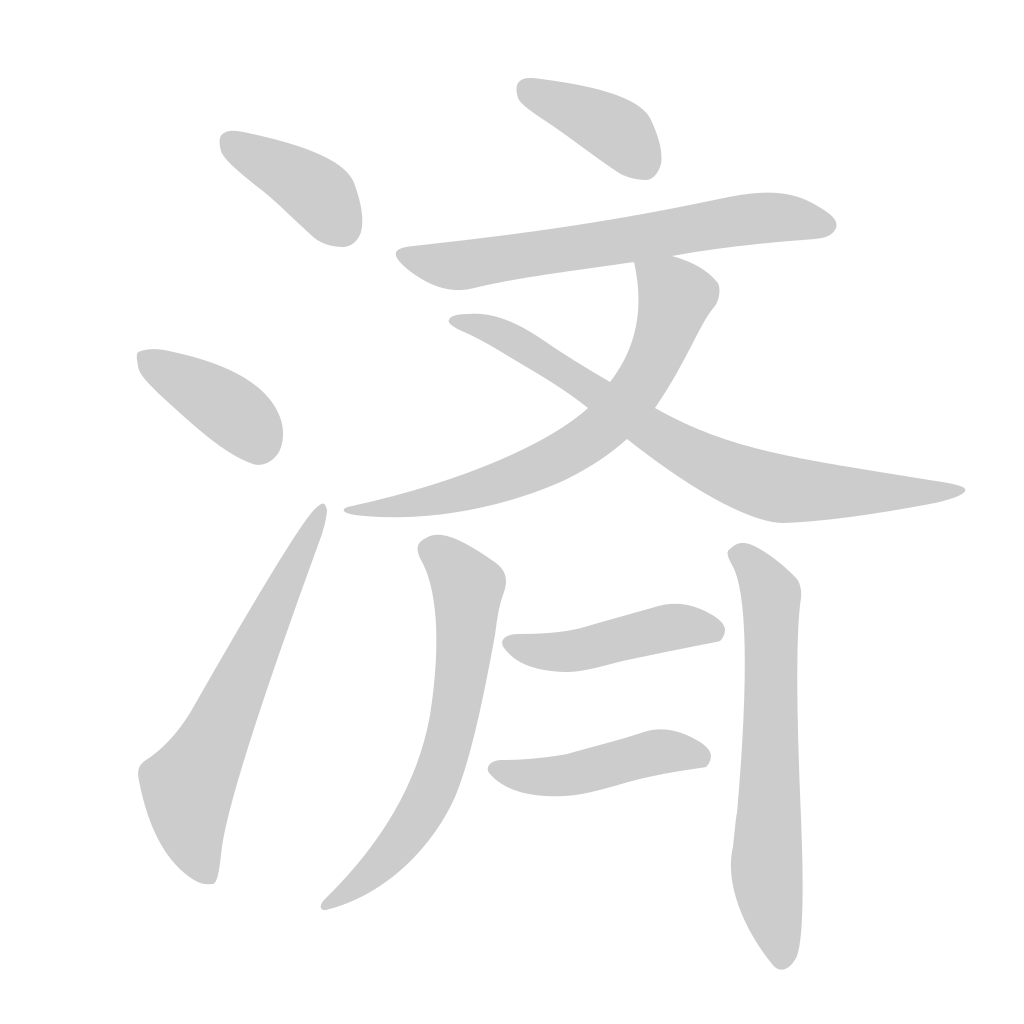
| 4 | 済 |  | 11 | ⽔ (water) | KIC 33 | Jisho · AnimCJK |
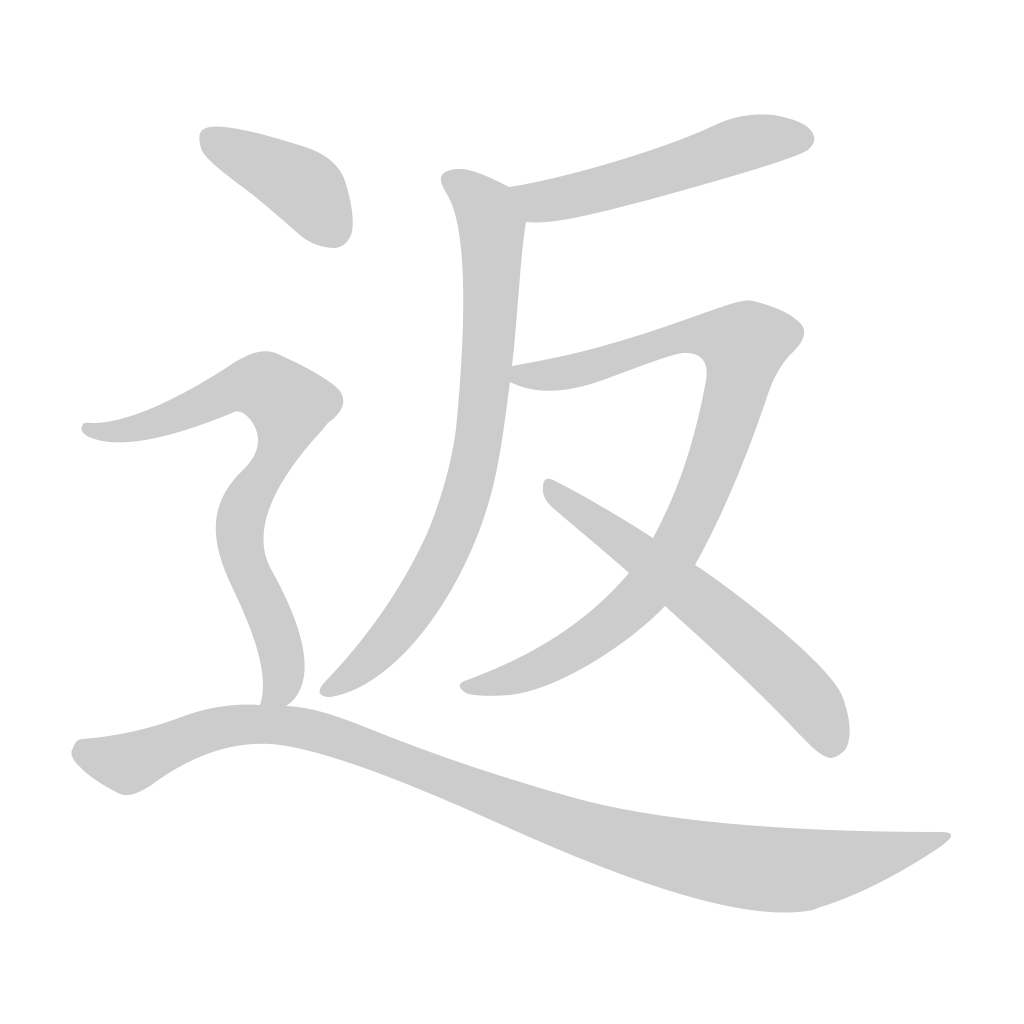
| 5 | 返 |  | 7 | ⾡ (road) | KIC 8 | Jisho · AnimCJK |
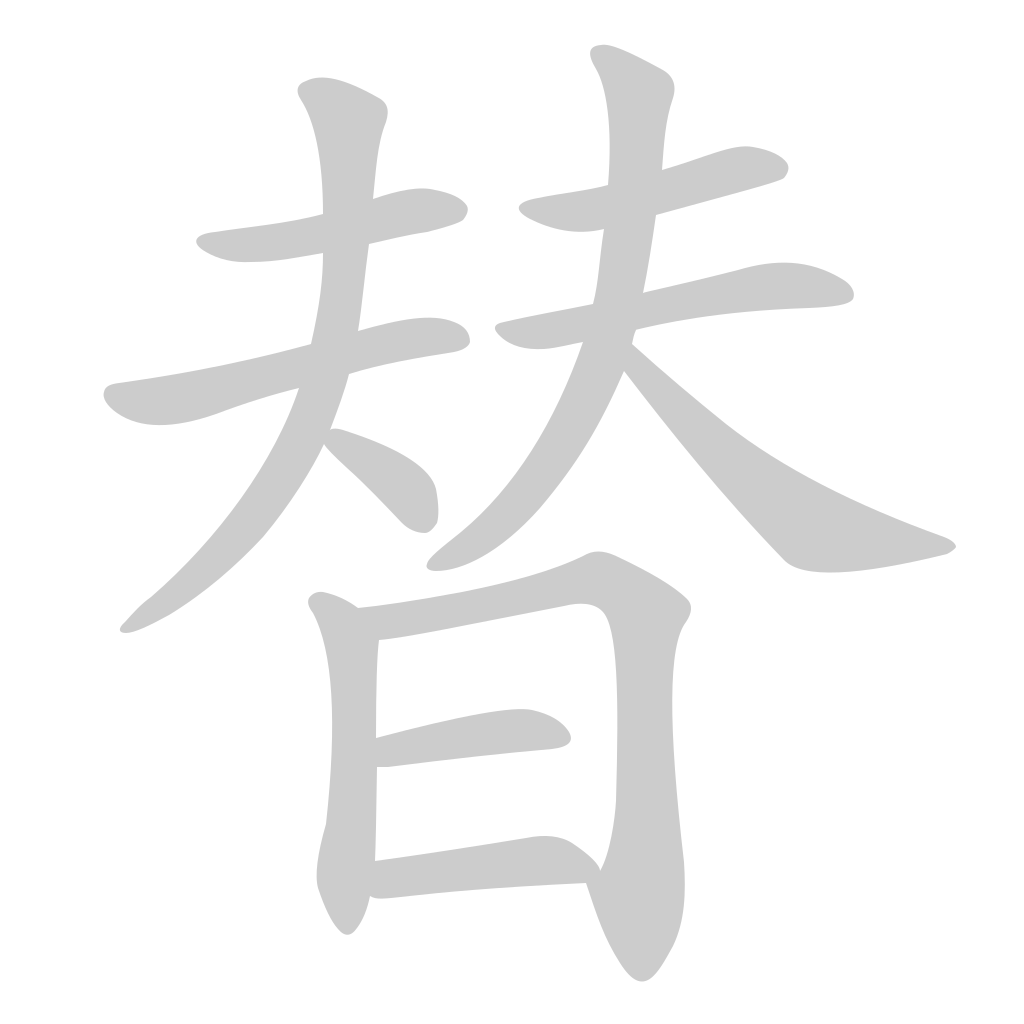
| 6 | 替 |  | 12 | ⽈ (sun) | KIC 21 | Jisho · AnimCJK |
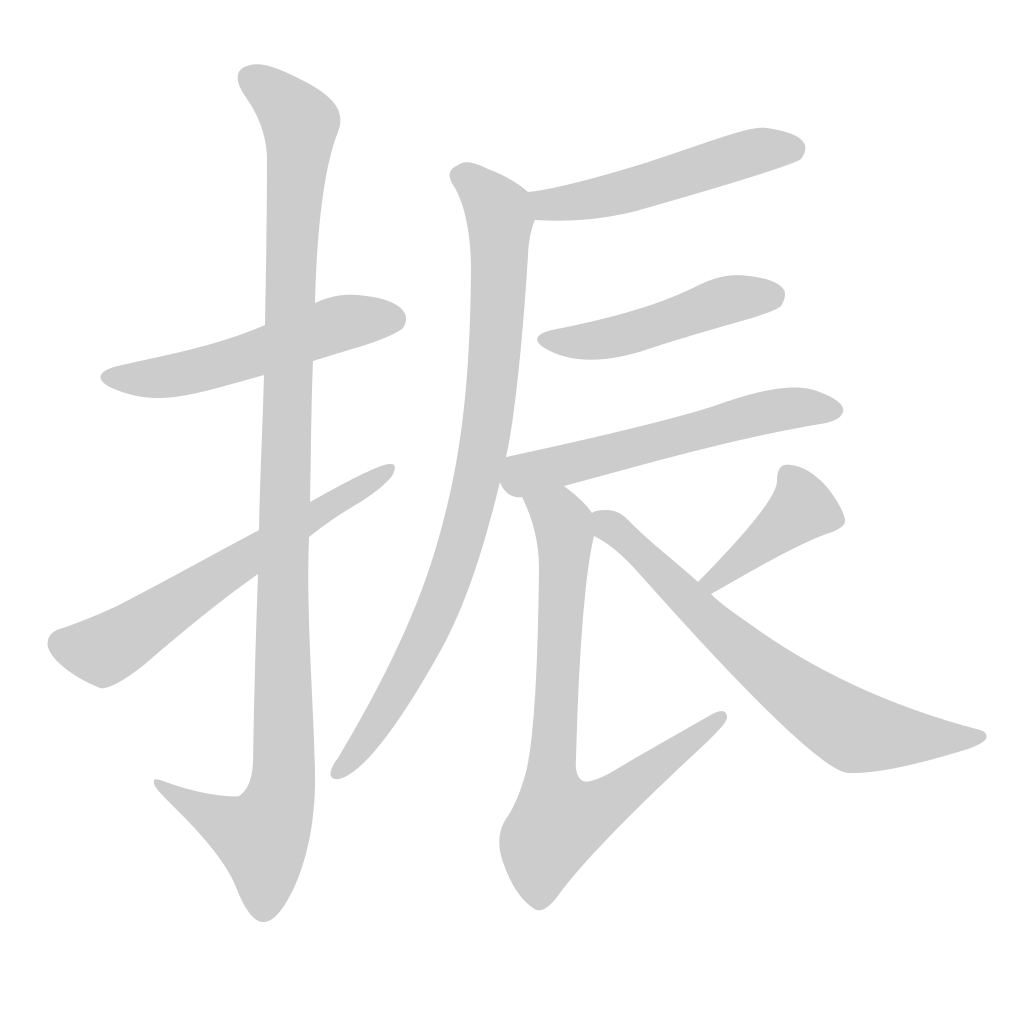
| 7 | 振 |  | 10 | ⼿ (hand) | KIC 56 | Jisho · AnimCJK |
| 8 | 込 | 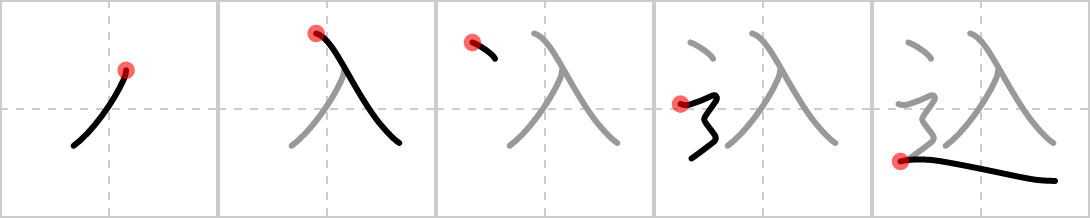 | 5 | ⾡ (road) | KIC 73 | Jisho · AnimCJK |
| 9 | 現 |  | 11 | ⽟ (jewelry) | KIC 38 | Jisho · AnimCJK |
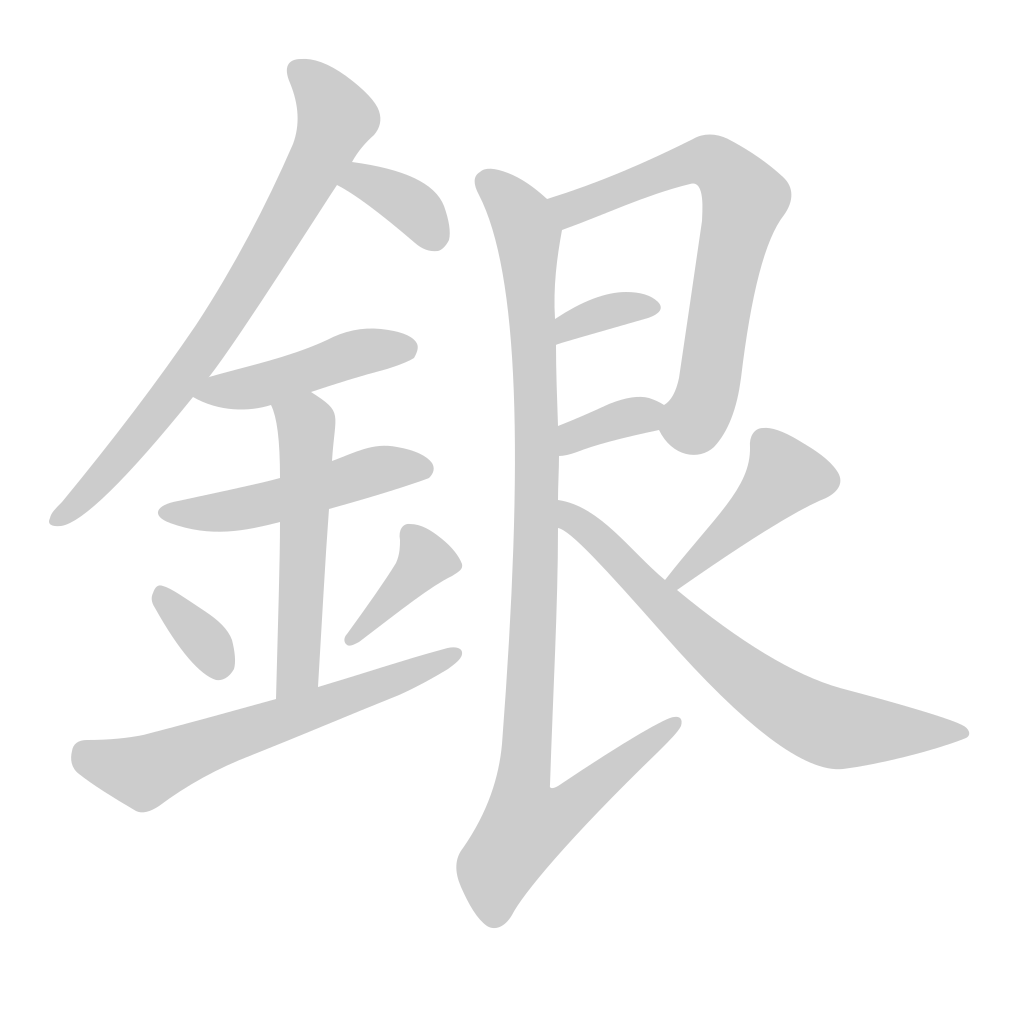
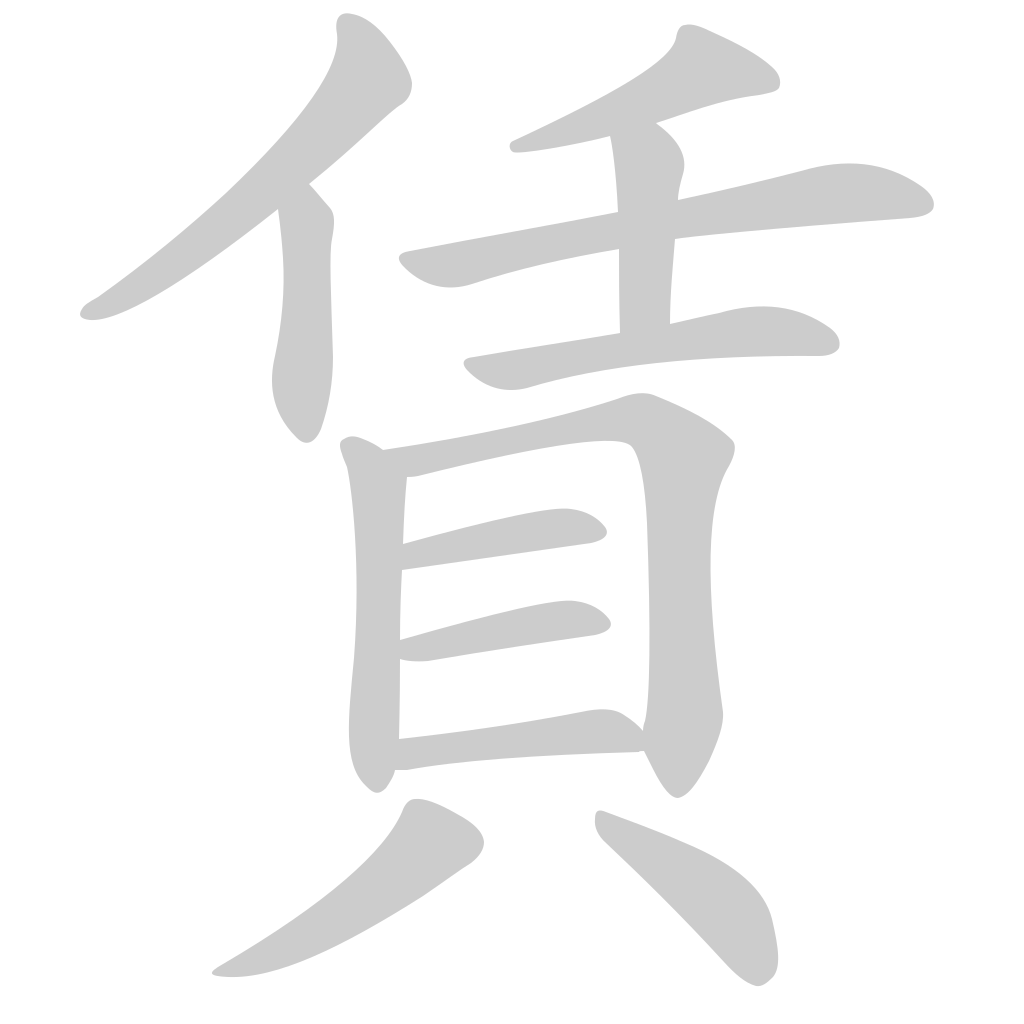
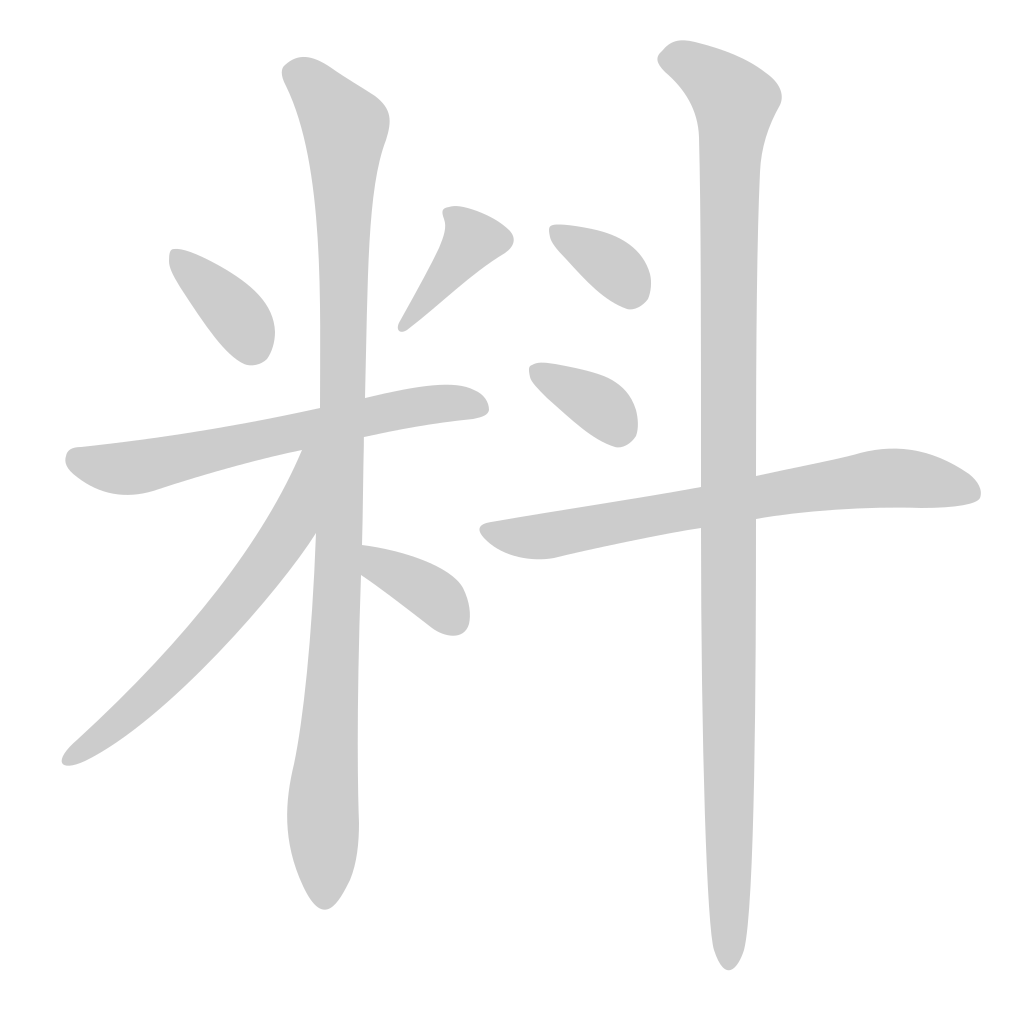

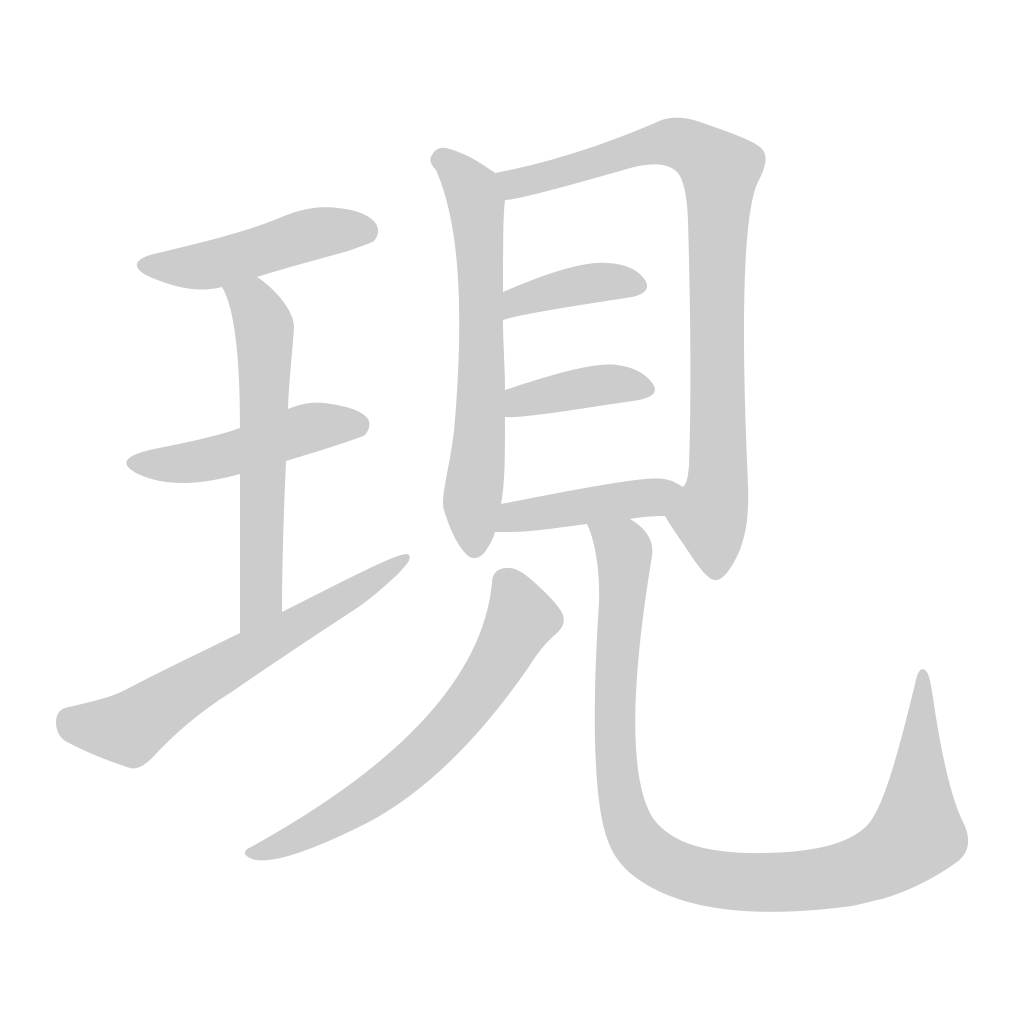
PNGs are generated from KanjiVG using
kanjivg-to-png, so each image shows the character being built stroke by stroke in panels. AnimCJK links open animated versions in a browser. KIC # cross-references the kanji's home chapter in the Kanji in Context numbering (1–143), whether or not that chapter has an authored workbook yet.
Per-Kanji Entries
1 — 銀 (silver) — 14 strokes
Radical: ⾦ (かねへん — "metal, gold, mineral") · へん · 14 strokes total
Components & function — 形声 (phonetic-semantic): 金 (meaning: metal) + 艮 (phonetic, コン → ギン; ancient meaning "to stop, be hard/fixed"). A hard, fixed metal — silver — extended metonymically to "bank" (銀行), the institution built on precious-metal value.
- 金 (meaning): metal — this radical's most common role across the jouyou set is a blunt "this is about metal/money" signal (see also 銅, 鉄, 針, 鏡).
- 艮 (sound): reads コン elsewhere (根, 恨), but drifts to ギン here — the same component also produces ゲン (限) and ガン (眼). Four different readings from one phonetic component is unusually wide drift; treat 艮 as "in this general sound family," not a precise predictor.
Stroke order
- Structure: 金 (left, 8 strokes, its own standard build: roof-shape top, two short strokes, then 土-like base) first, then 艮 (right, 6 strokes).
- Watch: 14 strokes is dense for a left-right structure — keep 金 compact so 艮 has room; don't let the left half sprawl.
- Common error: writing 艮 as 良 (which has an extra dot/stroke) — 艮 and 良 are visually close but distinct characters; 銀 uses 艮 only.
2 — 賃 (fare, fee, hire) — 13 strokes
Radical: ⾙ (かい — "shell, property, wealth") · 13 strokes total
Components & function — 形声 (phonetic-semantic): 任 (phonetic, ニン → チン; meaning: to bear, a duty/burden) + 貝 (meaning: money, wealth). Money borne as an obligation — the concrete image behind "fare, fee, wage."
- 任 (sound + meaning): reads ニン elsewhere (任務, 責任) but drifts to チン here; also contributes "duty/burden borne" to the sense of an obligatory payment.
- 貝 (meaning): the finance track's recurring money-signal radical — continues the pattern from Unit 1's 費 and 得.
Stroke order
- Structure: 任 (left, 6 strokes: 亻 then the 壬-shaped remainder) first, then 貝 (right, 7 strokes, standard build: top horizontal, box body, two base strokes).
- Watch: don't confuse this left-side 任 with a plain 亻 — it carries three more strokes after the person radical.
- Common error: writing 貝 with only one bottom stroke instead of two — 貝's base always has two short diverging strokes, matching every other 貝-kanji in this track.
3 — 料 (fee, materials) — 10 strokes
Radical: ⽃ (ますづくり — "big dipper, ladle, 18 liters") · つくり · 10 strokes total
Components & function — 会意 (ideographic): 米 (meaning: rice, grain) + 斗 (meaning: a ladle/measure, ~18 liters). Measuring out grain with a ladle — the concrete image behind "a measured amount," extended to "a fee" (a measured sum owed) and "materials" (measured-out stock).
- 米 (meaning): rice/grain — the thing being measured.
- 斗 (meaning): a ladle, also the classical unit of volume it represents. As a radical (⽃), it recurs in a small number of kanji tied to measuring or dipping (料 is the jouyou set's clearest example).
Stroke order
- Structure: 米 (left, 6 strokes: cross-shape core with four surrounding strokes) first, then 斗 (right, 4 strokes: two short strokes then a vertical hook and a final sweep).
- Watch: 米's cross-shape must be centered before adding the four diagonal strokes — rushing this makes the whole left side lean.
- Common error: writing 斗 with an extra stroke, making it look like 料's right side belongs to 科 (かがく-related "section/department," a different kanji entirely) — check the final hook carefully.
4 — 済 (settle (debt, etc.), relieve (burden), finish) — 11 strokes
Radical: ⽔ (さんずい — "water") · へん · 11 strokes total
Components & function — 形声 (phonetic-semantic): 氵 (meaning: water) + a simplified form of 齊 (phonetic, セイ → サイ; meaning: even, orderly, complete). To cross a river all together, in order — the concrete image behind "to finish, settle completely."
- 氵 (meaning): water — here specifically "crossing a body of water," the traditional-form etymology behind 濟/済.
- Right-hand component (sound): a simplified stand-in for 齊, contributing the セイ→サイ reading. The full 齊 is rare on its own in modern Japanese, but its simplified shape recurs in 斉 (as in 斉藤, a common surname) — recognizing the shape helps even without the full etymology.
Stroke order
- Structure: 氵 (left, 3 strokes) first, then the right-hand block (8 strokes, built top-to-bottom).
- Watch: the right side is NOT 斉 written independently — it's a compressed variant fitted to the character's proportions. Don't over-widen it.
- Common error: confusing 済 with other 氵-radical kanji that have a superficially similar right side (e.g. 清, せい "clean") — check the top of the right component carefully; 済's is distinct from 青.
5 — 返 (return, answer, fade) — 7 strokes
Radical: ⾡ (しんにょう — "road, walk, to advance") · にょう · 7 strokes total
Components & function — 形声 (phonetic-semantic): 辶 (meaning: movement, road) + 反 (phonetic, ハン → ヘン; meaning: to turn over, oppose). Turning back along the road — the concrete image behind "to return."
- 辶 (meaning): movement/road — signals travel or a path being followed. Shared with 込 below, both members of this unit's "money in motion" pair.
- 反 (sound): reads ハン in its far more common compounds (反対, 反省, 違反); the ヘン reading here is a drift specific to 返. Recognizing 反 helps predict 返's shape even if the reading itself needs separate memorising.
Stroke order
- Structure: 反 (upper-right, 4 strokes) first, then 辶 (the enclosing movement stroke, 3 strokes, added last — this is the general rule for 辶-radical kanji: the enclosed component is written first, the road-stroke wraps around it last).
- Watch: 辶's final stroke is a single continuous sweep, not built from multiple short strokes — rushing it produces a jagged, disconnected look.
- Common error: writing 辶 first and 反 second — 辶-radical characters as a rule are written with the enclosed component first, the road last, which feels backwards until it's drilled.
6 — 替 (exchange, spare, substitute) — 12 strokes
Radical: ⽈ (ひ — "sun, day, time") · 12 strokes total
Components & function — traditional analysis (structure debated): two 夫-like figures stacked over 曰. Older interpretations read it as "two people standing side by side" (an image of substitution/alternation — one stands in for the other), but the etymology isn't settled with the same confidence as a clean 形声 compound. The radical ⽈ (from 曰, "to say") is best treated as a dictionary-filing convenience here rather than a strong semantic driver — similar to 与 in KIC Lesson 50.
- Upper twin components: two near-identical shapes side by side, plausibly depicting substitution or alternation — consistent with 替's meaning "exchange, spare, substitute."
- ⽈-derived base (filing radical): contributes little semantically; don't over-read "sun/day" into 替's meaning.
Stroke order
- Structure: the two upper components (6 strokes total, left then right) first, then the base (6 strokes).
- Watch: the two upper halves must be visually near-identical and evenly sized — a lopsided pair is the most common legibility problem with this character.
- Common error: confusing 替 with 賛 (さん, "praise/support") — both have a similar two-part top, but 賛's bottom is 貝 (money/wealth), not the ⽈-derived base. Check the bottom to disambiguate.
7 — 振 (shake, wave, wag) — 10 strokes
Radical: ⼿ (て — "hand") · 10 strokes total
Components & function — 形声 (phonetic-semantic): 扌 (meaning: hand) + 辰 (phonetic, シン; ancient meaning associated with a large clam whose shell was used as a tool — by extension, a vibrating/trembling motion). A hand causing something to shake — the concrete image behind "to shake, wave."
- 扌 (meaning): hand — the agent performing the shaking action.
- 辰 (sound + meaning): drives the シン reading, shared with 震 (shake/tremble, weather-related) and 娠 (pregnancy, via the "quickening" sense) — a genuine cross-jouyou phonetic family, even though no partner appears within this unit.
Stroke order
- Structure: 扌 (left, 3 strokes) first, then 辰 (right, 7 strokes, built top-to-bottom).
- Watch: 辰's internal structure has a distinctive slanted top stroke — don't flatten it into a plain horizontal.
- Common error: rushing 辰 into a generic blob — its 7 strokes are individually meaningful, and the same component sits at the base of 農 ("agriculture"), so getting it right pays off beyond this unit.
8 — 込 (crowded, mixture, in bulk) — 5 strokes
Radical: ⾡ (しんにょう — "road, walk, to advance") · にょう · 5 strokes total
Components & function — 会意 (ideographic): 辶 (meaning: movement, road) + 入 (meaning: to enter). Entering onto the road / going into a space — the concrete image behind "crowded, included, put into." 込 is a kokuji: a character invented in Japan rather than borrowed from Chinese, which is why it has no on'yomi at all.
- 辶 (meaning): movement/road — shared with 返 above, both members of this unit's "money in motion" pair.
- 入 (meaning): to enter — no phonetic role since 込 is a kokuji with no Chinese-derived reading to inherit.
Stroke order
- Structure: 入 (2 strokes) first, then 辶 (3 strokes, wrapping around it last) — same enclosed-first, road-last order as 返.
- Watch: at only 5 strokes, 込 is the simplest kanji in this unit — don't over-complicate 入's two crossing strokes.
- Common error: trying to recall an on'yomi for 込 — there isn't one. If you find yourself reaching for one, that's the signal to double check you're not confusing it with a similar-looking borrowed character.
9 — 現 (present, existing, actual) — 11 strokes
Radical: ⽟ (おうへん — "jewelry, jeweled king") · へん · 11 strokes total
Components & function — 形声 (phonetic-semantic): 王 (a compressed form of 玉, meaning: jewel) + 見 (phonetic, ケン → ゲン; meaning: to see). Polishing a jewel until it can be seen clearly — the concrete image behind "to appear, present, actual."
- 王/玉 (meaning): jewel — as a left-side radical it compresses to look like 王 ("king"), but it's actually a variant of 玉; don't confuse the meaning with royalty. Also seen in 球, 理, 珍.
- 見 (sound + meaning): reads ケン in its base form (見学, 意見); drifts to ゲン here. It also reinforces the "become visible" sense directly.
Stroke order
- Structure: 王 (left, 4 strokes) first, then 見 (right, 7 strokes: 目-shape top, then the 儿-shaped legs).
- Watch: the left-side 王/玉 compresses its strokes to fit the へん position — the dot that distinguishes standalone 玉 from 王 is dropped in this compressed form, which is standard and not an error.
- Common error: writing 見 with the wrong leg-stroke order at the bottom — the two legs are written left-then-right, matching 見's stand-alone stroke order exactly.
Stroke & Component Patterns in This Unit
⾡ (movement/road) — 返 and 込, money changing location
Both 返 and 込 use the 辶 radical, and both follow the same stroke-order rule (enclosed component first, road-stroke wrapping around last). Semantically they're a matched pair for this unit's theme: 返 is money moving back to its origin (repayment), 込 is money moving into a destination (transfer, inclusion). Worth drilling together — same radical, same stroke-order logic, complementary meanings.
貝 (shell → wealth) — 賃 continues the finance track's money-signal
賃 is this unit's instance of the recurring 貝 radical first flagged in Unit 1 (費, and historically 得). As you move through later units, keep an eye out for 貝 as a fast visual cue that a kanji belongs to the money domain, even before you've placed its reading.
No shared phonetic components within this unit — each reading stands alone
Unlike Unit 1's 予→預 pair, none of this unit's 9 kanji share a visible phonetic component with each other. Three do have real phonetic components worth knowing for kanji outside this unit — 銀's 艮 (also in 根, 限, 眼), 返's 反 (also in 反対, 販, 板), and 振's 辰 (also in 震, 娠, 農) — but none of those partners appear here. Treat this unit as a "memorise each reading directly" set, and bank the phonetic knowledge for when you meet 艮/反/辰 again elsewhere.
込 — the unit's one kokuji
込 is the only character in this unit (and one of relatively few in the jouyou set) invented in Japan rather than adapted from a Chinese original. That's why it has zero on'yomi — a useful diagnostic if you're ever unsure whether a kanji is a kokuji: no on'yomi at all is a strong signal (other examples outside this unit: 働, 峠, 畑).
Similar-Looking Kanji (Outside This Unit)
These aren't this unit's kanji, but they're easy to confuse with one when reading real financial documents — different meaning, different (or coincidentally similar) reading, similar shape.
| This unit's kanji | Looks like | Key difference | Why it matters |
|---|---|---|---|
| 賃 (チン, fee/wage) | 貸 (タイ, lend) | Top: 任 vs 代 — both sit over 貝 | The unit's single most important pair. Not just visually similar — contextually adjacent: 賃貸 (rental) pairs a landlord who 貸す (lends/rents out) with a tenant who pays 賃 (the fee). Misreading one for the other in a lease is a real, not just theoretical, risk. |
| 済 (サイ, settle) | 清 (セイ, clean) | Right side: simplified 齊 vs 青 | Both 氵-radical with a superficially similar right-hand block. 返済 (repayment) vs 清算 (liquidation/settling accounts) — ironically both finance-adjacent terms, which makes the mix-up easier to make and harder to catch. |
| 銀 (ギン, silver/bank) | 根 (コン, root) | Same 艮 phonetic, different left radical (金 vs 木) | 艮's reading family (コン/ゲン/ガン/ギン) recurs across several common kanji — 銀 is this unit's instance; 根 is the one you'll meet most often outside finance vocabulary specifically. |
| 振 (シン, shake/transfer) | 震 (シン, earthquake/tremble) | Radical: 扌 (hand) vs 雨 (rain) | Identical reading, same 辰 phonetic core, both about "shaking" at the etymological root — 振込 (bank transfer) and 地震 (earthquake) are unrelated in modern usage, but the shared DNA is exactly why they're easy to conflate. |
Phonetic Series Summary (also in the workbook, repeated here for reference)
| Sound Component | Reading | Kanji in this unit | Notes |
|---|---|---|---|
| 艮 (in 銀) | ギン | 銀 | Also drives コン/ゲン/ガン in 根, 限, 眼 — a real cross-jouyou series, though no partner appears in this unit. |
| 反 (in 返) | ヘン | 返 | 反's own reading is ハン (反対, 反省); ヘン is a drifted reading specific to 返. |
| 辰 (in 振) | シン | 振 | Same 辰 component drives シン in 震 (shake/tremble) and 娠 (pregnancy) — 振's "shake" meaning and シン reading both trace back to it. |
Sources
- KanjiVG — github.com/KanjiVG/kanjivg | License: CC-BY-SA 3.0
- kanjivg-to-png — github.com/nicdgonzalez/kanjivg-to-png
- AnimCJK — github.com/parsimonhi/animCJK | License: Arphic Public License
- Jisho.org — jisho.org | Uses KanjiVG data for stroke order diagrams.
- Outlier Linguistics — outlier-linguistics.com | The Outlier Kanji Dictionary is the gold standard for rigorous functional component analysis.