Finance Vocabulary Unit 1 Kanji Reference
Table of Contents
- # Quick Reference
-
# Per-Kanji Entries
- ## 1 — 収 (income, obtain, reap) — 4 strokes
- ## 2 — 支 (branch, support, sustain) — 4 strokes
- ## 3 — 費 (expense, cost, spend) — 12 strokes
- ## 4 — 額 (forehead, tablet, plaque) — 18 strokes
- ## 5 — 給 (salary, wage, gift) — 12 strokes
- ## 6 — 与 (bestow, participate in, give) — 3 strokes
- ## 7 — 得 (gain, get, find) — 11 strokes
- ## 8 — 預 (deposit, custody, leave with) — 13 strokes
- ## 9 — 残 (remainder, leftover, balance) — 10 strokes
- # Stroke & Component Patterns in This Unit
- # Phonetic Series Summary (also in the workbook, repeated here for reference)
- # Sources
Unit 1 — 収 支 費 額 給 与 得 預 残 Companion to Workbook. The workbook handles articles, vocabulary, study aids, and self-test. This file is the structural deep-dive — radicals, functional components (meaning/sound/form), stroke order, and shared-component patterns.
Quick Reference
| # | Kanji | Stroke Order | Strokes | Radical | KIC # | Links |
|---|---|---|---|---|---|---|
| 1 | 収 | 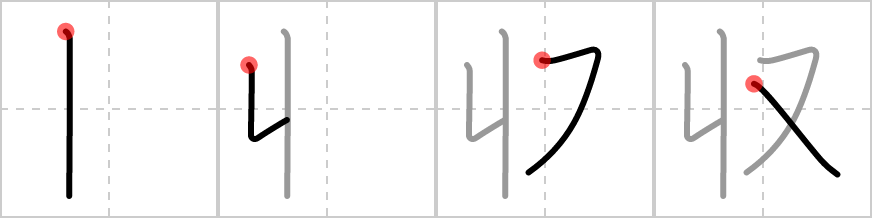 | 4 | ⼜ (again) | KIC 61 | Jisho · AnimCJK |
| 2 | 支 | 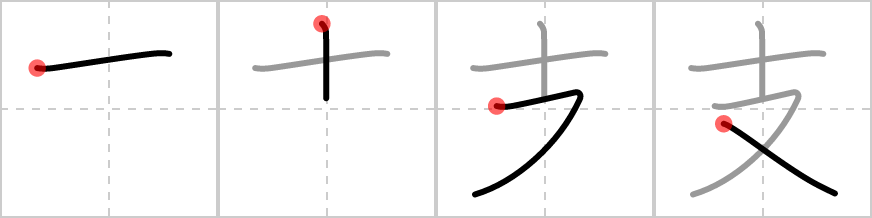 | 4 | ⽀ (branch) | KIC 20 | Jisho · AnimCJK |
| 3 | 費 |  | 12 | ⾙ (shell) | KIC 63 | Jisho · AnimCJK |
| 4 | 額 |  | 18 | ⾴ (head) | KIC 64 | Jisho · AnimCJK |
| 5 | 給 |  | 12 | ⽷ (thread) | KIC 41 | Jisho · AnimCJK |
| 6 | 与 | 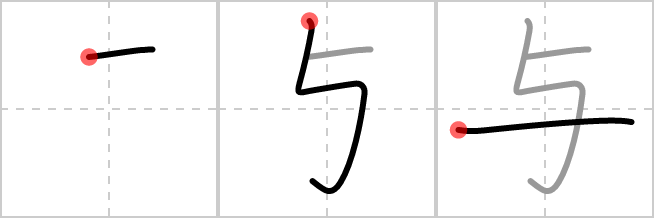 | 3 | ⼀ (one) | KIC 50 | Jisho · AnimCJK |
| 7 | 得 |  | 11 | ⼻ (step) | KIC 44 | Jisho · AnimCJK |
| 8 | 預 |  | 13 | ⾴ (head) | KIC 38 | Jisho · AnimCJK |
| 9 | 残 |  | 10 | ⽍ (death & dying) | KIC 10 | Jisho · AnimCJK |
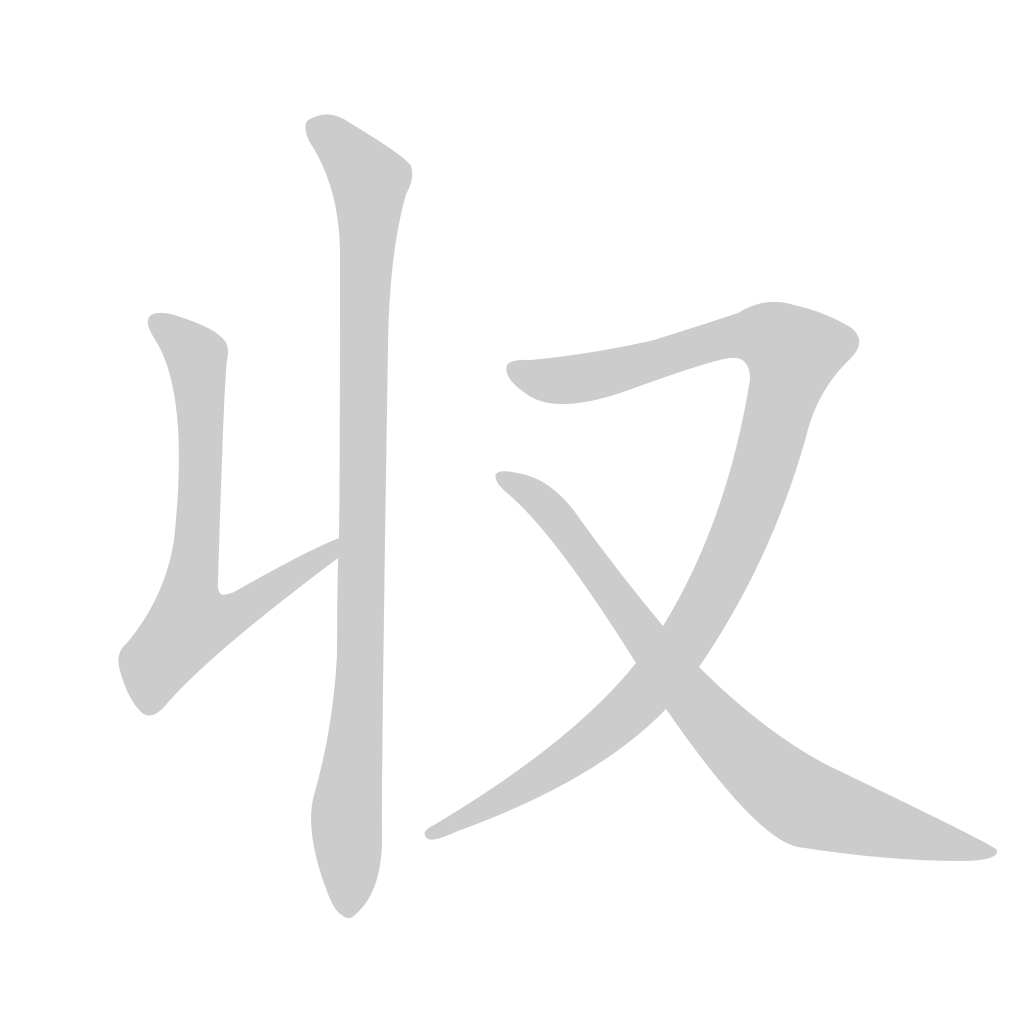

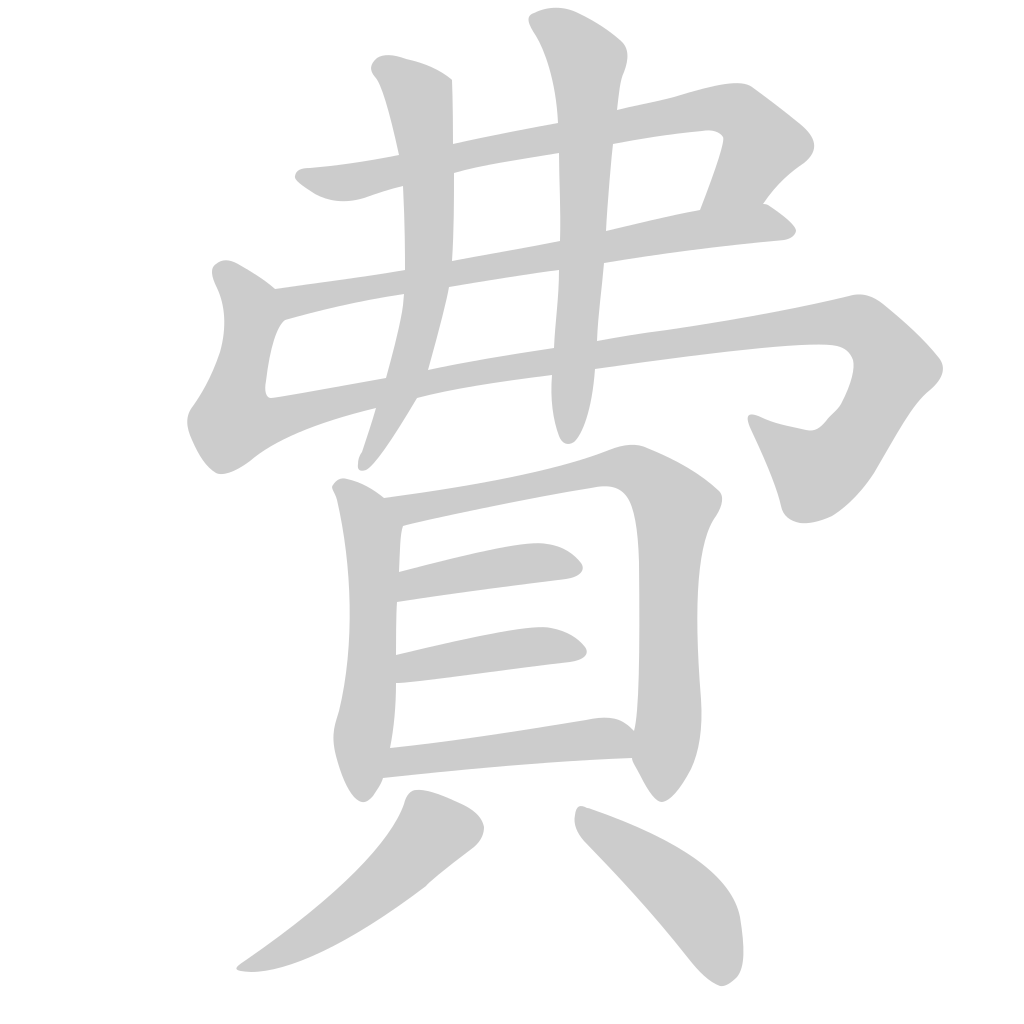
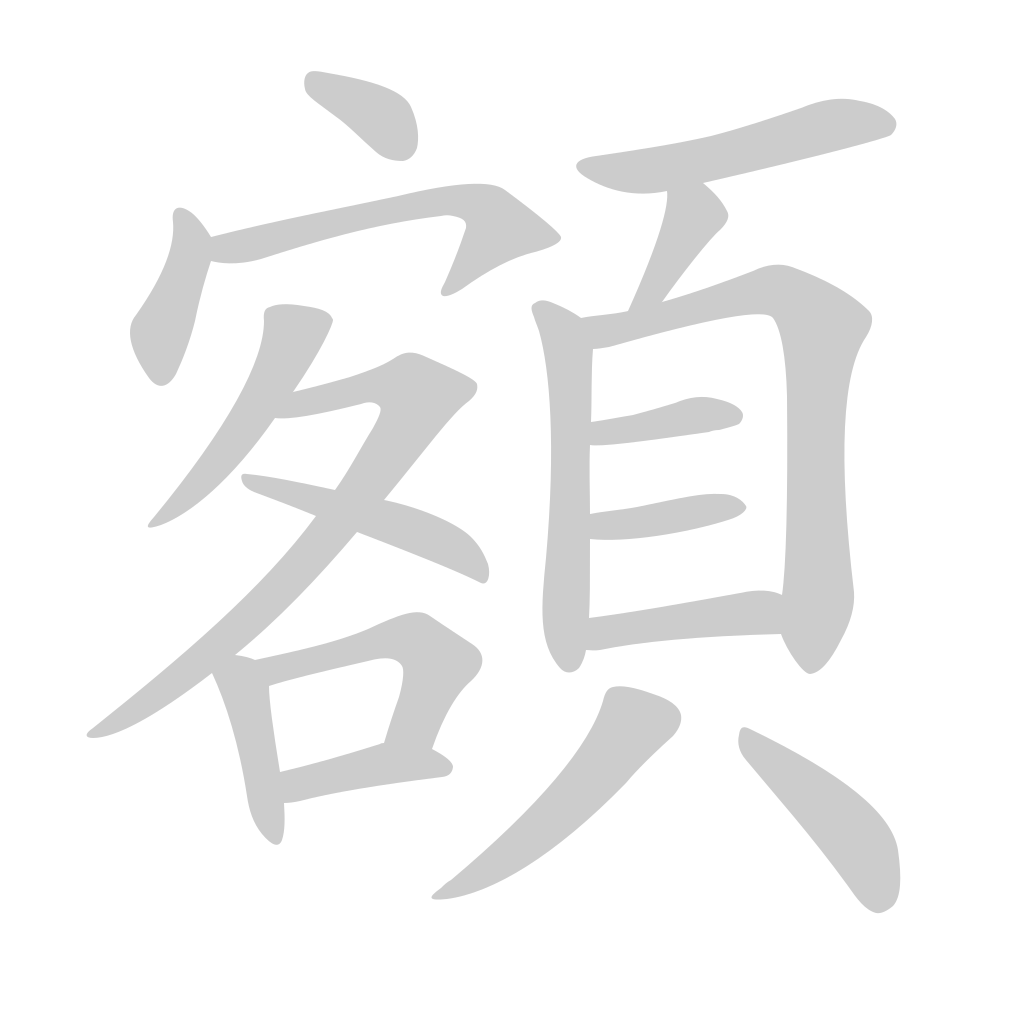

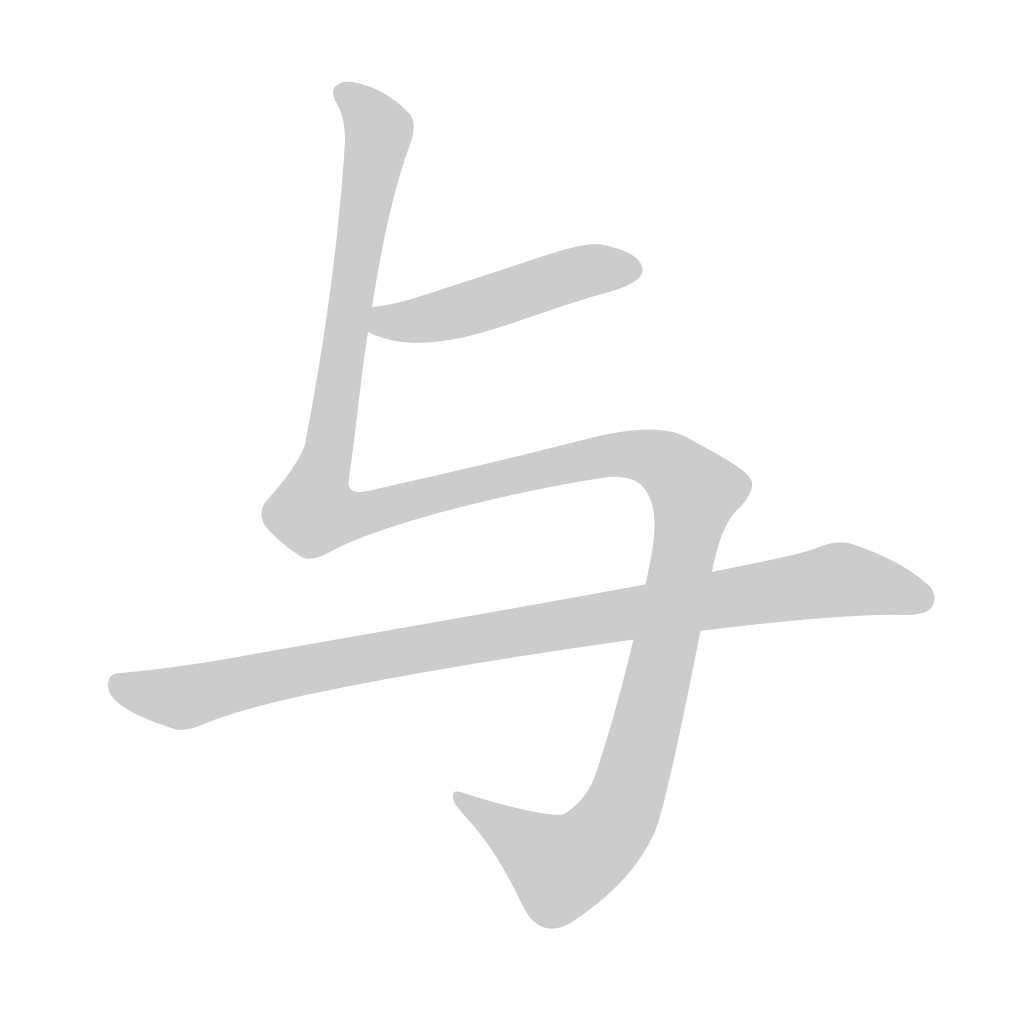
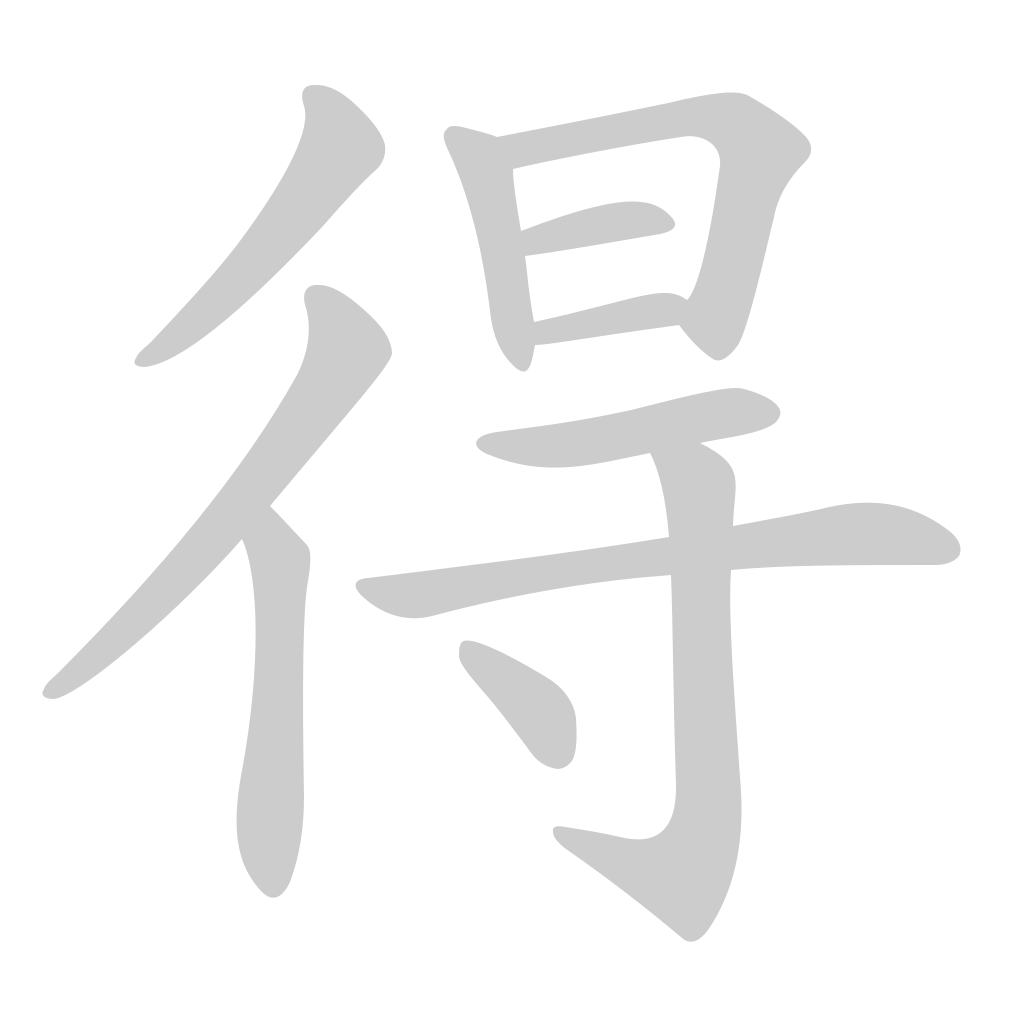
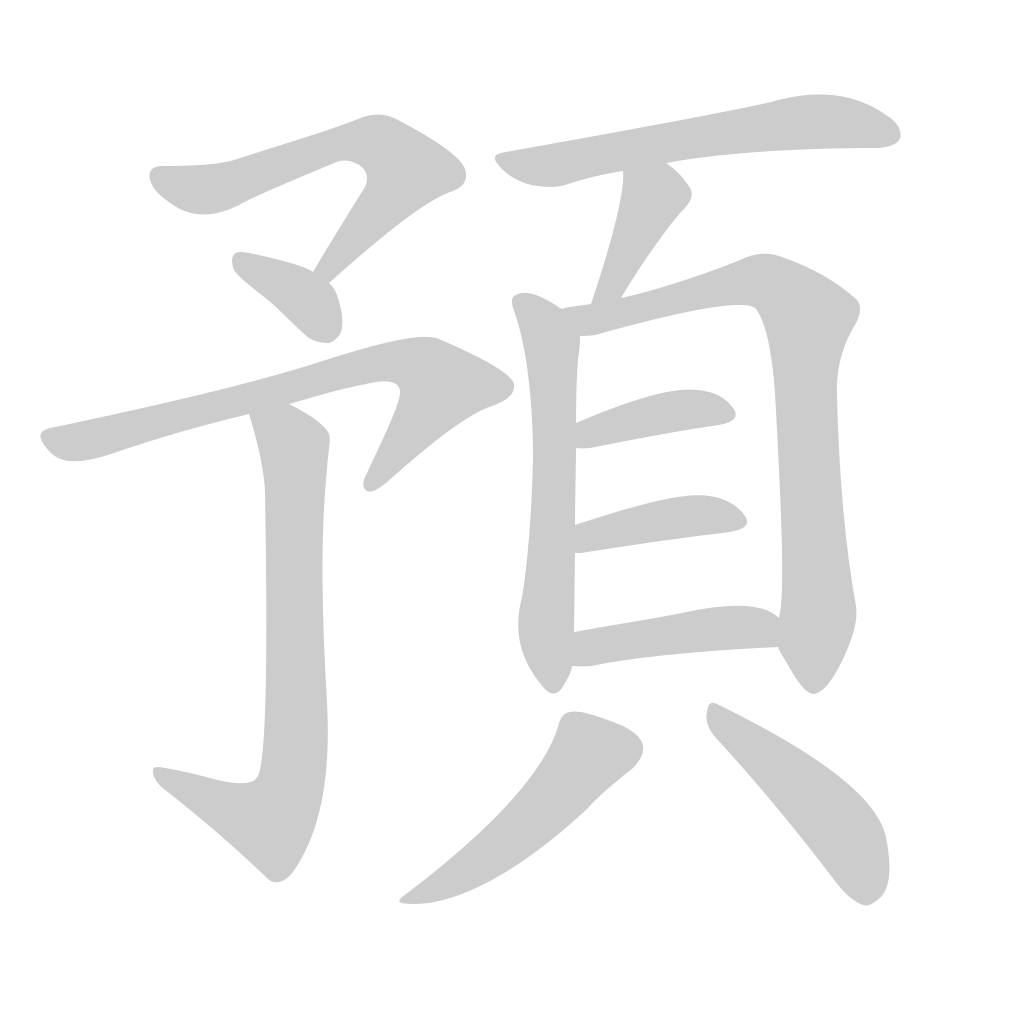
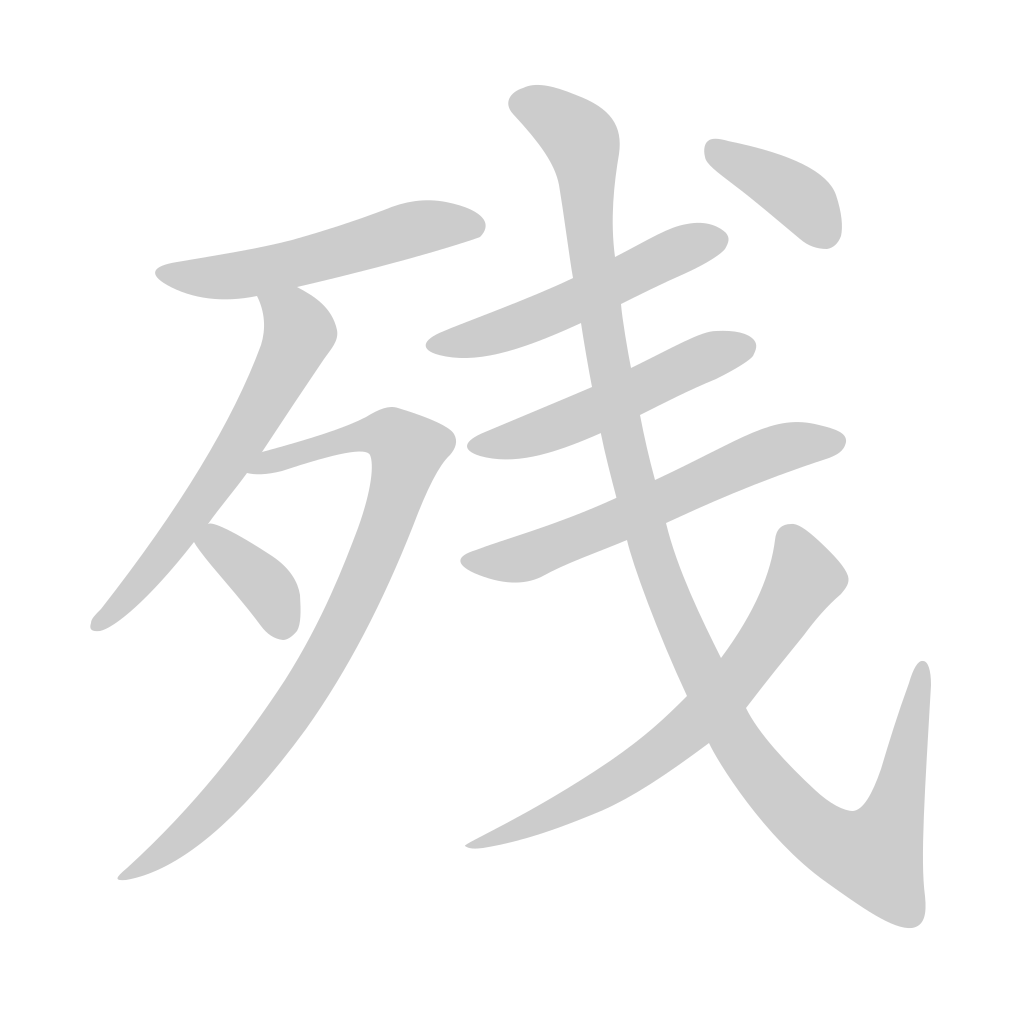
PNGs are generated from KanjiVG using
kanjivg-to-png, so each image shows the character being built stroke by stroke in panels. AnimCJK links open animated versions in a browser. KIC # cross-references the kanji's home chapter in the Kanji in Context numbering (1–143), whether or not that chapter has an authored workbook yet.
Per-Kanji Entries
1 — 収 (income, obtain, reap) — 4 strokes
Radical: ⼜ (また — "again, right hand") · 4 strokes total
Components & function — 会意 (ideographic): 丩 (tangled/twisted threads) + 又 (a hand). A hand gathering up tangled threads — the concrete image behind "to take in, collect, harvest."
- 丩 (meaning): tangled threads pulled together — the thing being gathered.
- 又 (meaning): a hand, doing the gathering. 又 recurs across many kanji as a compact "hand/action" component (取, 反, 友).
Stroke order
- Structure: 丩-derived top-left curve first, then the 又-derived strokes.
- Watch: only 4 strokes total — resist the urge to add an extra stroke; the whole character is compact.
- Common error: confusing 収 with 攻 (attack) — both have a right-side/left-side hand-action shape, but 攻 uses 攵ェ (strike) not 又, and has an entirely different left component (工).
2 — 支 (branch, support, sustain) — 4 strokes
Radical: ⽀ (しにょう — "branch") · 4 strokes total
Components & function — 会意 (ideographic): 十 (a branch, originally 木の枝 "tree branch") + 又 (a hand). A hand holding a branch broken off from the main trunk — the source of both "branch" and, by extension, "support" (a branch bears weight) and "pay out" (funds branching off from a main pool).
- 十-derived top (meaning): the branch itself — what's being held/broken off.
- 又 (meaning): the hand holding it. Same hand component as in 収.
Stroke order
- Structure: top stroke (the branch) first, then the 又-derived hand strokes below.
- Watch: 支 is its own radical (⽀) and doesn't decompose further in dictionaries — don't look for it hiding inside a bigger radical.
- Common error: writing the bottom as a plain 又 without connecting it properly to the top stroke — 支 should read as one fused unit, not two stacked pieces.
3 — 費 (expense, cost, spend) — 12 strokes
Radical: ⾙ (かい — "shell, property, wealth") · 12 strokes total
Components & function — 形声 (phonetic-semantic), traditional analysis: 弗 (phonetic; ancient image of two things being pulled apart/dispersed) + 貝 (meaning: money, wealth). Money dispersing away — the concrete image behind "expense, cost."
- 弗 (phonetic/form): a dispersing, splitting-apart shape. Its own reading is フツ, some distance from 費's ヒ — the phonetic contribution here is looser than a clean series like KIC's 召/紹/招, so treat it as a plausibility cue rather than a hard rule.
- 貝 (meaning): shell/wealth — the recurring "this kanji is about money" signal (see also 資, 財, 貸, 賃 in later finance units).
Stroke order
- Structure: 弗 (top, its own internal cross-strokes) first, then 貝 (bottom: top horizontal, box body, two base strokes) — same bottom-build order as any 貝-based character.
- Watch: 12 strokes is a lot for a single-syllable-reading kanji — don't rush the 弗 top; its internal strokes are easy to under-count.
- Common error: merging 弗's two verticals into one stroke. They're distinct — 弗 has its own internal structure independent of 費's identity as "貝-plus-something."
4 — 額 (forehead, tablet, plaque) — 18 strokes
Radical: ⾴ (おおがい — "head, page") · つくり · 18 strokes total
Components & function — 形声 (phonetic-semantic): 客 (phonetic, カク "guest") + 頁 (meaning: head, face). Originally "forehead" (the visible part of the face, 頁) — extended metaphorically to "a fixed, framed amount" (a sum written on a tablet/plaque), which is how it ended up meaning "amount, sum" in modern financial vocabulary.
- 客 (sound): reads カク; 額's on'yomi ガク is the same syllable voiced (k→g), a common drift pattern also seen elsewhere in the finance kanji set (賞ショウ→常ジョウ in the KIC chapters).
- 頁 (meaning): head/face — literal in the "forehead" sense, and the filing radical here. Note this is a case where the radical genuinely carries meaning (unlike its more structural role in 預, two entries below) — don't assume 頁 always means the same thing.
Stroke order
- Structure: 客 (top, 9 strokes: roof-shape 宀 then 各 below) first, then 頁 (bottom, 9 strokes: 一 then 目-like frame then 八-shaped legs).
- Watch: two dense 9-stroke halves stacked — write each half as a complete unit before starting the next; don't interleave strokes across the boundary.
- Common error: shrinking the bottom 頁 to fit under a large 客 — keep the two halves proportionally balanced, each about half the character's height.
5 — 給 (salary, wage, gift) — 12 strokes
Radical: ⽷ (いとへん — "thread") · へん · 12 strokes total
Components & function — 形声 (phonetic-semantic): 糸 (meaning: thread, continuous supply) + 合 (phonetic, ゴウ → シフト to キュウ; meaning: to unite/combine). A continuous thread being joined/supplied — the image behind "to provide" and, specifically, wages regularly supplied.
- 糸 (meaning): thread — signals ongoing, continuous supply (also seen in 続, 経, 結).
- 合 (sound + meaning): contributes both the phonetic base (drifted from ゴウ to キュウ) and reinforces "bringing together" — wages as something regularly brought to you.
Stroke order
- Structure: 糸 (left, its own internal top-to-bottom build) first, then 合 (right: 人-shape roof, then 一, then 口 box at bottom).
- Watch: 糸 as a left-side radical compresses to 3 short strokes plus a small loop at the bottom — don't draw it as wide as the standalone 糸 character.
- Common error: writing 合 as 会 — they look similar but 合's bottom is a closed 口 box, while 会's bottom is a different, open shape.
6 — 与 (bestow, participate in, give) — 3 strokes
Radical: ⼀ (いち — "one, horizontal stroke") · 3 strokes total
Components & function — simplified form of traditional 與 (14 strokes: 舁 "two pairs of hands" + 与, i.e. "hands jointly lifting something up"). The simplified 与 compresses that etymology into 3 strokes; structure debated for the modern glyph. The radical ⼀ is a dictionary-filing convenience, not a semantic component (this is the same character discussed in Kanji in Context Lesson 50 — see chapters/50/reference.md for the fuller writeup).
- Traditional 與: "two hands jointly lifting/offering something" — a vivid image of collaborative giving that's compressed away in the modern simplified form.
- No phonetic component: 与 is a simplified ideograph in its modern form; the ヨ reading (and kun あたえる / あずかる) must be memorised directly.
Stroke order
- Structure: 3 strokes — a top stroke with a rightward sweep or slight bend (not a flat horizontal), a shorter middle horizontal, and a bottom horizontal (usually the longest, often with a slight upward lift at the right end).
- Watch: 与 is not three parallel horizontal lines (that would be 三) — the first stroke's bend and the varying lengths are what make it 与.
- Common error: flattening all three strokes into identical horizontals. Keep the proportions deliberately uneven.
7 — 得 (gain, get, find) — 11 strokes
Radical: ⼻ (ぎょうにんべん — "step, stride, street, to go") · へん · 11 strokes total
Components & function — 会意 (ideographic), traditional analysis: 彳 (a road/walking) + an ancient form that originally included 貝 (shell/money) + 寸 (a hand/measure). "Walking along and picking up money by hand" — the concrete image behind "to gain, acquire." Script evolution has fused the original 貝 into the modern middle section (which now reads more like 旦 with an extra stroke), so the money-component is no longer visually obvious — this is a case where etymology and the modern glyph have drifted apart.
- 彳 (meaning): a road, walking, movement — signals an action carried out over the course of going somewhere.
- middle + 寸 (meaning, historically 貝 + 寸): money picked up by hand; visually obscured today, but this is the etymological core of "gain."
Stroke order
- Structure: 彳 (left, 3 strokes) first, then the fused middle section, then 寸 (bottom-right, hand + a dot).
- Watch: don't confuse the 彳-radical (2-stroke diagonal + vertical, used for "movement" kanji: 行, 待, 後) with 亻 (person radical, single diagonal stroke) — they look similar but are structurally distinct filing radicals.
- Common error: writing the middle section as 旦 (sun over horizon) and stopping there — 得 has one more stroke after that block, plus the 寸 hand component at the bottom-right; skipping it produces an incomplete character.
8 — 預 (deposit, custody, leave with) — 13 strokes
Radical: ⾴ (おおがい — "head, page") · つくり · 13 strokes total
Components & function — 形声 (phonetic-semantic): 予 (phonetic, ヨ "in advance, beforehand") + 頁 (filing radical: head/page). The reading ヨ transfers directly from 予 (as in 予定, 予約) — "given/set aside in advance," extended to "entrust beforehand," hence "deposit."
- 予 (sound): reads ヨ; this is the clean, visible phonetic driver of 預's reading — contrast with 額's looser 弗→ヒ or 客→ガク drift.
- 頁 (radical, structural): unlike in 額 (where 頁 carries real "head/face" meaning), here 頁 functions mostly as a dictionary-filing radical — its semantic contribution to "deposit, entrust" is weak-to-absent. Radical ≠ semantic component is the lesson: don't assume every 頁-kanji is "about the head."
Stroke order
- Structure: 予 (top, 4 strokes) first, then 頁 (bottom, 9 strokes, same build as in 額).
- Watch: 預 and 額 share the exact same bottom 頁 — the only visual difference is the top (予 vs 客). Slow down on the top component to keep them distinct.
- Common error: writing 予 with an extra stroke, making it look like 矛 (spear) — 予 is 4 strokes; check the hook direction on the final stroke.
9 — 残 (remainder, leftover, balance) — 10 strokes
Radical: ⽍ (がつへん — "death & dying, to decompose") · へん · 10 strokes total
Components & function — 形声 (phonetic-semantic): 歹 (meaning: bone fragments, remnants of decay) + 戔 (phonetic, セン → ザン; meaning: to injure, pare down, diminish). What's left after something is worn down or diminished — the concrete image behind "remainder, leftover, balance."
- 歹 (meaning): bone fragments/decay — signals "what's left after something is used up." Its own radical name literally means "death & dying," but here it's contributing "remnant," not anything morbid — a good reminder that radical names can be misleadingly narrow.
- 戔 (sound + meaning): also seen in 銭 (せん, small coin — "small/diminished money"), 浅 (あさい, shallow — "diminished depth"), and 践 (せん, to tread). All carry a "small/diminished" sense from the same 戔 component; the reading drifts セン→ザン here specifically.
Stroke order
- Structure: 歹 (left, 4 strokes) first, then 戔 (right, 6 strokes: two 戈-shaped units stacked).
- Watch: 戔's two halves are near-identical (both a small 戈 "halberd" shape) — write the top one completely before starting the bottom one.
- Common error: conflating 残 with 浅 or 銭 in reading — all three share 戔 and a "diminished" sense, but the left radical (歹 vs 氵 vs 金) tells them apart instantly. Check the left side first.
Stroke & Component Patterns in This Unit
頁 (head/page) — shared bottom, different semantic weight: 額 vs 預
Both 額 and 預 end in the same 9-stroke 頁 block, but 頁 pulls its weight differently in each:
- 額 — 頁 is genuinely semantic (head → forehead → framed amount). The top 客 supplies the ガク reading.
- 預 — 頁 is mostly a filing radical; the ヨ reading and the "entrust" meaning both come from the top 予. 頁's semantic contribution here is weak.
Takeaway: don't assume a shared radical means a shared role. This is the ~1-in-3 case (per KANJIDIC2 across the jouyou set) where the dictionary radical isn't the semantic driver — flag it rather than gloss over it.
貝 (shell → wealth) — the finance track's recurring money-signal
貝 appears as a clearly visible bottom component in 費 (弗 + 貝), and was present in 得's ancient form before script evolution fused it into the modern glyph. Across the wider finance vocabulary track, expect 貝 to keep showing up as a semantic "this is about money" signal — 資, 財, 貸, 賃, 買, 費 all carry it. Treat 貝 the way 扌 signals "hand action" — a fast visual cue for a kanji's domain, even before you've learned the reading.
ヨ readings that aren't a phonetic series: 与 vs 預
与 and 預 both read ヨ, and both cluster semantically around money changing hands, which makes them feel related. They aren't: 与 is a simplified ideograph (from 與, "hands jointly lifting"), while 預's ヨ comes cleanly from its own phonetic component 予. Compare with the genuine phonetic pair in this unit (予 → 預) to calibrate what a real shared-component relationship looks like versus a reading coincidence.
戔 (diminish) — 残's phonetic family, useful beyond this unit
残's phonetic component 戔 (セン → ザン here) recurs in 銭 (small coin), 浅 (shallow), and 践 (tread) — all carrying a "small/diminished" sense. Recognizing 戔 on sight is a preview of vocabulary outside this unit's scope, but worth flagging since 銭 shows up constantly in casual money vocabulary (小銭 こぜに, "small change").
Phonetic Series Summary (also in the workbook, repeated here for reference)
| Sound Component | Reading | Kanji in this unit | Notes |
|---|---|---|---|
| 予 (in advance) | ヨ | 預 | 預 = 予 (top, phonetic) + 頁 (bottom, filing radical, not semantic here). The ヨ reading comes straight from 予 (予定, 予約). |
Sources
- KanjiVG — github.com/KanjiVG/kanjivg | License: CC-BY-SA 3.0
- kanjivg-to-png — github.com/nicdgonzalez/kanjivg-to-png
- AnimCJK — github.com/parsimonhi/animCJK | License: Arphic Public License
- Jisho.org — jisho.org | Uses KanjiVG data for stroke order diagrams.
- Outlier Linguistics — outlier-linguistics.com | The Outlier Kanji Dictionary is the gold standard for rigorous functional component analysis.