KIC Lesson 50 Kanji Reference
Table of Contents
- # Quick Reference
-
# Per-Kanji Entries
- ## 707 — 角 (angle, corner, square) — 7 strokes
- ## 708 — 巻 (scroll, volume, book) — 9 strokes
- ## 709 — 券 (ticket) — 8 strokes
- ## 710 — 償 (reparation, make up for, recompense) — 17 strokes
- ## 711 — 賞 (prize, reward, praise) — 15 strokes
- ## 712 — 常 (usual, ordinary, normal) — 11 strokes
- ## 713 — 党 (party, faction, clique) — 10 strokes
- ## 714 — 堂 (public chamber, hall) — 11 strokes
- ## 715 — 非 (un-, mistake, negative) — 8 strokes
- ## 716 — 与 (bestow, participate in, give) — 3 strokes
- # Stroke & Component Patterns in This Lesson
- # Similar-Looking Kanji (Outside This Lesson)
- # Phonetic Series Summary (also in the workbook, repeated here for reference)
- # Sources
Lesson 50 — Characters 707–716: 角 巻 券 償 賞 常 党 堂 非 与 Companion to Workbook. The workbook handles articles, vocabulary, study aids, and self-test. This file is the structural deep-dive — radicals, functional components (meaning/sound/form), stroke order, and shared-component patterns.
Quick Reference
| # | Kanji | Stroke Order | Strokes | Radical | On'yomi | Kun'yomi | Links |
|---|---|---|---|---|---|---|---|
| 707 | 角 |  | 7 | ⾓ (horn) | カク | かど, つの | Jisho · AnimCJK |
| 708 | 巻 |  | 9 | ⼰ (self) | カン, ケン | ま.く, まき, ま.き | Jisho · AnimCJK |
| 709 | 券 |  | 8 | ⼑ (knife) | ケン | (なし) | Jisho · AnimCJK |
| 710 | 償 |  | 17 | ⼈ (person) | ショウ | つぐな.う | Jisho · AnimCJK |
| 711 | 賞 |  | 15 | ⾙ (shell) | ショウ | ほ.める | Jisho · AnimCJK |
| 712 | 常 |  | 11 | ⼱ (cloth) | ジョウ | つね, とこ- | Jisho · AnimCJK |
| 713 | 党 |  | 10 | ⼉ (human legs) | トウ | なかま, むら | Jisho · AnimCJK |
| 714 | 堂 |  | 11 | ⼟ (earth) | ドウ | (なし) | Jisho · AnimCJK |
| 715 | 非 |  | 8 | ⾮ (wrong) | ヒ | あら.ず | Jisho · AnimCJK |
| 716 | 与 | 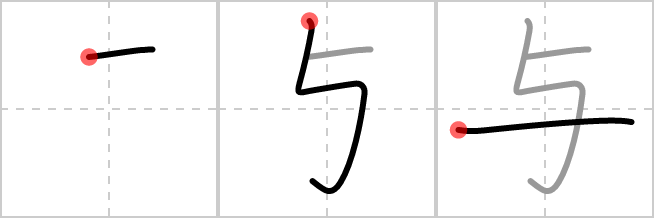 | 3 | ⼀ (one) | ヨ | あた.える, あずか.る | Jisho · AnimCJK |
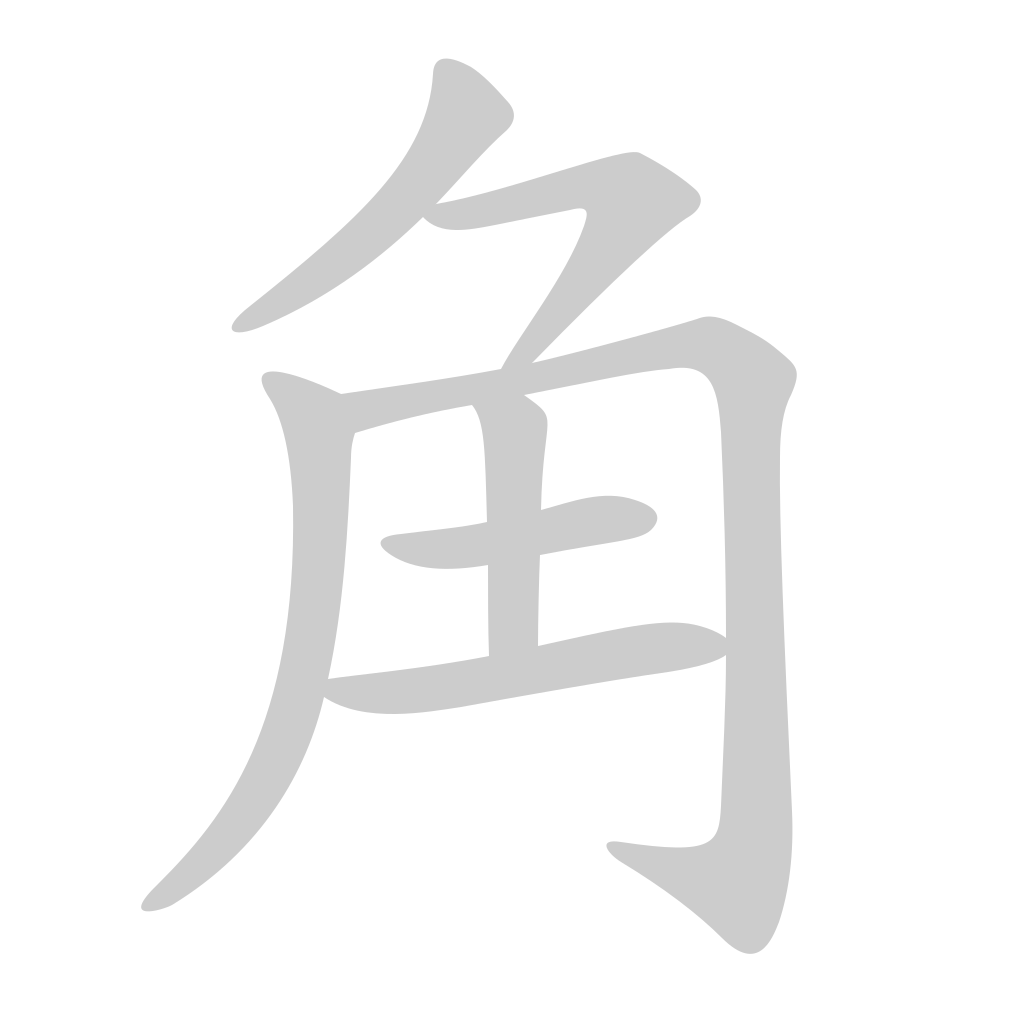
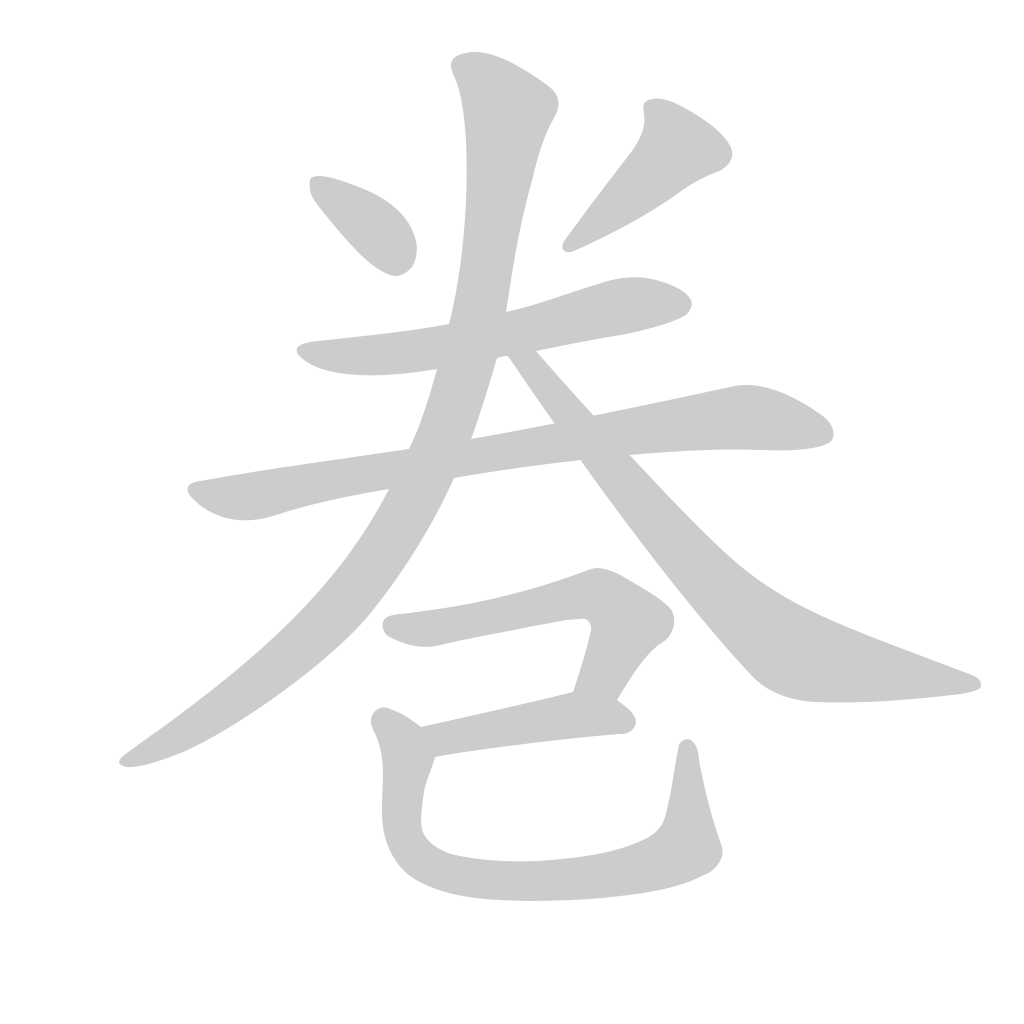
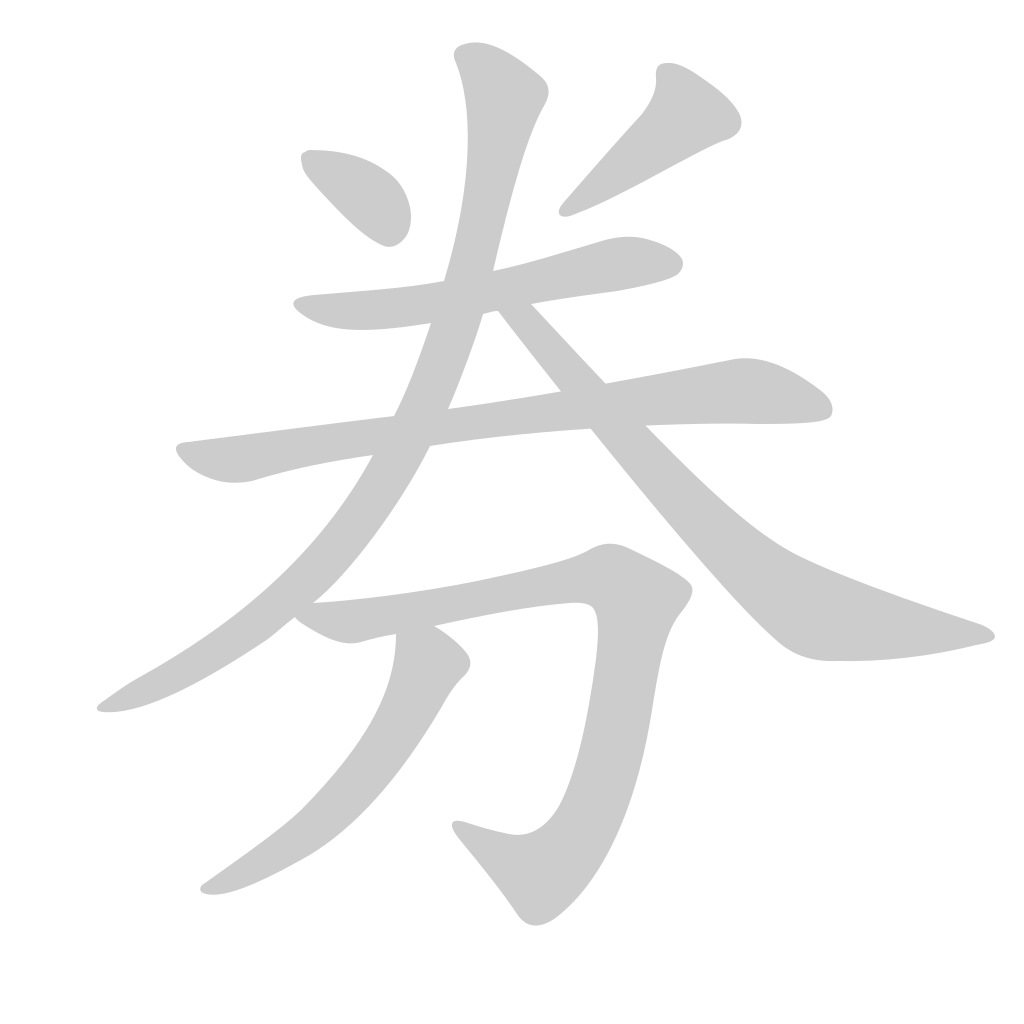
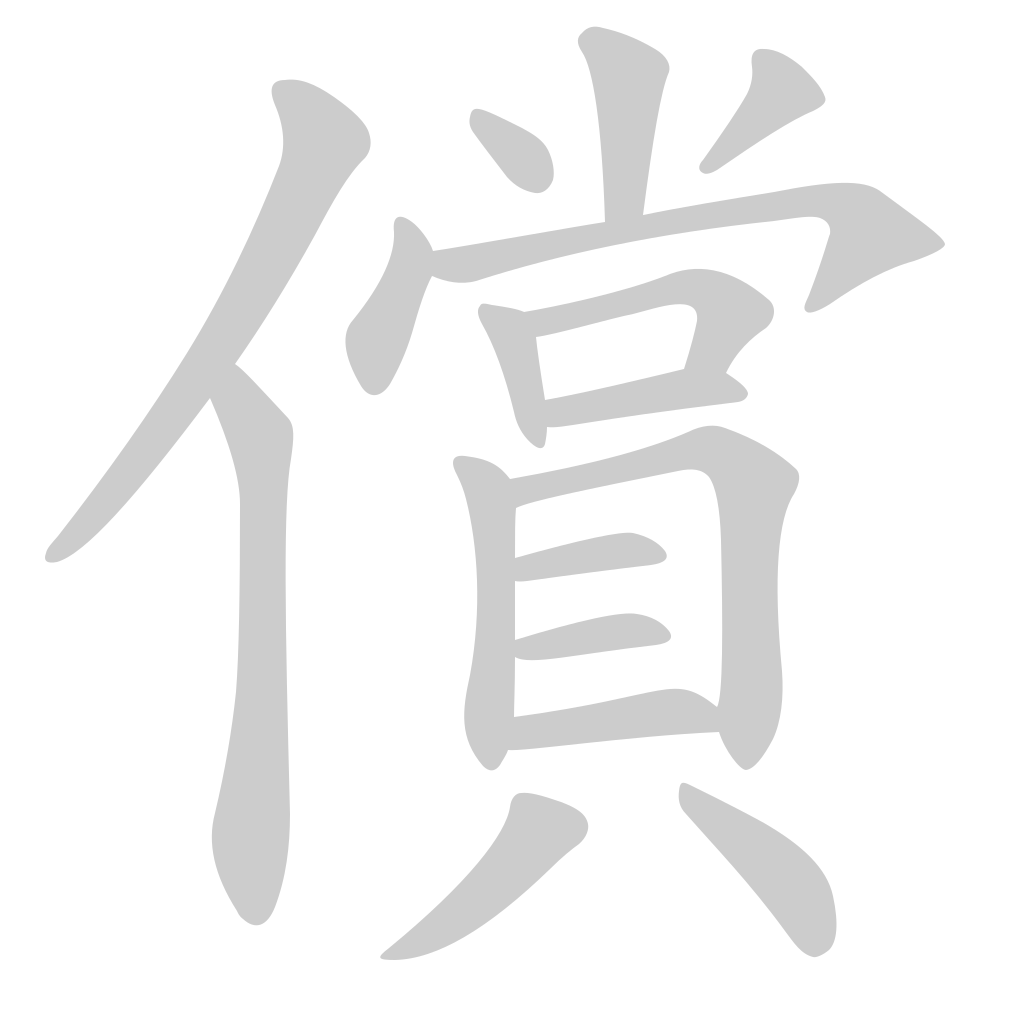
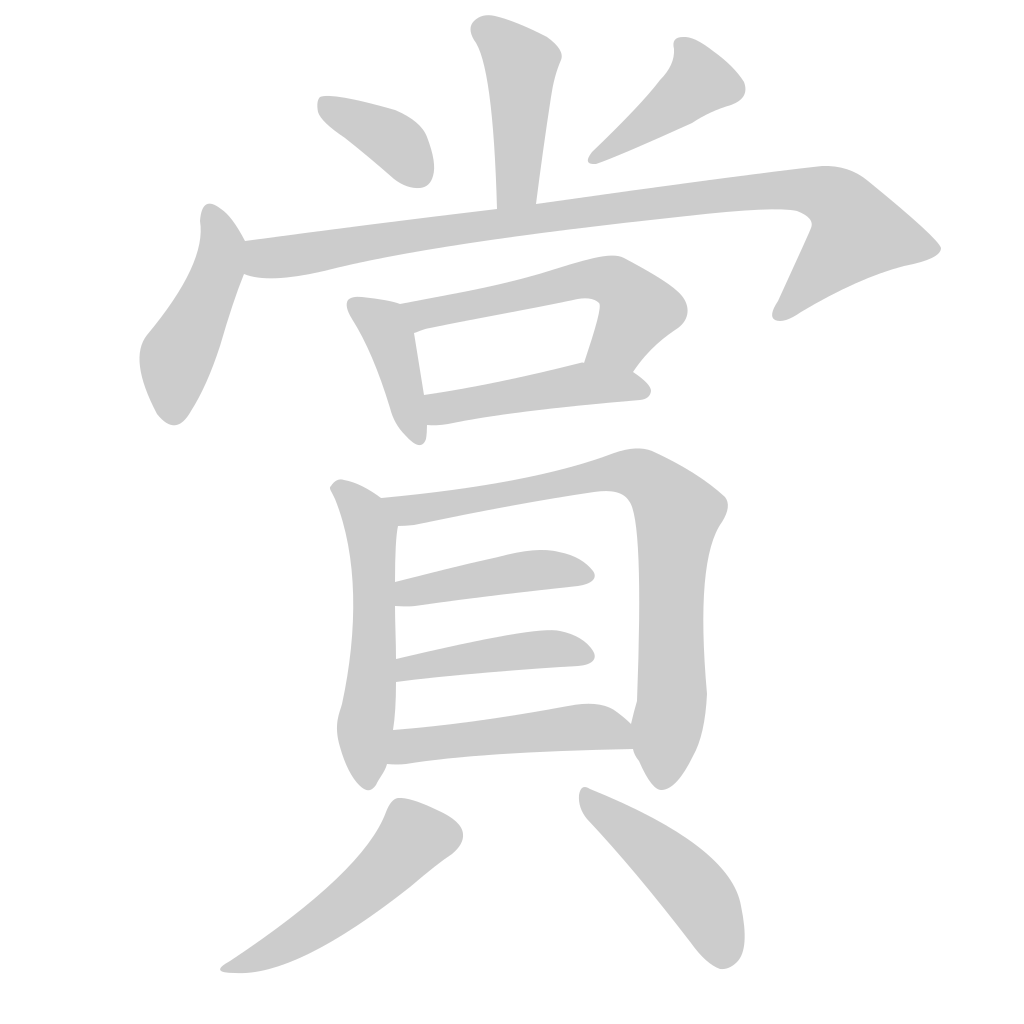
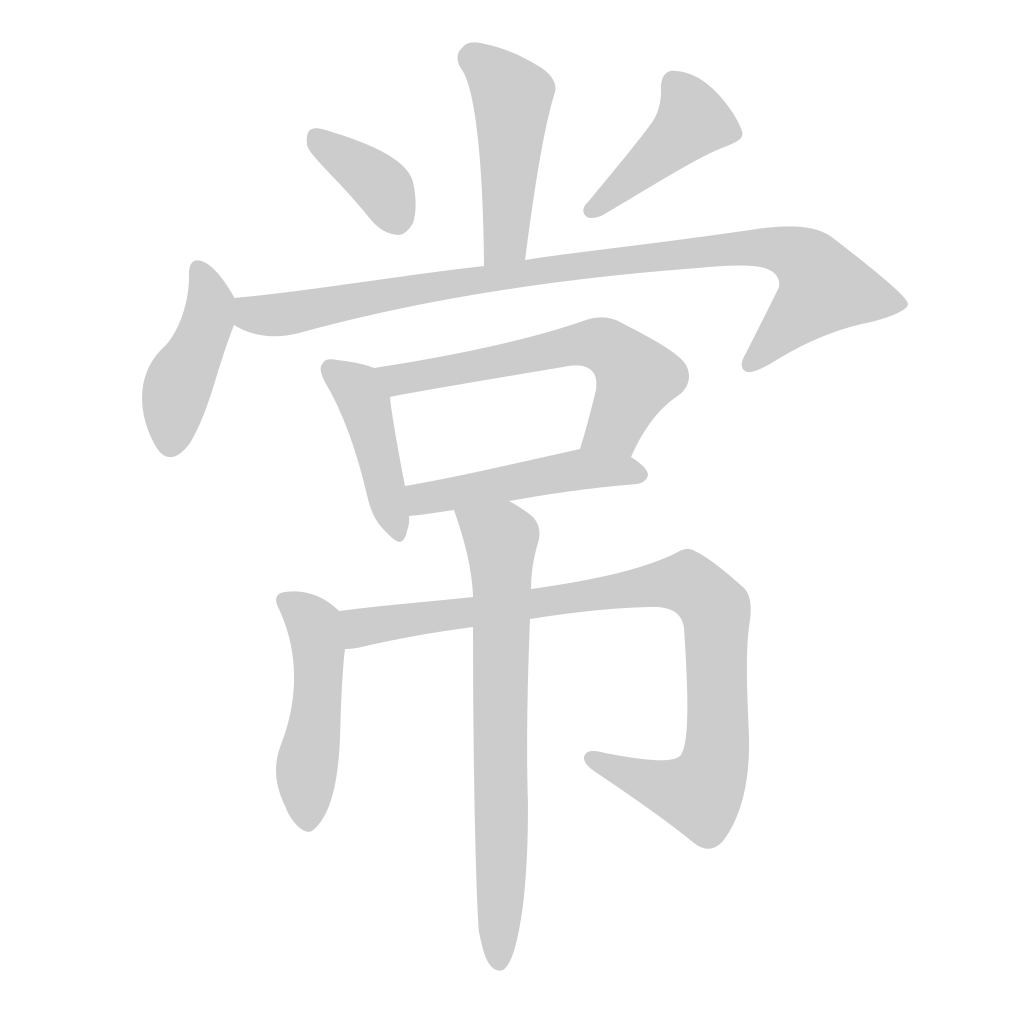
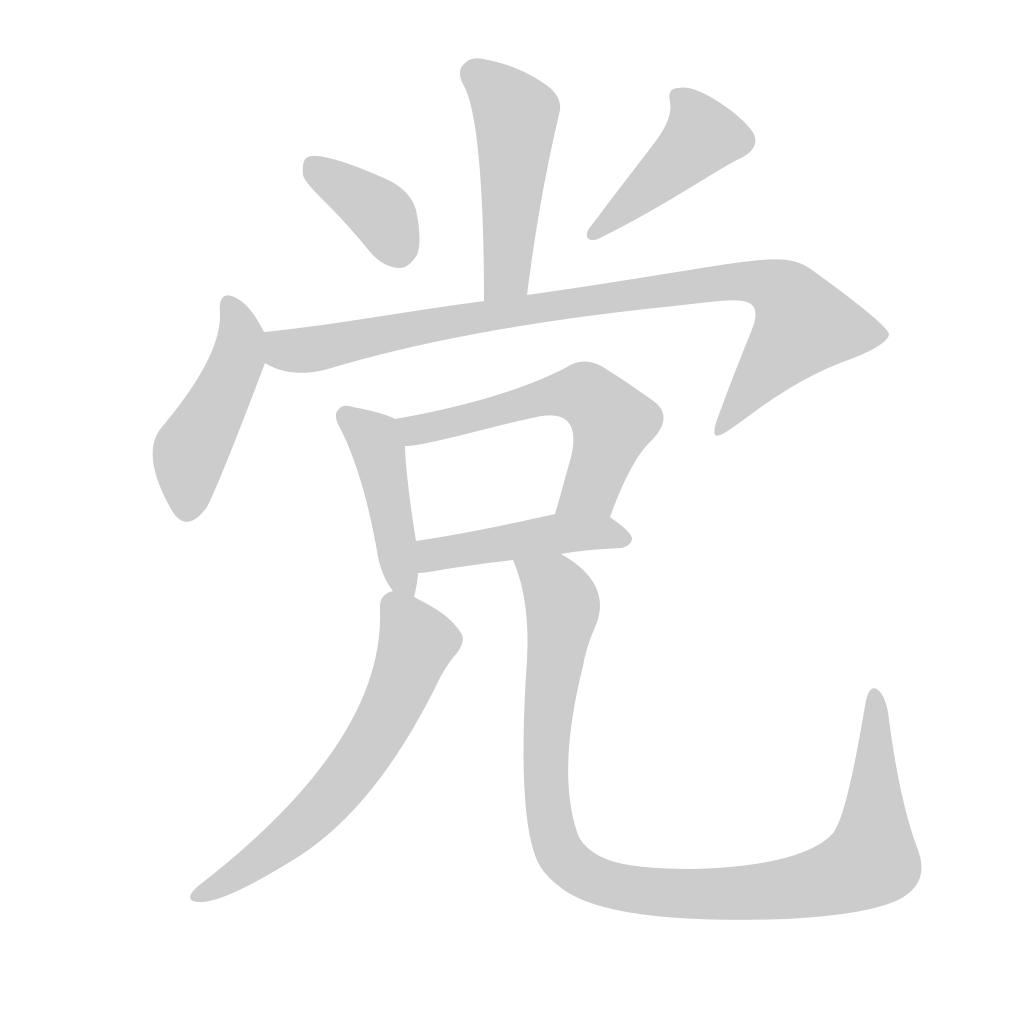
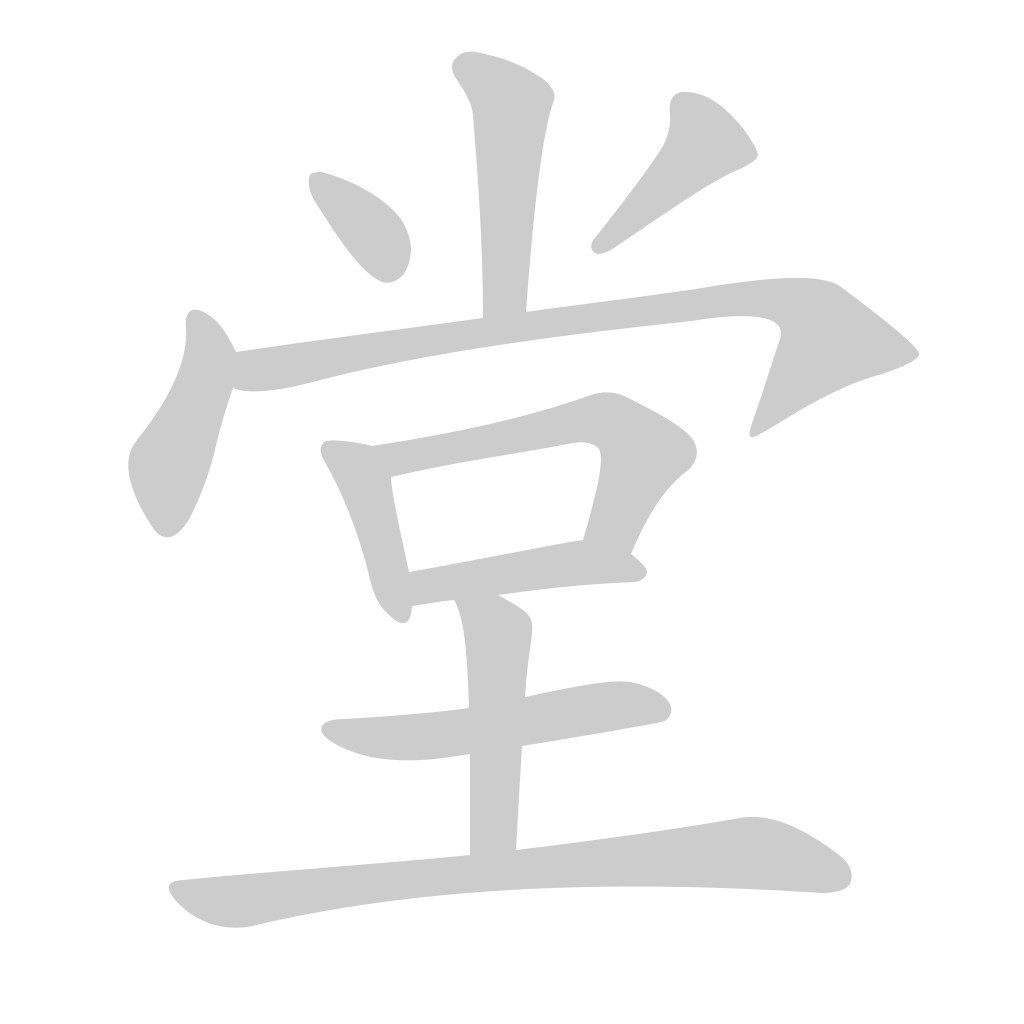
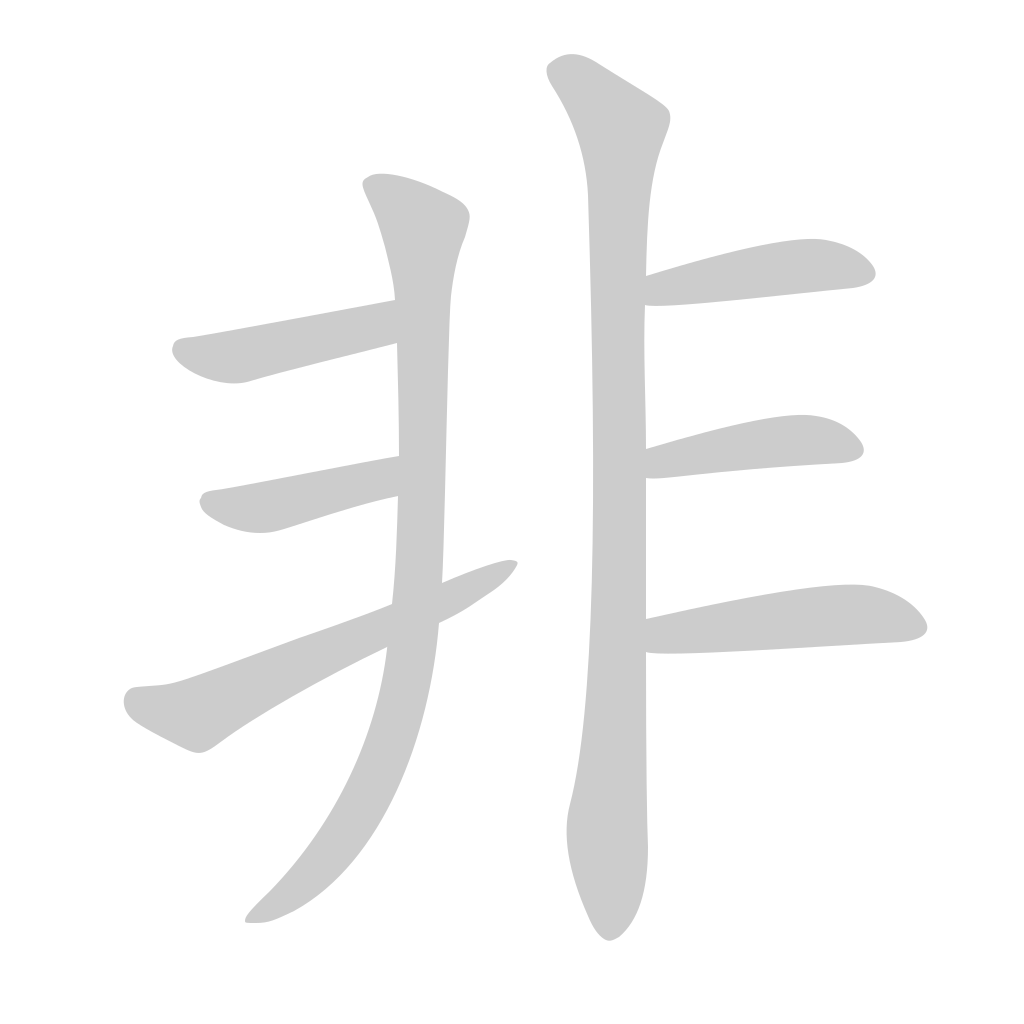
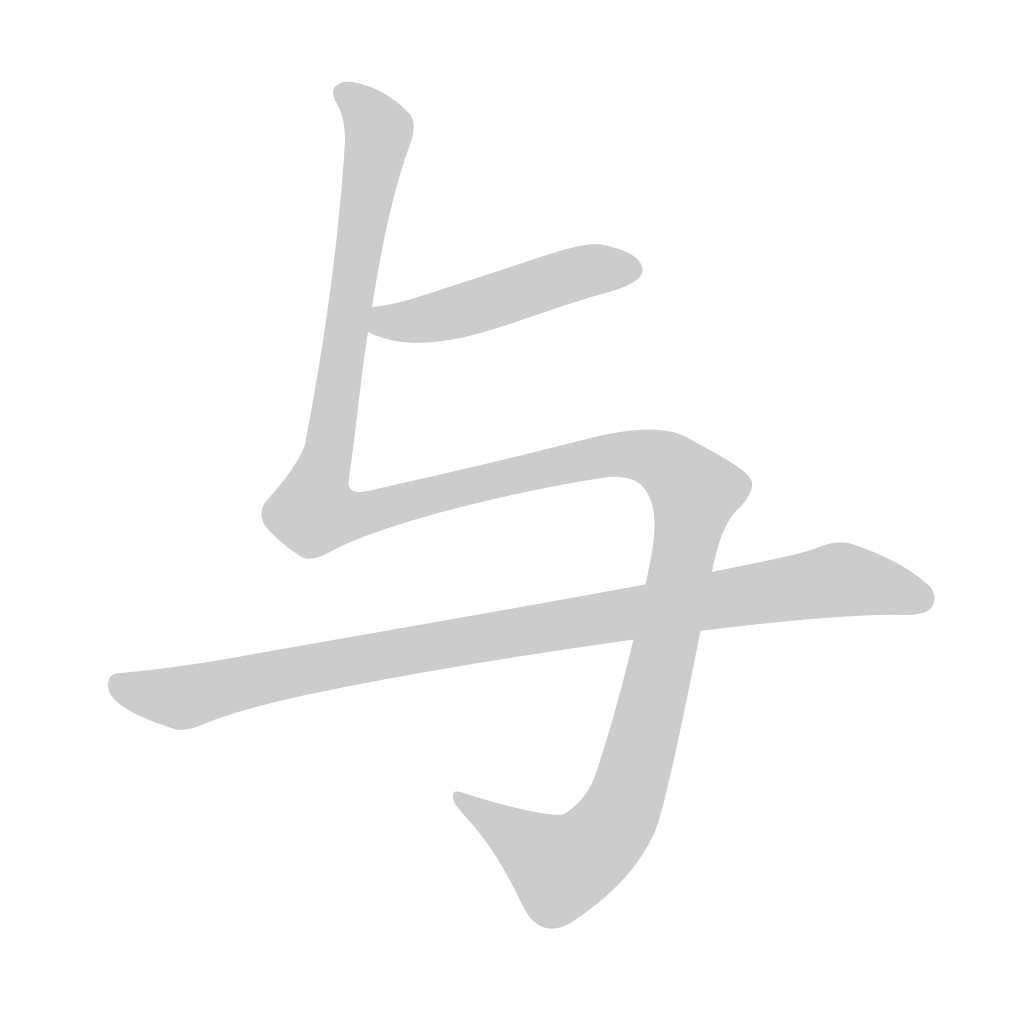
PNGs are generated from KanjiVG using
kanjivg-to-png, so each image shows the character being built stroke by stroke in panels. AnimCJK links open animated versions in a browser.
Per-Kanji Entries
707 — 角 (angle, corner, square) — 7 strokes
Radical: ⾓ (つの — "horn, corner") · 7 strokes total
Components & function — 象形 (pictograph): depicts the curved shape of an animal horn. 角 is its own radical and acts purely as a meaning component in compounds.
- ⾓ (meaning): the horn/corner shape. In 解 (to solve/untie), 角 combines with 刀 and 牛 to suggest removing an animal's horns with a knife. In this chapter, 角 stands alone.
- No sound component: 角 is a standalone pictograph, not a phonetic-semantic compound. Its readings カク / かど / つの must be memorised individually.
Stroke order
- Structure: outer frame first — curved top-left stroke (like ク curving down-right), then the top-right stroke, then fill in the inner horizontal bars, then the base. Top half before bottom half.
- Watch: the top-left opening is a curve, not a right angle — 角 should look like a horn flaring outward, not a closed box.
- Common error: closing the top into a square. Keep the top strokes open; the first stroke curves and does not connect back to form a closed shape until the full character is written.
708 — 巻 (scroll, volume, book) — 9 strokes
Radical: ⼰ (おのれ — "self, snake") · 9 strokes total
Components & function — 形声 (phonetic-semantic): upper coiling component (龹, suggesting wrapping/rolling) + 己 (self/snake radical, reinforces the curling sense). Reading カン from the phonetic upper element.
- 龹 / upper element (form + sound): the upper part of 巻 depicts bent, coiling arms or a person crouching — suggesting the action of rolling or wrapping. It carries the カン reading.
- 己 (form): the snake-like 己 at the bottom echoes the curling meaning and serves as the filing radical. It is NOT a semantic component in the usual sense here — its role is structural.
Stroke order
- Structure: write the upper component (龹) in full first — the inner bent strokes before the enclosing outer strokes — then 己 at the bottom (3 strokes: curved top, inner tick, base hook).
- Watch: the upper element has a specific internal order. The two short inner strokes come before the longer enclosing strokes above them.
- Common error: writing 己 as 已 (すでに) or 巳 (み). In 巻, the bottom is 己 (middle stroke touches the top right corner, does not extend past it). Compare 己 vs 已 vs 巳 carefully.
709 — 券 (ticket) — 8 strokes
Radical: ⼑ (かたな — "knife, sword") · 8 strokes total
Components & function — 形声 (phonetic-semantic): same upper coiling component as 巻 (龹) + 刀 (knife). Reading ケン. The knife at bottom evokes cutting — tickets were physically cut from rolls or books.
- 龹 / upper element (form + sound): identical to the top of 巻. Carries the ケン reading.
- 刀 (meaning): knife/blade — documents that are "cut and issued." The semantic link: 刀 suggests the act of issuing a separated piece, hence a ticket or certificate.
Stroke order
- Structure: upper component (龹) first — same order as in 巻 — then 刀 (2 strokes: curved main stroke, then the short angled stroke hooking left) at the bottom.
- Watch: 刀 is only 2 strokes; 己 is 3. This is why 券 (8 strokes) has one fewer stroke than 巻 (9). Don't add an extra stroke to the bottom.
- Common error: writing 巻 when you mean 券, or vice versa. The tops are identical — the entire visual distinction is in the bottom radical (己 vs 刀).
710 — 償 (reparation, make up for, recompense) — 17 strokes
Radical: ⼈ (ひと — "person") · 17 strokes total
Components & function — 形声 (phonetic-semantic): 亻 (person radical, meaning component) + 賞 (phonetic-semantic component, ショウ). A person (亻) returning the prize-value (賞) that was owed — hence recompense.
- 亻 (meaning): person radical (2 strokes). The human agent doing the compensating.
- 賞 (sound + meaning): the full 15-stroke character 賞 forms the right-hand side of 償 unchanged. Reading ショウ comes directly from 賞. The "value/prize" sense of 賞 is repurposed: instead of receiving value, a person is sending it back.
Stroke order
- Structure: left side first — 亻 (2 strokes: diagonal then curving vertical) — then the entire right side = 賞 written in full (15 strokes): 尚 (upper 8 strokes) then 貝 (lower 7 strokes).
- Watch: 償 is the most complex character in this lesson at 17 strokes. The right side is exactly 賞 — knowing 賞's stroke order makes 償's right half automatic.
- Common error: modifying the right side so it no longer matches 賞. The identity 償 = 亻 + 賞 is the mnemonic — if your right side doesn't look like 賞, something is wrong.
711 — 賞 (prize, reward, praise) — 15 strokes
Radical: ⾙ (かい — "shell, property, wealth") · 15 strokes total
Components & function — 形声 (phonetic-semantic): 尚 (sound component, ショウ: "to esteem, value highly") + 貝 (meaning component, shell/wealth → material reward).
- 尚 (sound + meaning): upper 8 strokes. Means "to esteem, value" — semantically reinforces the idea of something prized. Reading ショウ. This same component tops 常, 堂, and 党 in this lesson — the chapter's dominant structural motif.
- 貝 (meaning): lower 7 strokes. Cowrie shell — the ancient symbol for wealth and exchange. 貝 as radical consistently signals value, money, or property (see also: 賃, 資, 財).
Stroke order
- Structure: 尚 first (top section: write 小 cluster at top, then the mouth 口-like area below it), then 貝 (top horizontal, then the box body, then two bottom horizontal strokes).
- Watch: the top of 賞 (the 尚 component) is structurally identical to the tops of 常, 堂, and 党. The only way to identify the character is the bottom radical. 賞 = 貝 at bottom.
- Common error: confusing 賞 with 常 (巾 below) in writing. Burn the pairing: 賞 prize = 貝 wealth below; 常 everyday = 巾 cloth below.
712 — 常 (usual, ordinary, normal) — 11 strokes
Radical: ⼱ (はば — "cloth, width") · 11 strokes total
Components & function — 形声 (phonetic-semantic): 尚 (sound component, ジョウ: esteem/always) + 巾 (meaning component, cloth). A cloth that is always draped/hanging — the everyday, the habitual.
- 尚 (sound): upper 8 strokes. Provides the ジョウ reading (same phonetic component as 賞 ショウ, 堂 ドウ, 党 トウ — vowel shift across borrowing layers).
- 巾 (meaning): lower 3 strokes. Cloth hanging on a pole. The semantic link: cloth is a daily necessity — that which is always present → "usual, ordinary."
Stroke order
- Structure: 尚 (8 strokes) then 巾 (3 strokes: vertical down, short left horizontal, short right horizontal).
- Watch: 巾 vs 貝 at the bottom. 巾 is only 3 strokes (vertical + two short horizontals); 貝 is 7. If you write more than 3 strokes below 尚, you're writing 賞, not 常.
- Common error: the chapter's most frequent confusion — 常 vs 賞. Mnemonic: 常 = everyday cloth (巾 = fabric you see daily); 賞 = prize wealth (貝 = valuable shell).
713 — 党 (party, faction, clique) — 10 strokes
Radical: ⼉ (ひとあし — "human legs, person") · 10 strokes total
Components & function — simplified form of traditional 黨 (黒 "black" + 尚). In simplified 党, the upper portion retains the small-strokes element of 尚 (specifically 小 + the upper region) + 儿 (human legs) at the bottom. A group of people (儿) moving together under a shared value (尚-derived top).
- Upper component (form + sound): an abbreviated form of 尚, carrying approximate ТОУ/トウ reading (further vowel drift from ショウ → ジョウ → ドウ → トウ).
- 儿 (meaning): human legs — the "walking person" radical. Evokes a group of people; a clique or faction walks together.
Stroke order
- Structure: write the upper abbreviated component first (small strokes: 小-like cluster, then the middle region), then 儿 below (2 strokes: left-leaning then right-curving leg strokes).
- Watch: 党 vs 堂 — both share an 尚-derived top; the bottom is the only difference. 党 = 儿 (people, 2 strokes); 堂 = 土 (earth, 3 strokes).
- Common error: writing 兄 or 見 at the bottom instead of 儿. The bottom of 党 is just the two-stroke human-legs form, no extra horizontal strokes.
714 — 堂 (public chamber, hall) — 11 strokes
Radical: ⼟ (つち — "earth, ground") · 11 strokes total
Components & function — 形声 (phonetic-semantic): 尚 (sound component, ドウ — vowel shift from ショウ) + 土 (meaning component, earth/ground). A building that stands on the earth — a hall, chamber, or public space.
- 尚 (sound): upper 8 strokes. Phonetic hint for ドウ (shifted from ショウ). Same top as 賞, 常, 党.
- 土 (meaning): lower 3 strokes. Earth, ground — the foundation a hall is built upon. 土 as bottom radical signals physical structure or place (see also: 場, 地, 坂).
Stroke order
- Structure: 尚 (8 strokes) then 土 (3 strokes: shorter horizontal, longer horizontal, vertical down through centre).
- Watch: 土 vs 巾 at the bottom. 土 has two horizontals crossed by a vertical (like a cross or plus sign); 巾 has a vertical flanked by two short horizontals. Count strokes: both are 3, but the shapes differ.
- Common error: 堂 vs 常 written at speed. Burn the distinction: 堂 = hall on the ground (土 = earth); 常 = everyday cloth (巾 = fabric).
715 — 非 (un-, mistake, negative) — 8 strokes
Radical: ⾮ (あらず — "wrong, non-") · 8 strokes total
Components & function — 象形 (pictograph): depicts two wings or a pair of ribs spread in opposite directions from a central spine. The bilateral opposition encodes "wrong, contrary, non-."
- ⾮ as radical and meaning component: 非 is its own radical and never combines with other chapter characters. It functions purely as a prefix — 非公式, 非常, 非合法 — and retains its "negation/against norms" meaning consistently.
- No sound component: 非 is a standalone pictograph. Reading ヒ must be memorised.
Stroke order
- Structure: bilateral — left half, then right half. Left: 1 vertical stroke, then 3 short horizontal strokes (top to bottom). Right: 1 vertical stroke, then 3 short horizontal strokes mirroring the left.
- Watch: the two halves must be written in sequence (left side complete before right side). The horizontals on each side should be evenly spaced and symmetric.
- Common error: making the horizontal strokes uneven or asymmetric. In careful writing, each side has exactly 3 evenly-spaced horizontal strokes on either side of the central vertical. Rushing produces lopsided versions.
716 — 与 (bestow, participate in, give) — 3 strokes
Radical: ⼀ (いち — "one, horizontal stroke") · 3 strokes total
Components & function — simplified form of traditional 與 (14 strokes: 舁 + 与 or "two hands raising together"). The simplified 与 retains only 3 strokes. Structure debated; the radical ⼀ is a dictionary-filing convenience rather than a semantic component.
- Simplified form: the traditional 與 showed "two hands jointly lifting something up" — a vivid image of giving or participating together. In the simplified 与, this etymology is compressed into 3 strokes.
- No phonetic component: 与 is a simplified ideograph. Reading ヨ must be memorised along with the kun readings あたえる / あずかる.
Stroke order
- Structure: 3 strokes. Stroke 1: a top stroke that curves or angles (not a flat horizontal — it has a rightward sweep or slight downward bend). Stroke 2: a shorter middle horizontal. Stroke 3: the bottom horizontal, typically the longest of the three, often written with a slight upward lift at the right end.
- Watch: 与 is not three parallel horizontal lines (that would be 三). The strokes vary in length and the first stroke has a distinctive bend or hook. Proportions matter — the character should look balanced and intentional, not like 三 squashed.
- Common error: writing 与 as three identical horizontal strokes (like 三). The first stroke must curve or angle differently from a plain horizontal.
Stroke & Component Patterns in This Lesson
The 尚 cluster — 賞, 常, 党, 堂 (+ 償's right half)
This lesson's most striking structural feature: four of the ten kanji share 尚 (or a simplified variant) as their dominant upper component, differentiated solely by what sits below.
| Kanji | Bottom radical | Meaning link |
|---|---|---|
| 賞 (ショウ) | 貝 — shell/wealth | prize wealth received |
| 常 (ジョウ) | 巾 — cloth | everyday fabric, the habitual |
| 党 (トウ) | 儿 — human legs | group of people walking together |
| 堂 (ドウ) | 土 — earth | hall standing on the ground |
| 償 (ショウ) | 亻 + 賞 | person (亻) returning the prize-value (賞) |
The reading also drifts systematically as 尚 is borrowed into different vocabulary layers: ショウ (賞, 償) → ジョウ (常) → ドウ (堂) → トウ (党). Recognising the pattern turns five separate readings into one anchored observation.
Disambiguation drill (all share 尚 top):
- What's below 尚? 貝 → 賞 (prize)
- What's below 尚? 巾 → 常 (usual)
- What's below 尚? 土 → 堂 (hall)
- What's below 尚? 儿 → 党 (party)
巻 / 券 — identical tops, different bottoms
Both characters use the same upper element (the coiling/rolling component 龹). The bottom is the only distinguishing feature:
- 巻 = 龹 + 己 (self/snake, 3 strokes) → 9 strokes total. Rolling, wrapping, volumes.
- 券 = 龹 + 刀 (knife, 2 strokes) → 8 strokes total. Cut documents, tickets, certificates.
In handwriting, slowing down for the bottom radical is the only reliable way to keep these distinct.
非 — symmetric pictograph, lesson's only negation prefix
非 (8 strokes) is structurally unique in this lesson — no shared components with any other chapter kanji. It functions exclusively as:
- A standalone character/radical (⾮)
- A productive negation prefix: 非公式, 非合法, 非人道的, 非常
The bilateral symmetry of 非 (two opposed wings) visually encodes its meaning. No other chapter kanji shares this bilateral design.
与 and 角 — structural isolates
与 (3 strokes, simplified from 與) and 角 (7 strokes, pictograph) share no components with any other lesson kanji. Both are best memorised as wholes rather than decomposed. 角 does appear as a meaning component in other common kanji (解, 触), but none of those appear in this lesson.
Similar-Looking Kanji (Outside This Lesson)
These aren't this lesson's kanji, but they're easy to confuse with one when reading — different meaning, different (or coincidentally similar) reading, similar shape.
| This lesson's kanji | Looks like | Key difference | Why it matters |
|---|---|---|---|
| 常 / 堂 / 党 (all 尚-topped) | 掌 (ショウ, palm of the hand) | 掌 = 尚 + 手, an outside member of the same family | The in-lesson 尚 cluster doesn't stop at this chapter's four kanji — 掌 shares the same top and the same ショウ reading family. Seeing 尚 on top of an unfamiliar kanji is a reliable "esteem/value" or ショウ-family signal, not just a within-lesson coincidence. |
| 非 (ヒ, non-, against norms) | 悲 (ヒ, sad) / 罪 (ザイ, crime) | 非 is a literal component, not a look-alike | 非 sits at the top of 悲 (非 + 心, "feelings gone wrong" → sorrow) and at the bottom of 罪 (罒 + 非, "net" + "wrong" → crime). Recognizing bare 非 helps you spot it inside bigger kanji, not just confuse it with them. |
Phonetic Series Summary (also in the workbook, repeated here for reference)
| Sound Component | Reading | Kanji in this lesson | Notes |
|---|---|---|---|
| 賞 (prize/value) | ショウ | 賞, 償 | 償 = 亻 + 賞. Person radical added; reading ショウ unchanged. |
| 尚 (esteem) | ジョウ / ドウ | 常, 堂 | Both have 尚 on top; reading drifts ショウ → ジョウ (常) → ドウ (堂). |
Sources
- KanjiVG — github.com/KanjiVG/kanjivg | License: CC-BY-SA 3.0
- kanjivg-to-png — github.com/nicdgonzalez/kanjivg-to-png
- AnimCJK — github.com/parsimonhi/animCJK | License: Arphic Public License
- Jisho.org — jisho.org | Uses KanjiVG data for stroke order diagrams.
- Outlier Linguistics — outlier-linguistics.com | The Outlier Kanji Dictionary is the gold standard for rigorous functional component analysis.