KIC Lesson 46 Kanji Reference
Table of Contents
- # Quick Reference
-
# Per-Kanji Entries
- ## 663 — 句 (phrase, clause, sentence) — 5 strokes
- ## 664 — 旬 (decameron, ten-day period, season (for specific products)) — 6 strokes
- ## 665 — 保 (protect, guarantee, keep) — 9 strokes
- ## 666 — 証 (evidence, proof, certificate) — 12 strokes
- ## 667 — 許 (permit, approve) — 11 strokes
- ## 668 — 認 (acknowledge, witness, discern) — 14 strokes
- ## 669 — 課 (chapter, lesson, section) — 15 strokes
- ## 670 — 税 (tax, duty) — 12 strokes
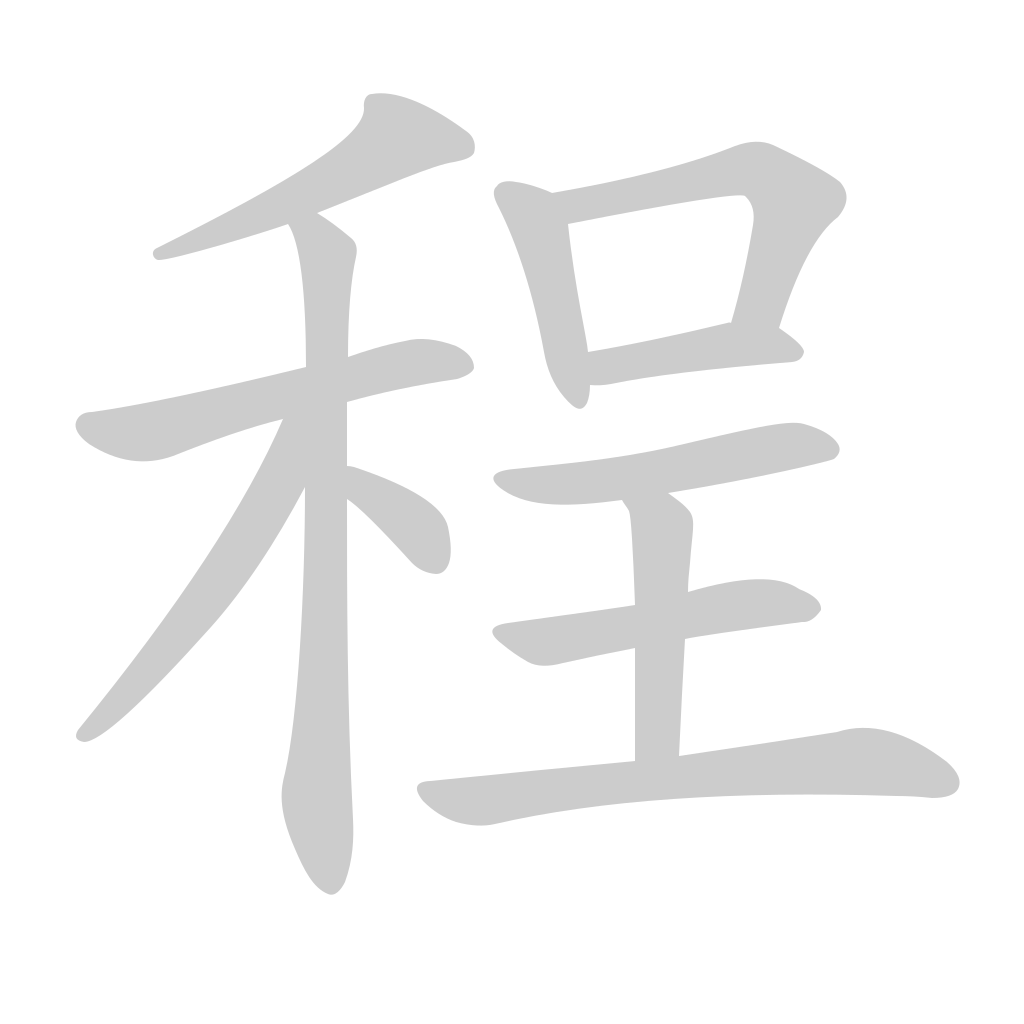
- ## 671 — 程 (extent, degree, law) — 12 strokes
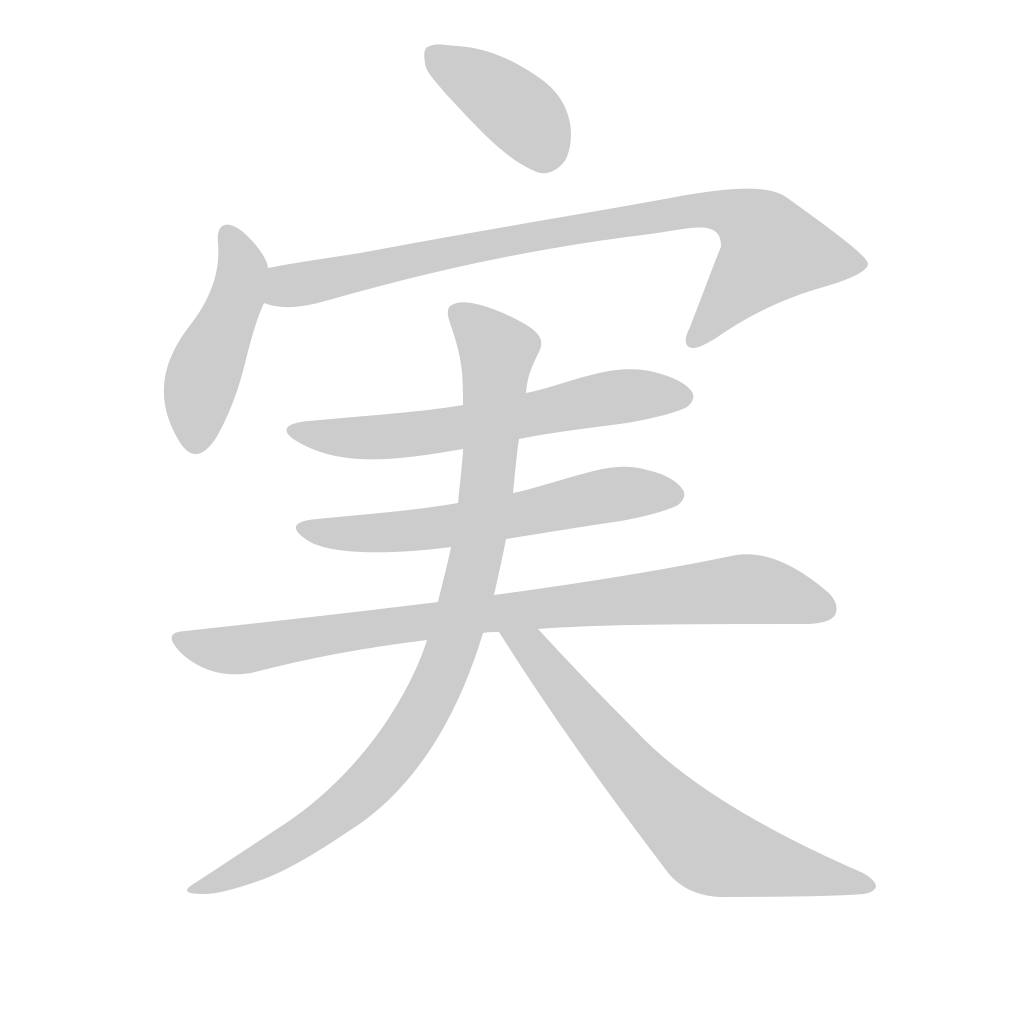
- ## 672 — 実 (reality, truth, seed) — 8 strokes
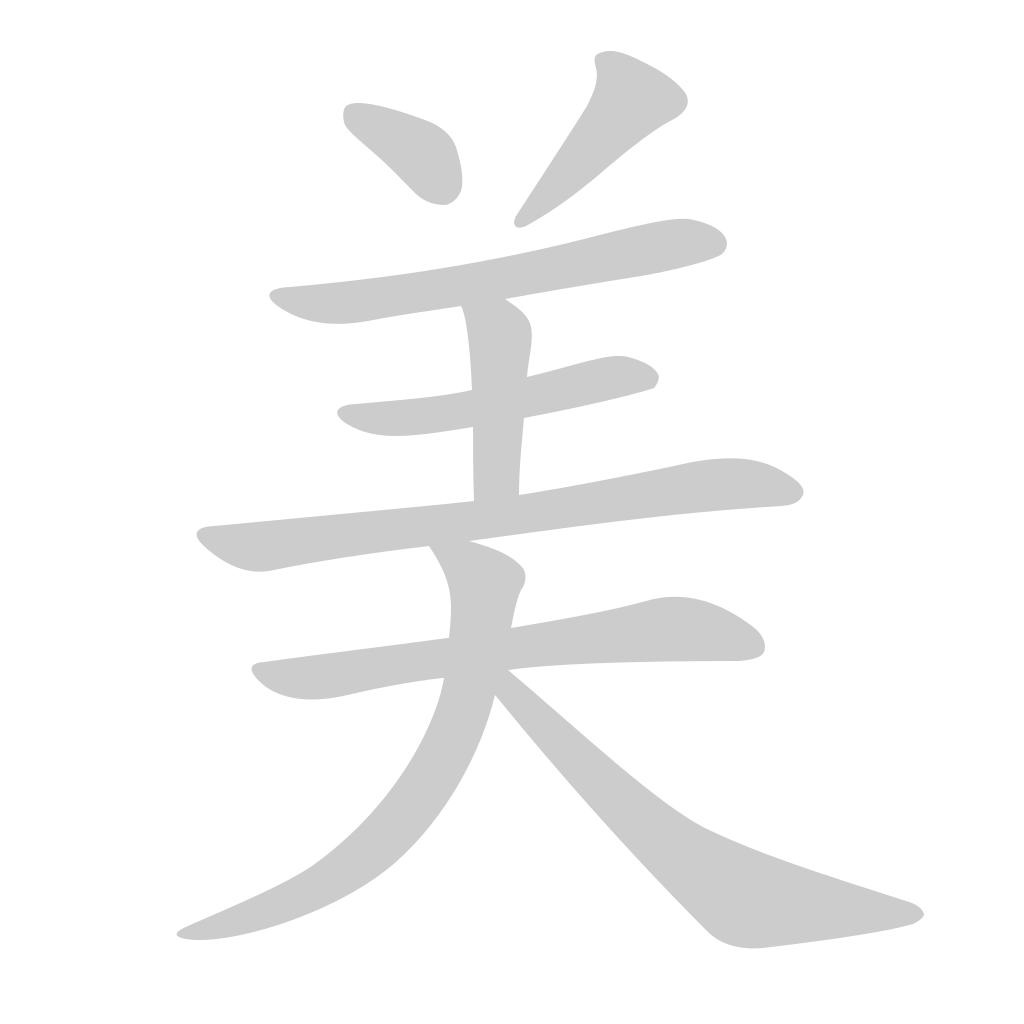
- ## 673 — 美 (beauty, beautiful) — 9 strokes
- # Stroke & Component Patterns in This Lesson
- # Similar-Looking Kanji (Outside This Lesson)
- # Phonetic Series Summary (also in the workbook, repeated here for reference)
- # Sources
Lesson 46 — Characters 663–673: 句 旬 保 証 許 認 課 税 程 実 美 Companion to Workbook. The workbook handles articles, vocabulary, study aids, and self-test. This file is the structural deep-dive — radicals, functional components (meaning/sound/form), stroke order, and shared-component patterns.
Quick Reference
| # | Kanji | Stroke Order | Strokes | Radical | Links |
|---|---|---|---|---|---|
| 663 | 句 | 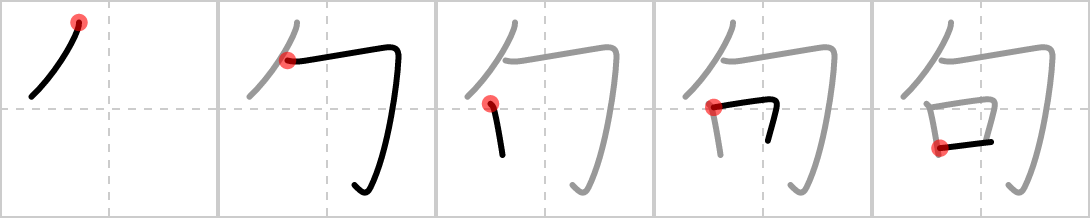 | 5 | ⼝ (mouth) | Jisho · AnimCJK |
| 664 | 旬 |  | 6 | ⽇ (sun) | Jisho · AnimCJK |
| 665 | 保 |  | 9 | ⼈ (person) | Jisho · AnimCJK |
| 666 | 証 |  | 12 | ⾔ (words) | Jisho · AnimCJK |
| 667 | 許 |  | 11 | ⾔ (words) | Jisho · AnimCJK |
| 668 | 認 |  | 14 | ⾔ (words) | Jisho · AnimCJK |
| 669 | 課 |  | 15 | ⾔ (words) | Jisho · AnimCJK |
| 670 | 税 |  | 12 | ⽲ (grain) | Jisho · AnimCJK |
| 671 | 程 |  | 12 | ⽲ (grain) | Jisho · AnimCJK |
| 672 | 実 |  | 8 | ⼧ (roof) | Jisho · AnimCJK |
| 673 | 美 |  | 9 | ⽺ (sheep) | Jisho · AnimCJK |

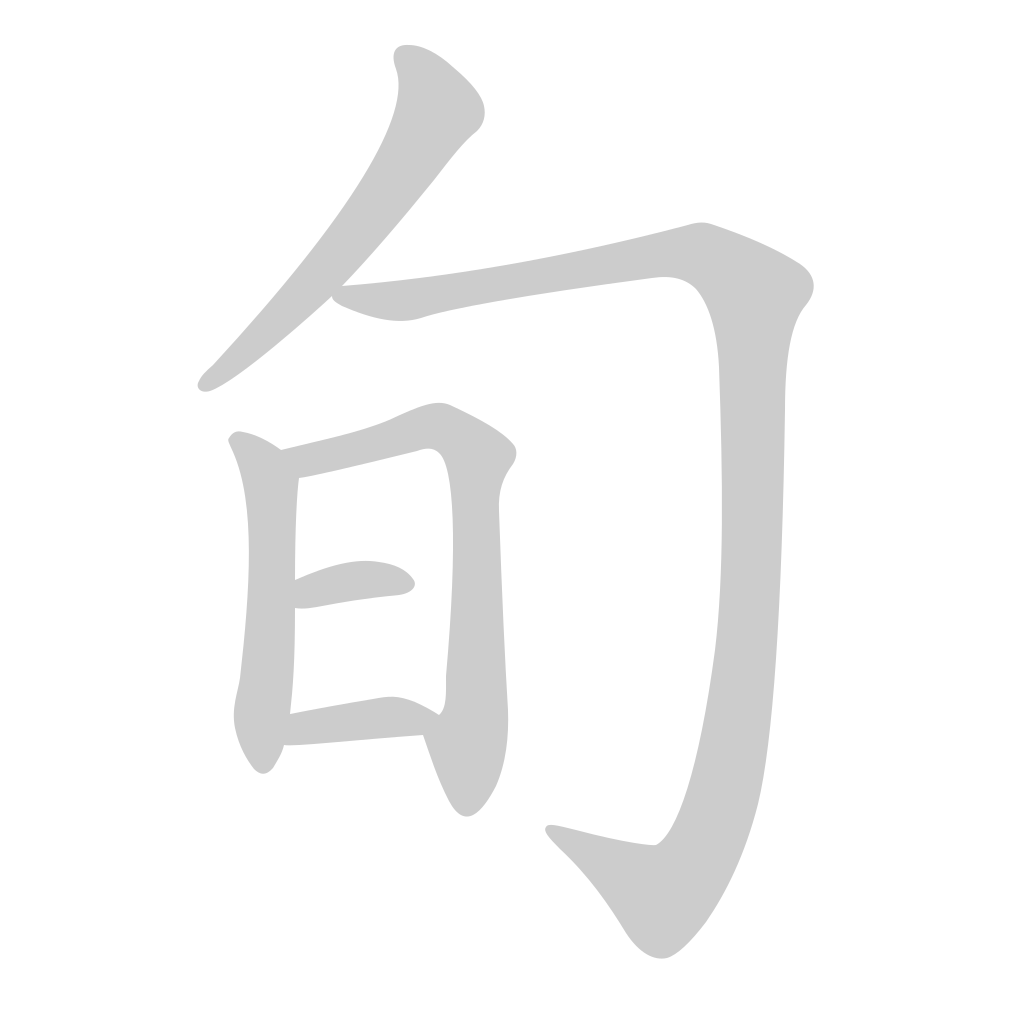
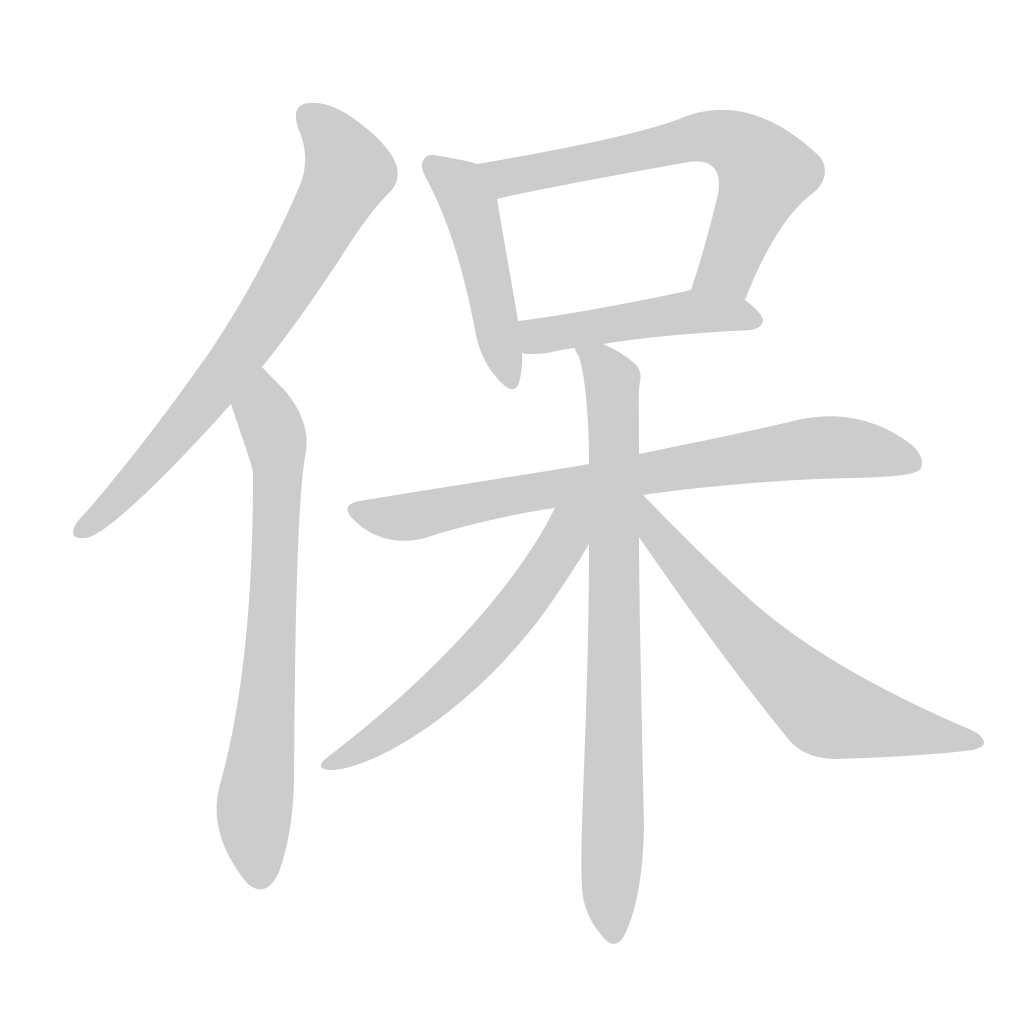
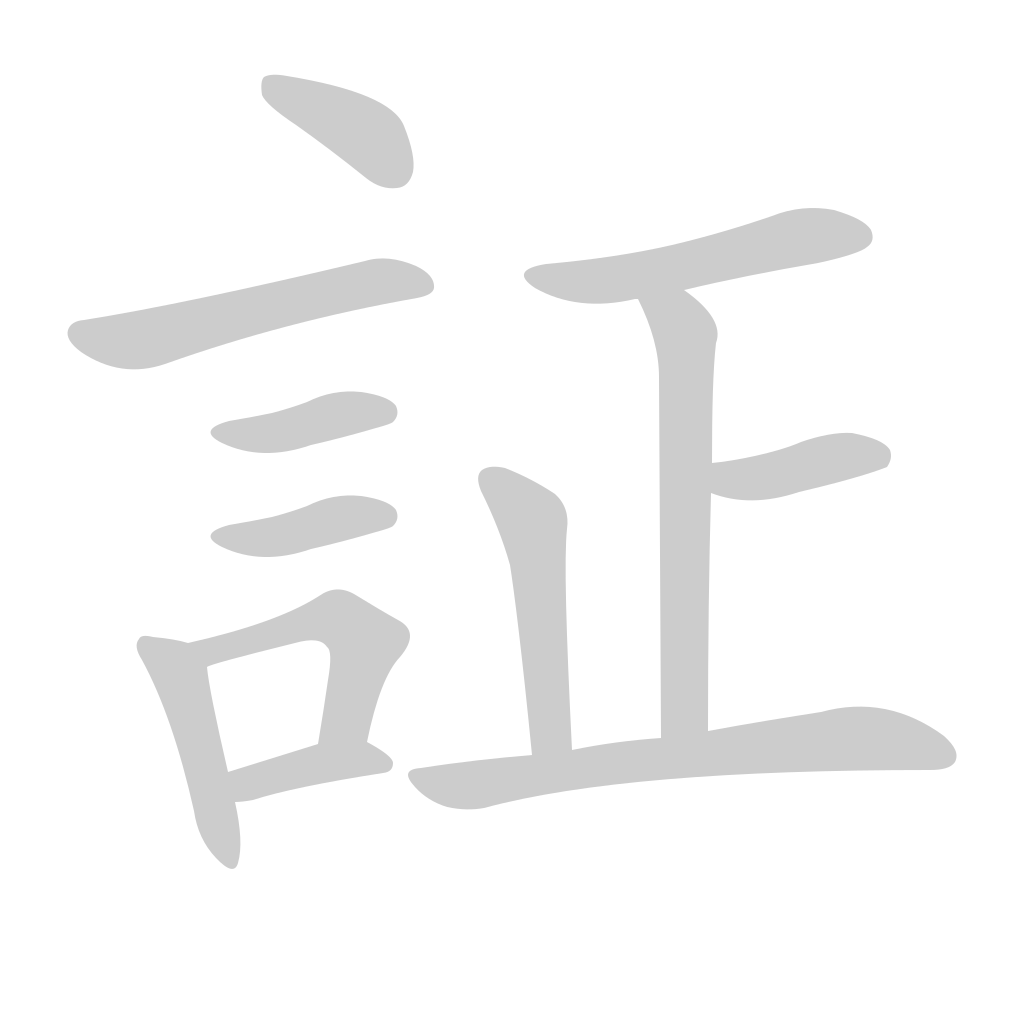
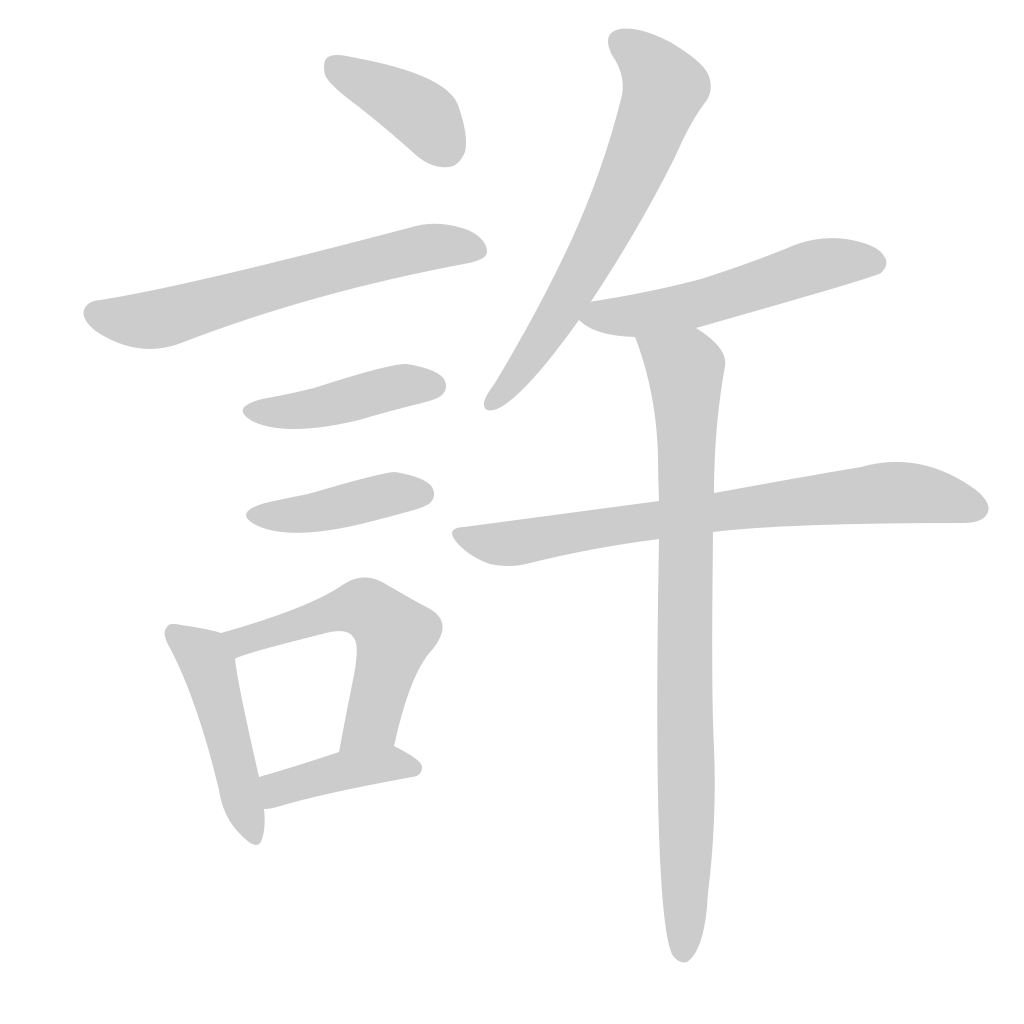
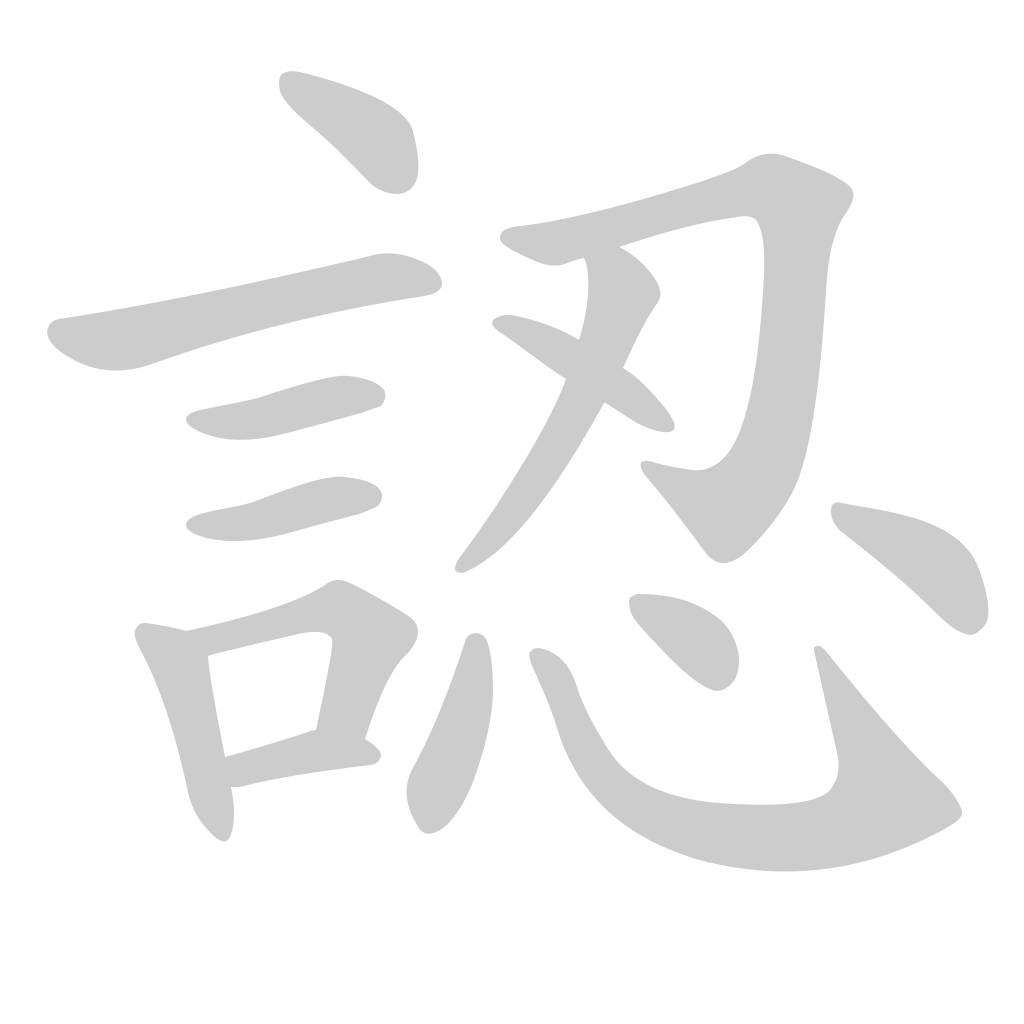
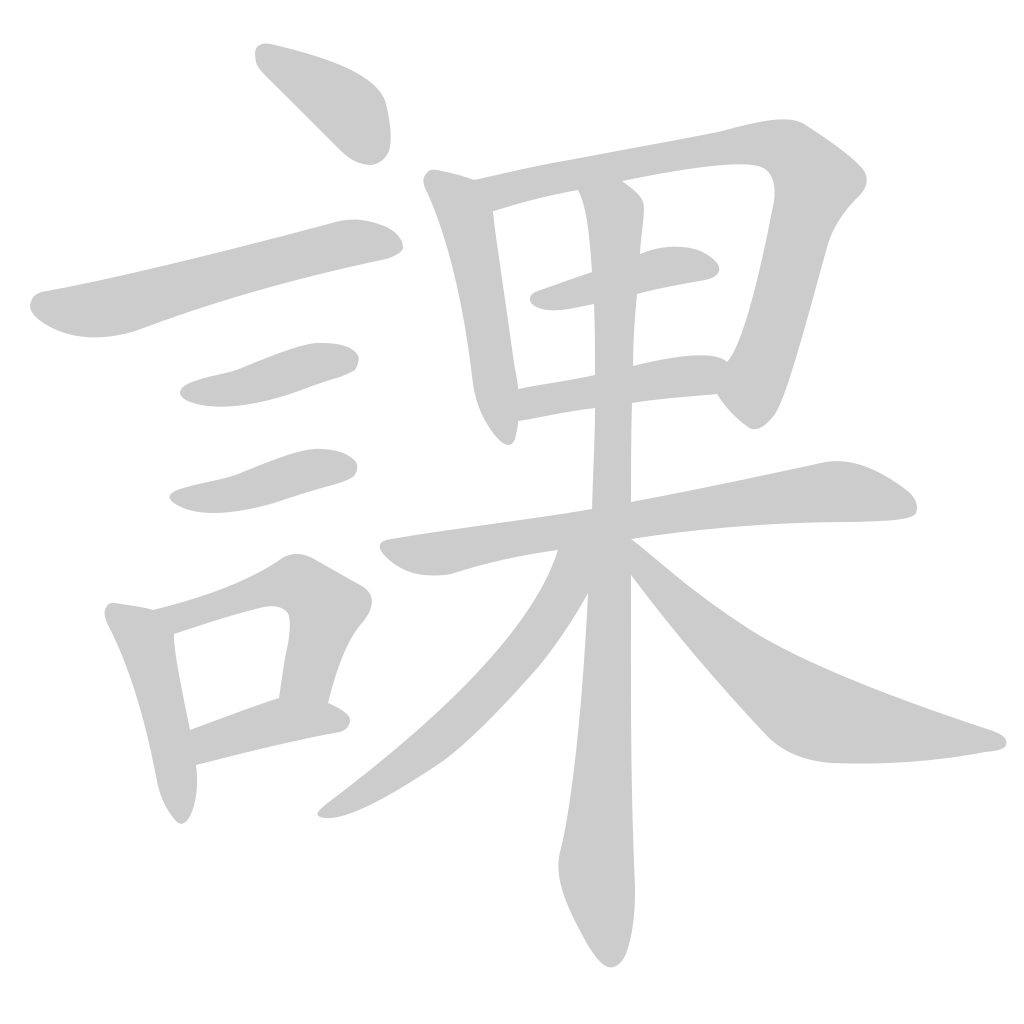
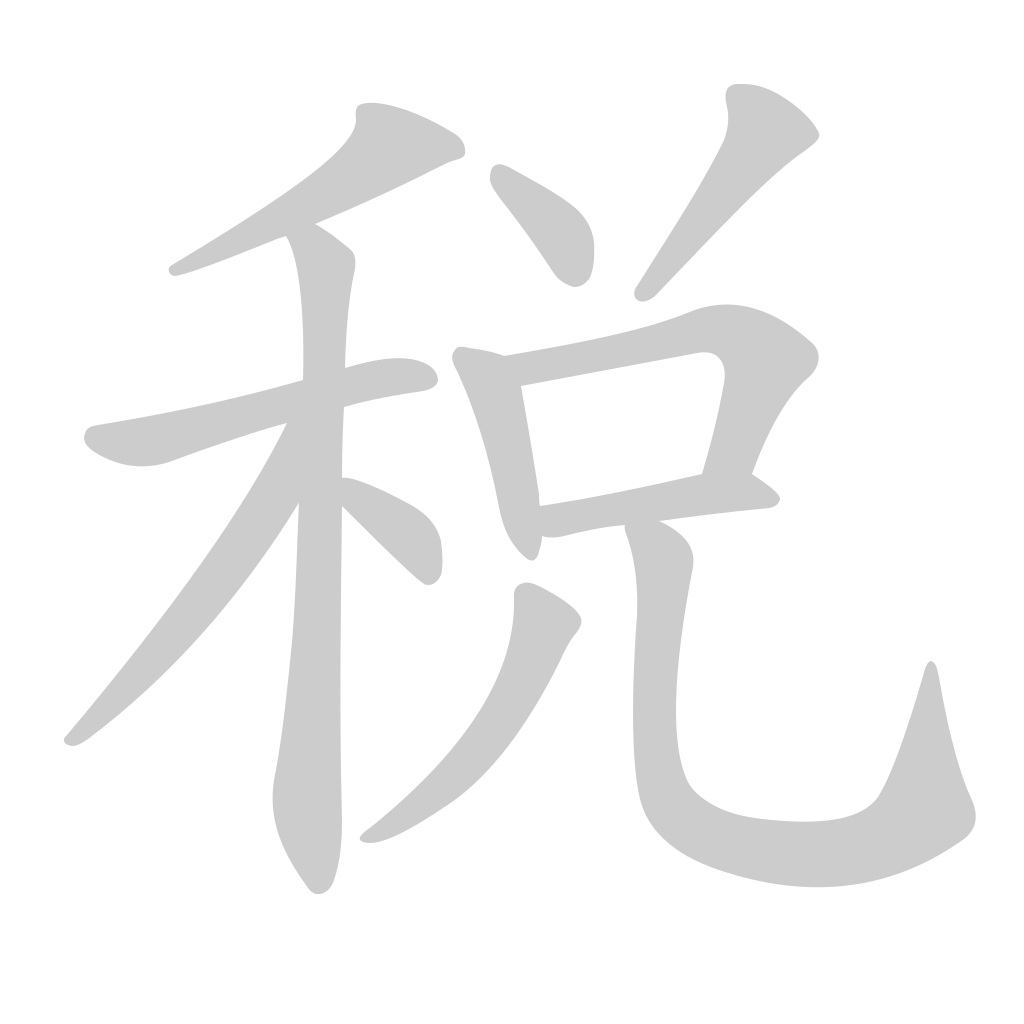
PNGs are generated from KanjiVG using
kanjivg-to-png, so each image shows the character being built stroke by stroke in panels. AnimCJK links open animated versions in a browser.
Per-Kanji Entries
663 — 句 (phrase, clause, sentence) — 5 strokes
Radical: ⼝ (くち — "mouth") · 5 strokes total
Components & function — 会意 (compound ideograph)
- 勹 (wrap, enclose) — form/meaning component supplying the bounding-and-grouping sense
- 口 (mouth) — semantic component supplying the speech sense; also the listed radical
- "Sounds wrapped together into a unit" → phrase, clause. A rare classification — neither a clean 形声 nor a picture; the reading ク is conventional.
- Modern usage stays close to the root: 文句 (phrasing → complaint), 語句 (words and phrases), 俳句-style counted verse.
Stroke order
- Structure: outer 勹 wrapper (2 strokes: short top slash, then the wide horizontal with its sweeping right hook) → inner 口 (3 strokes)
- Watch: the wrapper's hook is one continuous stroke that goes around — write it fully before anything goes inside
- Common error: writing the inner 口 first and then wrapping 勹 around it — enclosure before contents, always
664 — 旬 (decameron, ten-day period, season (for specific products)) — 6 strokes
Radical: ⽇ (ひ — "sun, day, time") · 6 strokes total
Components & function — 会意 (compound ideograph)
- 勹 (wrap, enclose) — form/meaning component: a completed cycle
- 日 (sun, day) — semantic component; also the listed radical
- "Days wrapped into a cycle" — historically the Chinese 10-day calendar unit, surviving in 上旬・中旬・下旬 (the three thirds of a month). The reading ジュン belongs to that unit; シュン is the standalone "in season" sense (旬の食材).
- Structural twin of 句: the same 勹 wrapper with different contents — 口 (sound) for 句, 日 (day) for 旬. Memorize as a pair.
Stroke order
- Structure: outer 勹 wrapper (2 strokes) → inner 日 (4 strokes)
- Watch: identical wrapper to 句; only the inside differs — 日 here is 4 strokes, not 口's 3
- Common error: blurring 旬 into 句 when writing quickly — drill the two side by side and let the inside (日 vs 口) do the distinguishing
665 — 保 (protect, guarantee, keep) — 9 strokes
Radical: ⼈ (にんべん — "person ") · へん · 9 strokes total
Components & function — 会意 (compound ideograph)
- 亻 (person) — semantic component; the listed radical
- 呆 (historically a picture of a swaddled infant) — semantic component: the thing being carried and protected
- "A person protecting a baby" → preserve, maintain, guarantee. The modern "foolish" sense of standalone 呆 (呆れる) is a much later semantic drift — do not read it back into 保.
- The reading ホ is conventional — there is no clean phonetic component to lean on here.
Stroke order
- Structure: left 亻 (2 strokes) → right 呆: 口 on top (3 strokes), then 木 below (4 strokes — horizontal, vertical, then the two slanting strokes)
- Watch: the right side has a 口 above the 木 — the historical "wrapped infant"
- Common error: writing the right side as bare 木 and omitting the 口 on top
666 — 証 (evidence, proof, certificate) — 12 strokes
Radical: ⾔ (ごんべん — "words, to speak, say") · へん · 12 strokes total
Components & function — 形声 (phonosemantic)
- 左 言 (speech) — semantic component: a formal utterance
- 右 正 (correct, upright) — phonetic component: 正【セイ・ショウ】→ 証【ショウ】 ✓ exact match
- "Speech that is correct and upright" → evidence, testimony, proof (証明, 証言, 証拠).
- 正 is a productive sound component outside this lesson too: 政【セイ】(politics), 整【セイ】(arrange), 症【ショウ】(symptom).
Stroke order
- Structure: left 言 (7 strokes: top point, wide horizontal, two short horizontals, then 口 at the bottom) → right 正 (5 strokes)
- Watch: complete 言 fully before starting 正 — it recurs in four kanji this lesson, so master its internal order once
- Common error: miscounting 言 — it is 7 strokes, not 6 or 8
667 — 許 (permit, approve) — 11 strokes
Radical: ⾔ (ごんべん — "words, to speak, say") · へん · 11 strokes total
Components & function — 形声 (phonosemantic, series broken)
- 左 言 (speech) — semantic component: permission is a speech act
- 右 午 (noon — originally a pestle) — phonetic component historically, but 午【ゴ】and 許【キョ】no longer align in modern Japanese
- The phonetic series is broken in current use — treat the reading キョ as conventional and fixed rather than predictable.
- Semantic spread: official permission (許可, 免許, 特許) and interpersonal forgiveness (許す) both flow from "granting by word."
Stroke order
- Structure: left 言 (7 strokes) → right 午 (4 strokes: short slash, then a small 干-like cross — horizontal, then a vertical with its final tail)
- Watch: 午's vertical stays below the top; it does not pierce upward
- Common error: confusing 午 (4 strokes, contained vertical) with 牛 (cow — also 4 strokes but with different proportion and a protruding vertical)
668 — 認 (acknowledge, witness, discern) — 14 strokes
Radical: ⾔ (ごんべん — "words, to speak, say") · へん · 14 strokes total
Components & function — 形声 (phonosemantic)
- 左 言 (speech) — semantic component: acknowledgment happens through words
- 右 忍 (endure, bear) — phonetic component: 忍【ニン】→ 認【ニン】 ✓ exact match
- 忍 itself decomposes as 刃 (blade — sound, ジン→ニン shift) over 心 (heart — meaning); the 心 reinforces 認's sense of "recognizing after speech and deliberation."
- Modern usage: 認める (admit), 認識 (recognition), 確認 (confirm), 公認 (official recognition).
Stroke order
- Structure: left 言 (7 strokes) → right 忍: 刃 on top (3 strokes), then 心 below (4 strokes)
- Watch: 刃 is a small angled stroke, then a vertical that hooks left, then a single small dot
- Common error: mis-stroking 刃 as 4 strokes — it is 3 (slash + vertical-hook + dot)
669 — 課 (chapter, lesson, section) — 15 strokes
Radical: ⾔ (ごんべん — "words, to speak, say") · へん · 15 strokes total
Components & function — 形声 (phonosemantic)
- 左 言 (speech) — semantic component: duties are assigned and reported by word
- 右 果 (fruit, result) — phonetic component: 果【カ】→ 課【カ】 ✓ exact match
- "Speech that produces a result" → duty, task, assignment (課題, 課する). The "section / department" sense (課長, 経理課) generalizes from "the unit assigned a duty."
- The 果 series extends outside the lesson: 菓【カ】(confection) — same reading, same component.
Stroke order
- Structure: left 言 (7 strokes) → right 果 (8 strokes: 田 on top, then 木 below — with 木's central vertical extending up through the 田)
- Watch: 果's long central vertical is one stroke that connects the whole right side; don't break it into two
- Common error: treating 果 as 田 + 大 — the bottom is 木, and its vertical runs up through the kanji
670 — 税 (tax, duty) — 12 strokes
Radical: ⽲ (のぎへん — "grain") · へん · 12 strokes total
Components & function — 形声 (phonosemantic, with reading drift)
- 左 禾 (grain) — semantic component: taxes were historically paid in grain, hence the radical
- 右 兌 (exchange) — phonetic component with a known irregularity: 兌【ダ・エツ】→ 税【ゼイ】
- The 兌 series spans three readings — 税【ゼイ】, 説【セツ】(theory; but ゼイ in 遊説 "stump speech"), 脱【ダツ】(escape). Recognize the component, but verify the reading per kanji.
- Modern usage is uniformly fiscal: 税金, 関税, 所得税, 免税, 課税.
Stroke order
- Structure: left 禾 (5 strokes: slanting top stroke, horizontal, vertical, then the two slanting strokes) → right 兌 (7 strokes: 八 on top, 口 in the middle, 儿 legs at the bottom)
- Watch: 禾's slanting top stroke is what distinguishes it from 木 — write it first and keep it distinct
- Common error: writing 禾 as 木 (dropping the slanting top stroke)
671 — 程 (extent, degree, law) — 12 strokes
Radical: ⽲ (のぎへん — "grain") · へん · 12 strokes total
Components & function — 形声 (phonosemantic)
- 左 禾 (grain) — semantic component: measuring grain → measuring extent and degree
- 右 呈 (present, show) — phonetic component: 呈【テイ】→ 程【テイ】 ✓ exact match
- Modern usage: 程度 (degree), 課程 (curriculum), 日程 (schedule), plus the high-frequency kun noun 程 (ほど) and 程々に (in moderation).
- Beware the homophone pair 課程 / 過程 (both かてい) — this lesson's 課程 is a course of study; 過程 (with 過) is a process.
Stroke order
- Structure: left 禾 (5 strokes, same as in 税) → right 呈 (7 strokes: 口 on top, then 王 below — three horizontals crossed by a vertical)
- Watch: the left side is identical to 税's; the right side alone determines reading and meaning
- Common error: swapping the right sides of 税 and 程 when writing from memory — drill the two together as a 禾-pair
672 — 実 (reality, truth, seed) — 8 strokes
Radical: ⼧ (うかんむり — "roof, house") · かんむり · 8 strokes total
Components & function — 会意 (compound ideograph, modern simplified form)
- 宀 (roof) — semantic component: the house that holds the wealth
- Lower block — a modern simplification; the historical glyph 實 has 貫 (a string of cash coins; older analyses split it 毋 + 貝) under the roof
- "Wealth filling the house" → full, substantial → real, true, fruit. The modern form is graphically opaque — don't hunt for a phonetic component; the reading ジツ is conventional.
- Semantic spread: factual truth (事実, 真実, 実際に) and botanical fruit (実, 実る) both come from the "filled, substantial" root.
Stroke order
- Structure: top 宀 (3 strokes: dot, then the horizontal with its hooked corner) → a short horizontal, a wider horizontal → 大 below (3 strokes: horizontal, slash, sweep)
- Watch: the two middle horizontals sit between the roof and the 大 — they are separate strokes, not part of either
- Common error: writing 実 as 宀 + 大 only — the inner middle horizontals are essential (8 strokes, not 6)
673 — 美 (beauty, beautiful) — 9 strokes
Radical: ⽺ (ひつじ — "sheep") · 9 strokes total
Components & function — 会意 (compound ideograph) (structure debated)
- 上 羊 (sheep) — semantic component; also the listed radical
- 下 大 (big) — semantic component supplying scale
- "A big, fat sheep" — a beautiful and valuable sacrifice in ancient ritual → beauty. An alternative analysis reads the glyph as a person (大) wearing a ram-horn headdress; the traditional 羊 + 大 reading is standard, but the structure is debated.
- The reading ビ is conventional. Modern usage: 美人, 美術館, 美学, and the kun adjective 美しい.
Stroke order
- Structure: top 羊-form (6 strokes: two dots, three horizontals, then the central vertical) → the final wide horizontal and the 大's slash and sweep (3 strokes)
- Watch: the central vertical stops at the last of the top horizontals — it does not run down into 大, which gets its own horizontal
- Common error: writing the top as 王 — the two dots at the very top make it 羊 (sheep), not 王 (king)
Stroke & Component Patterns in This Lesson
The 言 (ごんべん) cluster — 証, 許, 認, 課
Four of eleven kanji share 言 on the left (7 strokes). Always: 言 first, then the right-side component. Master 言 in isolation — it appears in dozens of Jōyō kanji beyond this lesson.
| Kanji | Right side | Strokes (right) | Reading driver |
|---|---|---|---|
| 証 | 正 | 5 | 正【セイ・ショウ】→ 証【ショウ】 ✓ |
| 許 | 午 | 4 | series broken in modern Japanese — キョ is conventional |
| 認 | 忍 | 7 | 忍【ニン】→ 認【ニン】 ✓ |
| 課 | 果 | 8 | 果【カ】→ 課【カ】 ✓ |
The first three form the formal-procedure trio — prove (証), permit (許), recognize (認). Drilling them together reinforces the semantic relationship while practicing the shared 言 left side; 課 extends the family into "assign and report."
The 禾 (のぎへん) pair — 税, 程
Both kanji are 禾 + a different right-side phonetic, and both are 12 strokes. 禾 always first (5 strokes — note the slanting top stroke, which is exactly what distinguishes it from 木). The right side is a clean 形声 sound component in both cases: 兌 → ゼイ (with drift), 呈 → テイ (exact). Since the left halves are identical, the right side alone carries all the information — drill the pair together.
The 勹 (wrapper) pair — 句, 旬
Both kanji are the same 勹 wrapper with different contents: 口 (speech) for 句, 日 (days) for 旬. The wrapper is written first — a short slash, then one continuous horizontal-with-hook that goes around — and the content goes inside. "Wrapper of words" vs "wrapper of days" is the whole distinction; write them side by side until the inside is automatic.
Radical = meaning, across the board
Unusually for a lesson this size, every radical in Lesson 46 is genuinely semantic: 口 (speech in 句), 日 (days in 旬), 亻 (the protecting person in 保), 言 (speech acts in 証・許・認・課), 禾 (grain-as-payment and grain-as-measure in 税・程), 宀 (the wealth-holding house in 実), 羊 (the sacrificial sheep in 美). Roughly a third of Jōyō kanji have radicals that carry no meaning — this lesson has none, so here the radical is a reliable memory hook.
Similar-Looking Kanji (Outside This Lesson)
These aren't this lesson's kanji, but they're easy to confuse with one when reading — different meaning, different (or coincidentally similar) reading, similar shape.
| This lesson's kanji | Looks like | Key difference | Why it matters |
|---|---|---|---|
| 税 (ゼイ, tax) | 説 (セツ, theory) | Left radical: 禾 (grain) vs 言 (speech); both share the right-side 兌 | Same 兌 phonetic series — and 説 even reads ゼイ in 遊説 (stump speech). In dense text the two blur at a glance; the radical decides grain-tax vs speech. |
| 証 (ショウ, proof) | 症 (ショウ, symptom) | Wrapper: 言 on the left vs 疒 (sickness enclosure); both carry 正 | Same reading AND same 正 phonetic — 証状 territory vs 症状 (symptoms). A genuinely swappable pair in medical or legal text; only the radical tells testimony from illness. |
| 保 (ホ, preserve) | 呆 (ボウ, dumbfounded) | 保 = 亻 + 呆, nothing more | A direct derivation — bare 呆 is common as 呆れる (あきれる, "be appalled"). Its modern "foolish" sense is late semantic drift; seeing 呆 alone should recall 保's etymology (a swaddled infant), not contaminate it. |
Phonetic Series Summary (also in the workbook, repeated here for reference)
Phonetic Series Summary
| Sound Component | Reading | In This Lesson | Other Common Kanji |
|---|---|---|---|
| 果 | カ | 課 | 果 itself, 菓 (sweets) |
| 呈 | テイ | 程 | (まれ) — 呈 itself |
| 正 | セイ / ショウ | 証 | 政, 整 |
| 兌 | ゼイ / エツ / ダツ | 税 | 説 (theory), 脱 (escape) |
| 勹 (wrapper, structural) | — | 句, 旬 | (a structural component, not a phonetic) |
| 言 (radical, structural) | — | 証 許 認 課 | many — speech-act kanji |
Lesson highlight: The 言-cluster (証 許 認 課) shares structure but not sound — these are formal speech-act kanji where 言 is purely a meaning radical. They make a coherent semantic group: testify (証), permit (許), recognize (認), assign-and-report-on (課).
Lesson highlight #2: 句 + 旬 share the 勹 (wrapper) structural element. They look very similar — only the inside differs (口 vs 日). Memorize as a pair: "wrapper of words" vs "wrapper of days".
Sources
- KanjiVG — github.com/KanjiVG/kanjivg | License: CC-BY-SA 3.0
- kanjivg-to-png — github.com/nicdgonzalez/kanjivg-to-png
- AnimCJK — github.com/parsimonhi/animCJK | License: Arphic Public License
- Jisho.org — jisho.org | Uses KanjiVG data for stroke order diagrams.
- Outlier Linguistics — outlier-linguistics.com | The Outlier Kanji Dictionary is the gold standard for rigorous functional component analysis.