KIC Lesson 20 Kanji Reference
Table of Contents
- # Quick Reference
-
# Per-Kanji Entries
- ## 362 — 反 (anti-) — 4 strokes
- ## 363 — 対 (vis-a-vis, opposite, even) — 7 strokes
- ## 364 — 村 (village, town) — 7 strokes
- ## 365 — 付 (adhere, attach, refer to) — 5 strokes
- ## 366 — 団 (group, association) — 6 strokes
- ## 367 — 寸 (measurement, tenth of a shaku, a little) — 3 strokes
- ## 368 — 支 (branch, support, sustain) — 4 strokes
- ## 369 — 技 (skill, art, craft) — 7 strokes
- ## 370 — 術 (art, technique, skill) — 11 strokes
- ## 371 — 街 (boulevard, street, town) — 12 strokes
- ## 372 — 封 (seal, closing) — 9 strokes
- ## 373 — 筒 (cylinder, pipe, tube) — 12 strokes
- # Stroke & Component Patterns in This Lesson
- # Similar-Looking Kanji (Outside This Lesson)
- # Phonetic Series Summary (also in the workbook, repeated here for reference)
- # Sources
Lesson 20 — Characters 362–373: 反 対 村 付 団 寸 支 技 術 街 封 筒 Companion to Workbook. The workbook handles articles, vocabulary, study aids, and self-test. This file is the structural deep-dive — radicals, functional components (meaning/sound/form), stroke order, and shared-component patterns.
Quick Reference
| # | Kanji | Stroke Order | Strokes | Radical | Links |
|---|---|---|---|---|---|
| 362 | 反 | 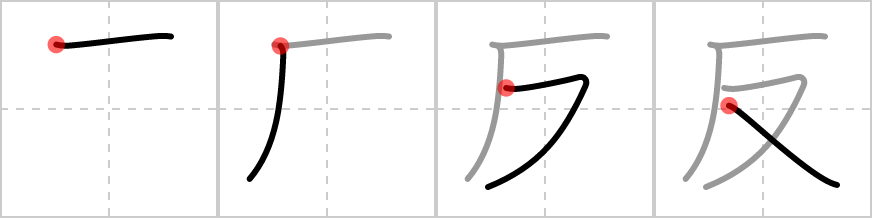 | 4 | ⼜ (again) | Jisho · AnimCJK |
| 363 | 対 |  | 7 | ⼨ (inch) | Jisho · AnimCJK |
| 364 | 村 |  | 7 | ⽊ (tree) | Jisho · AnimCJK |
| 365 | 付 | 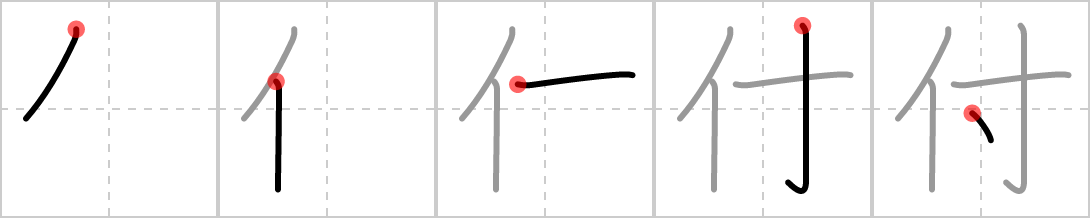 | 5 | ⼈ (person) | Jisho · AnimCJK |
| 366 | 団 |  | 6 | ⼞ (border) | Jisho · AnimCJK |
| 367 | 寸 | 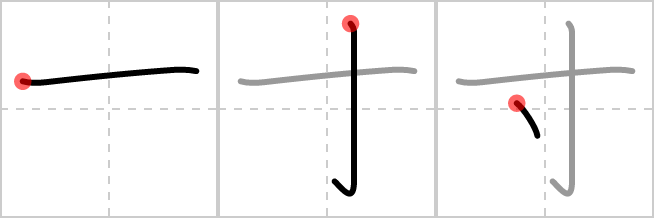 | 3 | ⼨ (inch) | Jisho · AnimCJK |
| 368 | 支 | 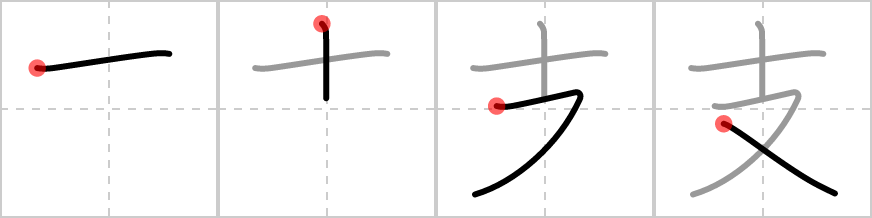 | 4 | ⽀ (branch) | Jisho · AnimCJK |
| 369 | 技 |  | 7 | ⼿ (hand) | Jisho · AnimCJK |
| 370 | 術 |  | 11 | ⾏ (to go) | Jisho · AnimCJK |
| 371 | 街 |  | 12 | ⾏ (to go) | Jisho · AnimCJK |
| 372 | 封 |  | 9 | ⼨ (inch) | Jisho · AnimCJK |
| 373 | 筒 |  | 12 | ⽵ (bamboo) | Jisho · AnimCJK |
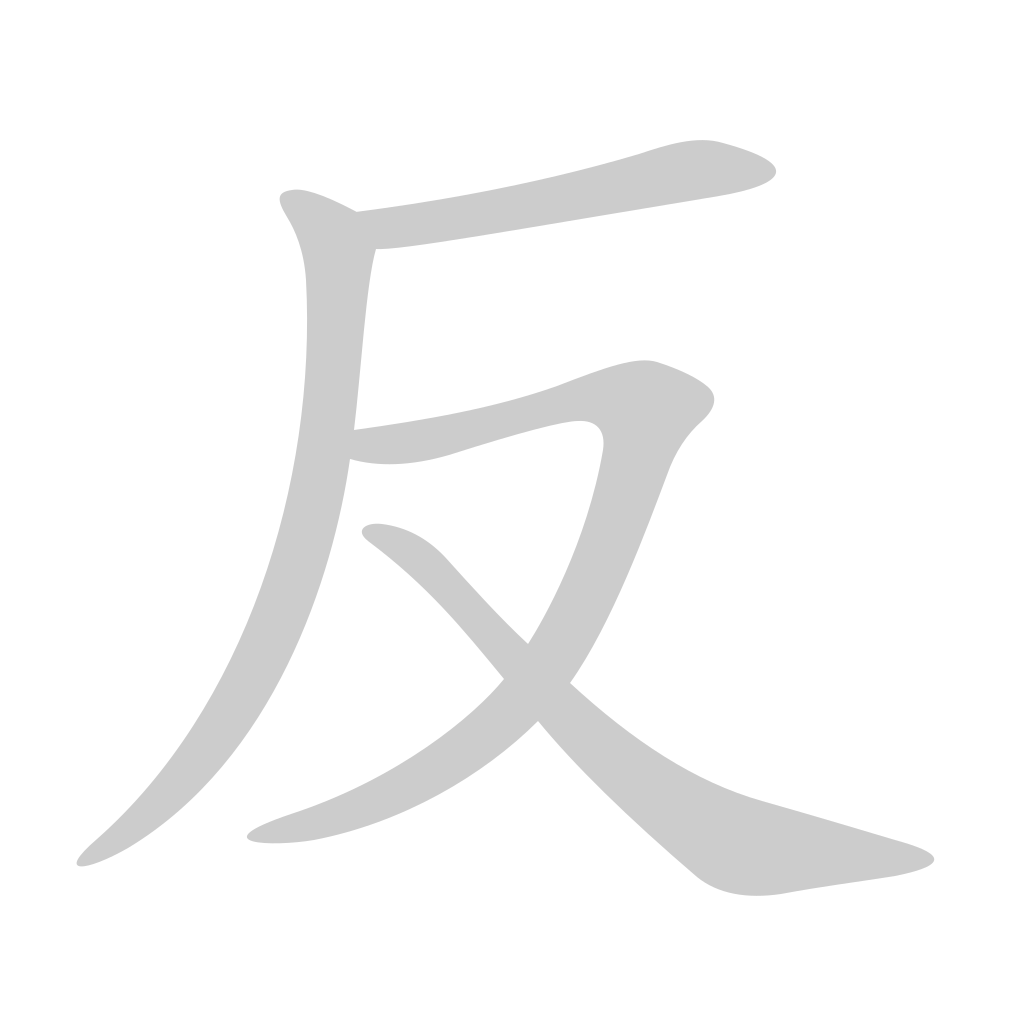
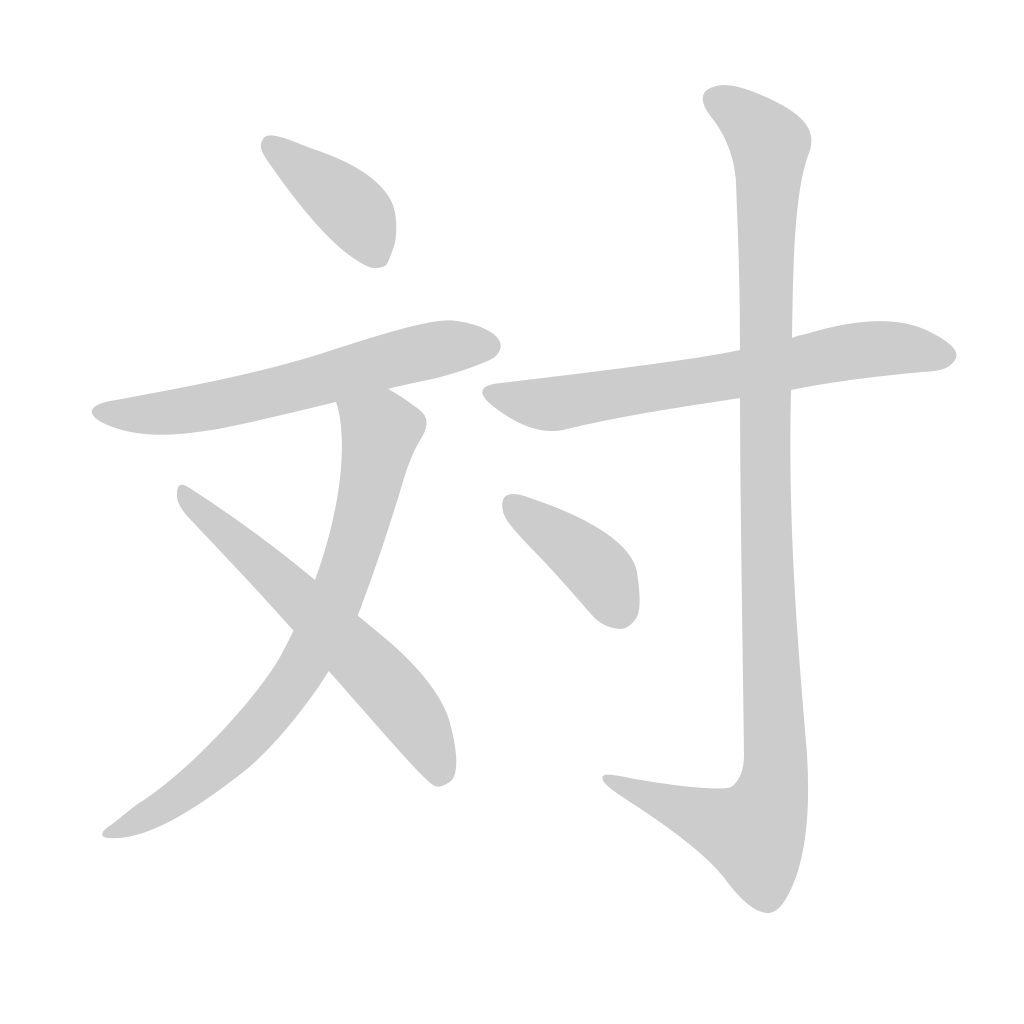
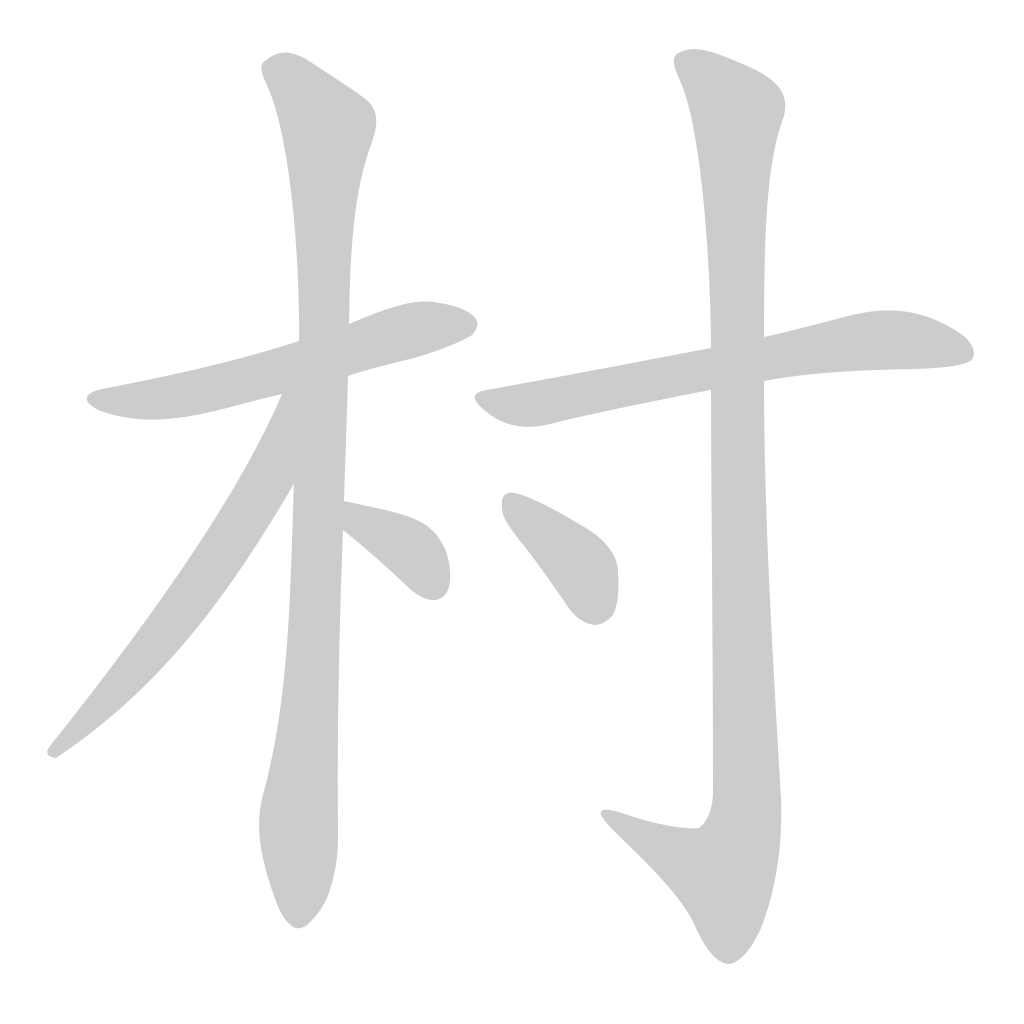
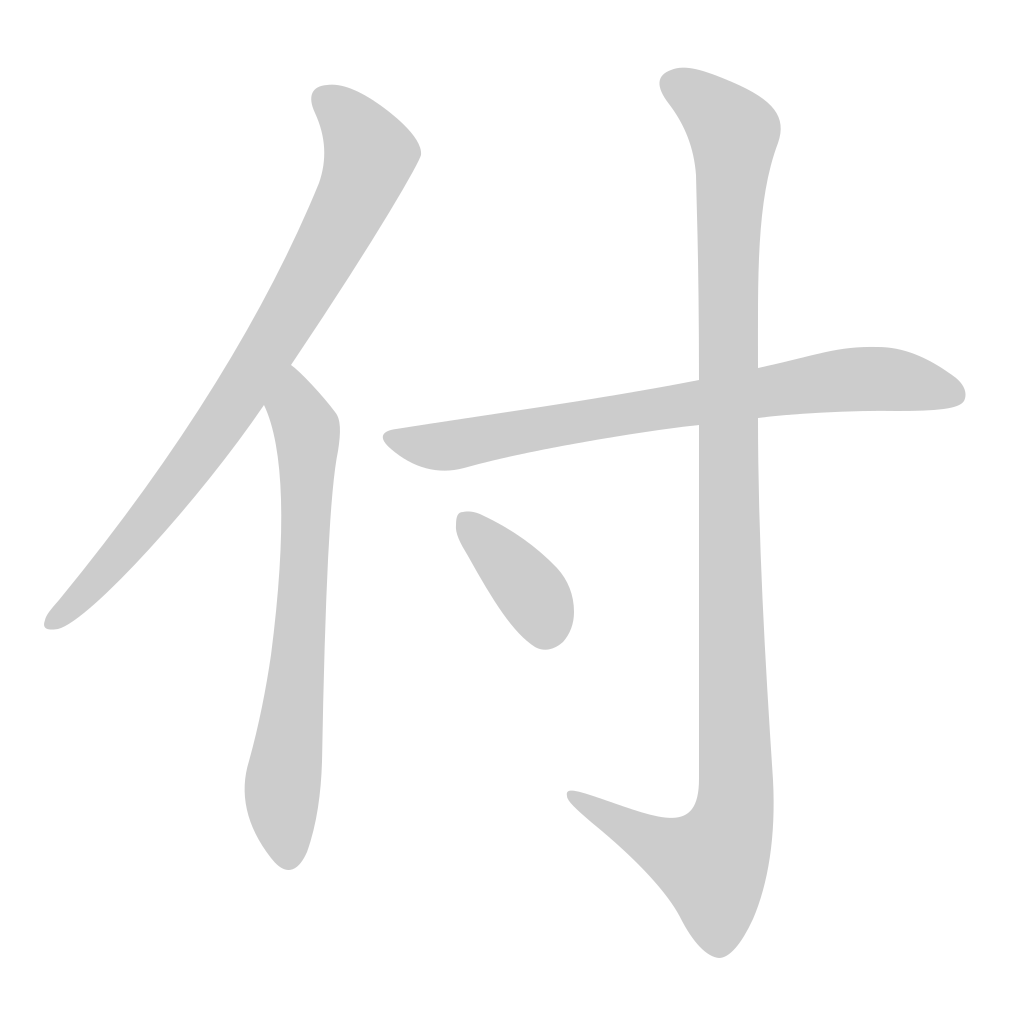
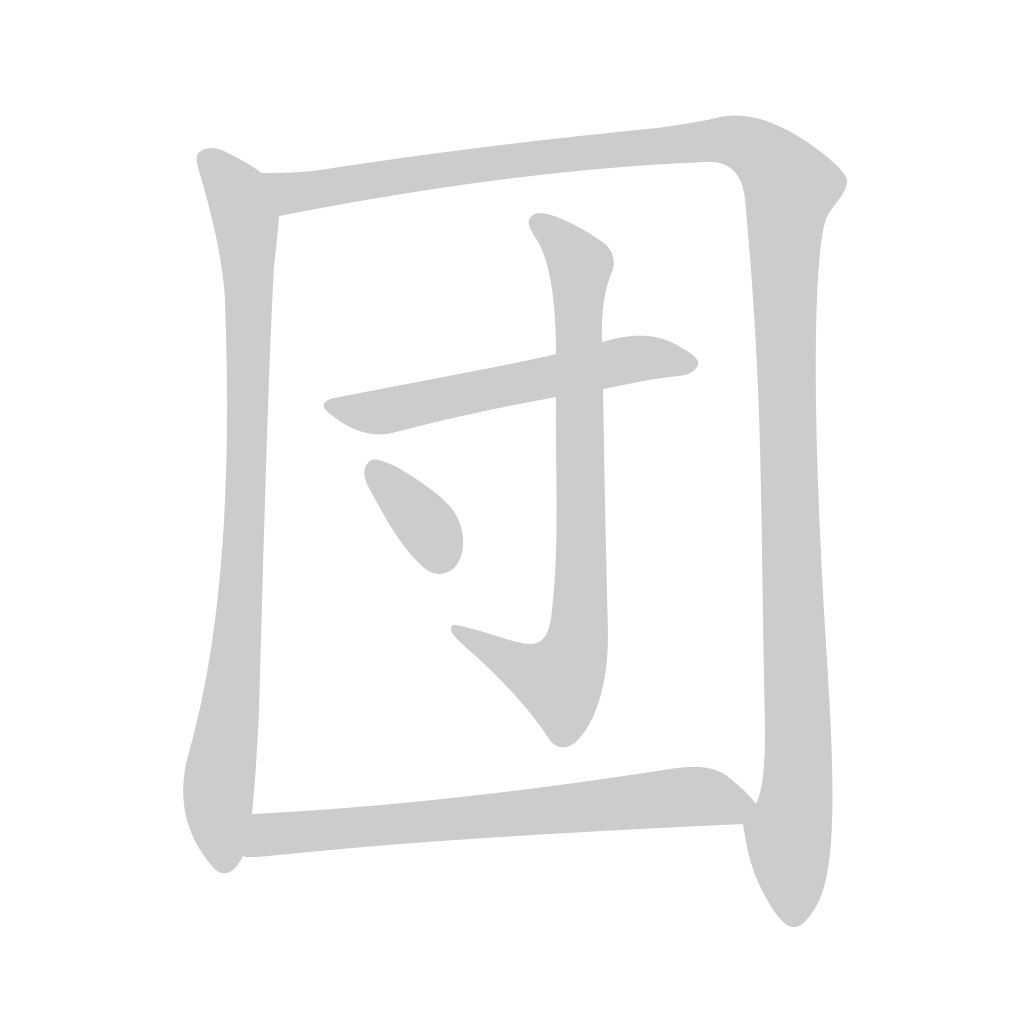
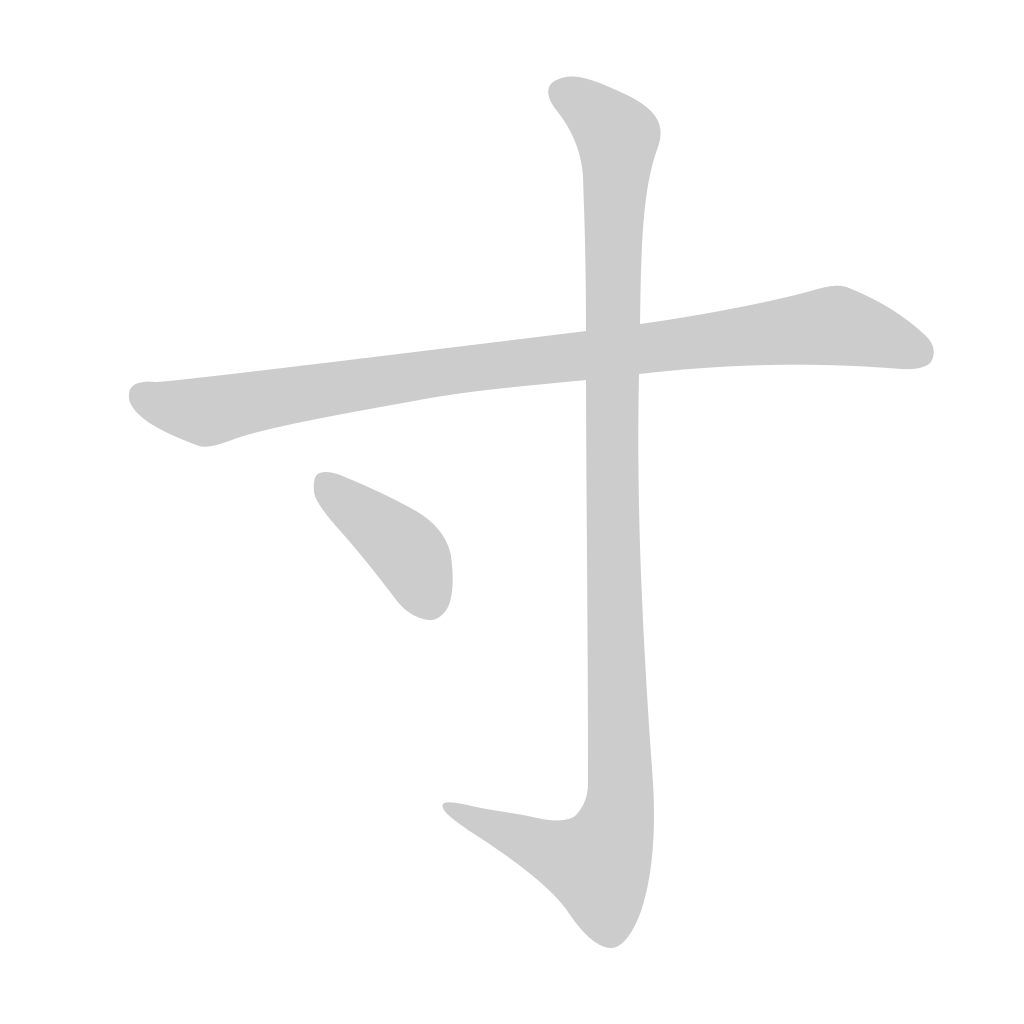
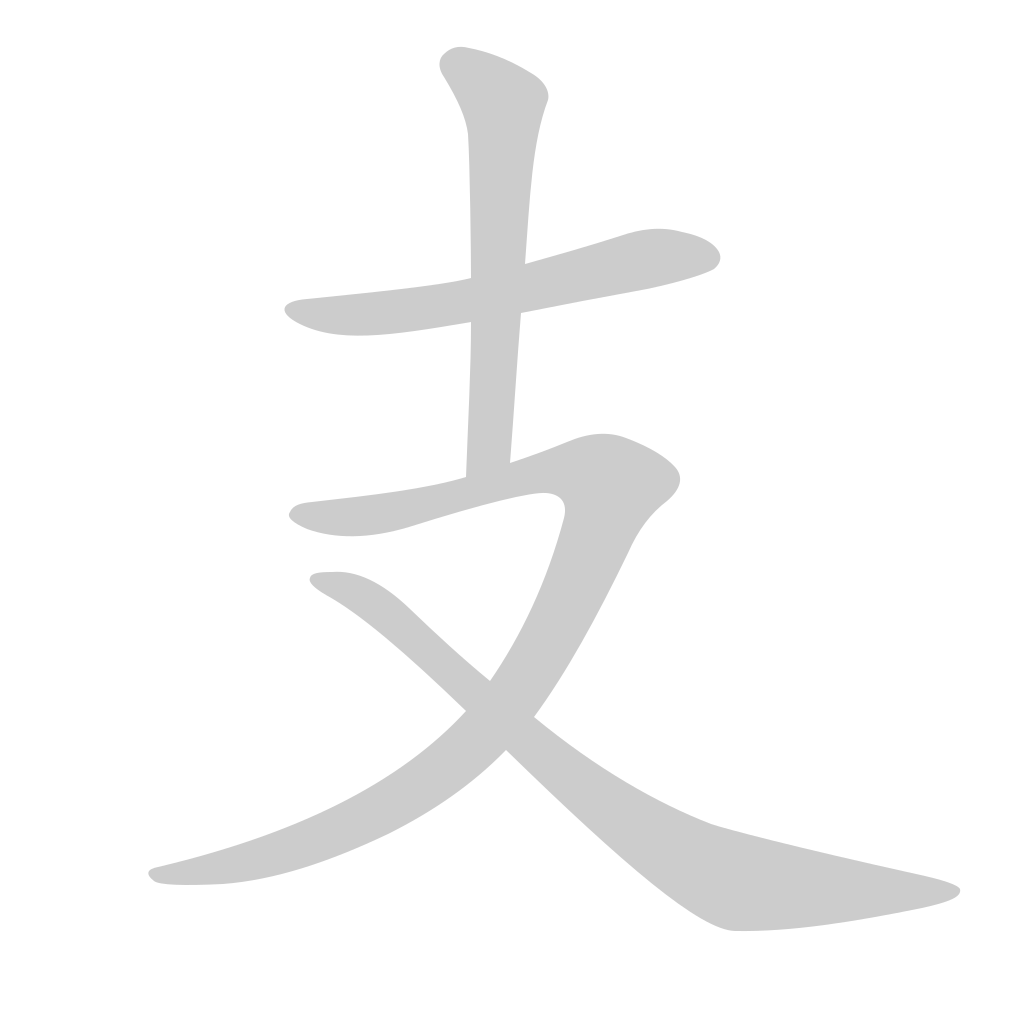
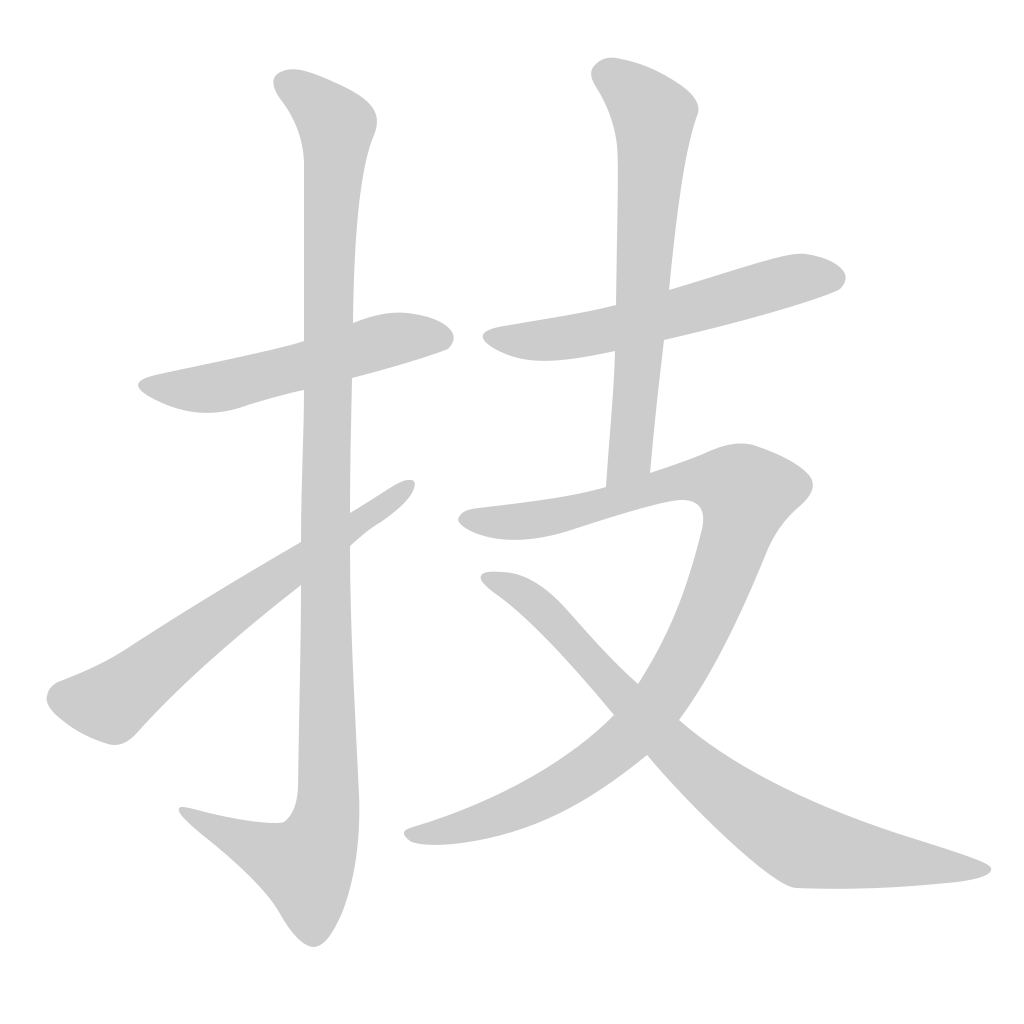
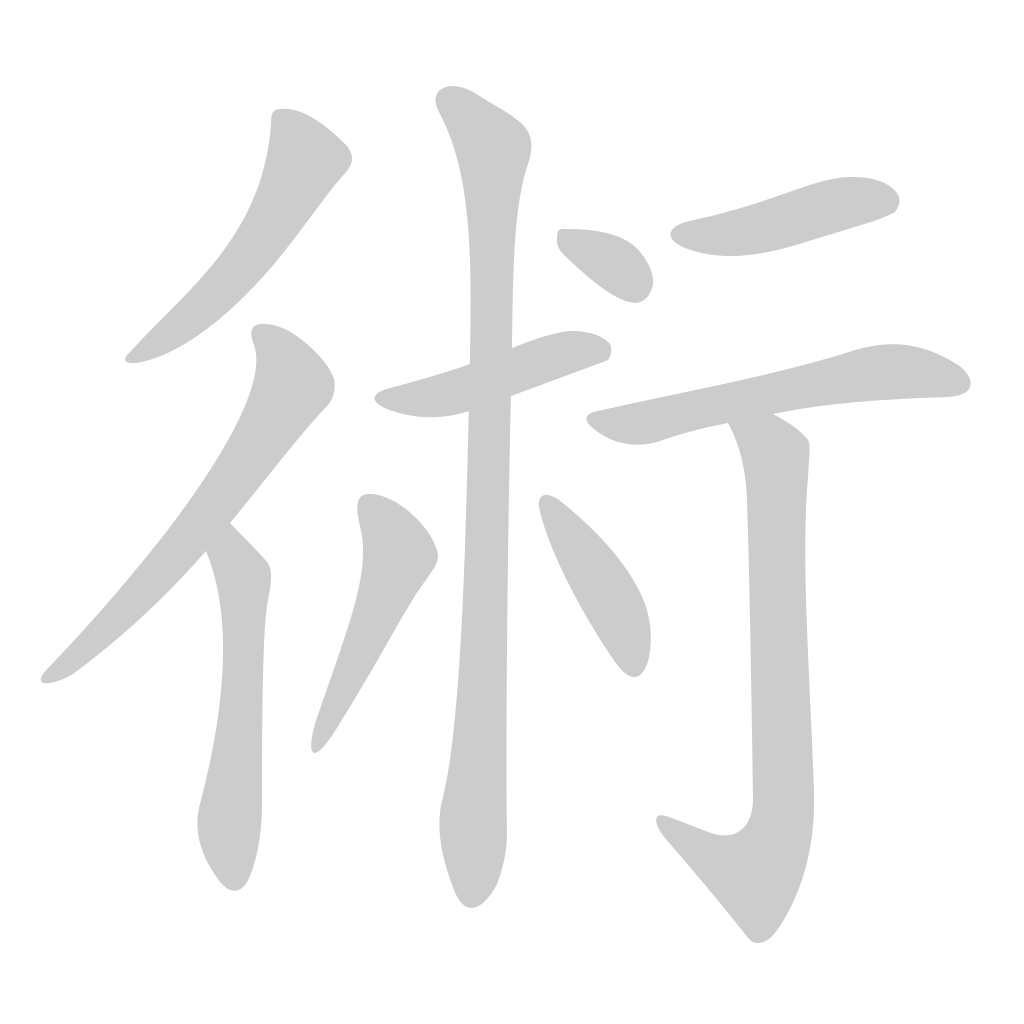
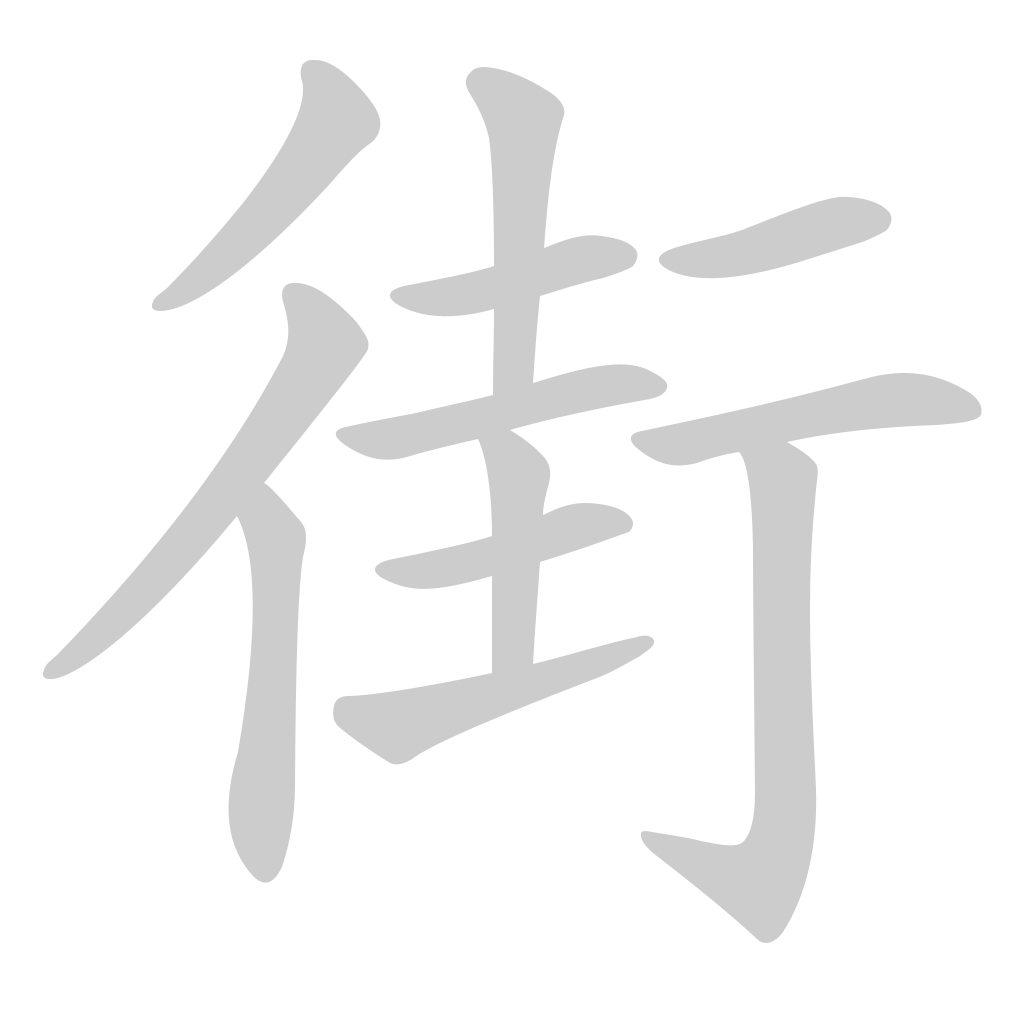
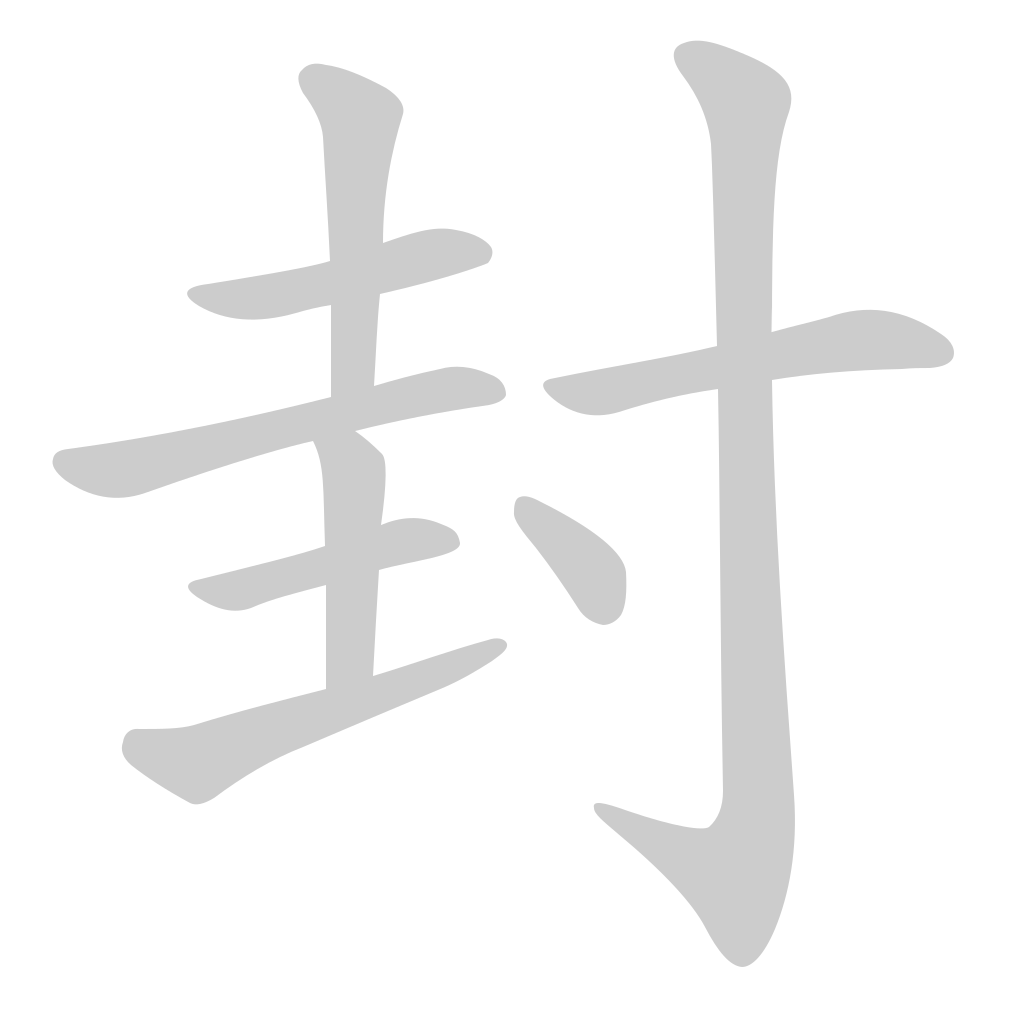
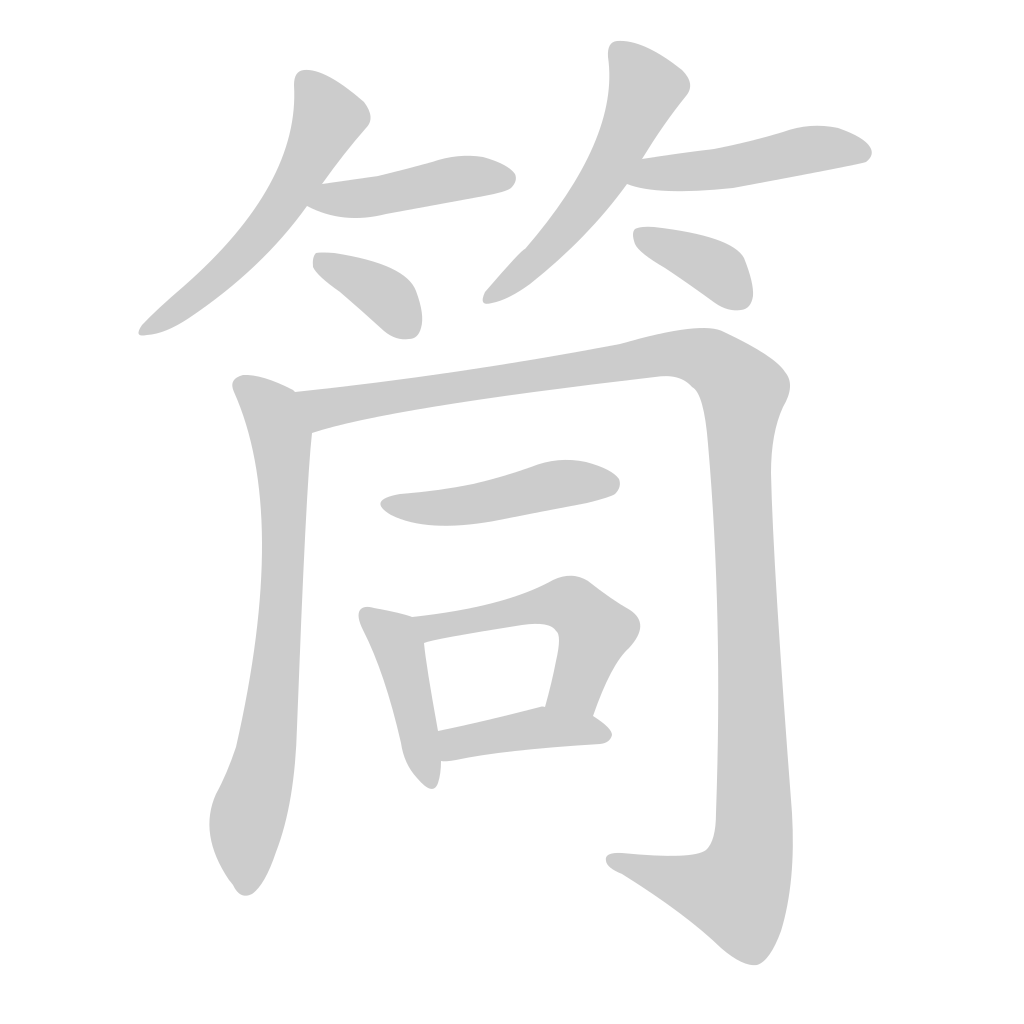
PNGs are generated from KanjiVG using
kanjivg-to-png, so each image shows the character being built stroke by stroke in panels. AnimCJK links open animated versions in a browser.
Per-Kanji Entries
362 — 反 (anti-) — 4 strokes
Radical: ⼜ (また — "again, right hand") · 4 strokes total
Components & function — 会意 (compound ideograph)
- 厂 (cliff / slanted surface) — semantic: a sloping face being pressed against
- 又 (right hand) — semantic: a hand pushing back against, or pulling itself up, the surface
- "A hand pressed against a cliff face, pushing back" → turn over, reverse, oppose. The radical 又 is a genuine meaning component here, not just a dictionary indexing choice.
- Series: 反 is itself a very productive sound component — 坂【ハン】(slope), 板【ハン】(board), 版【ハン】(printing plate), 販【ハン】(sell), 飯【ハン】(meal). Recognize 反 on sight for ハン predictions.
Stroke order
- Structure: 厂 frame first (2 strokes: short top horizontal, then the long left-falling stroke) → the 又-like lower part (2 strokes: angled stroke, then the final rightward sweep)
- Watch: complete the 厂 fully before the lower strokes, and hold the final sweeping stroke until last — it closes the character.
- Common error: letting the lower part drift toward a 爪-like shape, or launching the final sweep too early. Keep 又's two strokes distinct.
363 — 対 (vis-a-vis, opposite, even) — 7 strokes
Radical: ⼨ (すんづくり — "inch, (2.25 cm)") · つくり · 7 strokes total
Components & function — simplified form of 對 (structure obscured — learn as a unit)
- 左 — looks like 文, but it is a post-war abbreviation of 對's complex left side (in the older analysis, a rack of hanging instruments); in the modern form it reliably carries neither sound nor meaning
- 右 寸 (hand) — historically a hand holding the object up so it faces you
- The older 對 meant "hold something up to face someone" → face, oppose, form a pair. The visible 文 is a false lead — the shinjitai is not productively decomposable, so memorize 対 as a unit.
- The ⼨ radical here is an indexing choice; only the historical form justifies it semantically.
Stroke order
- Structure: left 文-shape (4 strokes) → right 寸 (3 strokes)
- Watch: finish the left portion completely before starting the right-side 寸.
- Common error: compressing the right side too much and losing the balance of 寸's final dot — give 寸 its full width.
364 — 村 (village, town) — 7 strokes
Radical: ⽊ (きへん — "tree, wood") · へん · 7 strokes total
Components & function — 形声 (phonosemantic)
- 左 木 (tree, wood) — semantic: a settlement associated with trees / woodland land use
- 右 寸 (sound) — 寸【スン/ソン】→ 村【ソン】 ✓ clean phonetic match
- The radical 木 is also the semantic component — the straightforward case, unlike several kanji in this lesson.
- One of only a few Jōyō kanji where 寸 works as a pure sound component; in 付 and 封 the same shape contributes meaning (hand) instead.
Stroke order
- Structure: left 木 (4 strokes) → right 寸 (3 strokes)
- Watch: write the left 木 fully before moving to the right-side 寸.
- Common error: writing 寸 too close to 木 and collapsing the two-part structure — keep a clear gap between the components.
365 — 付 (adhere, attach, refer to) — 5 strokes
Radical: ⼈ (にんべん — "person ") · へん · 5 strokes total
Components & function — 会意 (compound ideograph)
- 左 亻 (person) — semantic: the recipient
- 右 寸 (hand) — semantic: a hand giving or attaching something
- "A hand handing something over to a person" → attach, hand over, assign. Semantically transparent — both components carry meaning, and no sound component exists in the standard analysis.
- Series: 付 itself went on to become a sound component — 府【フ】(government office), 符【フ】(sign, tag), 附【フ】(attach), 腐【フ】(rot) all read フ.
Stroke order
- Structure: left 亻 (2 strokes) → right 寸 (3 strokes)
- Watch: the person radical is written first in its compact, narrow left-side form.
- Common error: making the right side too large so it overpowers the narrow 亻 — 付 should read as a slim pair, not a wide 寸 with a sliver attached.
366 — 団 (group, association) — 6 strokes
Radical: ⼞ (くにがまえ — "border, territorial boundaries") · かまえ, くにがまえ · 6 strokes total
Components & function — simplified form of 團 (formerly 形声; opaque in the modern form)
- 外 囗 (enclosure) — semantic: things gathered and bounded into a rounded mass → group
- 内 寸 — an arbitrary abbreviation of 專 (the sound component of the older 團); it contributes nothing functionally in the modern form
- The enclosure still tells the semantic story ("a bounded mass of people"), but the inside is historical residue. Like 対, learn the shinjitai as a unit rather than over-parsing it.
Stroke order
- Structure: enclosure first (left vertical, then top-and-right, 2 strokes) → inner 寸 (3 strokes) → closing bottom stroke last
- Watch: the outer enclosure begins first, but its closing stroke comes only after the inside is written — the universal 囗 rule.
- Common error: closing the box too early, before adding the inner strokes.
367 — 寸 (measurement, tenth of a shaku, a little) — 3 strokes
Radical: ⼨ (すん — "inch, (2.25 cm)") · 3 strokes total
Components & function — 指事 (indicative)
- Hand base — the horizontal + vertical-hook derive from a hand/wrist shape
- Dot — an abstract mark placed at the pulse point, one 寸 (~3 cm) below the wrist
- The mark-on-a-hand construction indicates the length unit directly; the meaning then extended to "tiny amount" (一寸). Best treated as a standalone graph in modern study — there is nothing further to decompose.
- As a component, 寸 is everywhere in this lesson: sound in 村, meaning (hand) in 付 and 封, abbreviation residue in 対 and 団.
Stroke order
- Structure: horizontal → vertical-hook → dot (3 strokes)
- Watch: keep the final dot clearly separate from the main vertical-hook stroke.
- Common error: turning the final dot into a drag or attaching it to the vertical line — it is a distinct, floating stroke.
368 — 支 (branch, support, sustain) — 4 strokes
Radical: ⽀ (しにょう — "branch") · 4 strokes total
Components & function — 象形 (pictograph; also analyzed as a hand holding a branch)
- 上 十-like piece — the branch or bamboo stick being held
- 下 又 (hand) — the grip
- Originally a concrete hand-and-stick shape; the meanings "branch off" and "support" both flow from holding a cut branch. No sound component in the consensus analysis.
- Because it is a base graph, 支 serves as the sound component in later kanji: 技【ギ】(this lesson), 枝【シ】(branch), 肢【シ】(limb).
Stroke order
- Structure: compact top first (horizontal, then vertical — 2 strokes) → the 又 below (2 strokes)
- Watch: keep the top compact, then write the lower action strokes in sequence.
- Common error: confusing it with other 又-based characters and flattening the middle crossing point — the top vertical must visibly meet the 又.
369 — 技 (skill, art, craft) — 7 strokes
Radical: ⼿ (てへん — "hand") · へん · 7 strokes total
Components & function — 形声 (phonosemantic)
- 左 扌 (hand) — semantic: manual skill, technique
- 右 支 (sound) — 支【シ/キ】→ 技【ギ】 ✓ (voiced shift of the same series that gives 枝 and 肢 their シ)
- The radical 手 is also the semantic component. The pairing is tidy: "hand" for the doing, 支 for the sound — and 支's own "branch/support" sense faintly reinforces "a capability you hold."
Stroke order
- Structure: left 扌 (3 strokes) → right 支 (4 strokes)
- Watch: write the left hand radical first, then the right-side 支 cleanly as its own two-part shape.
- Common error: crowding 支 after a too-wide 扌 — keep the hand radical narrow so 支 keeps its proportions.
370 — 術 (art, technique, skill) — 11 strokes
Radical: ⾏ (ぎょうがまえ — "to go") · かまえ, ぎょうがまえ · 11 strokes total
Components & function — 形声 (phonosemantic)
- 枠 行 (road, going) — semantic: a path → a method, a course of action
- 中 朮 (sound) — 朮【ジュツ】→ 術【ジュツ】 ✓ exact phonetic match
- "A path you follow" → art, technique, means. A textbook example of a sound component that stays fully useful in Japanese readings.
- 行 works here as a three-part frame: left rail 彳, inserted center, right rail 亍 — the same construction as 街 below.
Stroke order
- Structure: left rail 彳 (3 strokes) → center 朮 (5 strokes, including its final top-right dot) → right rail 亍 (3 strokes)
- Watch: keep the left and right rails of 行 distinct while inserting the center component in the correct order — and don't drop 朮's dot.
- Common error: tangling the middle strokes or making 行 look like a single box instead of two rails with a gap.
371 — 街 (boulevard, street, town) — 12 strokes
Radical: ⾏ (ぎょうがまえ — "to go") · かまえ, ぎょうがまえ · 12 strokes total
Components & function — 形声 (phonosemantic)
- 枠 行 (road) — semantic: a route, a space for movement
- 中 圭 (sound) — 圭【ケイ】→ 街【ガイ/カイ】 (historical shift, still recognizable)
- "Roads crossing settled land" → town, street. The radical 行 is also the semantic component.
- 圭 is simply 土 (earth) stacked twice — an easy anchor for the six center strokes.
Stroke order
- Structure: left rail 彳 (3 strokes) → center 圭 (6 strokes: 土 over 土) → right rail 亍 (3 strokes)
- Watch: treat it as the road frame wrapped around a stacked right-side form — finish each 土 completely, top before bottom.
- Common error: uneven spacing between the two verticals of 行 and the 圭 block — the three columns should sit at even rhythm.
372 — 封 (seal, closing) — 9 strokes
Radical: ⼨ (すんづくり — "inch, (2.25 cm)") · つくり · 9 strokes total
Components & function — 形声 (historical analysis; the modern shape is misleading)
- 左 — looks like 圭, but this is shape convergence, not the sound component of 街: the original graph showed a tree/mound of earth planted on a land boundary
- 右 寸 (hand) — semantic: the act of granting and marking off territory
- "A hand raising a boundary mound" → enfeoff, seal off land — whence 封建制度 (feudalism) — later generalized to sealing anything: 封筒, 開封, 封鎖. The sound is not cleanly recoverable from the modern visible form.
- Don't file this with the 圭 series: 街【ガイ】 and 封【フウ/ホウ】 share a left-side shape by accident of simplification, not by origin.
Stroke order
- Structure: left stacked 土 + 土 (6 strokes, top before bottom) → right 寸 (3 strokes)
- Watch: the left stacked component is completed before the right-hand 寸 finish.
- Common error: assuming the left side is literally 圭 and misbalancing the lower section — the two 土 should be evenly weighted, the lower one slightly wider.
373 — 筒 (cylinder, pipe, tube) — 12 strokes
Radical: ⽵ (たけかんむり — "bamboo") · かんむり · 12 strokes total
Components & function — 形声 (phonosemantic)
- 上 ⺮ (bamboo) — semantic: the original bamboo tube/cylinder
- 下 同 (sound) — 同【ドウ/トウ】→ 筒【トウ】 ✓ clean phonetic match
- The radical 竹 is also the semantic component — a bamboo section is a natural cylinder, so the meaning generalized to any tube (水筒, 封筒's -筒).
- Series: 同 is productive — 銅【ドウ】(copper), 胴【ドウ】(torso), 洞【ドウ】(cave). Recognize 同 for トウ/ドウ predictions.
Stroke order
- Structure: top ⺮ crown (6 strokes) → bottom 同 (6 strokes: 冂 enclosure, then 一 and 口 inside)
- Watch: the bamboo crown comes first in its standard six-stroke pattern — two mirrored three-stroke halves — then the lower 同 block.
- Common error: writing an oversimplified top and losing the symmetry of the bamboo radical; both halves need their small final dashes.
Stroke & Component Patterns in This Lesson
The 寸 cluster — 寸, 村, 付, 封, 対 (+団's interior)
寸 appears in fully half the lesson, but its function changes each time — the perfect demonstration that shape ≠ role:
| Kanji | Role of 寸 | Evidence |
|---|---|---|
| 寸 | itself (length unit) | — |
| 村 | sound | 寸【スン/ソン】→ 村【ソン】 ✓ |
| 付 | meaning (hand giving) | 会意 with 亻 |
| 封 | meaning (hand marking territory) | 形声, historical |
| 対 | abbreviation residue | shinjitai of 對 |
| 団 | abbreviation residue | shinjitai of 團 (寸 ← 專) |
Stroke-order trap: in every one of these, 寸 is written last (rightmost or innermost), and its final dot must stay a distinct, floating stroke — never dragged into the vertical hook.
Enclosure and path frames — 団, 術, 街
団 uses a full 囗 enclosure; 術 and 街 use 行 as a path-frame radical split into two rails. All three punish premature closing:
- 団 — the 囗's bottom stroke is written last, after the inner 寸.
- 術 / 街 — the right rail 亍 comes only after the center component is complete; the frame is filled left rail → center → right rail.
The shared rule: a frame never closes before its contents exist.
The hand-motion family — 反, 支, 技
All three involve 又/支-style dynamic lower strokes that feel hand-like — appropriately, since 又 is a hand in 反, and 支 is a hand gripping a branch (recurring as the sound component inside 技). These sweeps are easy to distort if you rush: keep the crossing points crisp and save each final sweep for last.
Compact daily-use shapes — 寸, 付, 村
The simplest kanji here are proportion tests, not stroke tests. 寸 (3 strokes) must balance a wide horizontal against a floating dot; 付 must keep 亻 narrow; 村 must keep daylight between 木 and 寸. Their difficulty is spacing, not complexity — grid paper helps more than repetition.
Similar-Looking Kanji (Outside This Lesson)
These aren't this lesson's kanji, but they're easy to confuse with one when reading — different meaning, different (or coincidentally similar) reading, similar shape.
| This lesson's kanji | Looks like | Key difference | Why it matters |
|---|---|---|---|
| 村 (ソン, village) | 材 (ザイ, lumber) | Right side: 寸 (dot below the hook) vs 才 (left-falling stroke through the hook) | Both are 木 + a three-stroke right side, and both live in wood/rural semantic space (村人 vs 材木) — at reading speed the right-side difference is one stroke's angle. |
| 技 (ギ, skill) | 枝 (シ, えだ — branch) | Left radical: 扌 (hand) vs 木 (tree) | Identical right side 支 — they're siblings in the same phonetic series. The radical alone decides "skill" vs "tree branch": 技術 vs 木の枝. |
| 反 (ハン, anti-) | 友 (ユウ, とも — friend) | Top-left: 厂 (stroke stays left) vs ナ (first stroke crosses through) | Both are 2 strokes over 又, and both extremely common. Handwritten quickly, 反対 and 友達 can start with the same blur — whether the top stroke crosses is the entire difference. |
| 街 (ガイ, street) | 衛 (エイ, defense) | Center: 圭 (stacked 土) vs 韋 (dense 5+ stroke block) | Same 行 road-frame, both frequent (地下街 vs 衛星, 防衛). The frame primes you to misread one for the other; check whether the center is the simple stacked-土 or something denser. |
Phonetic Series Summary (also in the workbook, repeated here for reference)
| Sound Component | Reading | In This Lesson | Other Common Kanji |
|---|---|---|---|
| 寸 | スン / ソン | 村 | 尊, 存 (historically related series, though less transparent in modern Japanese) |
| 支 | シ / キ | 技 | 枝, 肢 |
| 朮 | ジュツ | 術 | 朮 (herb name / component reading) |
| 同 | トウ / ドウ | 筒 | 銅, 洞, 胴 |
💡 Lesson highlight: several kanji here are simplified forms whose visible components are less informative than the older characters, especially 対 and 団. Others, like 技・術・街・筒, still reward sound-component analysis.
Sources
- KanjiVG — github.com/KanjiVG/kanjivg | License: CC-BY-SA 3.0
- kanjivg-to-png — github.com/nicdgonzalez/kanjivg-to-png
- AnimCJK — github.com/parsimonhi/animCJK | License: Arphic Public License
- Jisho.org — jisho.org | Uses KanjiVG data for stroke order diagrams.
- Outlier Linguistics — outlier-linguistics.com | The Outlier Kanji Dictionary is the gold standard for rigorous functional component analysis.